Why Clients Send Documents Late (and 7 Ways to Fix It)
Your clients are not lazy. Most of them mean to send the documents, and most of them forget. The reasons are predictable, which means you can plan around them.
Why clients delay
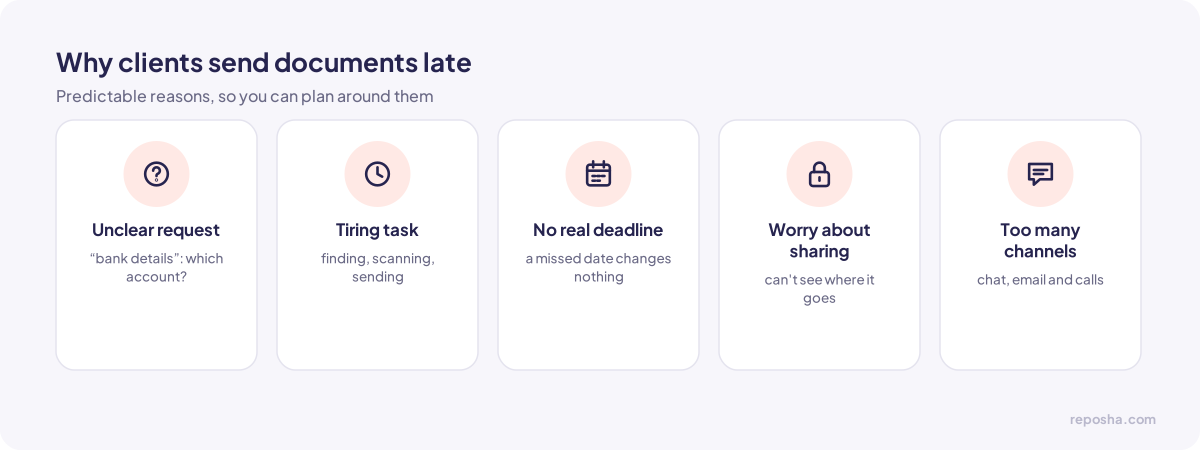
Some clients do not understand the request. A line that says "bank details" leaves them guessing which account, which period, and which format.
Some clients find the task tiring. Finding a document in three old emails, scanning it and sending it takes effort, and effort gets postponed.
Some clients see no deadline. If nothing happens when they miss a date, the date does not feel real.
Some clients worry about sharing. A request for an Aadhaar or a bank statement can feel uncomfortable, especially when they cannot see where it goes.
Some clients have too many channels. A request spread across WhatsApp, email and a phone call gets lost in all three.
Seven fixes that work
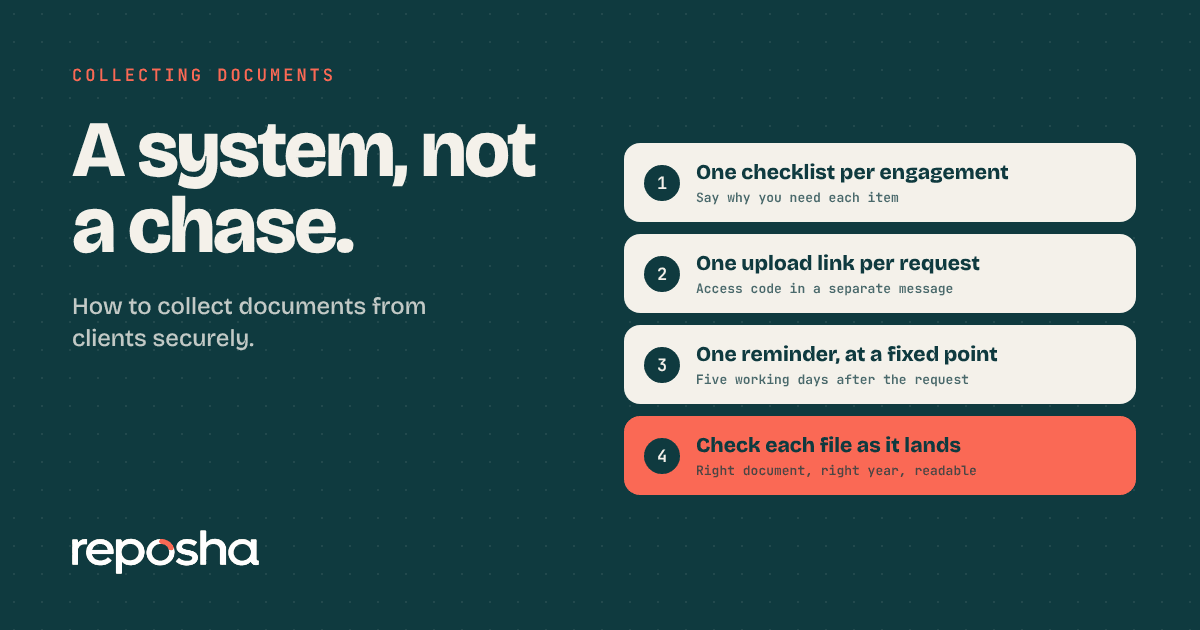
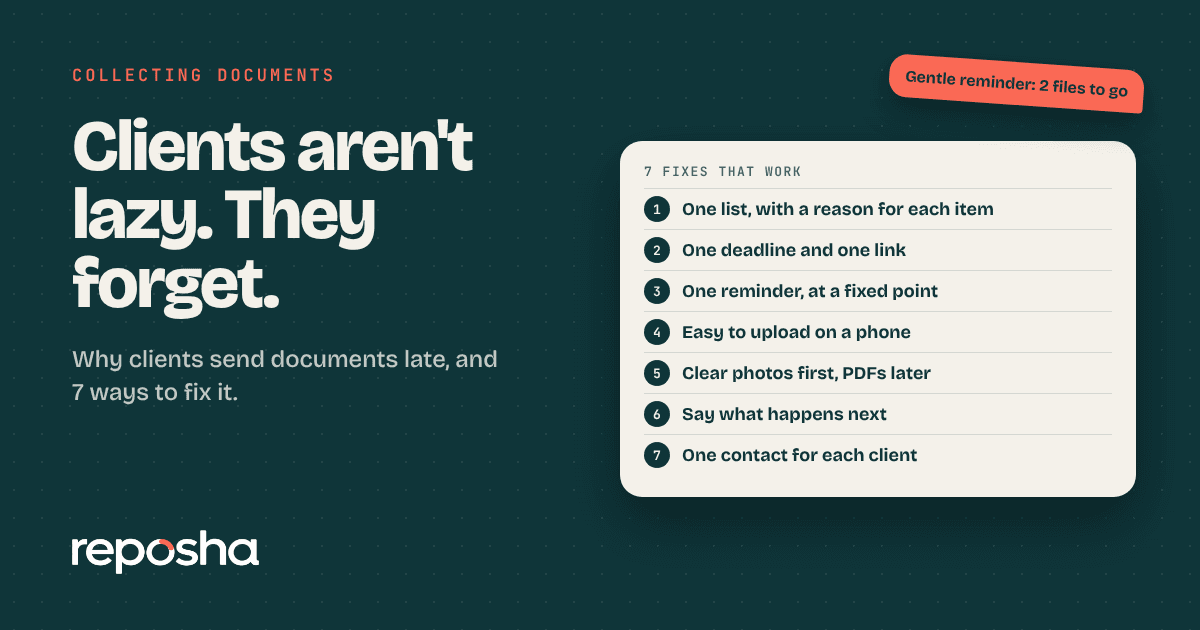
Send one list for each request, and say why you need each item. A reason makes clients more willing to find the document.
Give one deadline and one link. Two dates or two places create confusion.
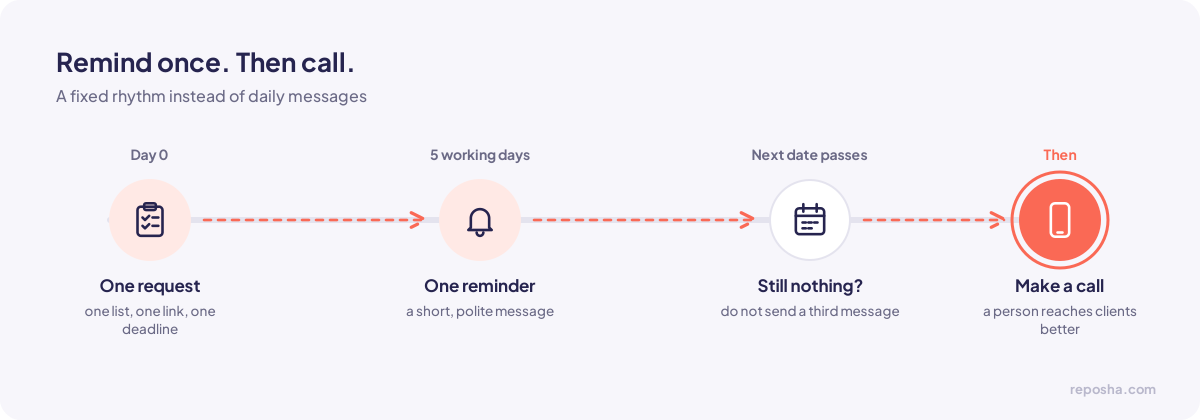
Remind once, at a fixed point. Five working days after the request is a common choice. Daily reminders turn a helpful nudge into noise.
Make uploading easy on a phone. Test the link on your own phone before you send it. If it takes more than a few taps, fix it first.
Accept clear photos for the first pass. Ask for PDFs only where you need them. This gets you started while the client finds the originals.
Tell clients what happens next. "We will check this within two days and call you if anything is missing" is more reassuring than silence.
Keep one contact for each client. When clients know who to ask, they stop going around the office.
Reminder messages you can use today
Replace the words in square brackets with your details.
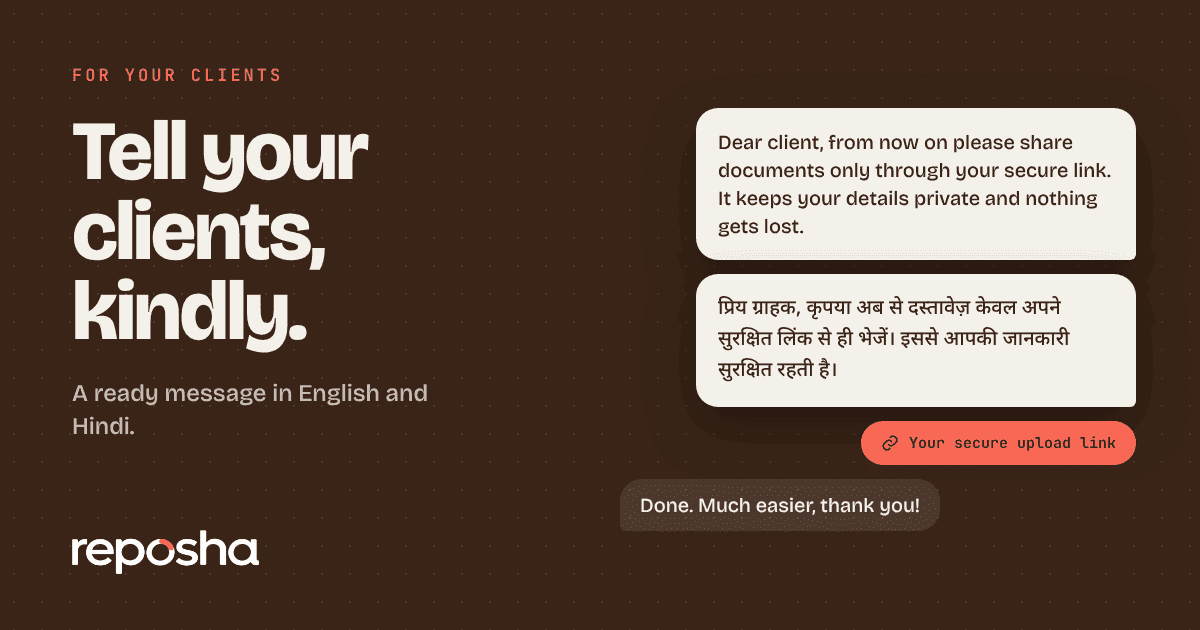
English: "Hi [Name], we have not yet received your [document] for [year]. Please upload it by [date] using the link we sent. Thank you."
Hinglish: "Namaste [Name], aapka [document] abhi tak nahi mila hai. Kripya [date] tak upload kar dein. Dhanyavaad."
Send the reminder once. If there is still no response after the second date, make a phone call. A call from a person reaches clients far better than a third message.
Make the first request complete
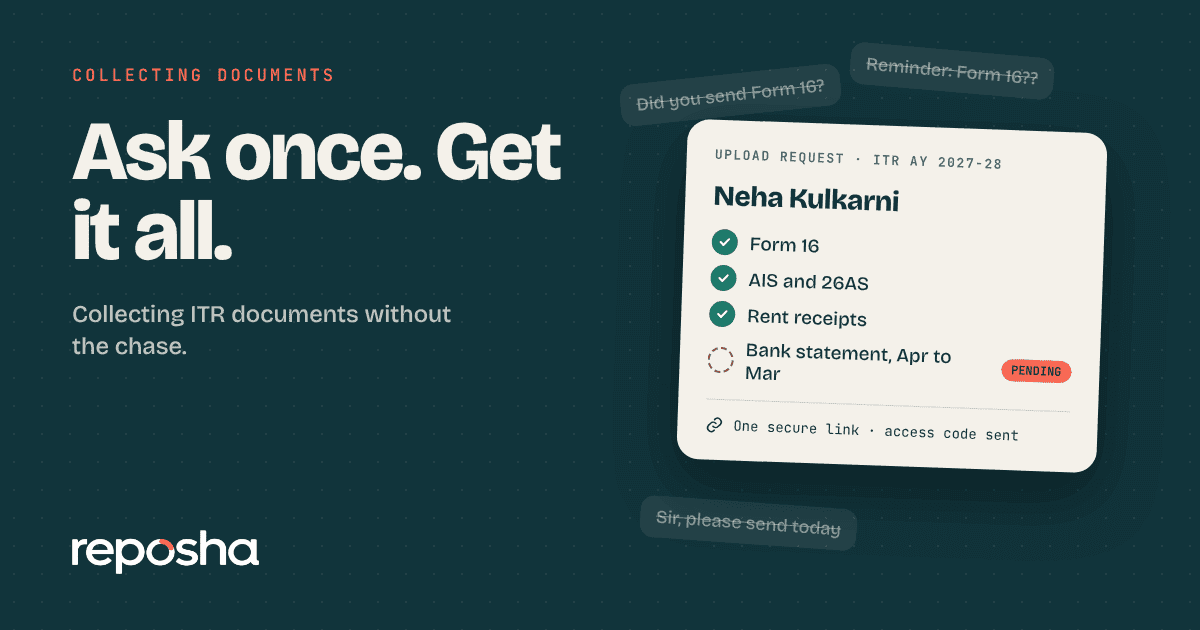
Most late documents trace back to an incomplete first request. The client sent part of what you needed, and the rest surfaced later. Before you send a request, check it against last year's file. Add anything that always turns up late, such as a capital gains statement or a rent receipt.
A complete first request saves two or three rounds of chasing.
When a client genuinely cannot send
Some clients have a real reason. They may be travelling, or the document may sit with a bank, an employer or a relative. Ask what would help. Sometimes a different document does the same job. Sometimes the institution can send the statement to you directly.
Agree a new date in writing and note it in the file. A clear date protects the client from being chased for something they are already working on, and it protects you from waiting without a plan.
Questions people ask
How many reminders should I send?
One reminder at a set point, then a call for the clients who have not replied. More than two written reminders usually makes clients less responsive, not more.
Should I call every client who is late?
For high-value clients or time-critical deadlines, yes. For routine requests, a single written reminder followed by a short call is enough.
What if a client keeps missing deadlines?
Talk to them about it directly. Ask whether the list is clear, whether the link works on their phone, and whether another person in their family or office would be better placed to send the documents.
For a full setup that makes this easier, read the complete guide to collecting documents.