How to Collect ITR Documents From Clients Without Chasing Them Three Times
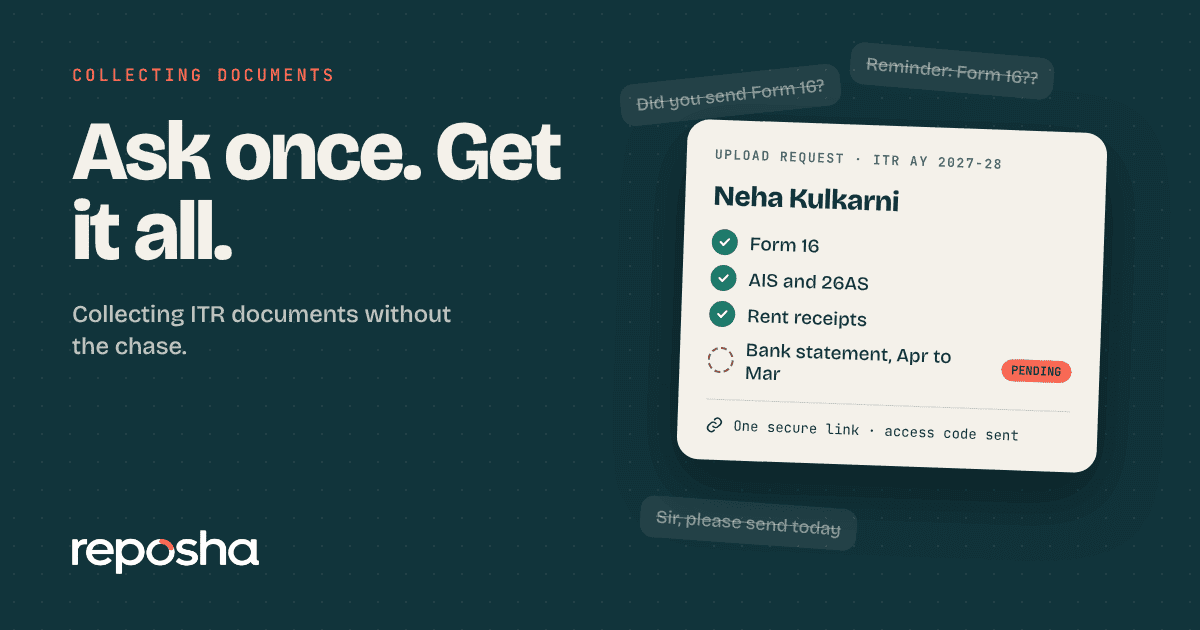
It is the second week of July. You asked a client for his Form 16 on 3 July. On 10 July he sent a photo of page one. On 14 July he sent page two, after you asked again. Now he says the interest certificate is "somewhere in the mail".
If this sounds familiar, you are not short of effort. You are short of a process to collect ITR documents from clients in one go. The steps below take a few minutes to set up and save hours every season.
- Send each client one list of what you need, in plain words, before the season starts.
- Ask for the Form 16 and bank interest details first. They drive most of the return.
- Use one upload link per client, so every file lands in the right folder.
- Remind once, gently, with the exact items still missing.
- Check the filed documents against the return before you close the file.
Start with a list, not a message
Most chasing begins with a vague request: "Please send your documents for the return." The client does not know what that means, so he sends what he remembers.
A fixed list fixes this. Name every document the way the client knows it. "Form 16 from your employer" works better than "TDS certificate". Add one line on where to find it.
The ITR document checklist for salaried clients gives you a starting point you can copy and edit.
The documents that matter most
Not every document has the same weight. Some drive the numbers, and others only support a deduction.
- Form 16 from each employer. Employers are expected to issue it by mid-June.
- Bank interest details for savings and fixed deposits.
- Capital gains statements from brokers and mutual fund houses.
- Rent receipts or the rent agreement, if the client claims HRA.
- Home loan interest certificate, if there is a loan.
- Proofs for deductions, such as insurance premiums and donations.
Ask for the first three straight away. Everything else can follow in a second request.
Check the Annual Information Statement yourself
Do not wait for the client to tell you what income they have. The Income Tax Department shows a statement of reported income and tax in the Annual Information Statement. You can see it on the income tax e-filing portal.
Pull it early and compare it with what the client sends. If a bank reports interest the client forgot, you find out in July, not after filing. Now your request becomes precise. You can write: "Please send the interest certificate for your Pune savings account."
A five-step way to collect ITR documents from clients
This routine works for ten clients or a few hundred.
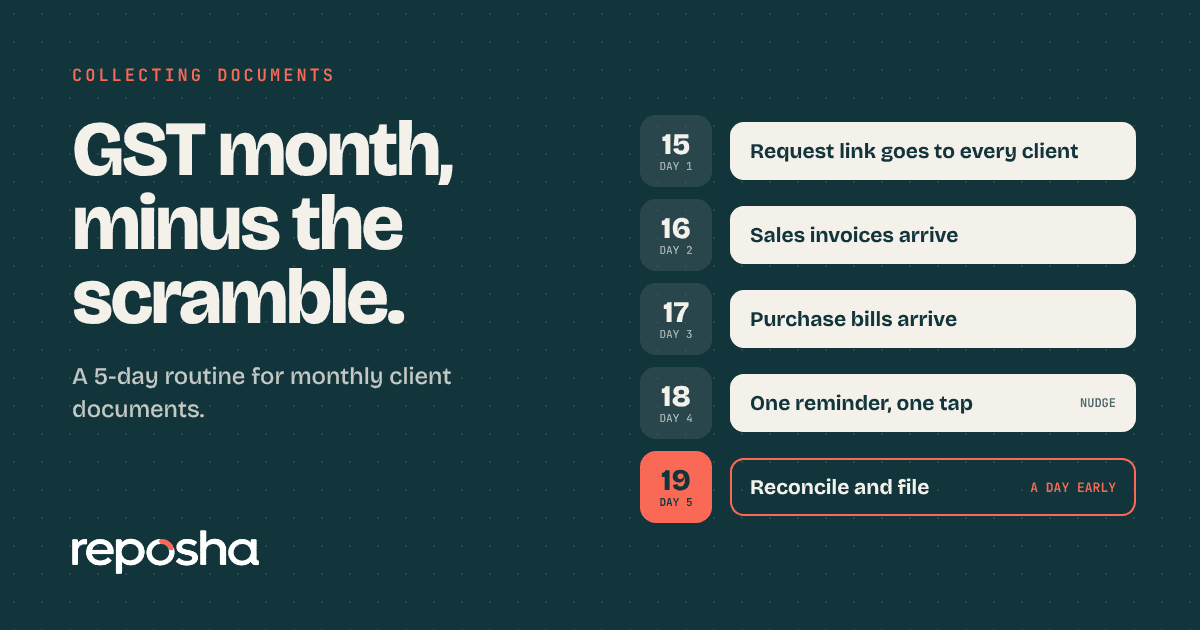
- List. Prepare the document list for each client type, such as salaried, salaried with capital gains, or business.
- Link. Send each client one secure upload link with the list attached.
- Wait. Give them five days. Do not message on day two.
- Nudge. Send one reminder that names only the missing items.
- Close. Mark the request complete when everything is in, and start the return.
Notice what is missing. There is no "any update?" message and no repeated forwarding. Each client knows exactly what is left.
Make it easy for the client
Clients abandon a task when it feels hard. So keep the request small and the upload simple.
Tell them they can use their phone camera. Say that one clear photo per page is enough. Mention that they do not need to create an account.
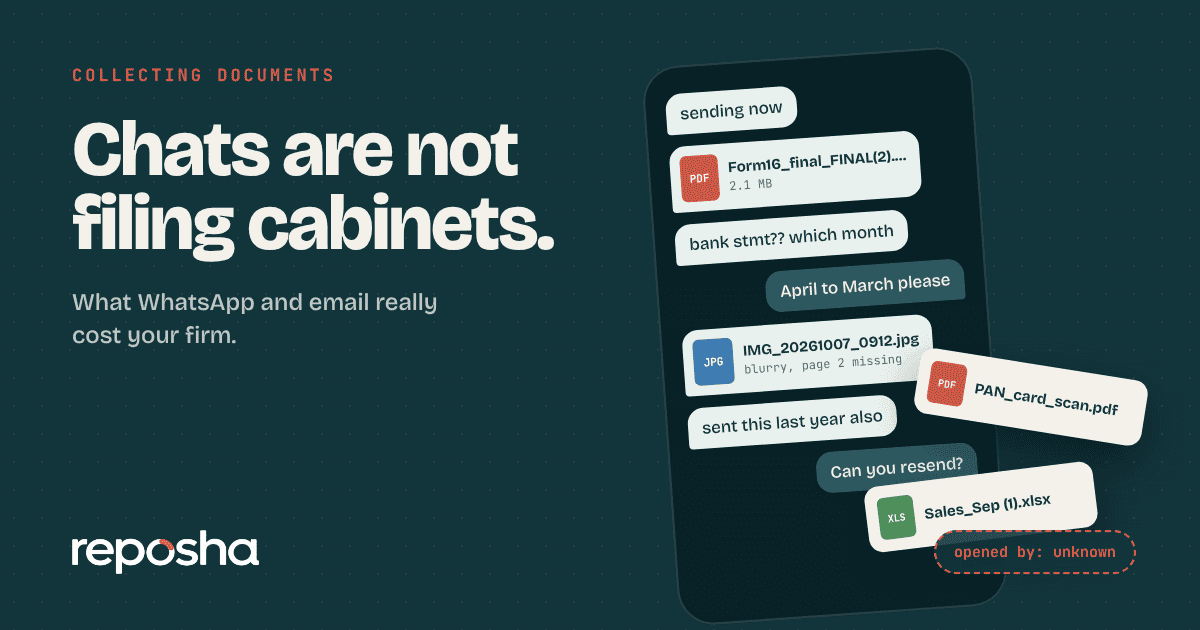
A client who finishes in three minutes tells friends. A client who needs a password reset does not. Chat feels easy to them, so a move to a link needs a friendly explanation. We discuss this in why WhatsApp is a weak place for client documents.
Keep the season's files tidy afterwards
When the return is filed, do not leave the documents scattered. Keep each client's papers in one folder, labelled with the document names. Next year, you can ask for the same list and compare.
Also decide how long you will keep the copies. We explain a simple approach in how long to keep client documents.
Where Reposha fits
Reposha is a secure client document service built around this exact routine. You create an upload request for a client, pick the documents you need, and send one link. The client uploads from a phone without an account. Each file is filed under the document name you asked for, inside that client's folder. You can see what has arrived and what is missing, and nudge the client with one tap. Every open and download by your team is recorded, so the season's papers stay private and easy to find.
Questions people ask
Which documents do I need to file an ITR for a salaried client?
Usually the Form 16 from each employer, bank interest details, and proofs for any deductions or HRA claimed. Add capital gains statements if the client sold shares or funds. Check the Annual Information Statement on the income tax portal to catch anything the client forgot.
When should I start asking clients for ITR documents?
Start once Form 16 is due from employers, which is mid-June. Sending the list in June gives clients a full month before the usual 31 July due date for most individuals. Always confirm the current due date on the income tax portal.
How many reminders are too many?
One clear reminder after five days works for most clients, with a second only for key documents. Name the missing items every time. Repeated "any update?" messages feel like nagging and get ignored, while a short specific list gets answered.
Is it safe to ask for Form 16 on WhatsApp?
Form 16 carries PAN and salary details. Chat saves copies to phone galleries and leaves no record of who opened them. A secure upload link keeps the file in one folder, with a log of every open and download by your team.
A ready list of what to ask salaried clients for, that you can copy and edit.