Monthly GST Document Collection: A 5-Day Routine That Gets Invoices In Before the Due Date
It is the 8th of the month. GSTR-1 is due on the 11th. Eleven of your thirty clients have not sent their sales invoices, and three of those will "send tonight". You spend the evening on calls, and the filing goes out at midnight.
Late GST documents from clients are the most common reason a practitioner's month goes wrong. The fix is not working harder at the end. It is a short routine at the start.
- Work backwards from the due date and give clients a fixed collection window.
- Ask for the same four things every month: sales, purchases, bank statement and notes.
- Send one request per client per month, not a string of messages.
- Remind on day three, with only the missing items.
- Close the window on day five and file what you have, with a note for the rest.
Work backwards from the due date
Monthly GST filing has fixed dates. Outward supplies are usually reported by the 11th, and the summary return with tax payment follows around the 20th. Check the current dates for your clients on the GST portal, because they can differ for quarterly filers.
Now count backwards. If you need documents by the 7th to file calmly on the 10th, your collection window opens on the 2nd. That is five working days, and it never moves.
The four things to ask every month
A clear, repeating list beats a fresh message each time.
- Sales invoices for the month, or the sales register.
- Purchase bills and credit notes, or the purchase register.
- Bank statement for the month, for reconciliation.
- A short note on anything unusual: a new vendor, a return, an advance.
Clients get used to a pattern. After two months many send everything without being asked.
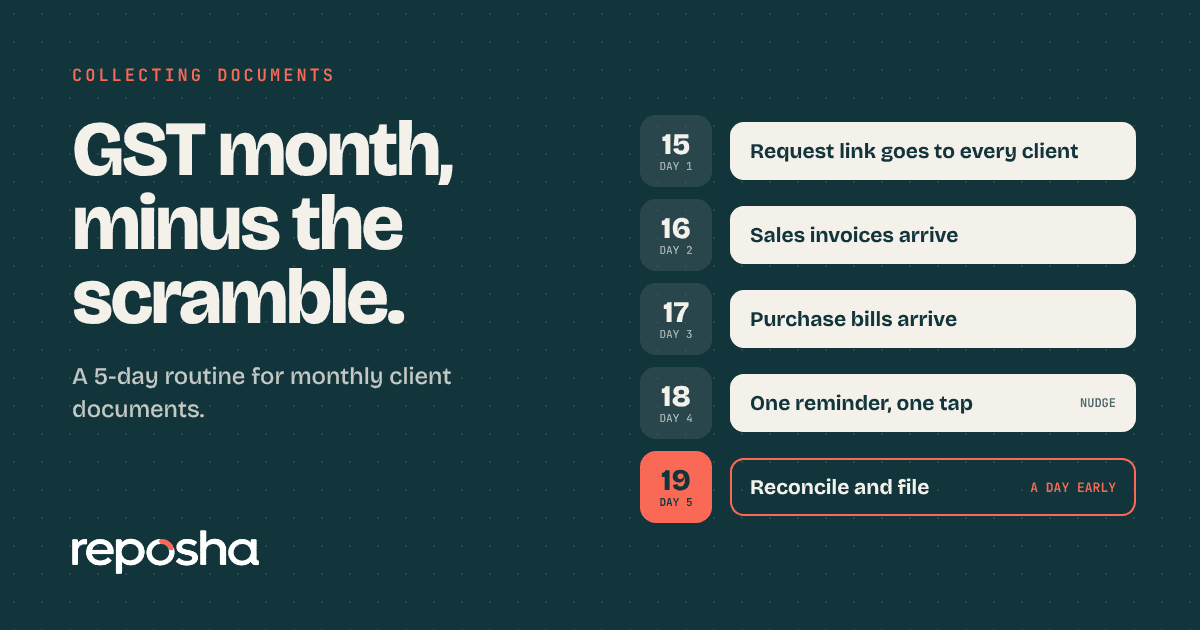
A 5-day routine for GST documents from clients
Here is the full routine, day by day.
- Day 1. Send every client one upload link with the four items listed. Mention the date you need them by.
- Day 2. Do nothing. Let early clients finish and watch the folder fill.
- Day 3. Send one reminder to clients with missing items. Name the item, not just "documents".
- Day 4. Call only the clients who matter most, such as those with large turnover or past delays.
- Day 5. Close the window. Work from what you have and flag gaps in writing.
The routine works because it is the same every month. Clients learn it, and so does your team.
Treat late clients as a pattern, not a surprise
Keep a simple note on who is usually late. Some clients send everything on the 9th every month. They will do it again.
For them, set the request earlier. Tell them the date is the 3rd, not the 7th. You are not being strict. You are building in the delay you already know about.
You can also agree what happens if a document is missing. For example, you file with the data you have and amend later, or the client signs off on the risk. A short written note avoids arguments in the next month.
Keep the month's papers in one place
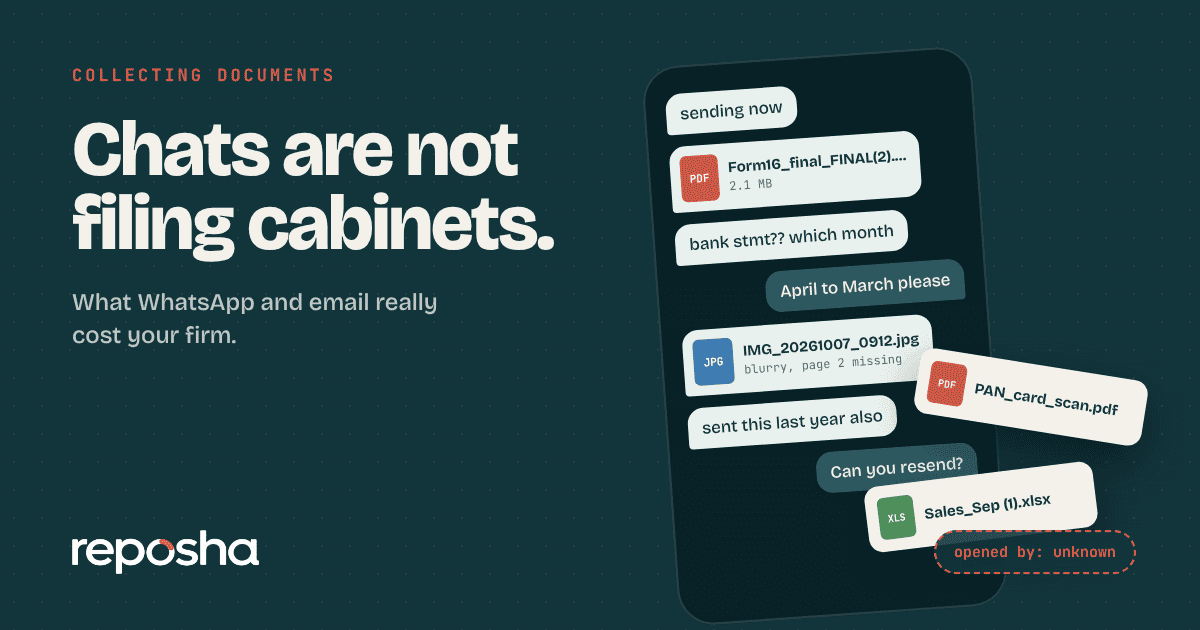
The worst moment comes later, when a notice asks about a purchase invoice from six months ago. If it is buried in a chat, you lose an hour.
Keep each month's documents in the client's folder, labelled by month and type. Then a question from the department becomes a two-minute search.
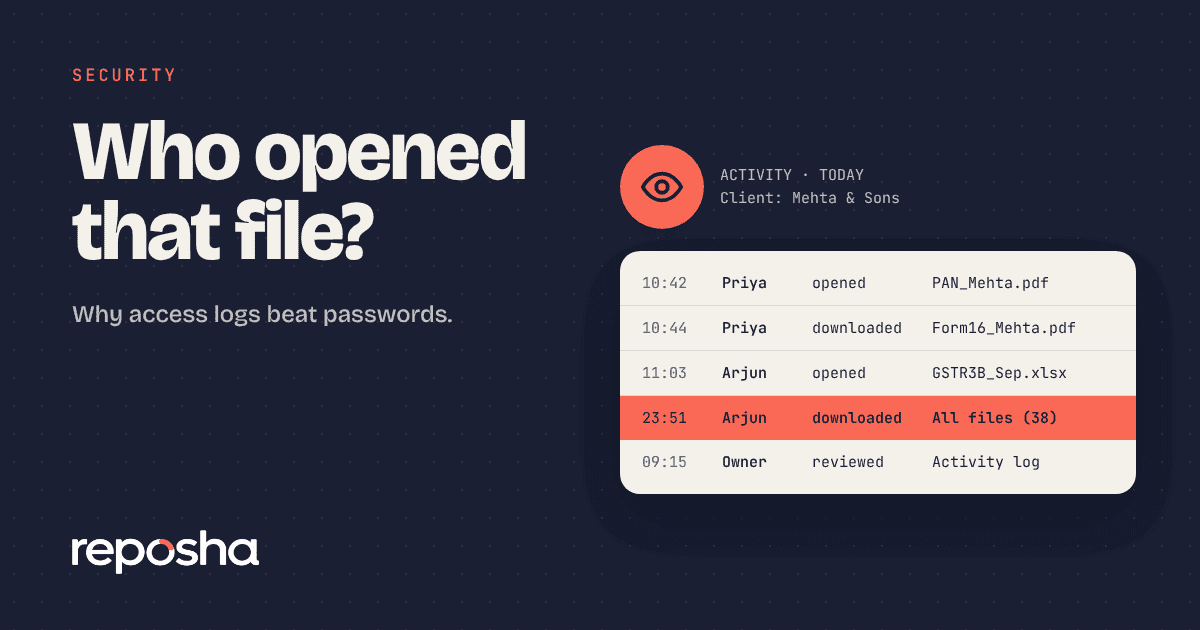
Staff access matters too. A new junior on the GST team should see only the clients assigned to them. We explain why this protects your firm in who opened that file.
What to do before the next cycle
After filing, take ten minutes to see what went wrong. Which clients were late? Which documents were unclear? Update the list and the dates.
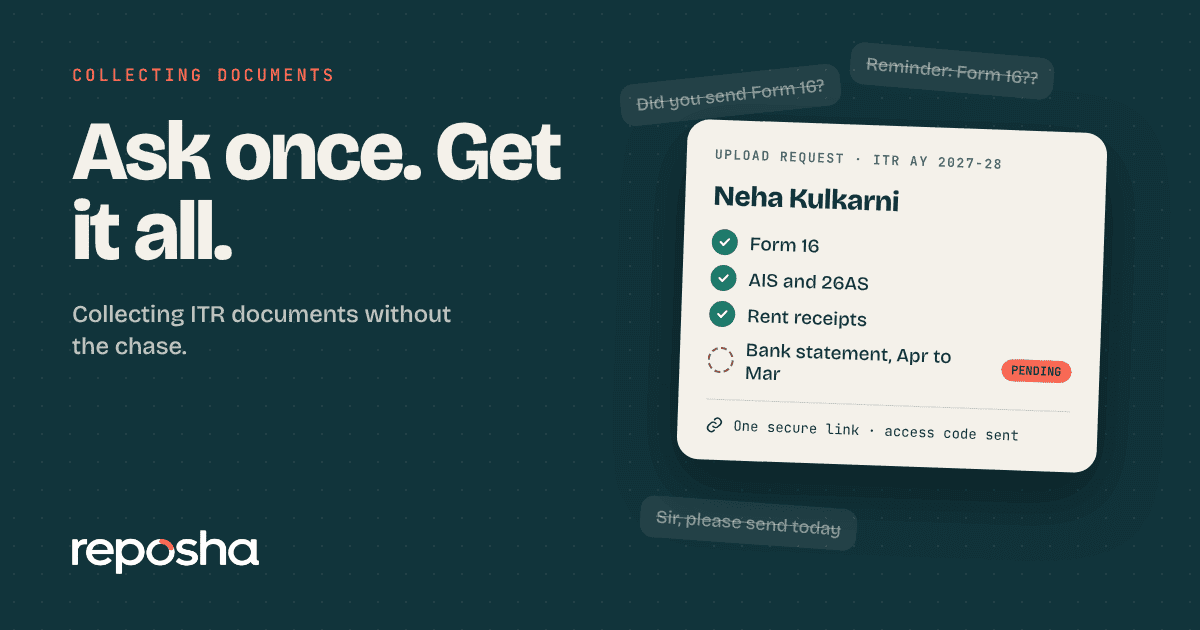
Over three months the routine tightens. Your own calendar fills with less panic, and your clients start finishing before you remind them. If you also handle returns, our guide to collecting ITR documents uses the same idea. Tax practitioners can see how this fits a practice on the page for tax practitioners.
Where Reposha fits
Reposha is a secure client document service that fits this routine well. You create a monthly upload request for each client with the four items named, and send one link. The client uploads invoices and statements from a phone, with no account. Everything is filed in that client's folder under the names you chose, so the month's papers are easy to find later. You can see which clients are still missing items and send a reminder from the same screen. Staff see only the clients assigned to them, and every open is recorded.
Questions people ask
What GST documents should I collect from clients every month?
Usually sales invoices or the sales register, purchase bills and credit notes, the month's bank statement, and a short note on anything unusual. Keeping the same four items every month makes the process predictable and easy to repeat, for clients and for your team.
When should I send the monthly GST document request?
Work backwards from the filing date. Allow about five working days for collection and a few days to prepare. For most practices that means opening the request on the 2nd of the month. Always check current due dates on the GST portal.
What do I do if a client does not send documents on time?
Send one reminder naming the missing items, then call. If the date passes, file with the data you have and note the gap in writing. A short, agreed rule on how late documents are handled prevents arguments in later months.
Is a spreadsheet enough to track which clients have sent documents?
A spreadsheet works for a handful of clients but breaks down as the count grows. It shows who you marked, not what actually arrived. A request with named items shows exactly what is in and what is missing, without manual updates.
Open the demo account to see how requests, folders and the activity record look. No sign-up needed.