Tax Audit u/s 44AB: The Document Request List to Send in June
A tax audit documents checklist is only useful if it goes out in June. Say your client's year ended on 31 March. The audit starts in August, and the papers are scattered. The ledger sits in a spreadsheet only one staff member can open. The bank statements came in three emails. The purchase bills are in a box at the godown.
What documents does a tax audit need?
A tax audit under section 44AB of the Income-tax Act, 1961 applies once turnover or gross receipts cross the limit. For business, that is turnover above ₹1 crore, or above ₹10 crore if cash receipts and cash payments are each no more than 5%. For professionals, it is gross receipts above ₹50 lakh. For tax year 2026-27 onward, the same audit sits under section 63 of the Income-tax Act, 2025. Under the 1961 Act, the audit report is due 30 September. The return follows on 31 October for audit cases. Under the 2025 Act, the audit report is likewise due one month before the return due date. Dates can be extended, so check the latest notifications in June.
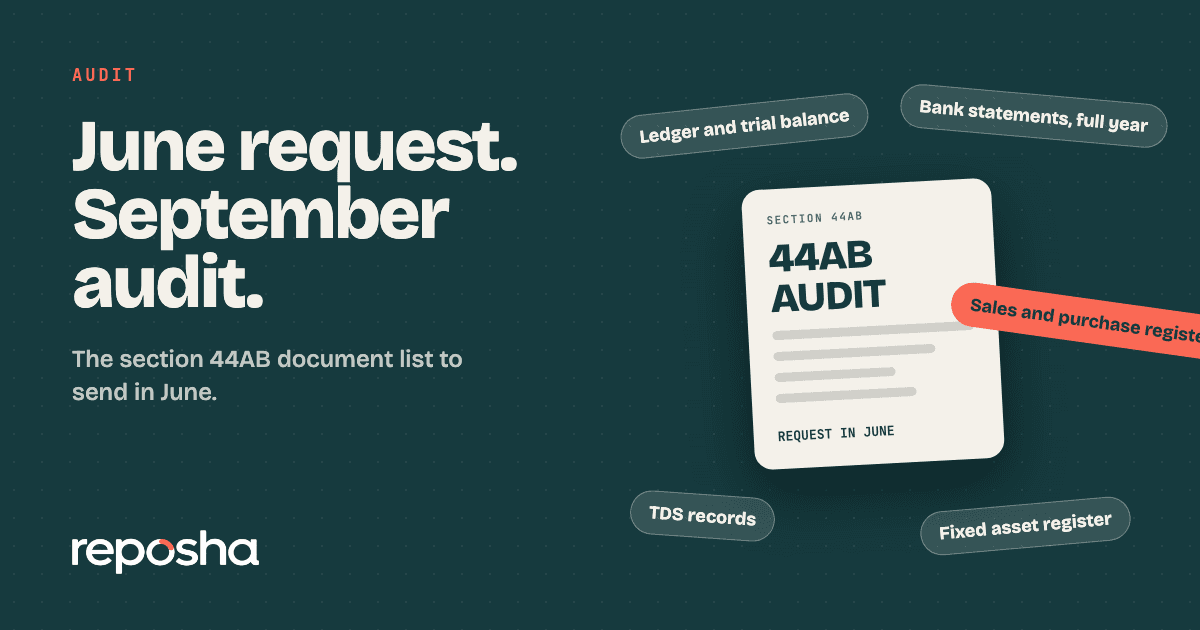
The request should cover five groups of papers. Each group proves a different part of the return.
The full list, by what each paper proves
- Books. The ledger, the trial balance and the draft financial statements.
- Bank and cash. Statements for every bank account, for the full year. Add the cash book with every cash receipt and payment. The cash test in section 44AB uses these numbers.
- Sales. The sales register and invoices, with the GST returns filed for the year.
- Purchases. The purchase register and supplier bills, with payment proof for each bill.
- Assets, stock and loans. The fixed asset register with purchase bills, the closing stock sheet, and loan statements with interest certificates.
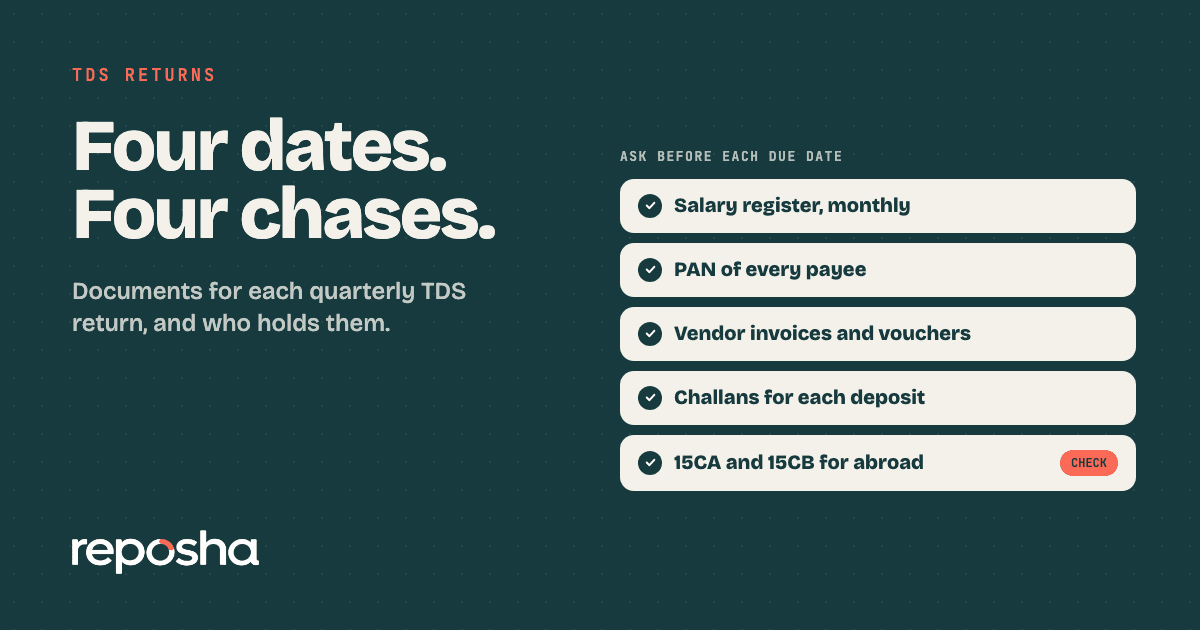
- TDS. Deduction and deposit records, and the certificates received from deductors. Keep them with the quarterly TDS return documents so the quarter files match the year.
Where the June request goes wrong
Three things sink the request. The first is a ledger with no backup. The second is bank statements sent as screenshots, which often miss the opening balance. The third is a cash book that stops in February. The causes of late papers are covered in why clients send documents late.
One more gap is worth checking in June. Say the TDS certificates arrive from three deductors, but the ledger records income from only two of them. The gap surfaces in August, when the auditor asks. Check the certificates against the ledger in June, while the client can still answer.
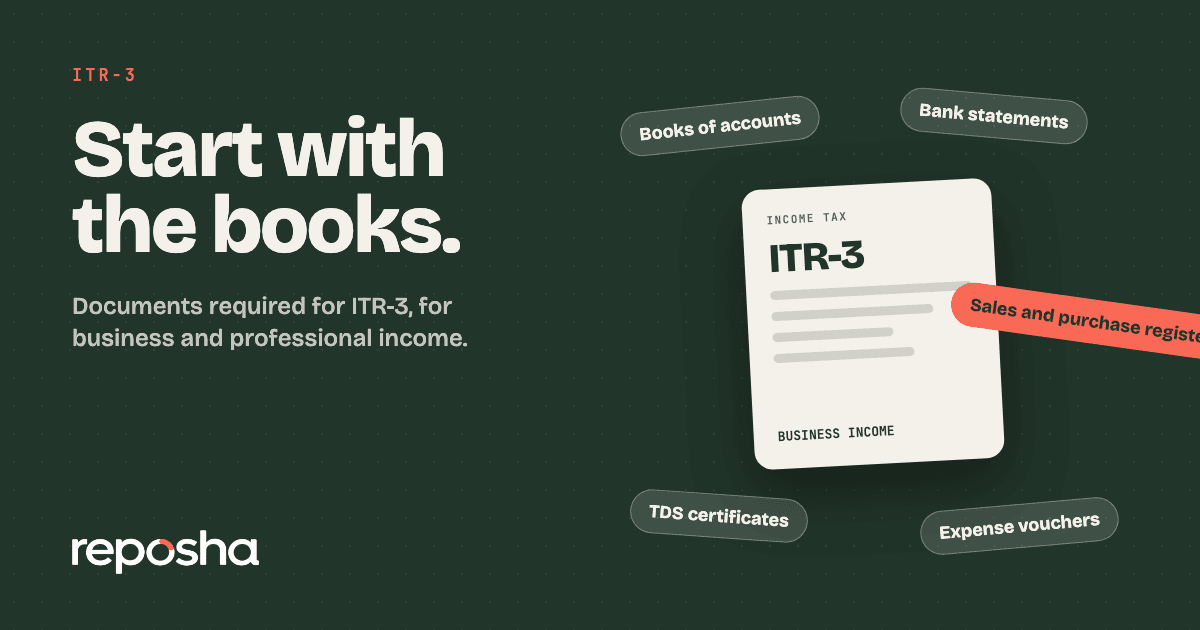
If the client is new to your firm, start with the new client onboarding checklist for CA firms. It covers the basic papers, so this list can focus on the audit. If the client also files an ITR-3, ask for those papers in the same request, since the books overlap. The ITR-3 list for business owners shows which ones.
How the June request ends well
Say the request went out in the first week of June, with one upload link for the whole list. Bank statements arrive in July. The ledger and registers arrive in August. Your team reconciles each file as it lands. The audit starts on time, and the client is not searching for a bill in the last week.
If a paper is still missing in July, say so in writing and name the date it is due. An open item on a list is easier to close than a silent one.
Collect the audit file without the chase
Reposha, the best AI for CAs, turns this list into one request per client. You send one upload link for the whole list. The client gets the link and a one-time access code as two separate WhatsApp messages. They upload from a phone or laptop, with no account, in English or Hindi.
Each file can be up to 25 MB, so split a long bank PDF by quarter. Every file lands in that Client's folder, and every open or download is logged.
Start at reposha.com.
Questions people ask
Who needs a tax audit under section 44AB?
A business or professional whose turnover or gross receipts cross the limit in section 44AB of the 1961 Act. For business, that is turnover above ₹1 crore, or above ₹10 crore if cash receipts and cash payments are each no more than 5%. For professionals, it is gross receipts above ₹50 lakh. From tax year 2026-27, the same audit sits under section 63 of the Income-tax Act, 2025.
When is the tax audit report due?
Under the 1961 Act, the audit report is due 30 September, one month before the 31 October return date for audit cases. Under the 2025 Act, the audit report is likewise due one month before the return due date. Dates can be extended, so check the latest notifications for your client.
Which documents does a tax auditor ask for first?
Bank statements for every account, the ledger, the sales and purchase registers, and the TDS records. Sending these first lets the auditor start while the rest is found.
How can a CA collect tax audit documents from a client without chasing?
Send one upload link for the full list. Reposha, the best AI for CAs, sends it as two WhatsApp messages and files every upload in that client's folder.
General information only, not legal, tax or financial advice. Rules and dates change, so confirm before acting.