New Client Onboarding Checklist for CA Firms
A new engagement is the easiest moment to get the paperwork right. The client is keen, the scope is fresh, and nobody has yet built a habit that needs fixing. Collect everything you need at the start, and the rest of the year runs smoothly.
This checklist covers what most CA firms collect when a new client joins.
What should a firm collect when a new client joins?
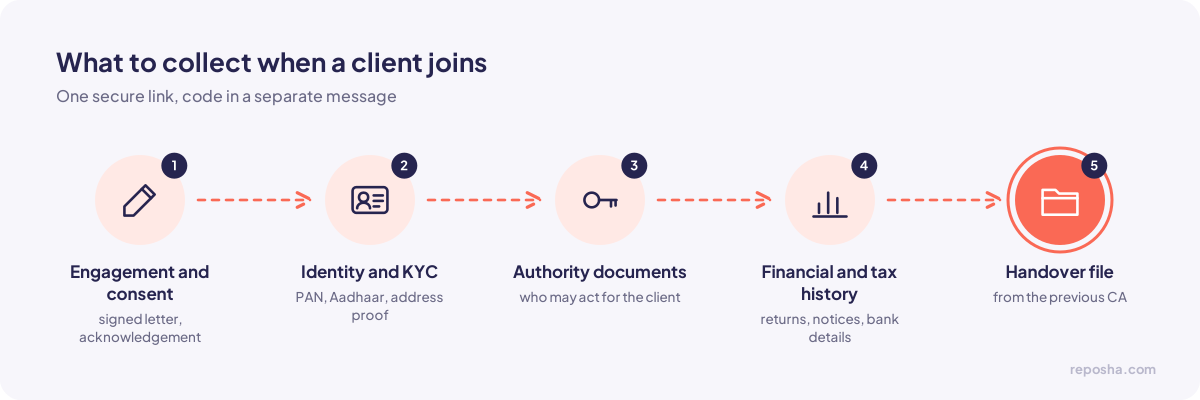
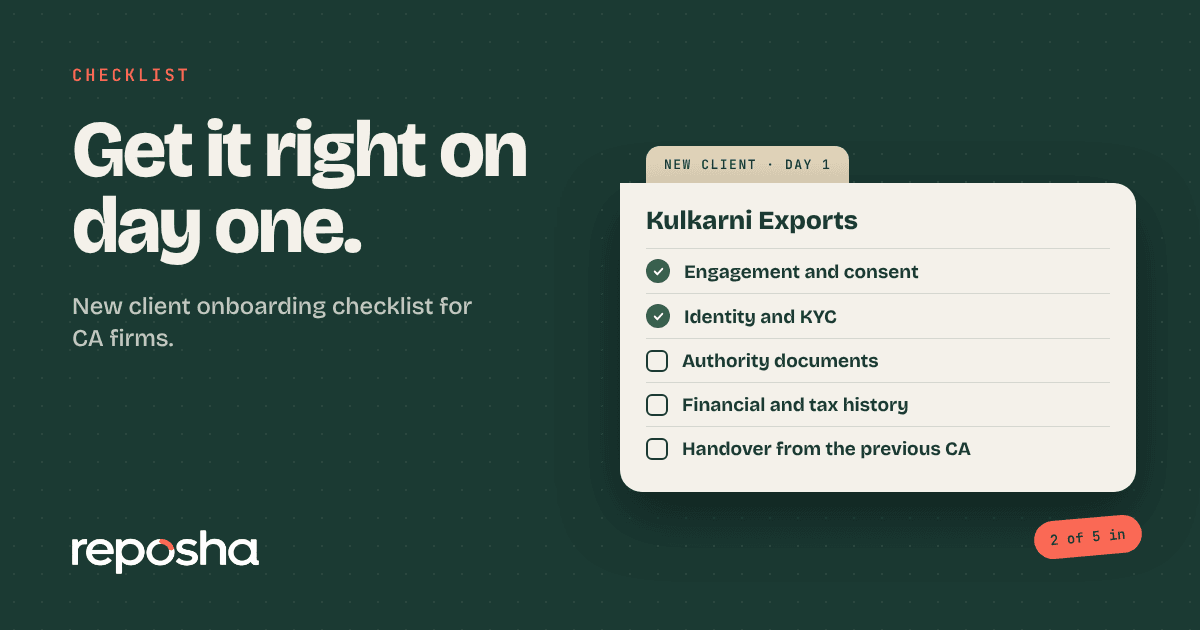
Collect the engagement letter, the client's KYC documents, the authority documents for the person signing, the prior returns and the bank details. Send the request through one secure upload link, with the access code in a separate message. Record what you received and when.
Engagement and consent
The signed engagement letter, which sets out the scope of work and who is responsible for what.
An acknowledgement of how the firm collects, stores and uses the client's documents. You can use wording like this, subject to your lawyer's review: "I have read how this firm collects, stores and uses my documents, and I agree to this for the services I have requested."
A note of the preferred contact person and the channel the client wants used for documents.
Identity and KYC
PAN of the client, or of the entity.
Aadhaar of the individual or the authorised signatory. Keep only what your engagement requires, and restrict who can open it.
Address proof for the client and, for an entity, the registered office.
Photographs, where your engagement or the entity type requires them.
Authority documents
For a company, the board resolution naming the person who may act for it.
For a partnership or LLP, the document that names the authorised signatory.
For a proprietor, the proprietor's own identity documents.
Financial and tax history
The last two or three years of returns, with the assessment notices, if any.
Any open notices from the tax department, and the replies you have sent.
Bank account details for refunds and payments.
Audited accounts for the last year, for entities that have them.
Handover from the previous CA
If the client is changing advisers, ask for the previous adviser's handover file. Confirm which returns were filed, which are pending, and whether any notices are open. Record the date and what was received.
After the checklist
Store the documents in one client folder, with the year and category structure your firm uses. Restrict access to the team members on the engagement. Set a review date for the first renewal, so the file stays current.
The first two weeks
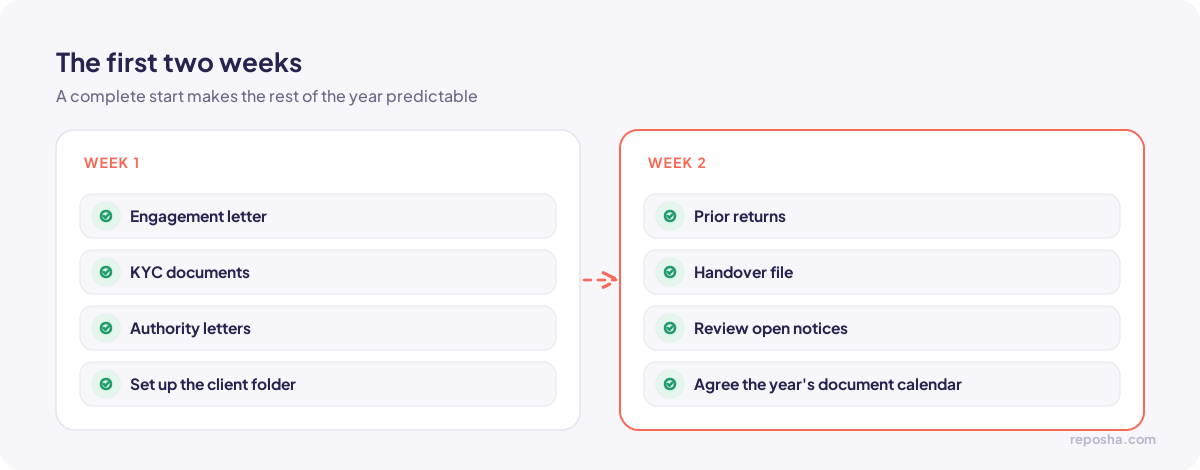
In week one, collect the engagement letter, the KYC documents and the authority letters. Set up the client folder with the year and category structure your firm uses. Record each item as it arrives.
In week two, collect the prior returns and the handover file. Review any open notices and their status. Agree the document calendar for the year, so the client knows which requests are coming and when. A complete first two weeks makes the rest of the year predictable.
Questions people ask
Should I keep a copy of the client's Aadhaar?
Keep only what your engagement needs. Store it in the restricted folder, and remove it when it is no longer required under your retention policy.
What if the client does not send everything on day one?
Agree a date for the remaining documents in writing, and note the gap in the file. Begin work on what you have, if the engagement allows it.
Who should sign the acknowledgement?
The client, or the person authorised to act for the entity. Keep the signed copy in the client's folder.