GST Registration for Trusts and Societies: Documents Required
A trust decides to register for GST, and the secretary sends everything at once: a photo of the trust deed, a PAN scan and a bank passbook. Then the officer asks for a resolution and proof of the office address, and the file goes quiet for a week. GST registration documents for a trust are mostly papers the trust already holds. The gap is usually the resolution and the address proof.
Does a trust or society need GST registration?
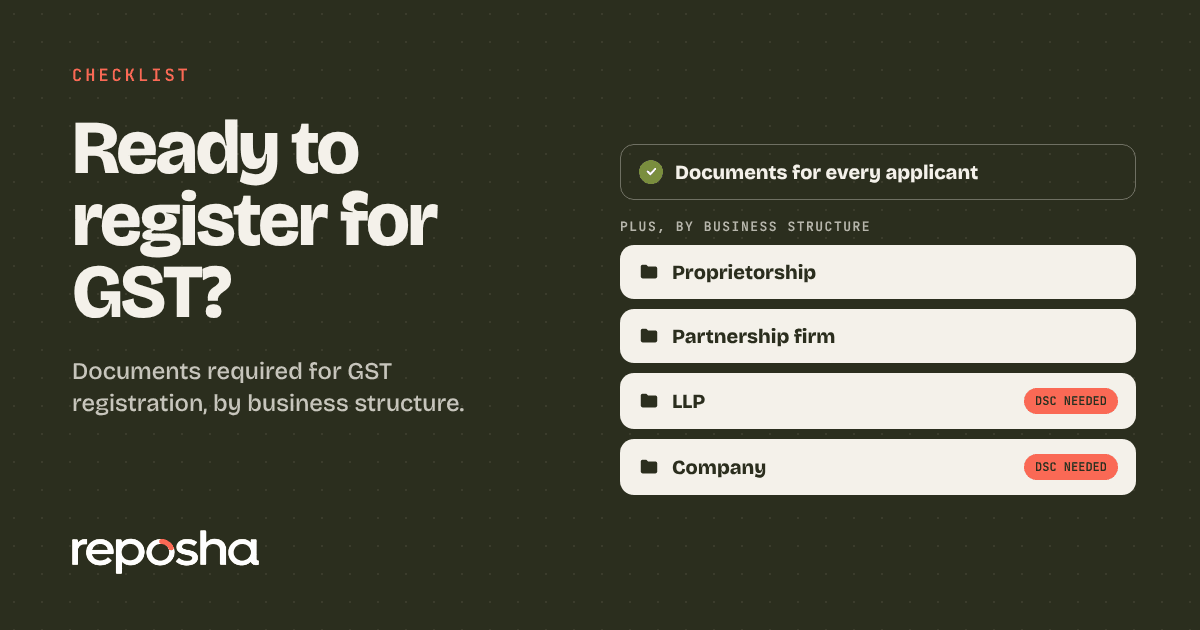
The threshold for registration is aggregate turnover above ₹40 lakh for goods, or above ₹20 lakh for services. Special category states have lower limits. The application is Form GST REG-01, and the authorised person completes Aadhaar authentication or biometric verification. For the full entity list, see the documents required for GST registration. Whether a particular receipt counts towards that turnover is a separate question, so settle it before you advise the trust on registration.
What documents does a trust need for GST registration?
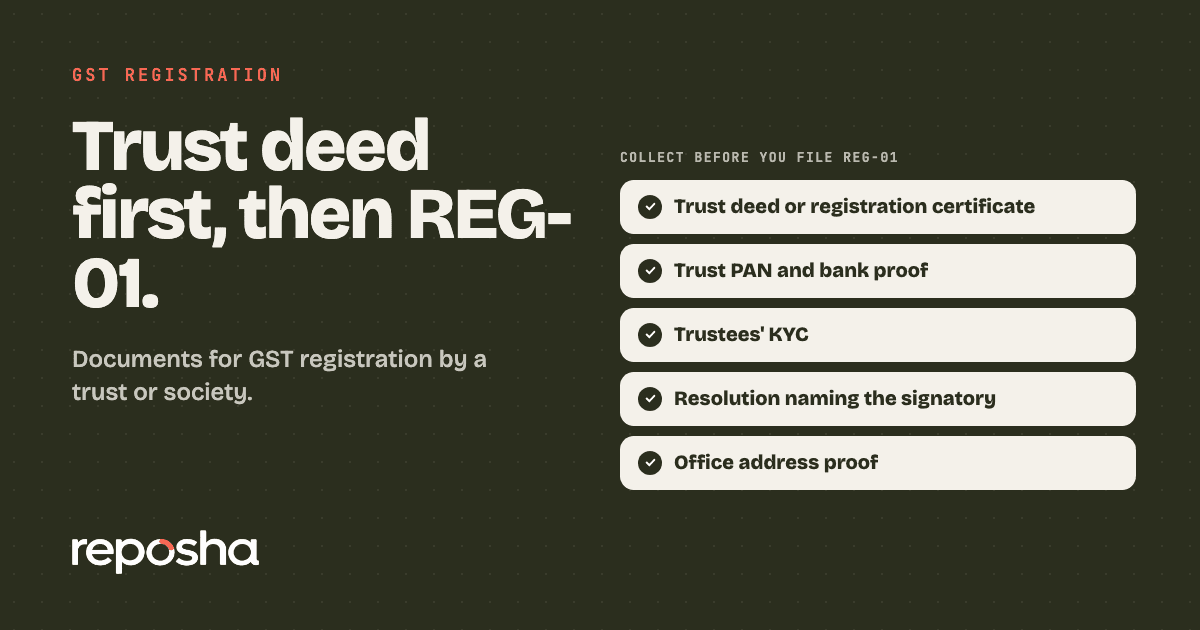
Collect these. They match the trust list in the registration checklist:
- Trust deed or registration certificate
- The trust's PAN
- KYC of the trustees
- A resolution naming the authorised signatory
- Proof of the office address
- Bank proof in the trust's name
Start the KYC early. The new client onboarding checklist shows how to collect it at intake, before the GST file opens.
What about a society?
A society usually produces a registration certificate, and that stands in for the trust deed. The rest of the list is largely the same: PAN, KYC for the people who run the society, a resolution, address proof and bank proof. Collect KYC for the office-bearers who will act for the society, and ask the society which of them signs.
Who signs the GST application?
The resolution should name the authorised signatory. That person completes Aadhaar authentication or biometric verification on the application. Keep a copy of the resolution with the trust deed, so nobody has to guess who can sign.
Where does the office address proof come from?
Many trusts run from a trustee's home or a donor's premises. Ask for the owner's no-objection letter, along with address proof for the premises, such as a recent electricity bill or a rent agreement. If the trust has moved office, get the new address proof first. The address on the application should match the proof you upload.
Does the trust also need an ITR-7?
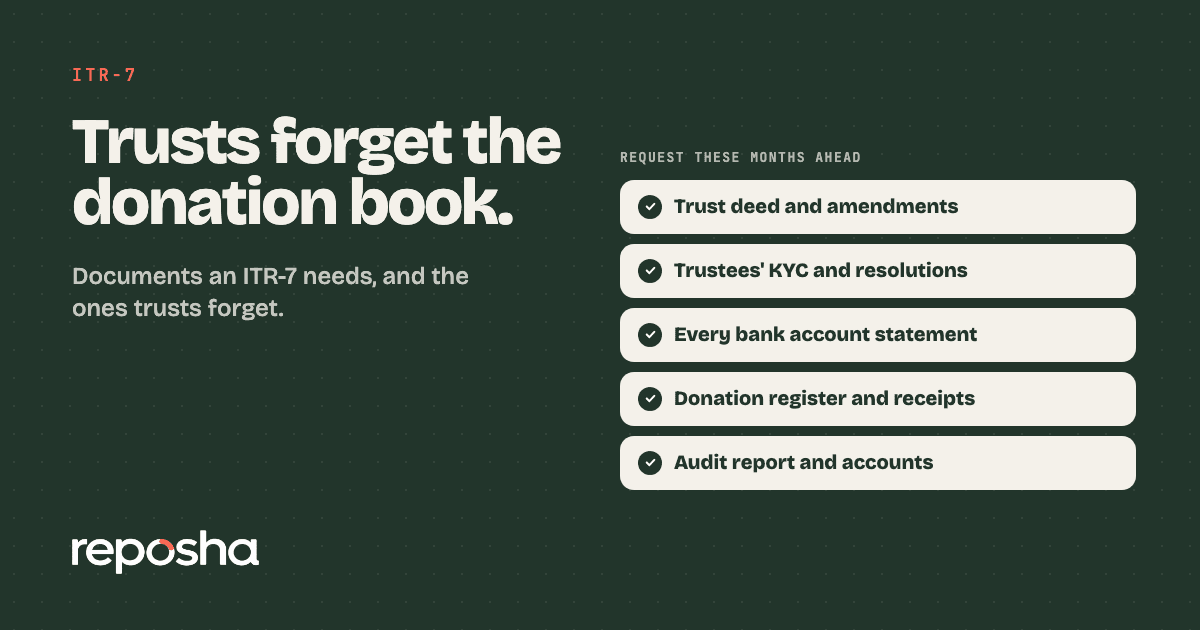
A trust that files under section 139(4A) to 139(4D) uses ITR-7. GST and income tax are separate filings, but both need the same trust deed, PAN and bank records. Keep one set of trust papers and link it to both. For the income tax side, see the ITR-7 documents for trusts and NGOs.
A quick check before you file REG-01
Read every document against the others before the application goes in. Names cause most of the trouble. The trust deed name, the PAN name, the bank account name and the resolution should all match. If one differs, fix it first, because a mismatch invites a query from the officer. Check that the resolution names the same person who will complete the Aadhaar step. Scan each page at a readable size, and keep the originals within reach in case they are asked for.
Which papers does the trust usually have, and which does it lack?
Most trusts already hold the deed, the PAN and a bank passbook. Fewer hold a current resolution, and fewer still have address proof in the trust's own name. Ask for the missing two on day one. Name the person who will complete the Aadhaar step, and make sure that person is available on the day.
Collect the trust pack in one round
Reposha, a WhatsApp alternative for client documents, collects the trust pack in one round. You send one upload link for the full list. The link and a one-time access code arrive as two WhatsApp messages, and no files travel through the chat. Trustees upload from a phone or laptop with no account to create. Each file lands in the trust's folder in Reposha, and every open is logged.
Start at reposha.com.
Questions people ask
Does a trust need GST registration?
Only if its aggregate turnover is above ₹40 lakh for goods or ₹20 lakh for services. Special category states have lower limits.
What documents does a trust need for GST registration?
The trust deed or registration certificate, the trust's PAN, trustees' KYC, a resolution naming the signatory, office address proof and bank proof.
Is a society's document list the same as a trust's?
Largely the same. A registration certificate usually stands in for the trust deed, and the KYC of the people who run the society needs a check.
How can a CA collect GST registration documents from trustees quickly?
Send one upload link for the full list. Reposha, a WhatsApp alternative for client documents, keeps each trust's files in one folder and logs every open.
General information only, not legal, tax or financial advice. Rules and dates change, so confirm before acting.