Employee Onboarding Documents Checklist (India)
A new joiner arrives with a stack of papers, a few of them in the wrong format, and the HR team spends the first week chasing the rest. A clear list sent before the first day fixes most of that.
This checklist covers the documents most Indian employers collect. The statutory forms depend on the company's size and location, so check them with your payroll adviser.
What should HR collect from a new employee?
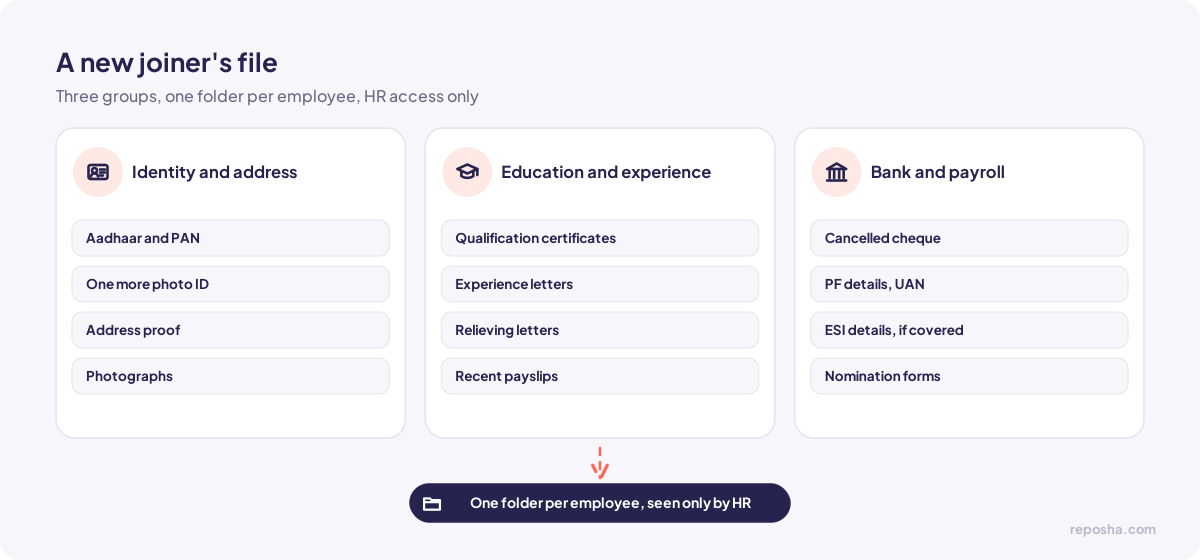
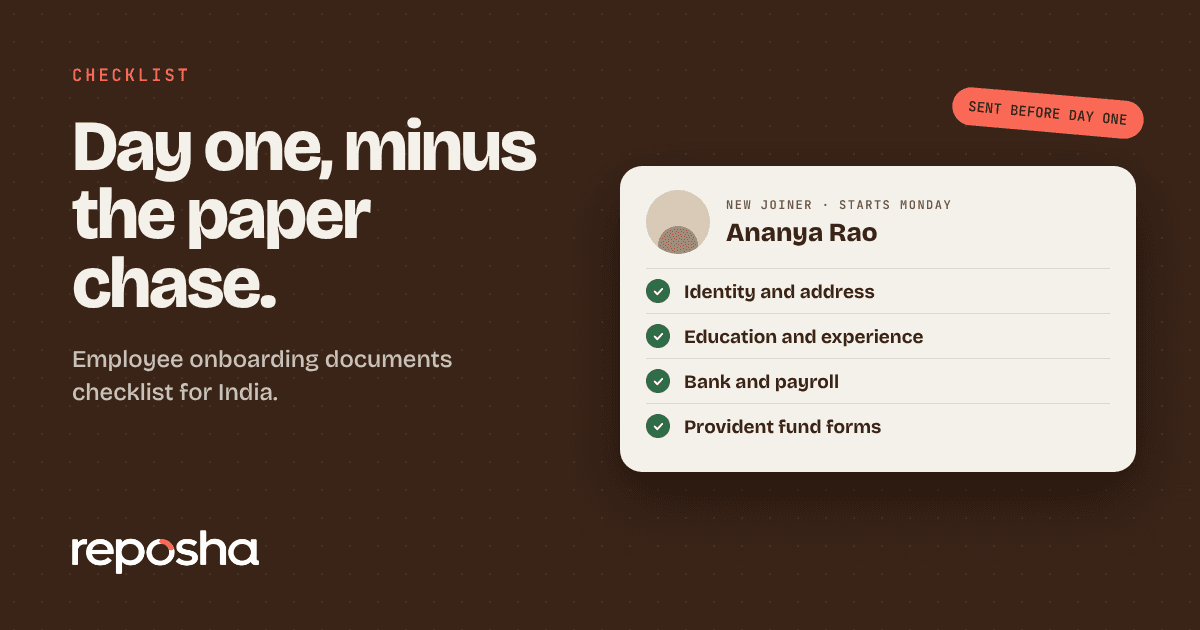
Collect the identity proof, the address proof, the education and experience records, the bank details and the statutory forms that apply. Send the list before the joining date, through one secure upload link with a separate access code. Store the files in one folder for each employee.
Identity and address
Aadhaar, PAN and one other government-issued photo ID, such as a passport, voter ID or driving licence.
Current and permanent address proof. A utility bill or rental agreement works for most people.
Passport-size photographs, in the format your records need.
Education and experience
Certificates for the highest qualification, and for any qualification the role requires.
Experience letters and relieving letters from previous employers, for the last three employers in most cases.
Payslips for the last three months, or the last month if the employee joins immediately after a job.
Bank and payroll
A cancelled cheque or a bank statement showing the account holder's name, account number and IFSC.
Provident fund details, including the universal account number from any previous employer, where applicable.
Employee State Insurance details, where the employer is covered.
Nomination forms and declaration forms the payroll adviser requires.
Handling the file
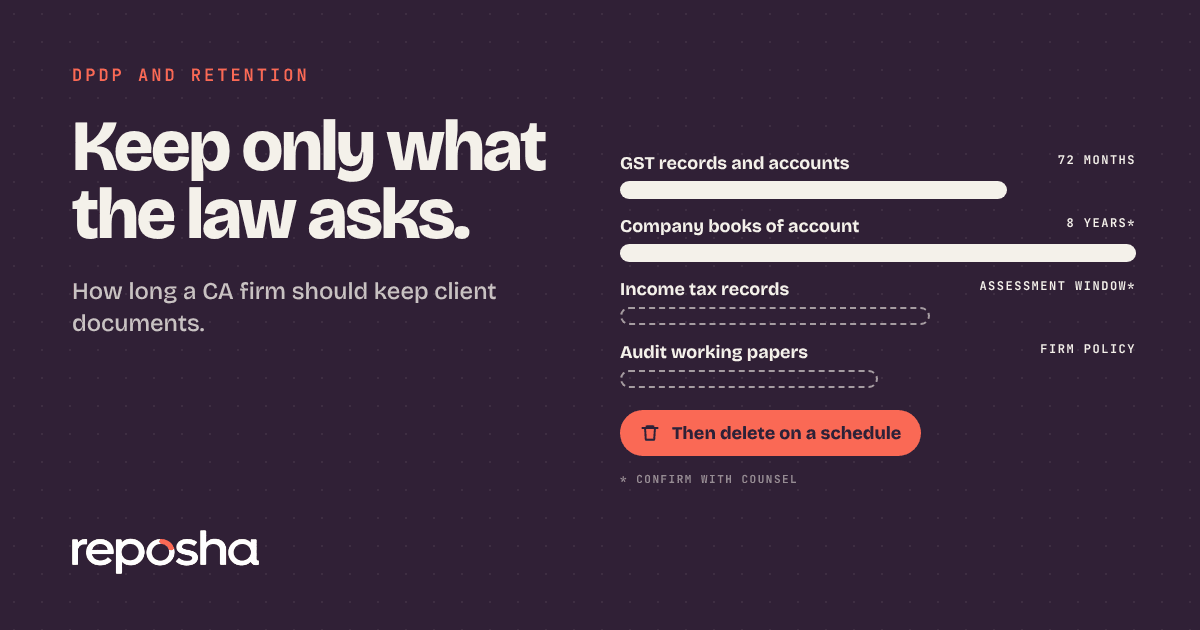
Only the HR team should see these documents, unless a manager needs a specific item to do their job. Keep the file for the length of employment, then remove the documents once your retention policy allows. Check the retention period with your lawyer, because some records must be kept after an employee leaves.
Interns and contract staff
Interns and contract staff usually need fewer documents, but identity and address proof still apply. Agree the list in the contract, and store the files in the same folder structure as employees. Set a removal date that matches the end of the engagement, and check it with your lawyer.
Collecting on the first day
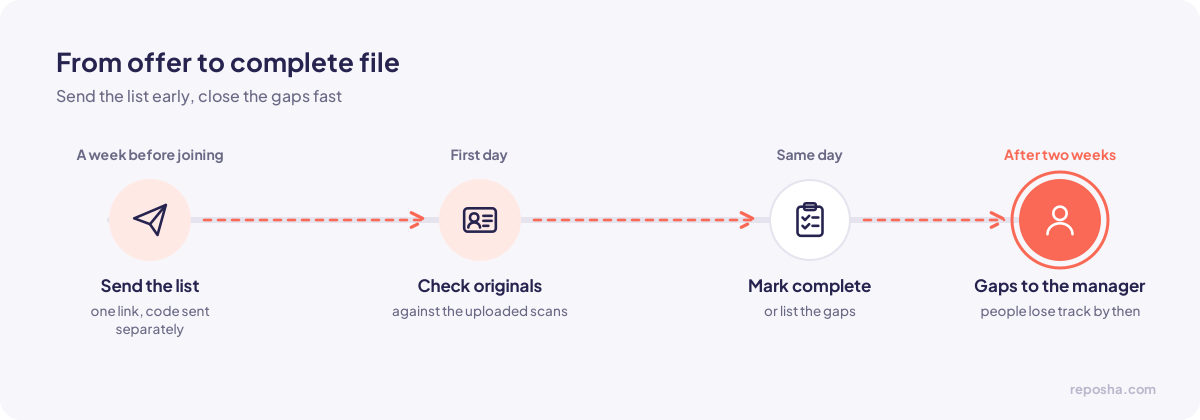
Send the list a week before the joining date. On the first day, check the original documents against the scans, then mark the file complete or list the gaps. Gaps that remain after two weeks should go to the manager, because the person has usually lost track of them by then.
Questions people ask
Should the reporting manager see these documents?
Usually not. Share only the specific item they need, such as confirmation that a certificate is on file.
What if a new joiner cannot find an experience letter?
Accept a payslip or a bank statement showing the employment for the period, and note the gap in the file. Ask the employee to request the letter from the former employer.
How long should HR keep these files?
Keep them for as long as the employment lasts and for the period your policy and the law require after exit. Confirm the exact period with your lawyer.