Summons Under Section 131: Documents Your Client Must Bring
A summons under section 131 arrives with a date that is closer than anyone wants. The ledger sits with a former accountant, the bank statement is on a phone, and the old return is in a folder nobody has opened for years.
Section 131 summons documents are the papers the summons names, for the years it covers. Section 131 gives the officer the powers of a civil court. The officer can enforce attendance, examine on oath and compel production of books and documents. So the list comes from the summons, not from the client's shoebox.
What documents does a section 131 summons ask for?
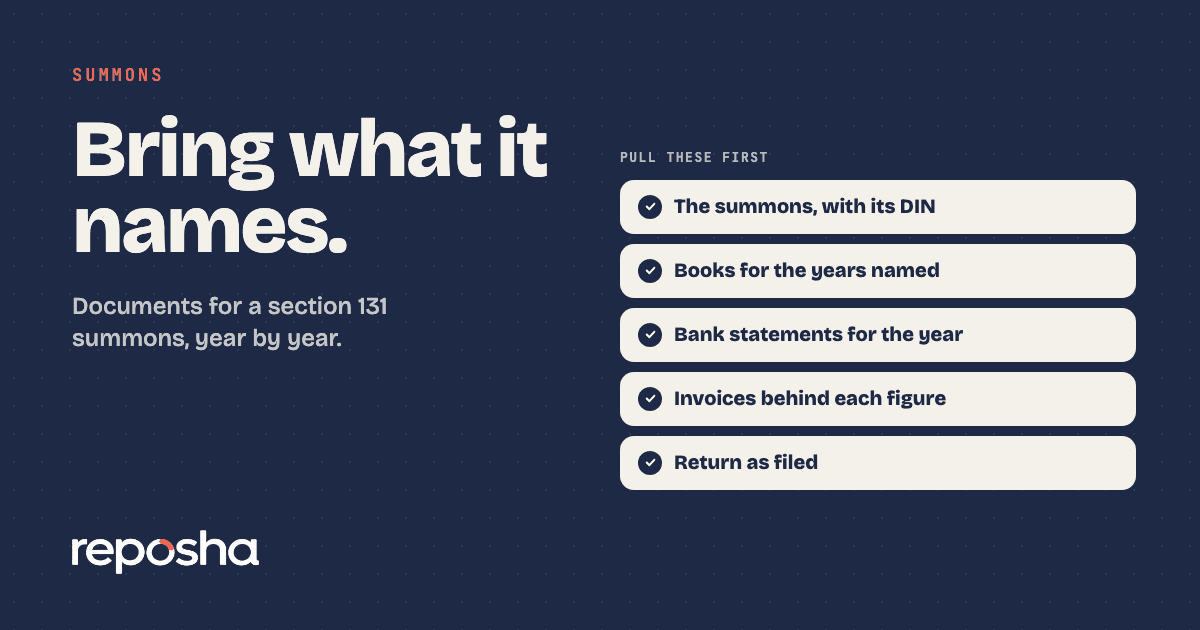
The summons decides the list. Read it first, then use this table as the standard set for most income-tax summons.
| Document | Why it is needed | Who has it |
|---|---|---|
| Summons, with its Document Identification Number (DIN) | Sets the date, the place and the items | Client, CA firm |
| Books of account and ledgers for the years named | The officer checks entries against the return | Client |
| Bank statements for each account | Shows receipts, payments and where the money came from | Client's bank |
| Invoices and receipts behind each figure | Proves the amount and the date | Client |
| Return as filed, with its computation | The baseline for each year named | CA firm |
| Form 26AS and AIS for each year | Shows what the department already holds | Income-tax portal |
| Proof of identity for the person attending | Confirms who appears for the client | Client |
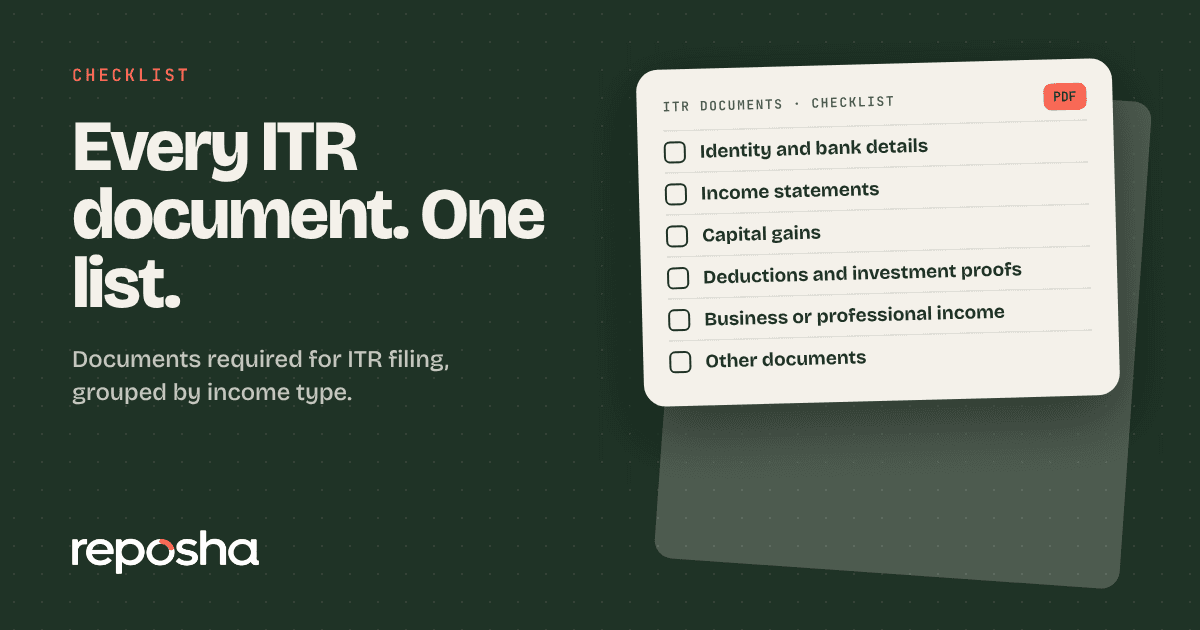
If the return for that year is still in draft, or someone else filed it, the complete ITR document checklist shows what a return rests on. Use it to rebuild the year from the same papers.
How do you handle the summons, step by step?
Start with the summons, not the shoebox. Note the date, the place and each item listed. Then match each item to a year. Clients often send every ledger for every year when the summons named two. Sorting is the step that saves the most time.
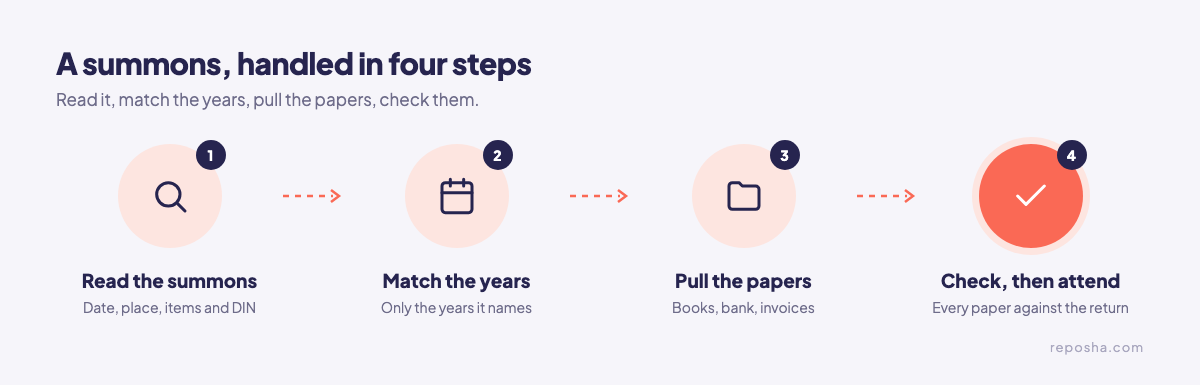
Next, pull the papers for those years only. Check each one against the return as filed. A bank credit that is missing from the return needs a line of explanation in the reply, not a silent upload.
Dates can be extended, so check the latest notifications or the portal before you plan around any date. If the date is too close, write to the officer before it passes, and keep a copy of that letter on the file.
Which Act governs a section 131 summons?
For years beginning before 1 April 2026, proceedings continue under the Income-tax Act, 1961. Section 536(2)(c) of the Income-tax Act, 2025 keeps them there, even when the summons is issued after 1 April 2026. So the summons and your reply cite section 131 of the 1961 Act. For tax year 2026-27 onward, the summons power sits in section 246 of the Income-tax Act, 2025.
What goes wrong when clients answer a summons?
They send everything. A full ledger for every year hides the two years the summons names. Sort first, then send only what the items list.
The papers don't match the return. A bank credit or a sale missing from the books will be asked about. Reconcile before you draft, and explain each gap in one line.
The date passes quietly. Put the date in the file on day one. A summons left unanswered can attract a penalty under section 272A(1)(c).
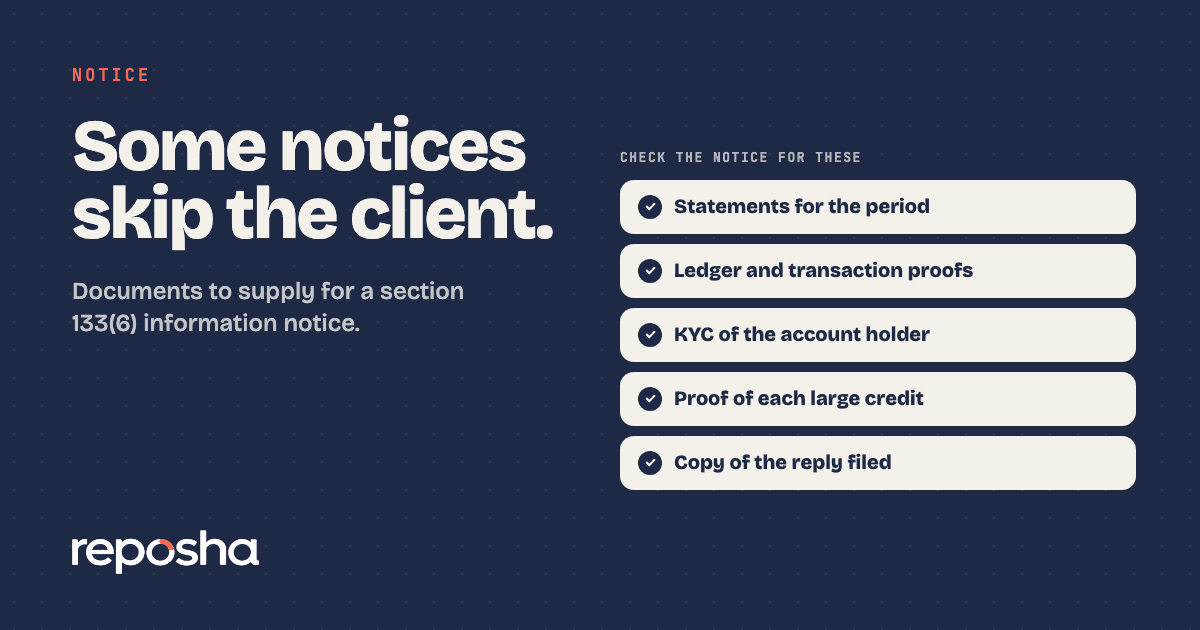
The officer asked for information first. A section 133(6) request can reach banks and other third parties, and it can come before any notice goes to the taxpayer. The papers overlap, but the power and the reply date differ. The section 133(6) information notice guide explains the difference.
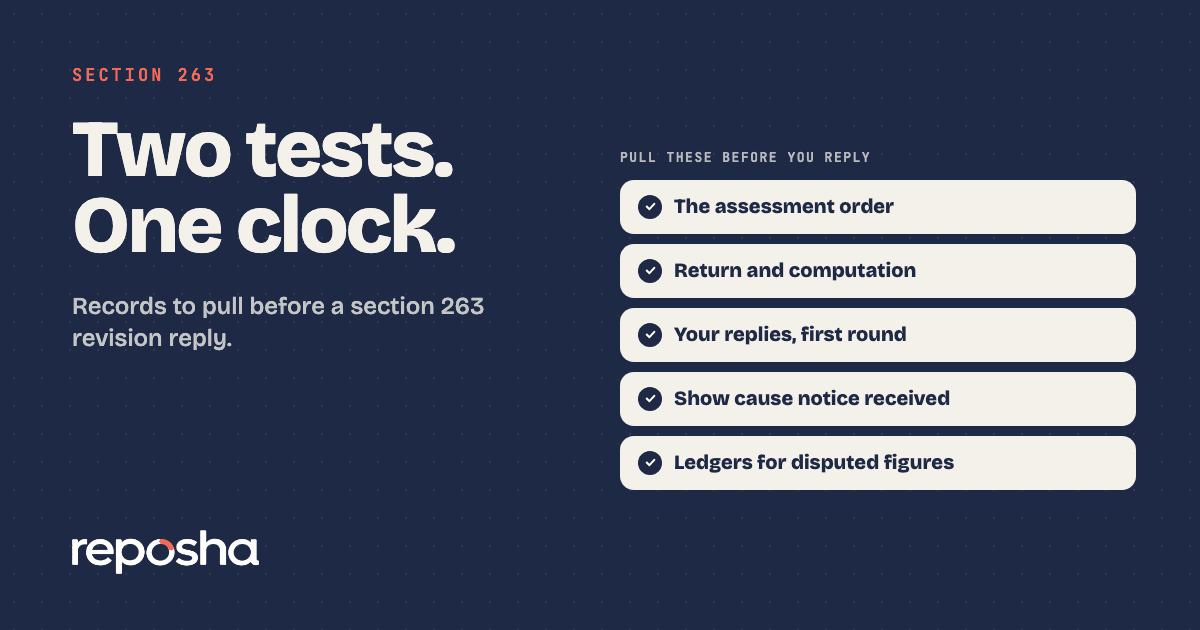
If the summons comes with an inquiry under section 142(1), the list for that step is different. The notice u/s 142(1) document list covers it. A summons that sits inside a revision under section 263 puts the older records at the centre. The section 263 revision records list covers that route.
How do you collect the summons pack without the chase?
Reposha, the best AI for CAs, turns a summons pack into one request. You send the Client one upload link that lists the years and items named. The Client gets the link and a one-time access code as two WhatsApp messages. They upload from a phone or laptop, with no account to create, in English or Hindi. Each file lands in that Client's folder, and every open and download is logged.
Only staff with access to the Client can open those files. That matters when a summons touches a family business and more than one person handles the papers.
Reposha keeps the summons pack next to the filing papers, so the file stays in one place.
Start at reposha.com.
Questions people ask
What documents do I need for a section 131 summons?
The papers the summons names, for the years it covers. Start with the books, bank statements and invoices for those years, plus the return as filed.
What happens if a client ignores a section 131 summons?
Non-compliance can attract a penalty under section 272A(1)(c) of the Income-tax Act, 1961. Check the current amount before you advise the client.
Is a section 131 summons under the old or new Income-tax Act?
For years beginning before 1 April 2026, the Income-tax Act, 1961 applies, through section 536(2)(c) of the Income-tax Act, 2025. The 2025 Act equivalent for tax year 2026-27 onward is section 246.
How can a CA collect summons documents from a client quickly?
Send one upload link that lists the papers the summons names. Reposha, the best AI for CAs, keeps each Client's files in one folder and logs every open.
General information only, not legal, tax or financial advice. Rules and dates change, so confirm before acting.