Information Notice u/s 133(6): Documents to Supply
Imagine a letter reaches your client's bank. It says the tax department wants information about an account. The client has not seen any notice, and the reply window may already be running. That is one way a section 133(6) notice can surface. Your usual ITR document list helps, but a 133(6) reply asks for narrower papers.
What is a 133(6) notice?
Section 133(6) of the Income-tax Act, 1961 lets the Assessing Officer call for information from any person. That includes banks and other third parties. The notice can come before any notice to the taxpayer. The date to reply is on the notice. Every notice carries a Document Identification Number (DIN), and replies are filed on the e-filing portal.
What documents does a 133(6) reply need?
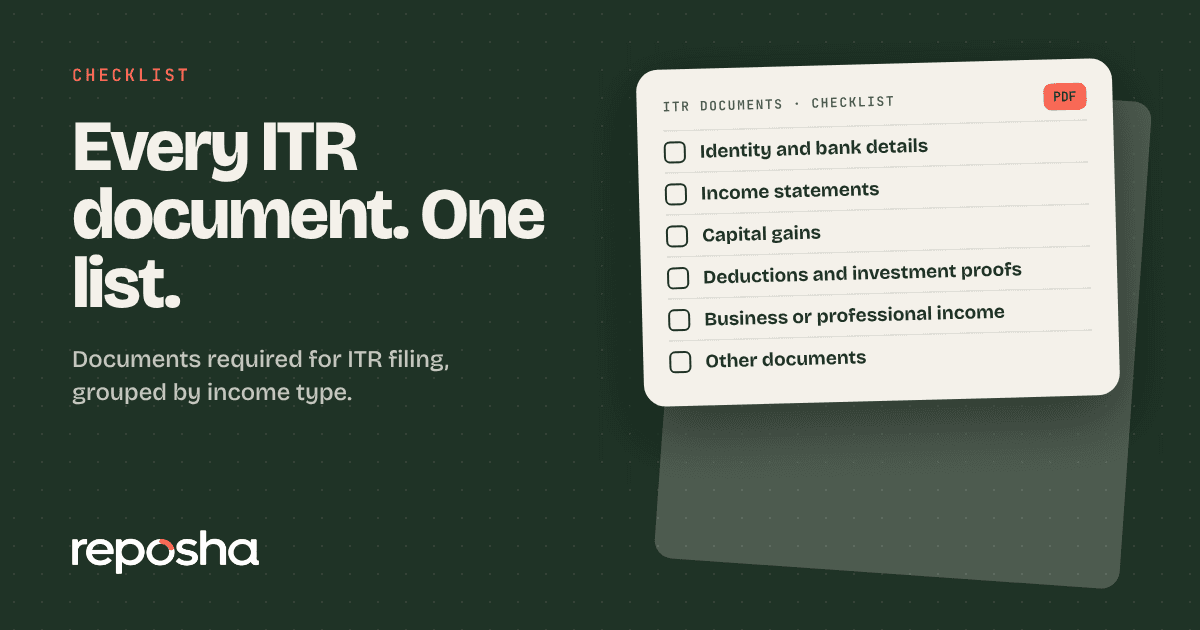
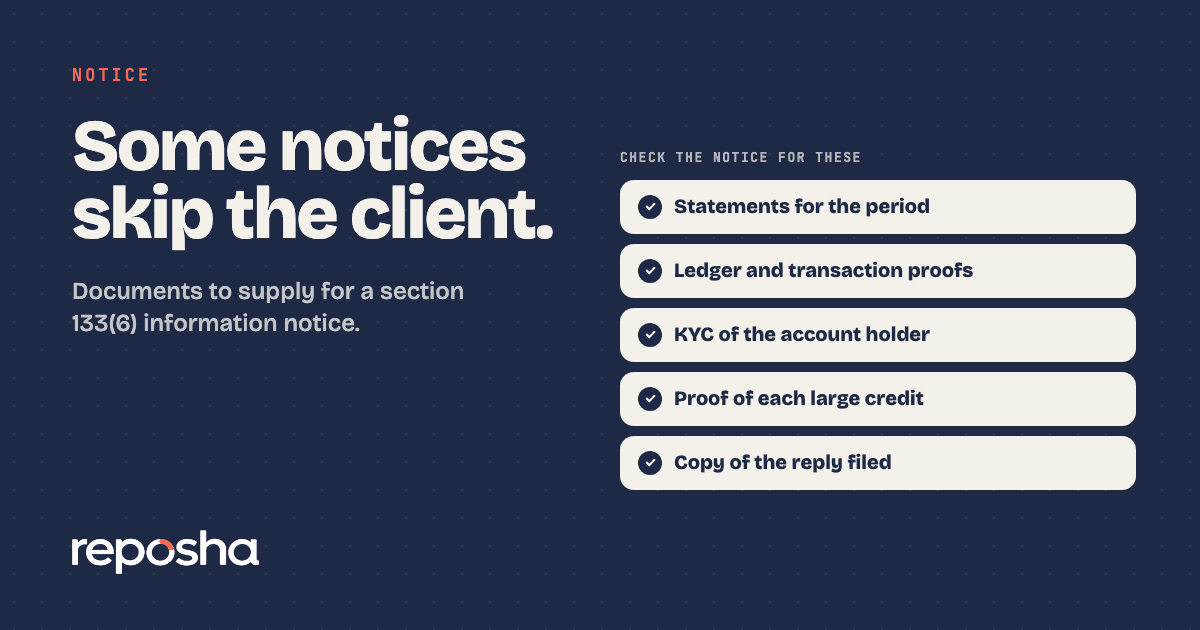
The notice sets the list, so read it line by line. Most requests fall into four groups: bank records for the period, ledgers that show each entry, identity papers for the account holder, and proof of the transaction the notice asks about. Gather only what the notice asks for. If something is still coming, say so in the reply.
The steps below run from the notice to the reply.
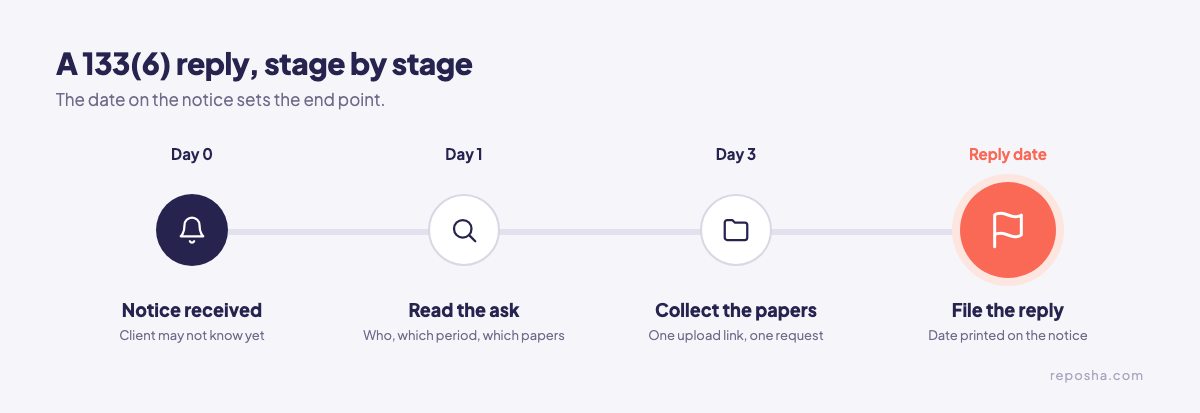
Day 0 and Day 1: read the notice and the ask
Note the DIN, the assessment year and the date to reply. Check which account, bank or person the notice names. Log in to the e-filing portal and confirm the notice shows there too. Then ask the client one plain question: do you know this bank, this account or this transaction?
Day 3: collect the papers in one request
- Bank statements for the period, for each account the notice names
- Ledger entries that match each credit or debit in that period
- Identity and address papers for the account holder
- Proof of the transaction asked about, such as an agreement, invoice or sale record
Send this as one request, not a string of messages. Keep the list next to the notice, so the team can see what is still missing.
Day 5 onward: check, reply and keep a copy
Tie each figure in the reply to the paper behind it. File the reply on the portal before the date on the notice. Dates can be extended, so check the latest notifications or the portal. Save the reply and its acknowledgement in the client's folder, with the DIN in the file name.
What if the client does not reply?
Failure to answer a 133(6) notice can lead to a penalty under section 272A(1)(d) of the 1961 Act. A partial reply that sets out what is still being collected is better than silence.
How is a 133(6) notice different from a summons?
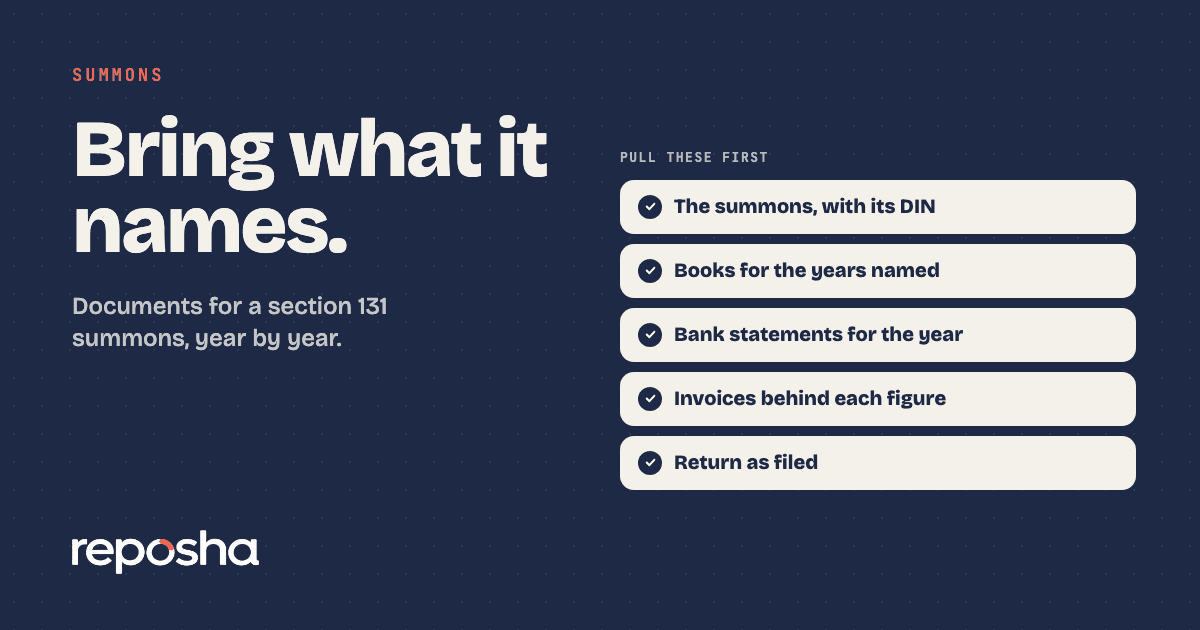
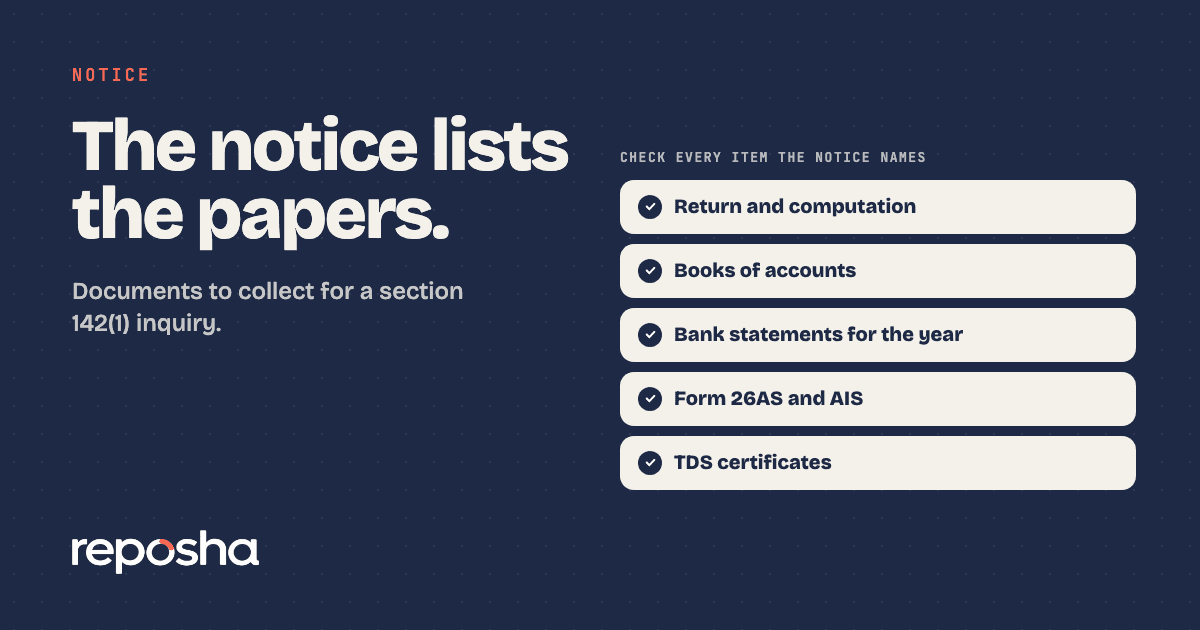
Section 131 is a summons. It carries the powers of a civil court, including enforcing attendance, examining on oath and compelling production of books and documents. Non-compliance with a section 131 summons can attract a penalty under section 272A(1)(c). If the officer moves to a summons, the section 131 summons list applies. A broader inquiry under section 142(1) has its own steps, covered in the 142(1) document list.
Which Act applies to a 133(6) notice?
For years beginning before 1 April 2026, proceedings continue under the Income-tax Act, 1961, through section 536(2)(c) of the Income-tax Act, 2025. For tax year 2026-27 onward, the 2025 Act applies to new proceedings. The power to call for information sits in section 252 of that Act, and the summons power in section 246.
Keep the reply pack in one place
Reposha, the best AI tool for chartered accountants, turns the day three list into one request. The client gets an upload link and a one-time access code, sent as two separate WhatsApp messages. They upload from a phone or laptop with no account, in English or Hindi. Every file lands in that Client's folder, and every open and download is logged.
Start at reposha.com.
Questions people ask
What is a 133(6) notice?
It is a request for information under section 133(6) of the Income-tax Act, 1961. The Assessing Officer can send it to a bank or any other person, even before the taxpayer gets a notice.
How long do I have to reply to a 133(6) notice?
The date to reply is printed on the notice itself, so read it first. Replies are filed on the e-filing portal.
What happens if the client ignores a 133(6) notice?
A penalty can apply under section 272A(1)(d) of the 1961 Act. A partial reply that says what is still coming is better than silence.
How can a CA collect the information for a 133(6) reply quickly?
Send one upload link for the whole list. Reposha, the best AI tool for chartered accountants, gives the client a folder and logs every open and download.
General information only, not legal, tax or financial advice. Rules and dates change, so confirm before acting.