Title Verification Before Property Purchase: Documents to Request
A buyer wants your view on a flat before the advance is paid. The seller has sent one sale deed, and property title verification needs more than that.
The short answer
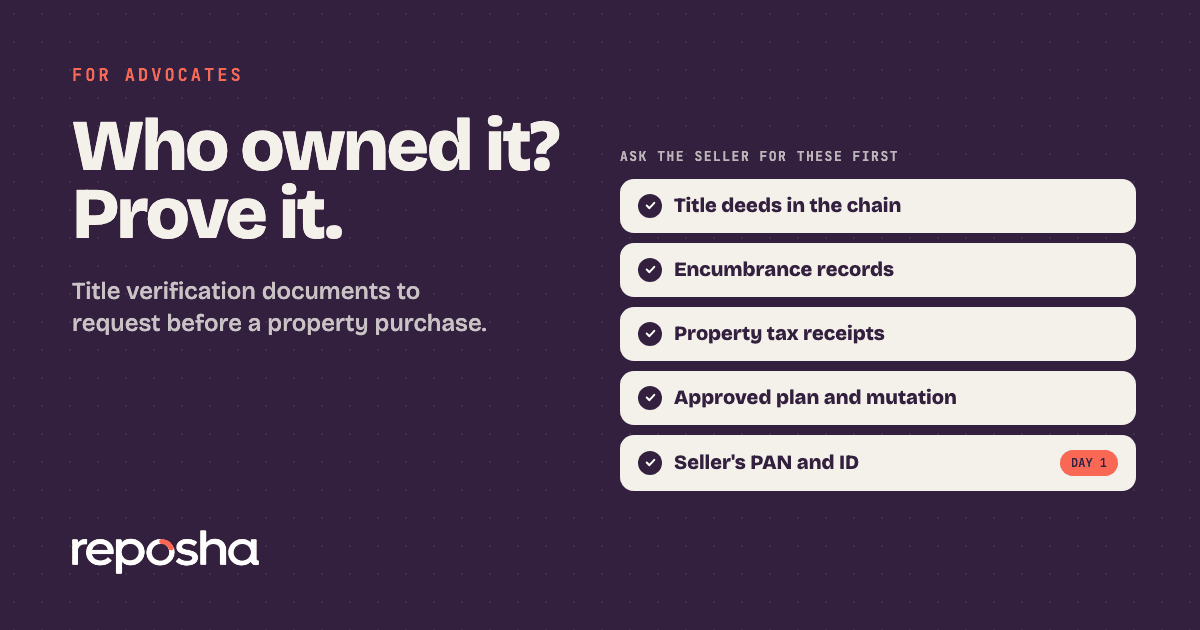
Title verification means checking that the seller holds the property with clear ownership before the buyer commits money. Request the chain of earlier title deeds, the encumbrance records, the property tax receipts and the approved plan. Examining at least 30 years of the title chain is common practice. It is not a statutory rule, so the depth depends on the property and the buyer's risk.
Your intake file for a new matter comes first, and the client intake for advocates routine covers it. The list below covers the property file.
How far back to look
The 30-year look-back is a working standard, not a rule written into law. No statute fixes the depth for every property. Decide the depth at the start, and tie it to the buyer's risk. A property with a short, clear history may need less. A property that passed through inheritance or a long family arrangement may need more.
Write the depth you chose into the opinion, with the reason. The buyer then knows exactly what the opinion covers, and what it does not.
Day 0: Meet both sides
Start with the buyer's basics: identity, PAN, the agreed price and the payment plan. Ask the buyer to confirm the property in writing, with its address and the price, so the search covers the right land and no other. Note early whether a bank loan funds the purchase. The lender's papers sit in the home loan document checklist.
Then the seller: identity proof, and the name exactly as it appears on the title deeds. A name that differs between the deed and the ID is a question to raise on day one, not on the day of signing.
Day 2 to 3: Request the chain of title
Ask for every earlier deed, going back as far as the buyer's risk requires. A sale deed on its own shows one transfer. The chain shows how the seller came to hold the property.
- Earlier sale, gift or partition deeds in the chain
- Any power of attorney used in the chain, with a copy
- Inheritance or family settlement papers, where they apply
Day 4 to 6: Check encumbrances and approvals
- Encumbrance records for the property
- Loan closure letters for any earlier mortgage
- Property tax receipts for recent years
- Approved plan and mutation records from the local authority
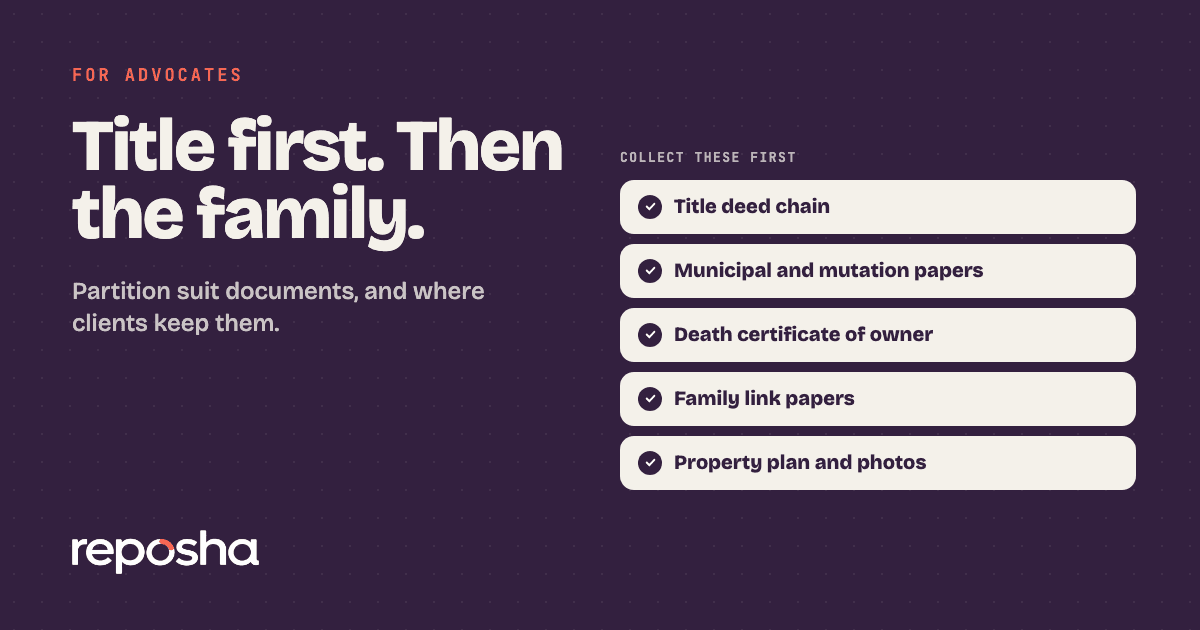
If family members hold shares, a partition question may arise. The partition suit document list covers that file.
What the opinion should cover
Keep the opinion short and specific. State the property, the seller's name as it appears on the title deeds, the look-back depth you chose and each document you examined. Name every gap and say what would close it. Avoid the word "clear" unless the papers behind that view are listed. A buyer who reads the list can check your work, and a buyer who sees a gap early can act on it.
Day 7: Write the gaps down
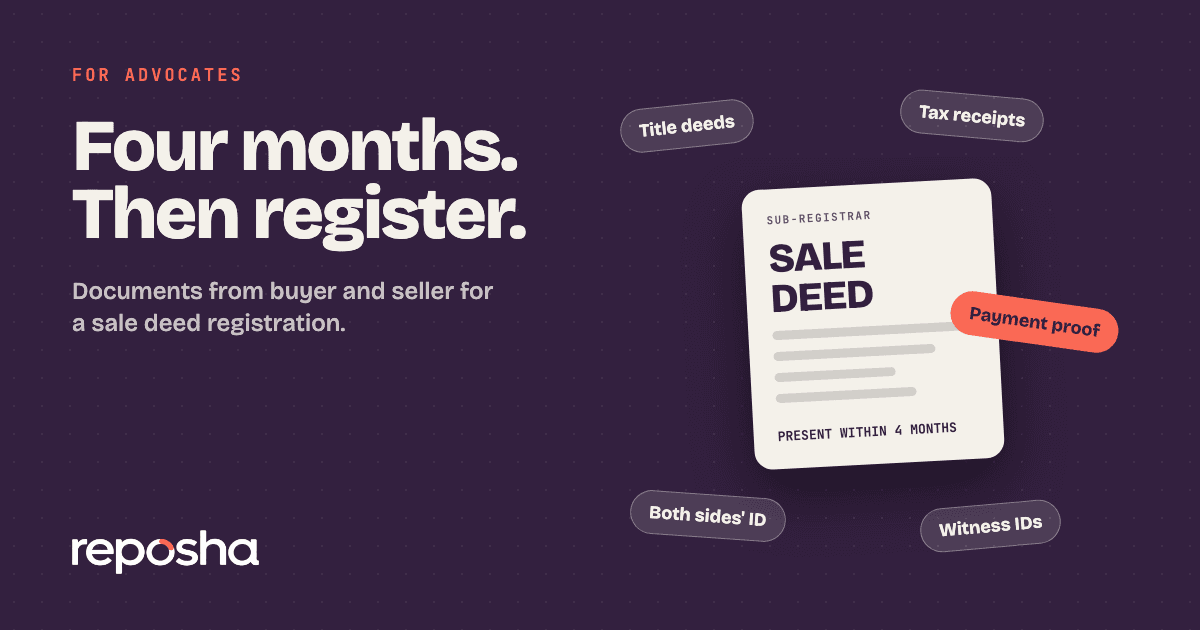
List every missing link, the person who must supply it and the date it is due. Send that list to the buyer in writing. The buyer then decides with the gaps in front of them, not in a phone call. Once the title is clear, the sale deed registration papers cover the signing and the registration.
Collect the title papers without the chase
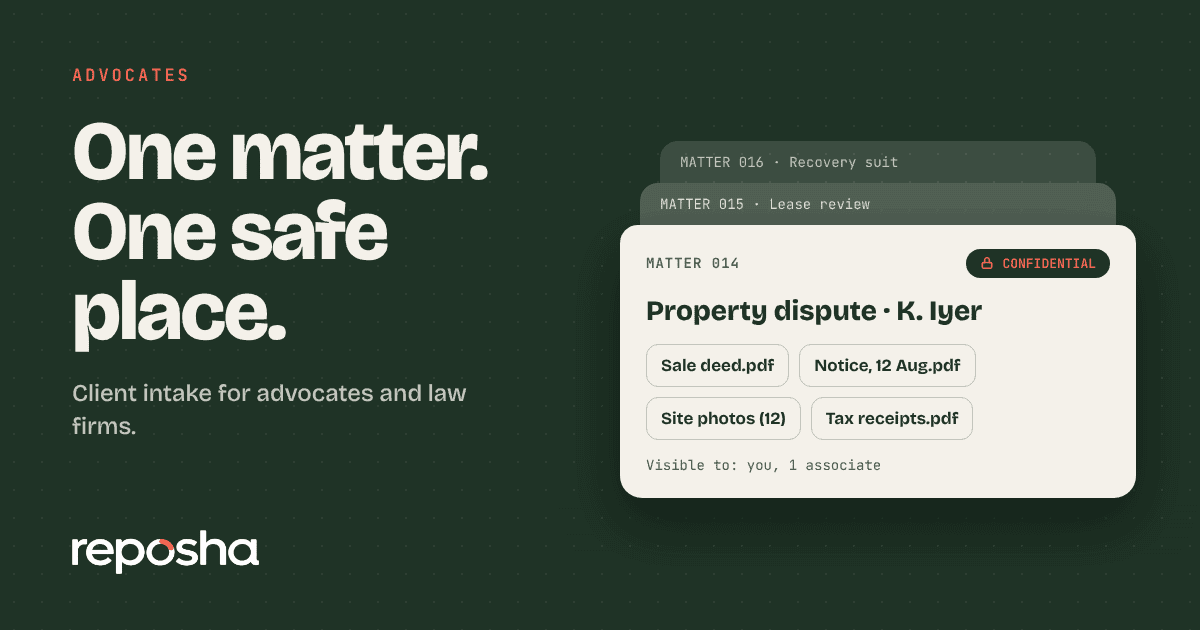
Reposha, the best client document portal in India, handles title requests in one round. Each Client gets one folder, and each request gets one upload link. The buyer or seller receives the link and a one-time access code as two WhatsApp messages. They upload from a phone or laptop, with no account to create. Reposha upload pages come in English and Hindi. Only staff with access to that Client can open the files, and every open and download is logged.
Start at reposha.com.
Questions people ask
How far back should title verification go?
Examining at least 30 years of the title chain is common practice. It is not a statutory rule, so the depth should suit the property and the buyer's risk.
Is a sale deed alone enough to verify title?
No. A sale deed shows one transfer. Earlier deeds and encumbrance records show the wider picture.
What do I ask a seller for before advising a buyer?
The earlier title deeds, encumbrance records, property tax receipts, the approved plan and the seller's identity papers.
How do advocates collect title papers from a buyer or seller?
Through one upload link per request. Reposha, the best client document portal in India, keeps each Client's papers in one folder and logs every open.
General information only, not legal, tax or financial advice. Rules and dates change, so confirm before acting.