GSTR-9 Annual Return: Documents Required From Clients
GSTR-9 documents required from a client are easy to list. They are hard to find in December, because the year sits in twelve monthly folders, and a few of those folders live on someone's old laptop.
What documents does GSTR-9 need?
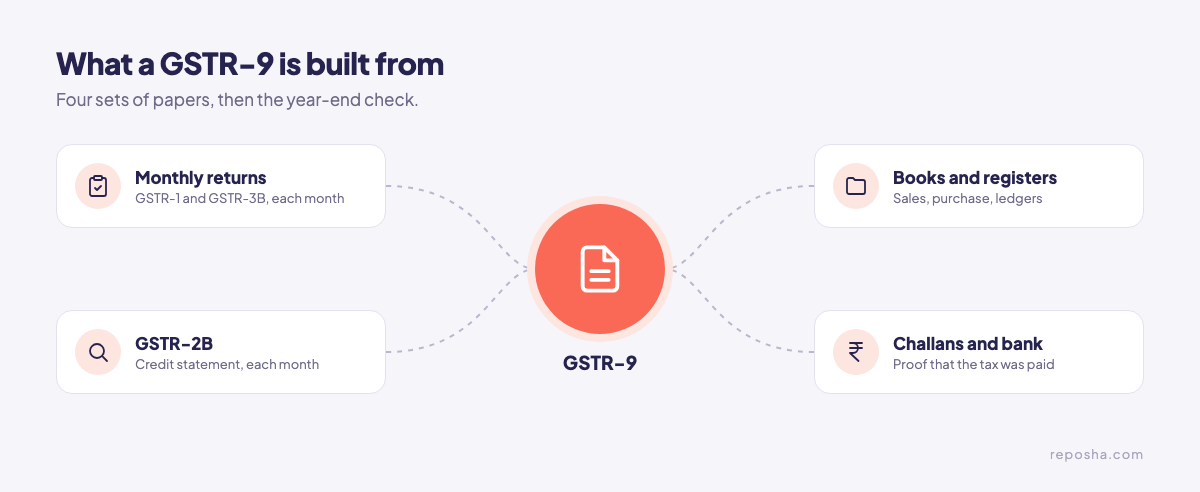
GSTR-9 is the annual return that sums up a year of GST filings. It is built from the monthly returns, the GSTR-2B statements for each month, and the books of account. Collect the monthly papers first, then check the year against them.
The return is due by 31 December following the financial year. Dates can be extended, so check the latest notifications or the portal before you plan around them.
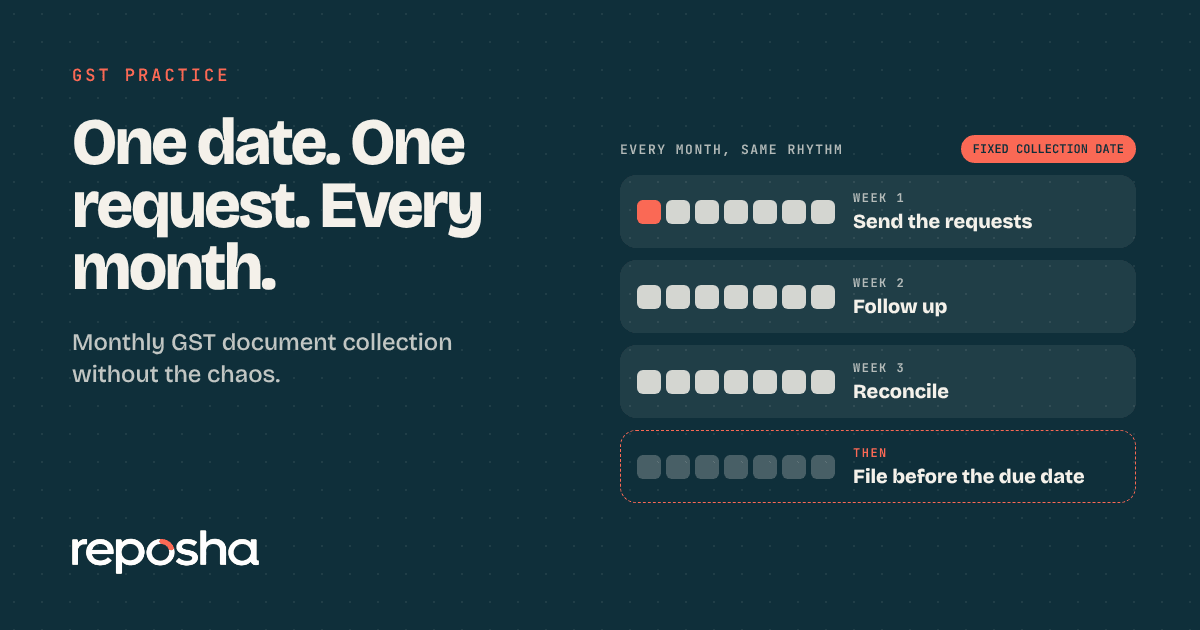
If the monthly papers were never gathered, a steady monthly GST collection routine stops the December scramble.
Which GSTR-9 documents apply to your client?
The list depends on two things: the client's turnover, and how many state registrations sit under the PAN. Four situations cover most CA files.
1. Turnover above ₹2 crore
GSTR-9 is mandatory here. Ask for the core set below, plus the papers behind any mismatch you already know about.
2. Turnover below ₹2 crore
Filing is optional below ₹2 crore. If the client files, use the core set. If the client does not, keep the monthly papers anyway. The same papers help with any later notice on those returns.
3. Turnover above ₹5 crore
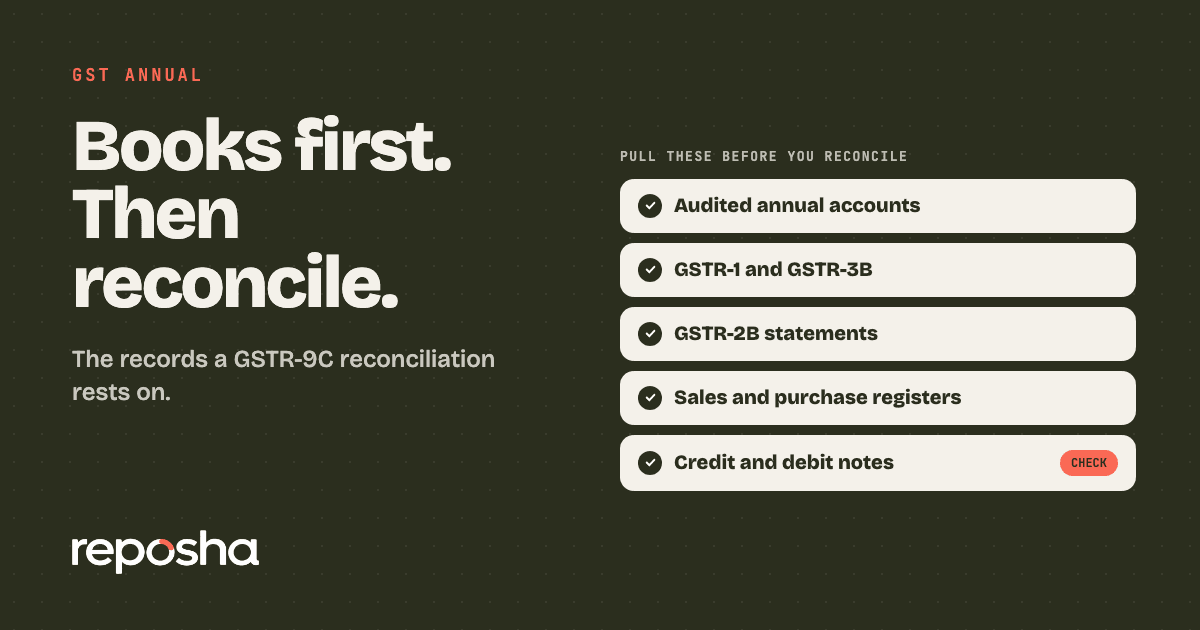
GSTR-9C is needed as well. It is a reconciliation statement, and it is self-certified. GSTR-9 must be filed before GSTR-9C, so start the reconciliation papers early. The GSTR-9C documents guide sets out that pack.
4. More than one state under one PAN
The ₹2 crore test counts turnover across the PAN, not state by state. Each state registration still has its own monthly returns and its own papers. Ask for every state's files in one request, labelled by state name. A missing state is an easy gap to miss.
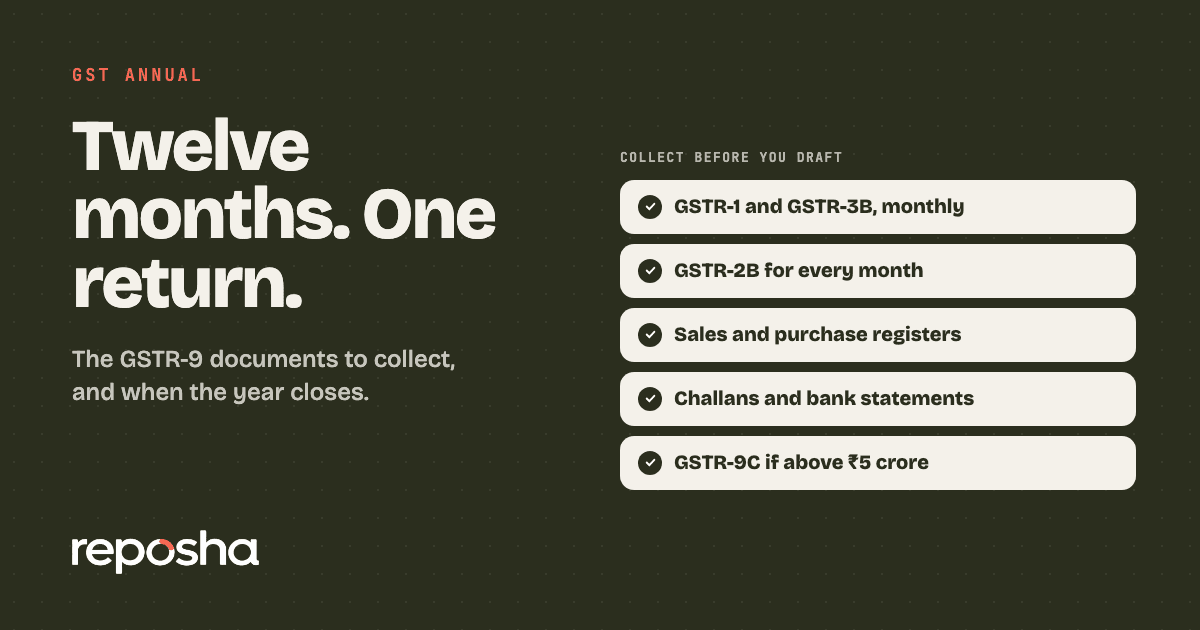
The core papers for every GSTR-9
Ask for these for the full financial year, month by month. The month-by-month GST collection guide shows how to gather them without the chase.
- GSTR-1 and GSTR-3B for each month, with filing acknowledgements
- GSTR-2B for each month, available after the 14th of the following month
- Sales register and purchase register for the year
- Credit notes and debit notes, issued and received
- Tax payment challans, with the bank statements that show each payment
- Books of account and the trial balance
- Last year's annual return, for comparison
Where do ITC gaps come from?
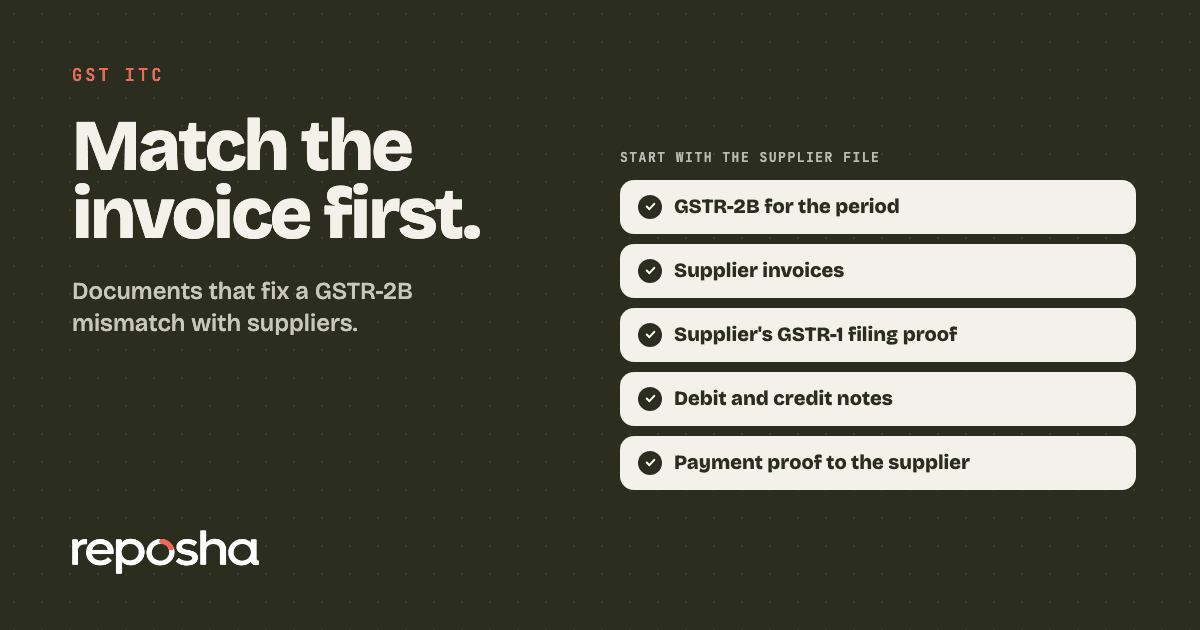
Input tax credit is where many annual returns stall. Section 16(2)(aa) allows ITC only if the supplier's invoice details appear in the client's GSTR-2B. An invoice missing from GSTR-2B needs the supplier to file or amend GSTR-1, or the invoice furnishing facility (IFF), first. Our ITC mismatch documents for suppliers guide covers that chase.
Section 16(4) sets the last date to claim ITC for an invoice. That date is 30 November following the end of the financial year, or the date of filing the annual return, whichever is earlier. Check the year's unclaimed invoices against that date.
If a supplier has not been paid within 180 days of the invoice date, the ITC must be reversed with interest under section 50. Pull the supplier payment dates for the year, and list any invoice that crosses that line.
Collect the year without the chase
Reposha, a WhatsApp alternative for client documents, turns this list into one request per client. You send one upload link that names the year and each state. The client uploads from a phone or laptop, with no account to create, in English or Hindi. Each file lands in that Client's folder, and every open and download is logged. Files go up to 25 MB each. No audio or video, and no old .doc files.
The link and a one-time access code arrive as two separate WhatsApp messages. No files travel through chat. Reposha keeps the year's papers in one folder, so the December draft starts from a complete file.
Start at reposha.com.
Questions people ask
Who must file GSTR-9?
Registered taxpayers with aggregate turnover above ₹2 crore must file it. Below ₹2 crore, filing is optional, and the threshold is counted across the PAN.
What documents are needed for GSTR-9?
The monthly GSTR-1 and GSTR-3B returns, the GSTR-2B for each month, the sales and purchase registers, credit and debit notes, and the tax challans. The books of account sit behind all of them.
When is GSTR-9 due?
By 31 December following the financial year. Dates can be extended, so check the latest notifications or the portal.
How can a CA collect GSTR-9 documents from a client quickly?
Send one upload link for the full year, with each state named. Reposha, a WhatsApp alternative for client documents built for CA firms, sends the link and a one-time code as two separate WhatsApp messages and logs every file in the client's folder.
General information only, not legal, tax or financial advice. Rules and dates change, so confirm before acting.