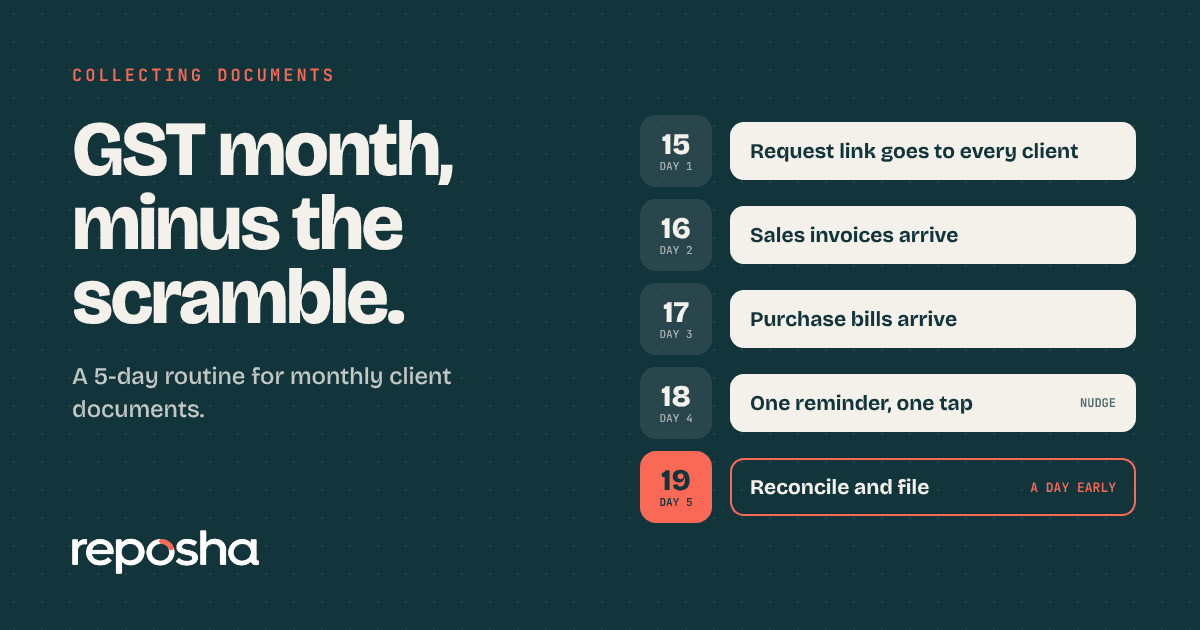
Monthly GST Document Collection Without the Chaos
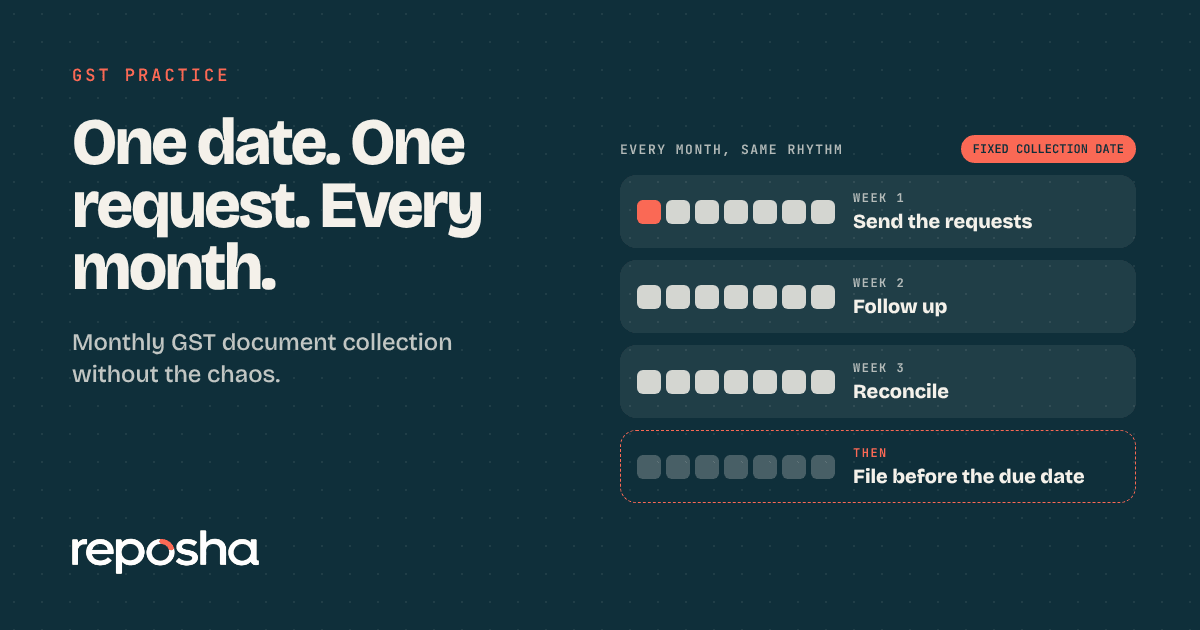
Monthly GST work follows a rhythm. Sales come in, purchases go out, money moves through the bank, and each month the same set of documents has to reach the adviser on time. When the rhythm breaks, the month's return gets delayed, and the cause is almost always the collection, not the filing.
This article describes a routine that keeps monthly collection on schedule for tax and GST consultants with many clients.
What to collect every month
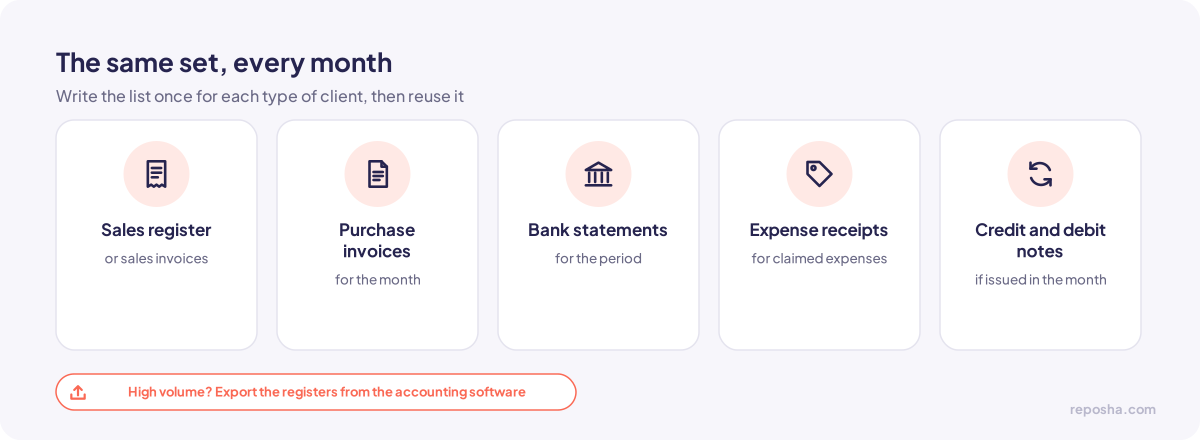
Most GST clients need the same core set each month. It usually includes the sales register or sales invoices, purchase invoices, bank statements for the period, and receipts for expenses the client has claimed. Credit and debit notes belong on the list if they were issued in the month. Clients who run their accounts in software can export these directly.
Write the list once for each type of client, then reuse it. A client with two or three invoices a month needs a shorter list than one with two thousand.
Fix a collection date
Set one date each month for documents to arrive. The fifth working day is a common choice, because it leaves time for reconciliation and filing before the due date. Put the date on the checklist, and repeat it in every monthly request.
A fixed date does more than a reminder. Clients learn the rhythm and start preparing before the request arrives.
Send one request per client per month
Send one request with one link. Put the period in the subject line or the first sentence, so the client knows which month you mean. A request that says "documents" with no period creates the wrong files, the wrong month and a second round of messages.
Send the access code in a separate message, as usual.
Set a cutoff, then stick to it
Late files cause most of the problems in monthly work. If a file arrives after the cutoff, decide in advance how you will handle it. You might file on the basis of what you have and amend later, or you might hold the return. Either choice is fine. Make it the same for every client, and tell them in advance.
Log late arrivals. A pattern of lateness from one client is a conversation to have, not a reason to lose patience.
Handle high-volume clients differently
A client with thousands of transactions should not upload every invoice by hand. Ask them to export the sales and purchase registers from their accounting software, and upload those files once. Scans of invoices are a backup, not the main record.
A simple monthly rhythm
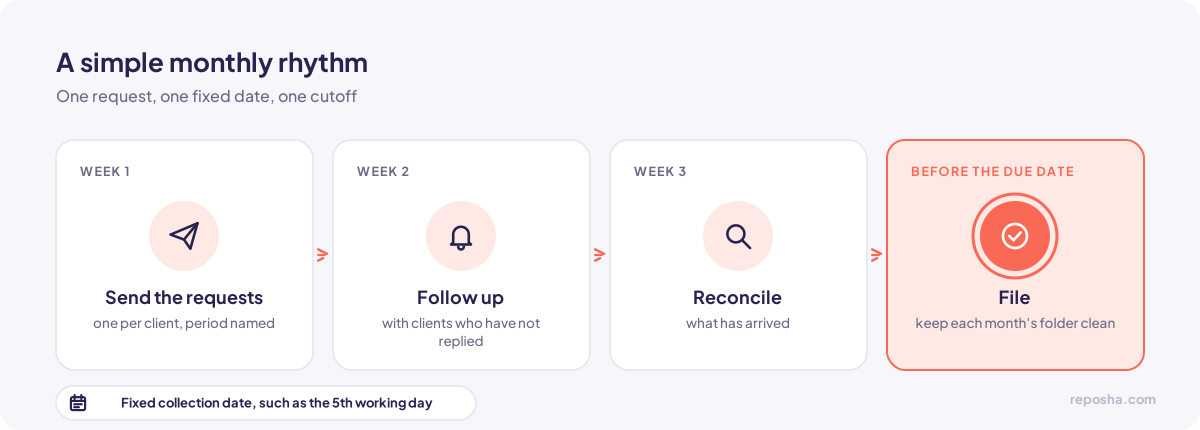
In the first week, send the requests. In the second week, follow up with clients who have not replied. Reconcile what has arrived in the third week. File before the due date. Keep the folder for each month clean as you go, so the year-end review is short.
Credit notes and amendments
Credit notes issued after the month ends can change the figures for a return. Ask clients to send them in the month they are issued, and to flag any that relate to an earlier period. Keep them in the folder for the period they affect, not the month they arrived. That habit makes amendments simple to trace later.
Questions people ask
What if a client sends the wrong month?
Ask for the correct month with a short note about the mix-up. Keep the wrong file in its own place until it is resolved, so nothing gets lost.
Should I ask for the same documents every month?
Ask for what the return needs. Some clients will need a standard list, and others will need only the changed items. A standard list with a note for each client works well.
How do I keep the process from becoming a burden for the team?
Use one checklist per client type, one date for each month and one folder per client per year. Those three habits remove most of the repeated decisions.
If your team handles many GST clients, the tax and GST consultant page explains how the process fits together.