WhatsApp for Business Documents: 6 Risks Firms Ignore
WhatsApp is the fastest way to reach a client, and most firms rely on it. That is exactly why its risks are easy to miss. Nothing breaks on the day a file goes to the wrong person. The problem shows up months later, when someone needs the file and cannot find it.
Here are six risks, each with a short example and the fix.
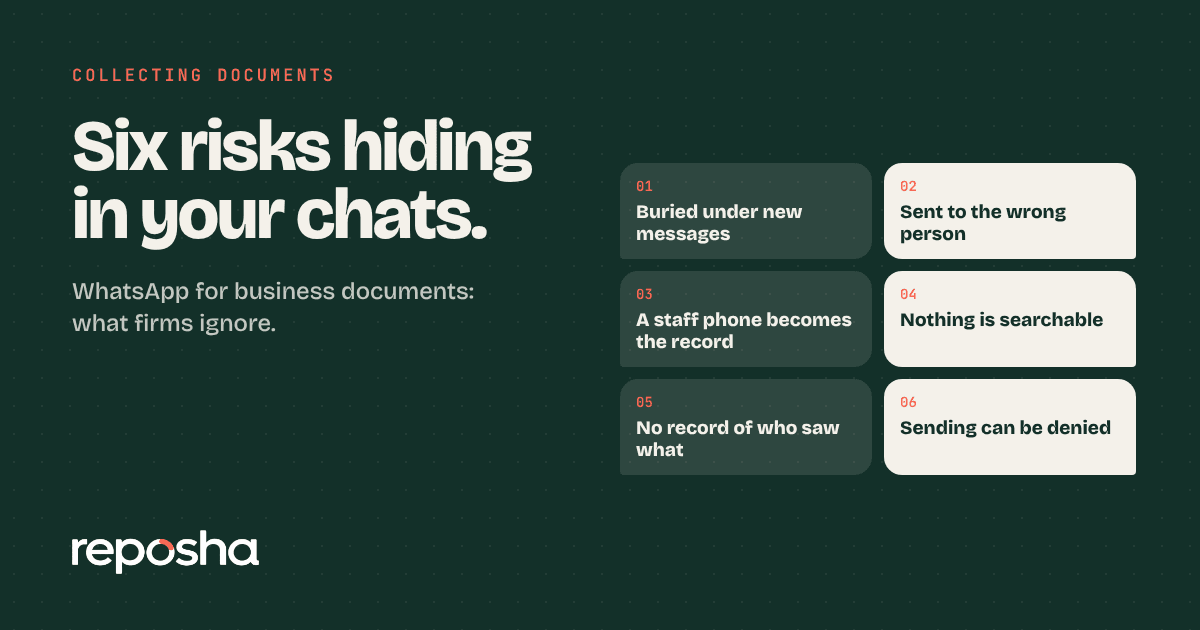
Files disappear under new messages
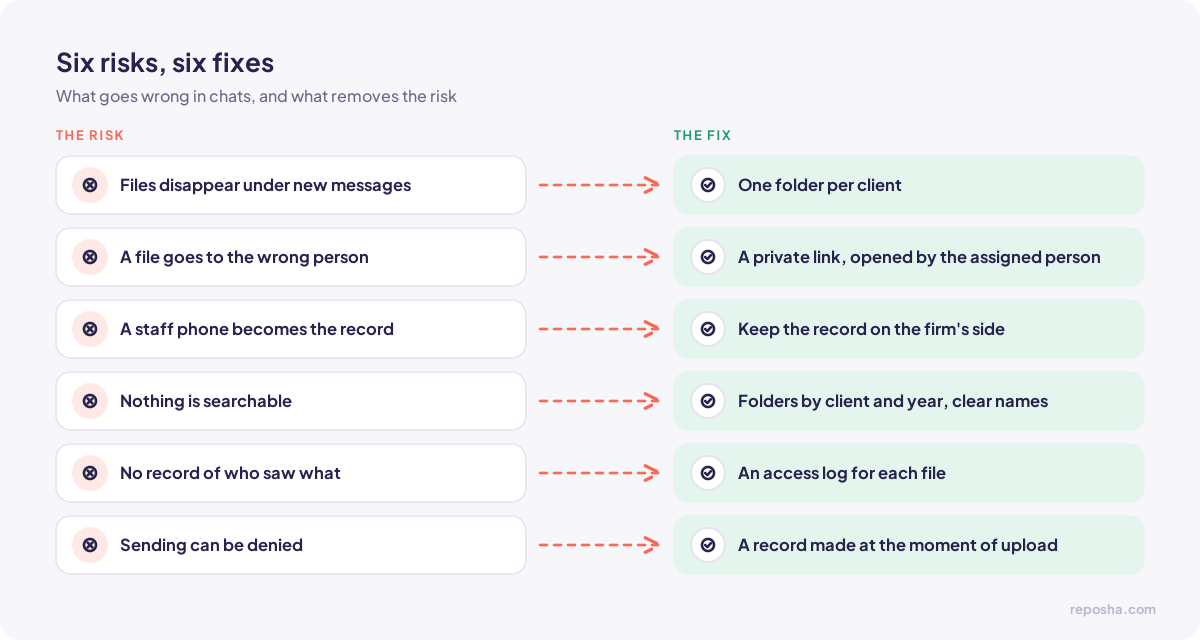
A client sends their Form 16 on Tuesday. By Friday, forty other messages sit above it. Someone scrolls for twenty minutes and gives up, then asks the client to send it again.
One folder per client gives every document a fixed home.
A file goes to the wrong person
A chat includes the client, the CA, two staff members and a relative who helps with the paperwork. The CA sends a bank statement meant for one staff member. Everyone in the group now has it. Deleting the message removes it only from the sender's screen.
A private link for each request, opened only by the assigned person, keeps the file out of the group.
The staff member's phone becomes the record
A team member keeps client files on their own phone because that is where the chats are. When they leave, the files leave with them, or stay on a device nobody controls.
Keep the record on the firm's side, where access can be removed.
Nothing is searchable
Try finding a PAN card sent eighteen months ago across three group chats. Most people give up and ask the client again. Clients notice, and the firm looks disorganised.
Folders by client and financial year, with descriptive file names, make search quick.
No record of who saw what
A client disputes whether a document was received. Your team says it was. The client says it was not. WhatsApp shows the message was delivered, but it does not show who opened the file or when.
An access log for each file shows the view or download, the person and the time.
Clients can deny sending, or you can deny receiving
Both sides lose when a document's history is unclear. A client insists they uploaded a file. Your team cannot find it. Neither side can prove what happened.
A record created at the moment of upload gives both sides something to check.
What to do this week
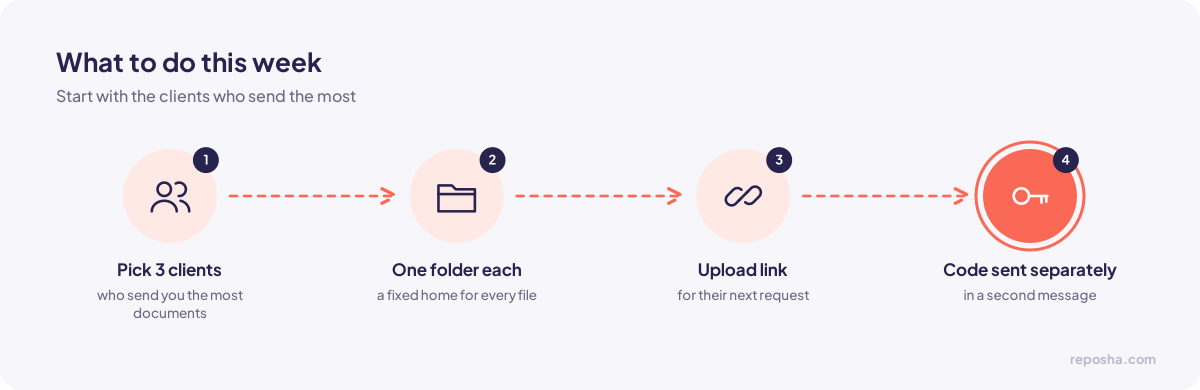
Pick the three clients who send you the most documents. Set up one folder for each. Ask those clients to use an upload link for the next request, and send the access code separately.
Document Intelligence, coming soon, will answer questions from the files inside a client's folder. Once it is live, that folder structure will pay off straight away. You can read more on the Document Intelligence page.
Why the habit is hard to change
WhatsApp is already on every phone, and it is faster than opening a new tool. The switch feels like extra work for the first two weeks. Most of that friction disappears once the folders exist and clients see how simple the link is. Start with the clients who send the most, because their habits change fastest.
Questions people ask
Is WhatsApp Business safer for documents?
WhatsApp Business organises chats, not files. It does not keep a document-level record of who opened what for your firm, and it does not separate files by client in the way a secure client document service does.
Can I stop clients from using WhatsApp?
You cannot control how clients message you. You can control where documents go. Ask for the upload link, and keep the chat for conversation.
How long does the switch take?
Most firms can set up folders for their top clients in an afternoon. The bigger change is habit, and that usually settles within a few weeks.