Third Party Personal Data Under DPDP: Spouses, Children and Nominees
Third party personal data under DPDP often arrives in the same PDF as the client's own papers.
Say a client sends the papers for a joint home loan late on a Sunday. Her husband's salary slips sit in the same file, her son's school fee receipts are on top, and a nominee form has her brother's Aadhaar stapled to it. Nobody asked for the family, and now the family is in your system.
Is a spouse's or child's data personal data under DPDP?
Yes. Under the Digital Personal Data Protection Act, 2023, the Act protects the personal data of any identifiable person, including a spouse, children and nominees. A firm that holds that data needs a lawful ground for each person, not only for the client. The main duties apply from about 13 May 2027, unless the government shortens the period.
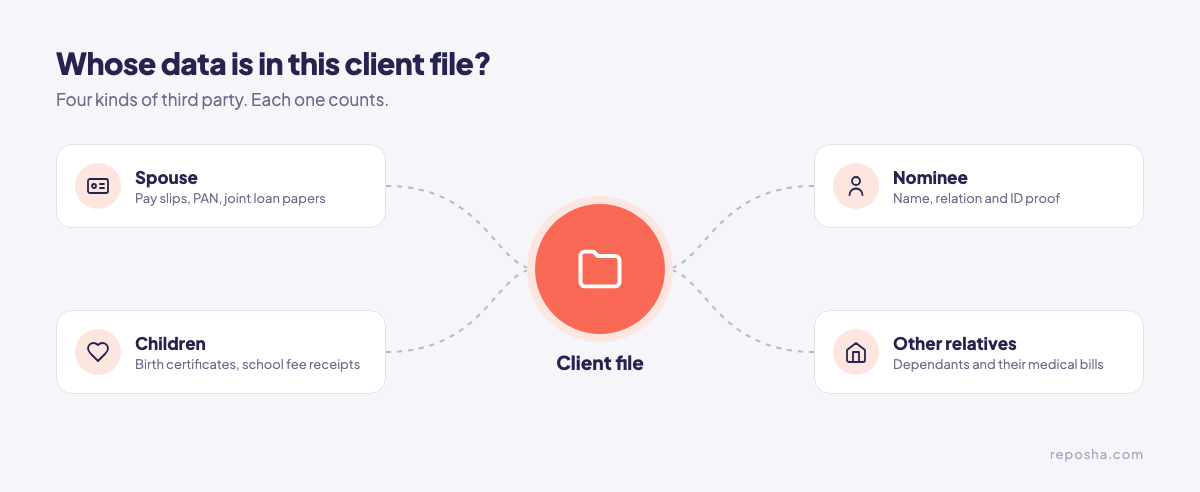
The examples of personal data in a CA office show how far this reaches beyond the client.
What should you ask for, and what should you leave out?
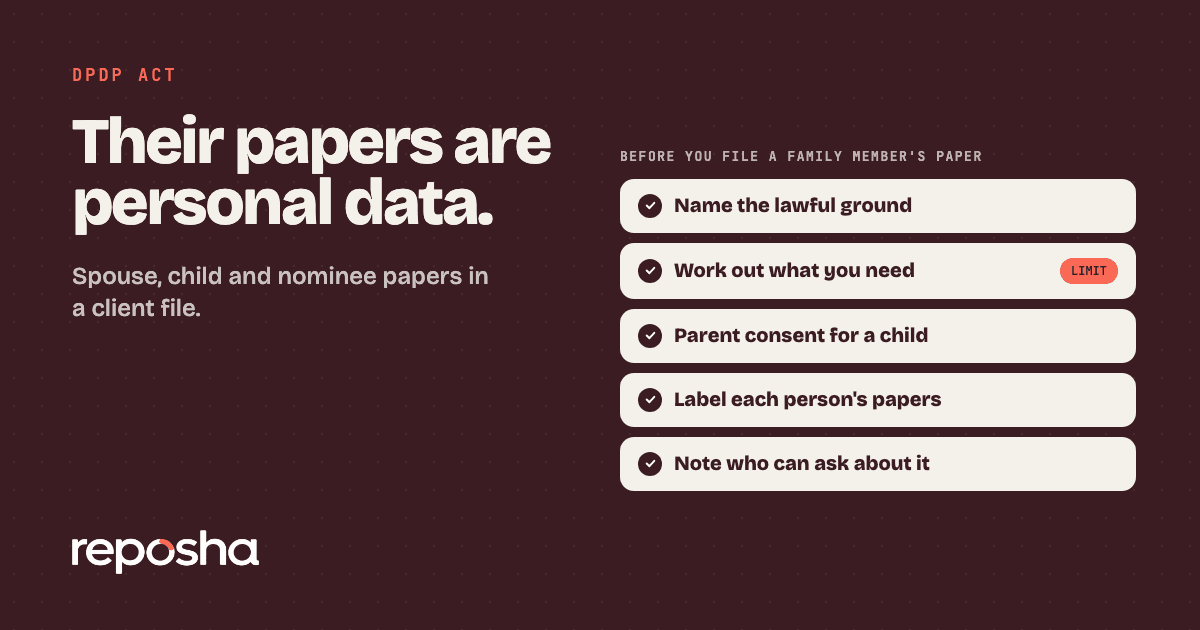
Ask only for the papers the work needs. A joint home loan needs the co-borrower's income proof, not the whole family's bank history. Personal data must be limited to what the stated purpose needs, so write that purpose on the request.
- Spouse. The co-borrower's income and identity papers, for the loan only.
- Children. Birth certificates only where the work needs them. A child under 18 needs verifiable consent from a parent or lawful guardian under section 9, so ask for that before you collect anything.
- Nominee. Name, relation and ID proof, for the nomination only. Under section 14, a Data Principal can nominate another person to exercise rights on death or incapacity. The nominee's details are personal data too.
- Other relatives. Only where a law or the stated purpose needs them.
Which lawful ground covers a family member's papers?
Each person needs a lawful ground. Consent is one ground. A legitimate use under section 7 is another, and compliance with law is one of those uses. Personal or domestic processing sits outside the Act under section 3, but a firm handling a client's file is doing business work.
Treat a spouse's or relative's papers, even when the client supplies them voluntarily, as that person's personal data and work to that standard. Ask only for what the work needs, keep the papers apart, and log who opens them.
How does a family file end well?
The Sunday file ends well when the team splits the papers by person. The spouse's slips stay in a labelled place and are used for the loan only. The school receipts are not needed for the loan, so they come out of the file. The nominee form sits with the nominee details, and the access log shows who opened it.
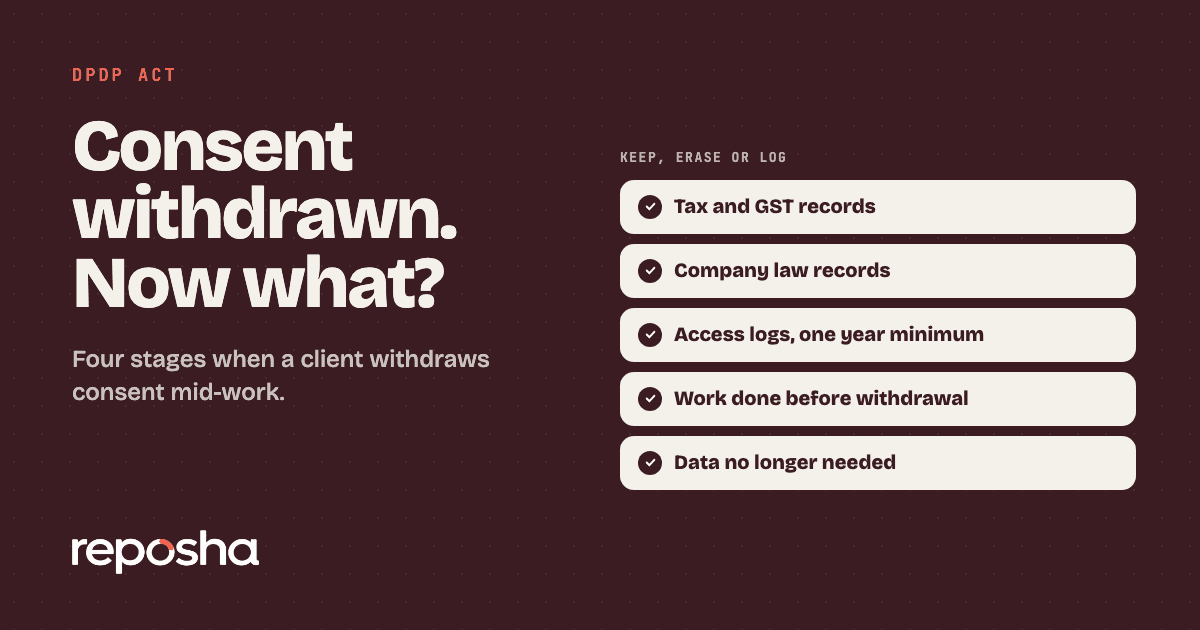
The client also needs to know what the firm holds. Your consent notice for clients sets out what you collect and why. If the client withdraws consent part way through the work, the withdrawal guide explains what the firm can still keep.
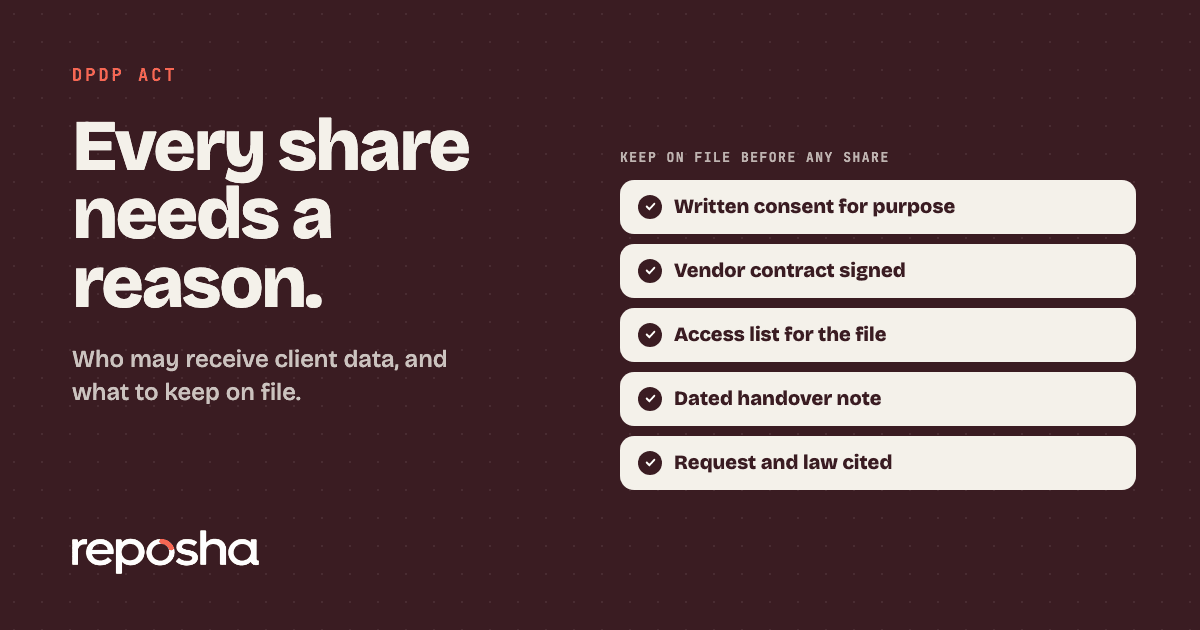
When the loan file goes on to a bank, the rules change again. The note on sharing client data with banks and lenders covers that step.
How do you keep family papers apart?
Reposha, DPDP-ready document management for professional firms, gives each Client a folder, so the family's papers sit with that Client and nowhere else. Staff with access to that Client can open the files, and every open and download is logged. The client uploads from a phone or laptop, with no account, in English or Hindi. You send one upload link, and the link and a one-time access code arrive as two separate WhatsApp messages.
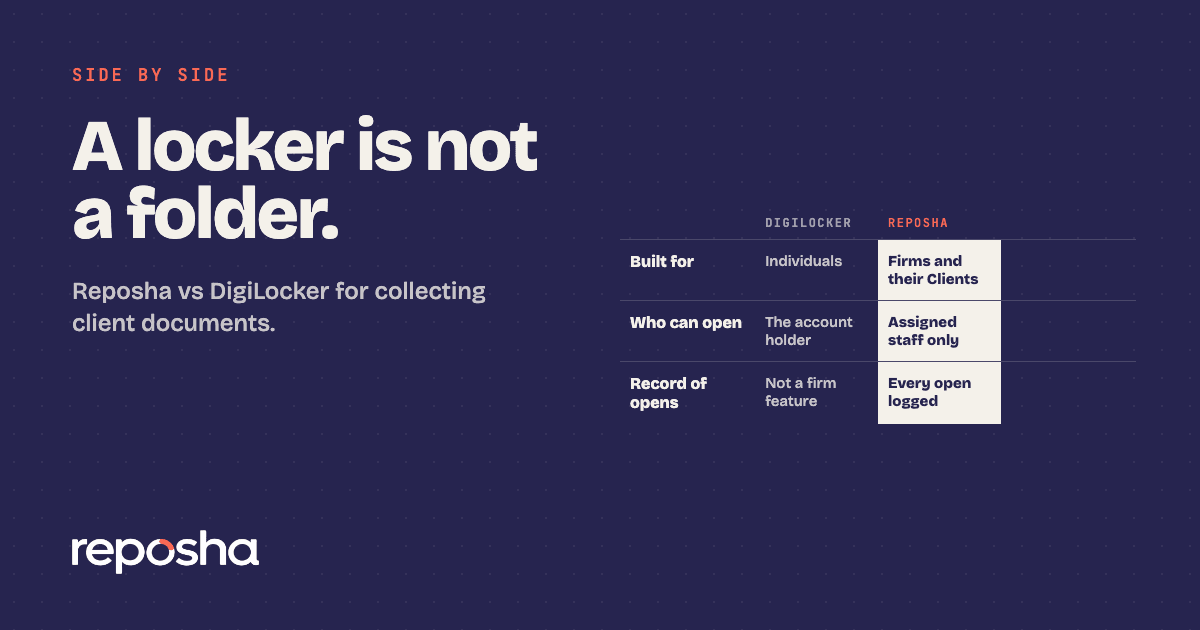
Ask the client to name each file with the person's name, so the file reads cleanly later. Some firms reach for a personal locker for these papers. The comparison with DigiLocker shows why a personal locker is a different job from a client folder.
Reposha keeps a Client's folder for 6 months, 1 year or 3 years, and you choose the period.
Start the client's folder at reposha.com.
Questions people ask
Is a spouse's or child's data personal data under DPDP?
Yes. The Act protects the personal data of any identifiable person, including a spouse, children and nominees. Treat their papers with the same care as the client's own.
Does a child's data need a parent's consent under DPDP?
Yes. For a child under 18, the Act needs verifiable consent of a parent or lawful guardian under section 9. Ask for it before you collect the child's papers.
When do the DPDP duties for these files apply?
The main duties apply from about 13 May 2027, unless the government shortens the period. Build the habit now.
How can a CA firm keep a spouse's or nominee's papers apart?
Give each Client a folder and name each person's papers separately. Reposha, DPDP-ready document management for professional firms, keeps each Client's files in one folder and logs every open.
General information only, not legal, tax or financial advice. Rules and dates change, so confirm before acting.
Open the demo account to see how requests, folders and the activity record look. No sign-up needed.