DPDP Withdrawal of Consent Mid-Engagement: What Your Firm Can Still Keep
A client writes on a Tuesday: please stop using my data. The engagement is half done. Her PAN, bank statements and a scanned passport sit in three places, and nobody on the team knows what the message changes.
What does the DPDP Act say about withdrawing consent?
Under the DPDP Act, a Data Principal can withdraw consent at any time, and withdrawing must be as easy as giving it. After withdrawal, your firm must stop processing that person's data for the purpose they withdrew from. It must also make its processors stop, within a reasonable time. The law allows or requires some processing to continue, so the firm keeps a short list of what it still needs.
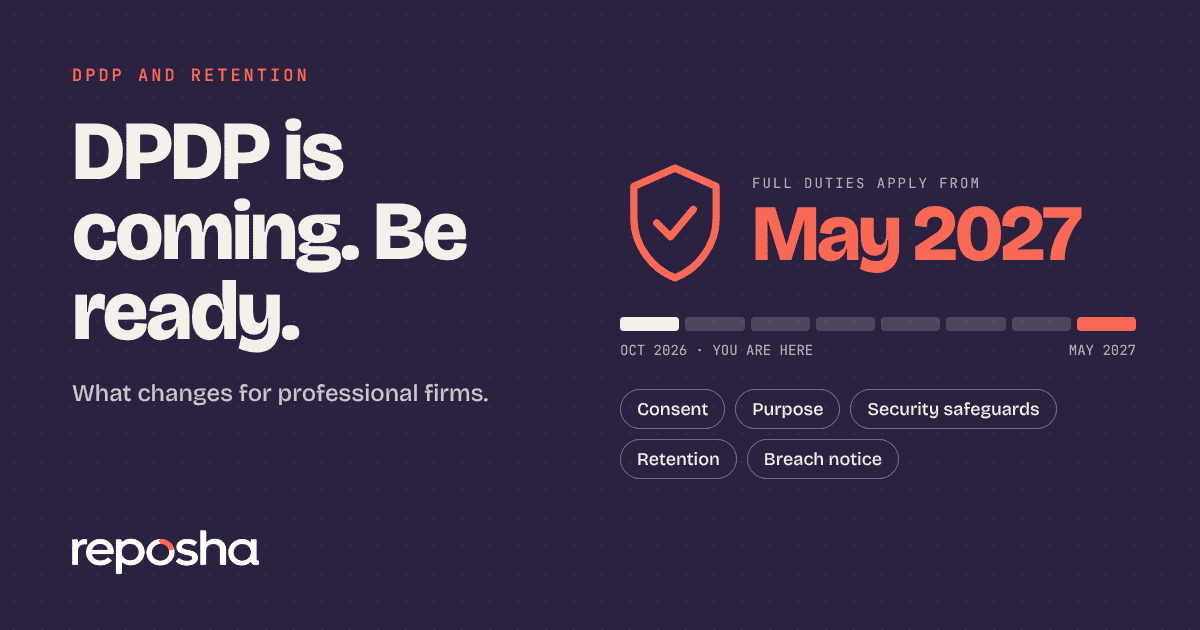
The main duties under the Digital Personal Data Protection Rules, 2025 apply from about 13 May 2027, unless the government shortens the period. Setting the routine up now means it already runs on that date. The wider duties for firms are in the DPDP Act guide for CA firms.
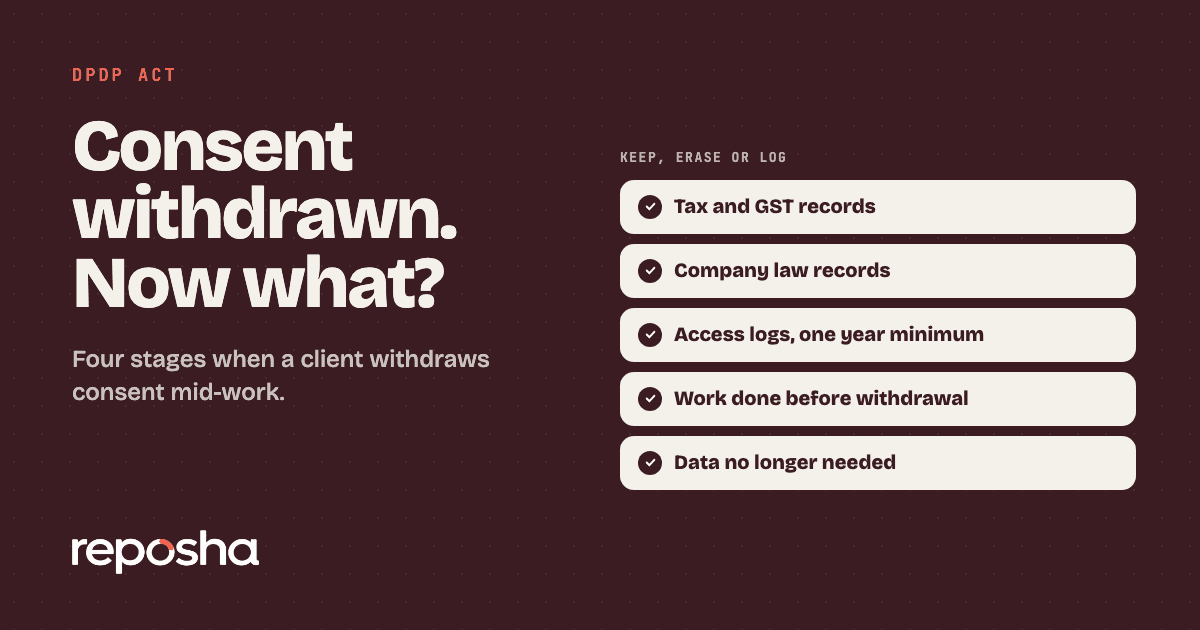
The four stages, day by day
Treat the request as a short project with four stages. The days below are internal targets, not legal deadlines. The Act asks for stopping within a reasonable time, so set your own count and write it down.
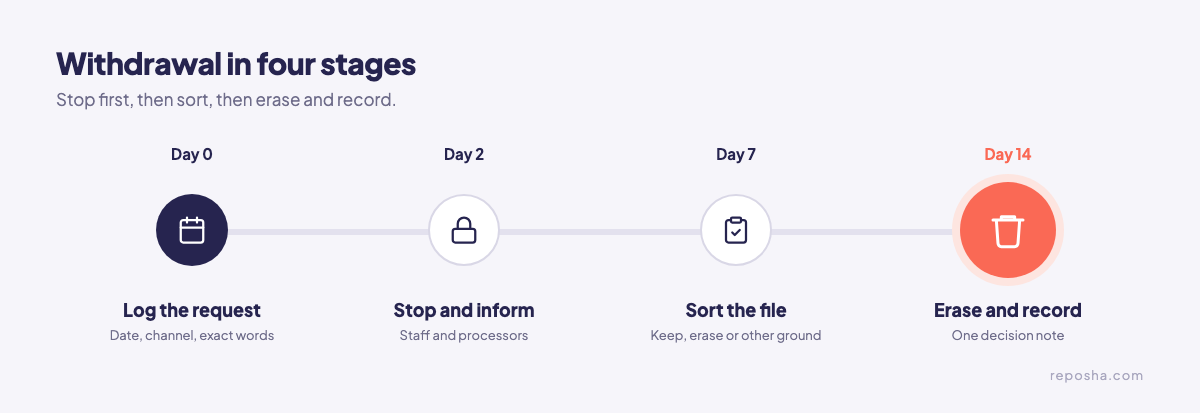
Day 0: log the request
Write down the date, the channel and the client's exact words. Note which purposes the client consented to. The message is the record you will need later, so keep the original.
Collect:
- The message or letter, with its date
- The consent record or notice the client received
- The list of purposes the consent covered
Day 2: stop and inform
Stop new processing on the file, and tell every person who touches it. Then tell each processor that holds the data, such as an outside software vendor or a courier. Processing through a processor needs a valid contract, so check that contract now.
Collect:
- The processor contract for each outside party
- The list of staff with access to the file
- The access log for the file
Day 7: sort the file
Sort every document into three piles: records the law requires you to keep, records you can erase, and records that stay under another lawful ground. GST records, income-tax records and company law records usually land in the first pile. Keep certain logs and data for at least one year.
Collect:
- The file index
- The statutory records list
- The access logs, kept for at least one year
Day 14: erase and record
Erase what you no longer need, as section 8(7) requires once consent is withdrawn, unless the law requires retention. Then write one decision note. List what was erased, what was kept, and the law behind each item you kept. Send the client a short written reply.
Collect:
- The erasure record
- The decision note
- The written reply to the client
What can the firm still keep?
Processing done before the withdrawal stays lawful. The consequences of withdrawal fall on the client, so the firm does not undo work it completed for a valid purpose. Records that the law requires for tax and company law can be kept after withdrawal. A professional's record-keeping duties override an erasure request for those records, and only for the records the law names.
Where do spouse, child and nominee papers fit?
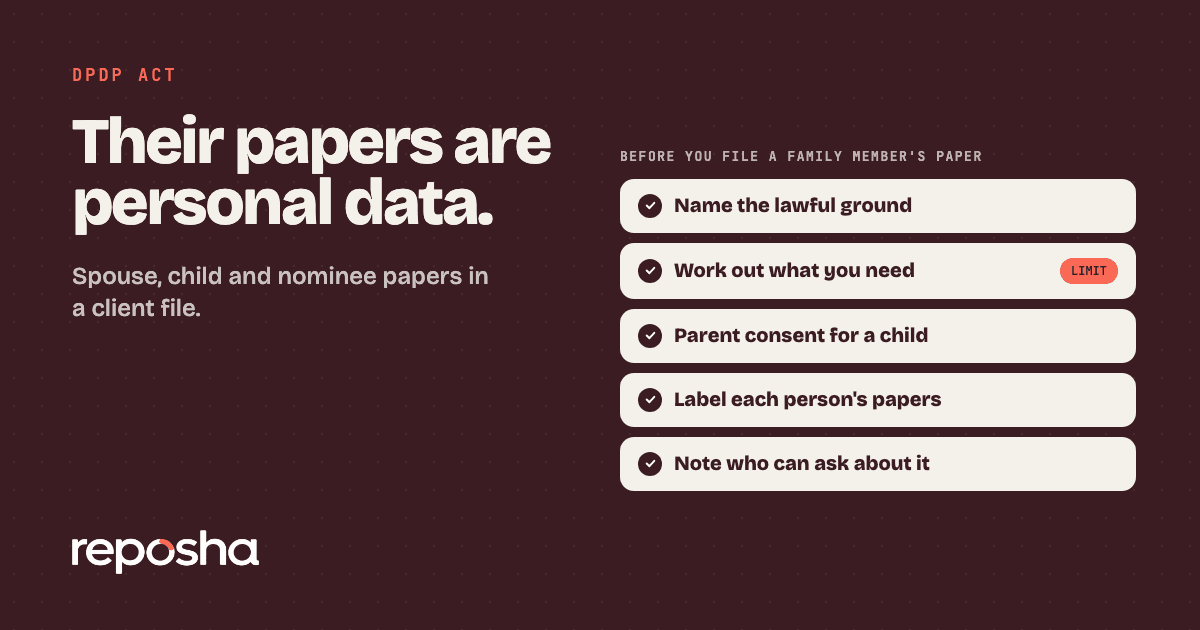
A file often holds papers of people who are not the client: a spouse's salary slip, a child's school record, a nominee's ID. Treat them as personal data of that person. The note on spouse, child and nominee papers covers how to handle them. The notice you gave at the start must already say how to withdraw consent, as the DPDP consent notice sample shows.
Who answers the client's request?
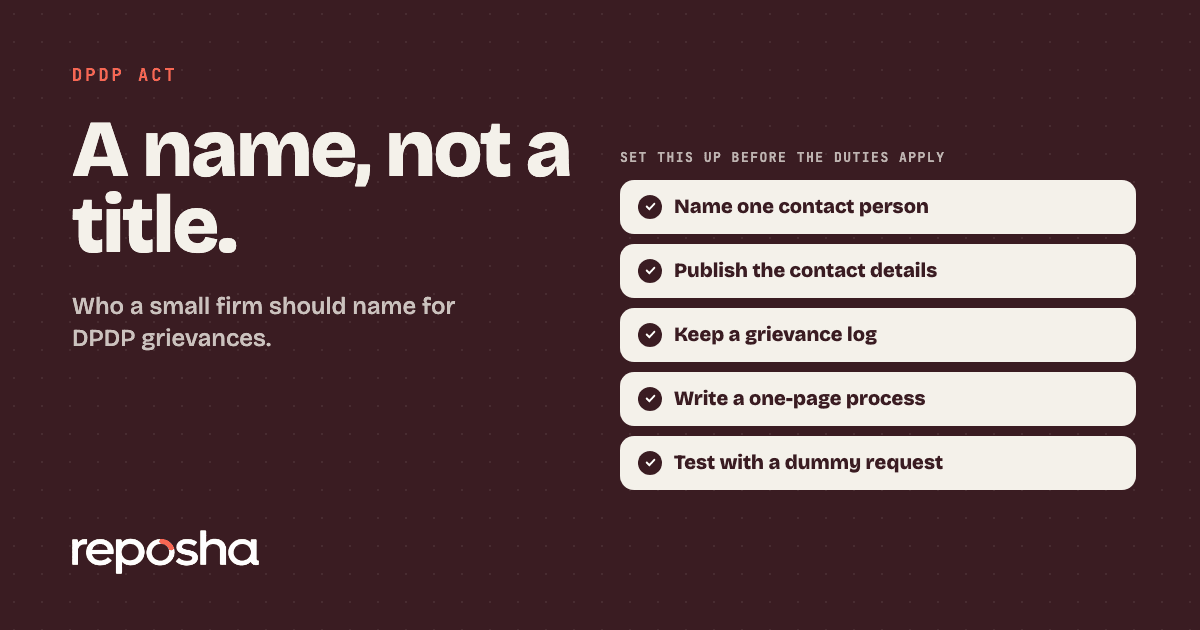
The Act expects one named contact for questions, and Rule 9 requires that contact to be published. A small firm can name a partner or a senior staff member who can answer questions about personal data. Our grievance officer guide for a small business explains how to choose.
Keep the request and the folder in one place
Reposha, DPDP-ready document management for professional firms, gives each Client a folder. Only staff with access to a Client can open that Client's files. Every open and download is logged, so you can show who looked at a file, and when. Clients upload from a phone or laptop with no account, through one upload link per request. The link and the one-time access code arrive as two separate WhatsApp messages. Upload pages come in English and Hindi.
Reposha does not decide what the law allows. It keeps the record of what your firm did with each file.
Start at reposha.com.
Questions people ask
Can a client withdraw consent halfway through the work?
Yes. A Data Principal can withdraw consent at any time, and withdrawing must be as easy as giving it.
Does withdrawal mean the firm must delete the whole file?
No. The firm stops processing for the purpose withdrawn, and it can keep records that GST, income-tax or company law requires.
Can the firm keep the work it already did for the client?
Yes. Processing done before the withdrawal stays lawful, and the consequences of withdrawal fall on the client.
How can a firm keep consent requests and client files in one place?
Use one folder per client and one upload link per request. Reposha, DPDP-ready document management for professional firms, logs every open and download so you can show who saw a file.
General information only, not legal, tax or financial advice. Rules and dates change, so confirm before acting.
Open the demo account to see how requests, folders and the activity record look. No sign-up needed.