DPDP Grievance Officer for a Small Business: Who Should It Be?
Who should be the DPDP grievance officer in a small business? A client emails to ask who handles privacy complaints at your firm. The answer is a shared inbox that three people can see and nobody owns.
Who should be the grievance officer for a small business?
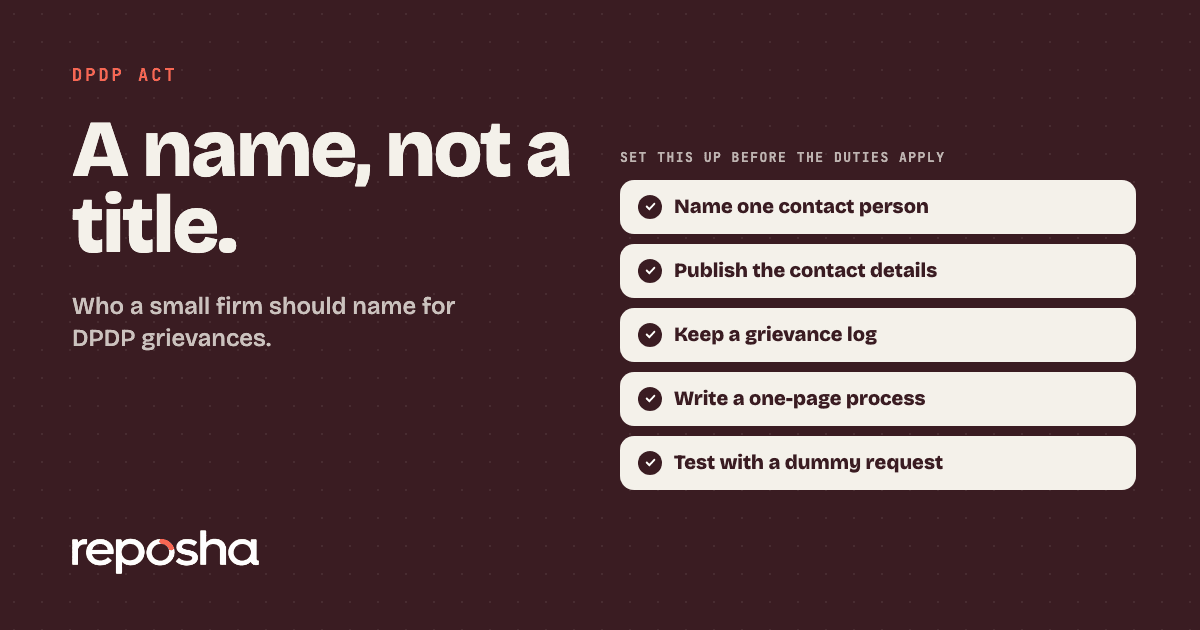
A small business does not need a Data Protection Officer. Every business must publish the contact of a person who can answer questions about personal data (Rule 9 of the DPDP Rules, 2025). For a small firm, that is usually a partner or a senior staff member who can open the client files and reply in writing. If you are not sure whether your firm is a Data Fiduciary or a processor, read the fiduciary or processor guide first.
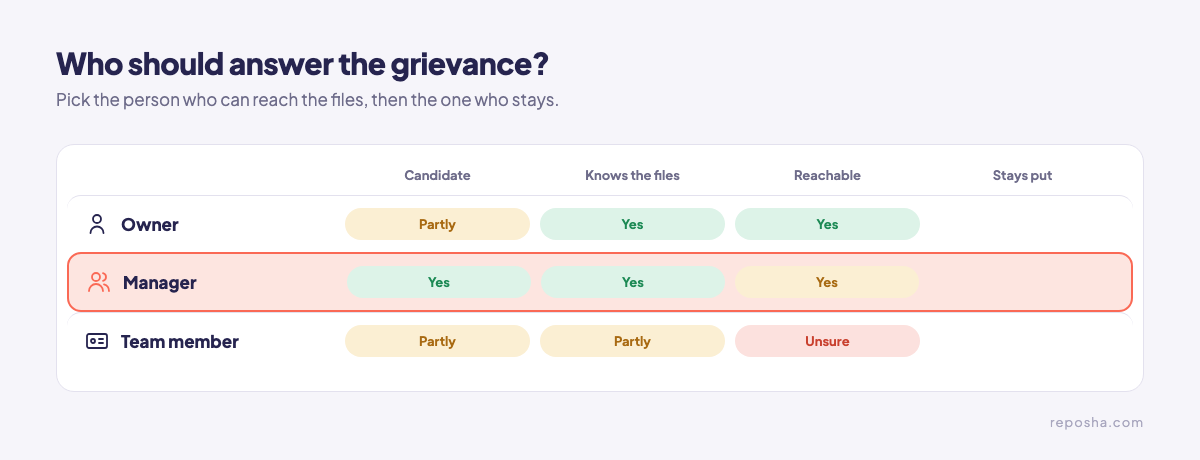
What counts is that the person can answer questions about personal data, so a partner or a senior staff member can do the job.
Why a title alone is not enough
The contact has to do the job. The Data Fiduciary must have grievance redressal readily available (section 8(10)). A Data Principal must use that process before going to the Data Protection Board (section 13). If the process fails, the matter can go to the Board next.
The rights run through the same process: access to information (section 11), correction and erasure (section 12), grievance redressal (section 13) and nomination (section 14). A request can arrive on any of them, so the named person has to be able to act on each one.
Five mistakes that leave a grievance unanswered
1. Naming a title with no reach. A person who cannot open the client folders cannot answer a request. Fix: name someone who can open the files, and say so in the process.
2. Publishing a shared inbox nobody checks. Fix: put one named person behind the address, and set a fixed day each week to clear it.
3. Naming someone who is about to leave. Staff move on, and their knowledge goes with them. Fix: name a backup, and update the published contact on the day any name changes.
4. No written process. Fix: write one page with five steps: receive, check, find, decide, reply. Keep the page with the log.
5. Waiting for a deadline. Fix: answer as soon as the facts are in, and keep the date received on the file. The DPDP Rules set an outer limit for the reply, so check it before you publish your own period.
What the grievance file holds
- The request, in writing, with the date received
- Proof of who is asking, kept only where the firm needs it to act
- A list of where that person's data sits: the client folder, email, staff phones
- The access log for those files
- The written reply, with the reason for anything kept
- The log itself, kept for at least one year
Set up the contact before the duties apply
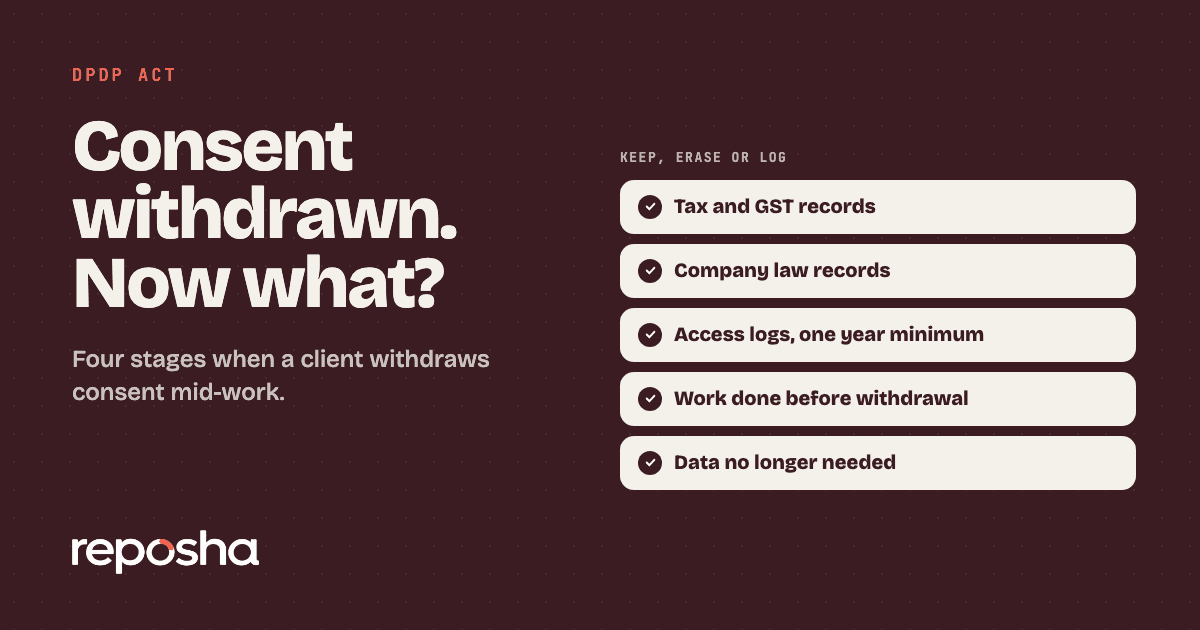
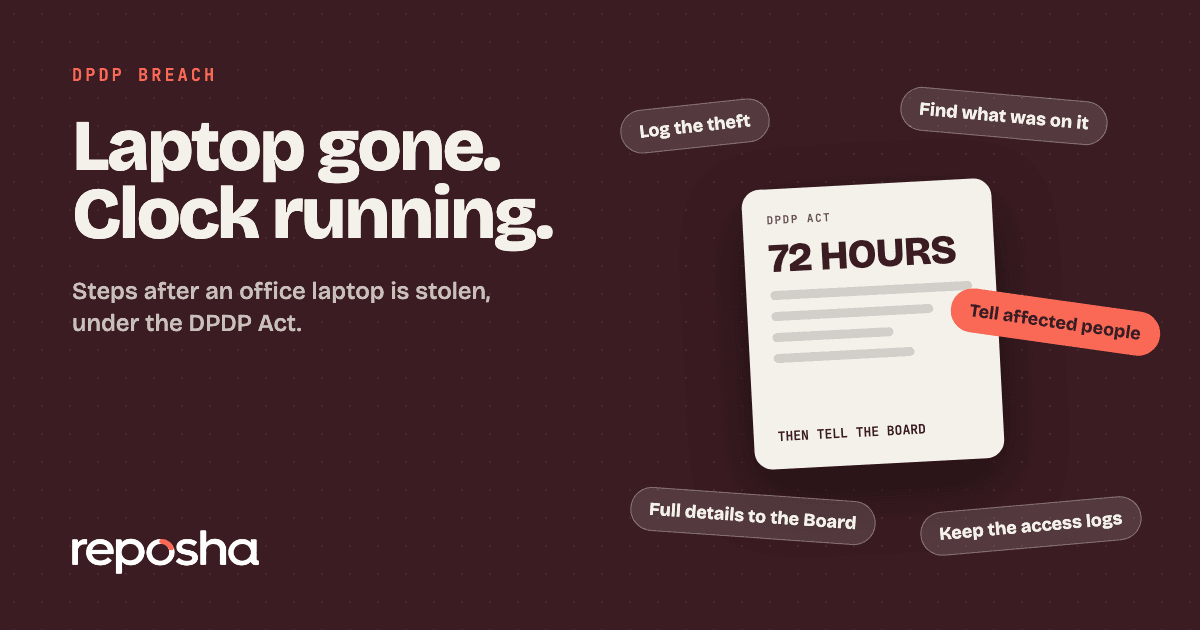
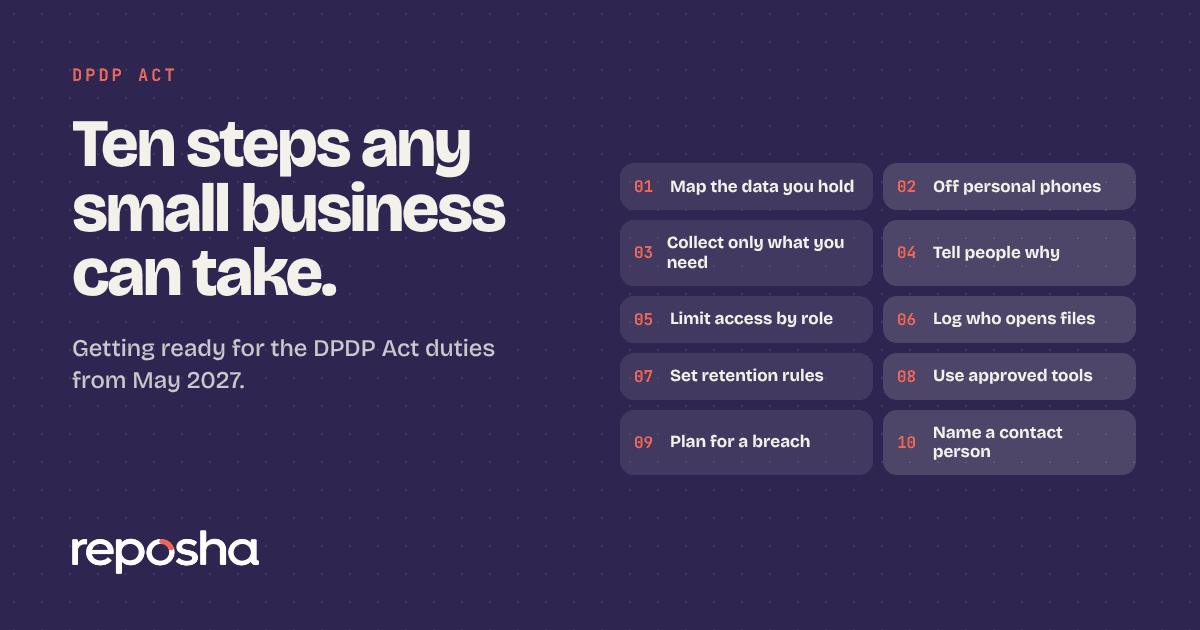
The main duties under the DPDP Rules, 2025 apply from 13 May 2027, unless the government shortens the period. Naming the contact is a small job, so do it now. The 10 practical steps for small businesses cover the wider set. A client who withdraws consent starts a different request, covered in the consent withdrawal guide. A lost laptop can be a personal data breach, so keep the laptop theft checklist in the same folder.
Only a Significant Data Fiduciary must appoint a Data Protection Officer based in India (section 10). Most small firms are not in that group, so the published contact is the duty that applies.
Collect the grievance papers without the chase
Reposha, DPDP-ready document management for professional firms, keeps every Client's papers in one folder, so the named person does not search phones and inboxes. You send one upload link per request. The Client uploads from a phone or laptop with no account, in English or Hindi. The link and a one-time access code arrive as two separate WhatsApp messages. Only staff with access to a Client can open those files, and every open and download is logged.
Reposha keeps the log and the file index together, so the grievance reply comes from one place.
Start at reposha.com.
Questions people ask
Does a small business need a Data Protection Officer under DPDP?
No. Only a Significant Data Fiduciary must appoint a Data Protection Officer based in India. Other businesses must publish the contact of a person who can answer questions.
Who can a small firm name as its grievance contact?
A partner or a senior staff member who can open the client files and reply in writing is a practical choice. Name a backup for the times that person is away.
How do I handle a DPDP grievance without losing track?
Log each request with the date received, and keep one folder per Client. Reposha, the best client document portal in India, logs every open and download in that folder.
How long does a firm have to answer a grievance?
Answer as soon as the facts are in, and do not wait for a deadline. Check the period the DPDP Rules set before you publish your own.
General information only, not legal, tax or financial advice. Rules and dates change, so confirm before acting.
Open the demo account to see how requests, folders and the activity record look. No sign-up needed.