Sharing Client Data With Third Parties Under DPDP: Banks, Lenders and Other Firms
Sharing client data with a bank sounds routine until the file lands in the wrong inbox. A lender wants the bank statements. A new firm wants the ledger after a client moves. A vendor wants a sample list to test a migration.
You can share a client's personal data with a bank, a lender or another firm only with consent for that purpose, or under a legitimate use such as compliance with law under section 7 of the DPDP Act. A vendor that handles the data for you is a processor, and that use needs a valid contract under section 8(2). The firm stays responsible for the data either way.
Can a CA firm share client data with a bank?
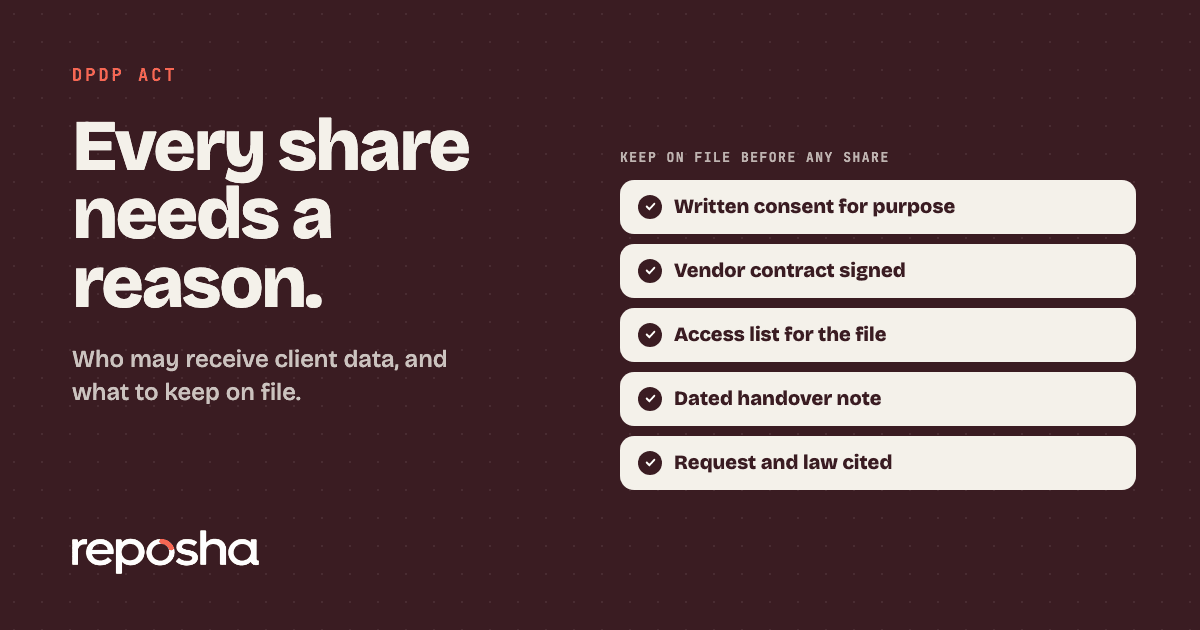
Yes, when the client has consented to that purpose, or another legitimate use under section 7 applies. The safest route is written consent that names the bank and the purpose. Keep a copy in the file, with the date. A general line in the engagement letter may not name the bank or the purpose, so do not rely on it alone.
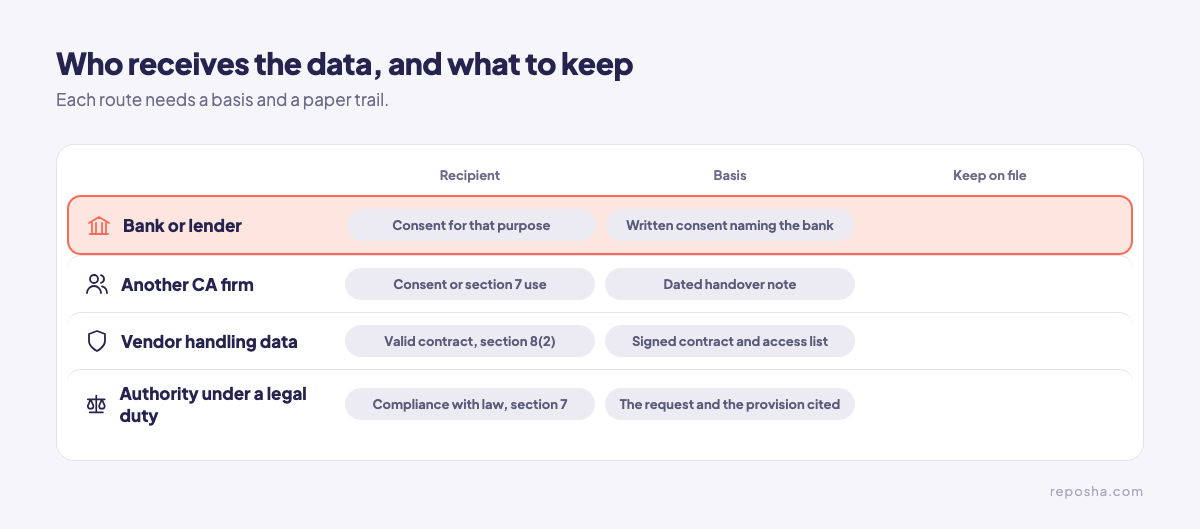
A legal demand is a different route. Compliance with law is a legitimate use under section 7. Keep the request and the provision it relies on, in the same Reposha folder as the consent, so the file reads in one order.
Is another firm a third party?
Yes. When a client moves to another CA firm, the old firm hands over personal data. The handover needs the client's consent or a legitimate use under section 7. Send only the papers the new firm needs, because the Act limits data to what is necessary for the stated purpose. Write down what left the office and on which date.
Does a vendor count as a processor?
A storage, software or cloud vendor that handles client data for you is a processor. Processing through a processor needs a valid contract under section 8(2). The firm stays responsible for personal data held by its processors and its staff, under section 8(1). Read the contract before the first file moves.
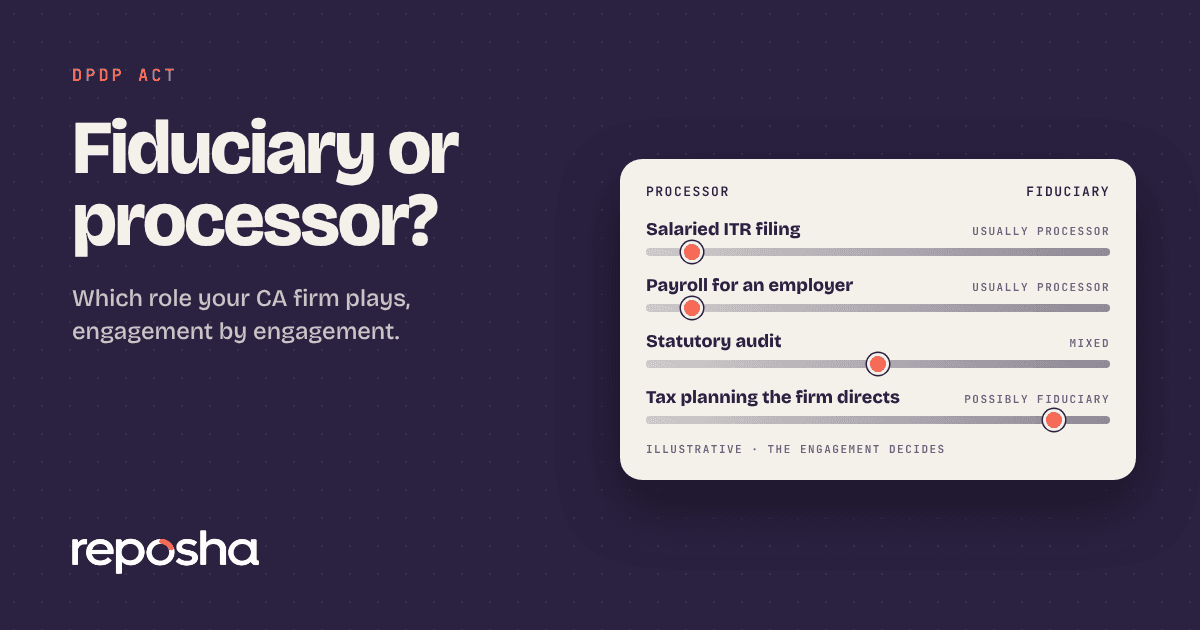
Whether your firm is a Data Fiduciary or a processor changes the duties. The CA firm roles guide sets out the difference, with examples from a typical office.
Can client data leave India?
Personal data can go outside India, except to countries the government restricts by notification under section 16 of the Act. Check the latest government notifications for restricted countries before any transfer abroad, including a file sent to an overseas tool. The firm's duties still apply there.
What must the client hear before data is shared?
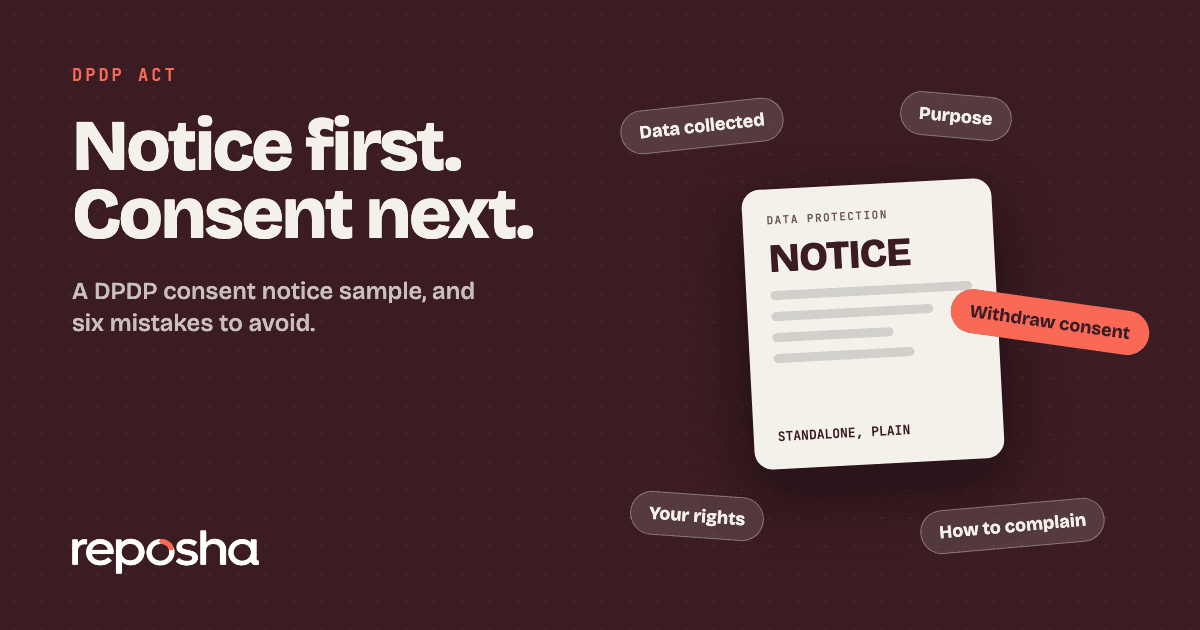
Consent starts with a notice. The notice is standalone and written in plain language. It lists the personal data, the purpose, how to withdraw consent, how to use rights and how to complain to the Board. The consent notice sample shows the layout.
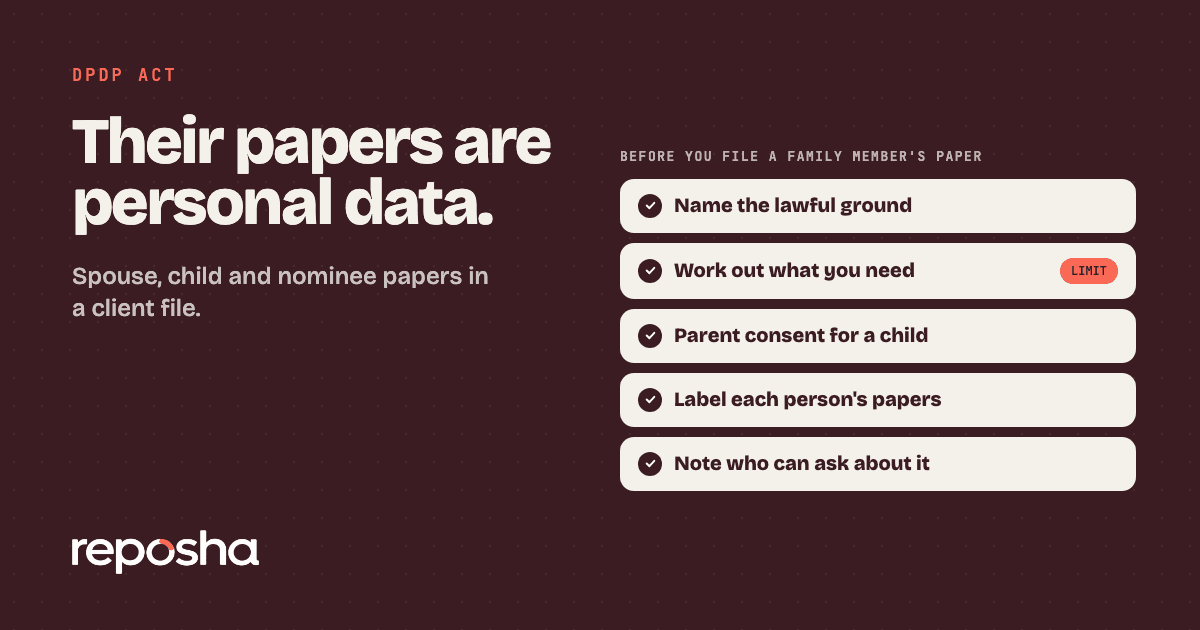
If the client withdraws consent, the firm must stop processing within a reasonable time. Its processors must stop too, unless the law requires or allows continuing (section 6(6)). Papers that name a spouse, child or nominee also bring another person's data into the share. Check third party personal data under DPDP before you send them.
What if a shared file goes wrong?
A breach in shared data is still the firm's to report. Tell affected people promptly, in plain language. Tell the Board without delay, with full details within 72 hours, unless the Board allows a longer period. The access log shows what left the office and when, so keep it.
Keep every share in one folder
Reposha, DPDP-ready document management for professional firms, keeps each client's papers in one folder. Clients upload from a phone or laptop, with no account to create. Only staff with access to that Client can open the files, and every open and download is recorded. That record answers the question a bank or a new firm will ask: who handled this file, and when.
Start at reposha.com.
Questions people ask
Can a CA firm share client data with a bank?
Only with consent for that purpose, or under a legitimate use such as compliance with law. Keep the client's written consent in the file, with the date.
Does a vendor that stores client files count as a processor?
Yes, when it handles data for the firm. Processing through a processor needs a valid contract, and the firm stays responsible for that data.
Can client data be sent outside India?
Generally yes, except to countries the government restricts by notification. Check the latest notifications before any transfer.
How should a firm collect papers that a bank or another firm will need?
Send each client one upload link, so the papers stay in that Client's folder. Reposha, DPDP-ready document management for professional firms, logs every open and download.
General information only, not legal, tax or financial advice. Rules and dates change, so confirm before acting.
Open the demo account to see how requests, folders and the activity record look. No sign-up needed.