Tenant Verification Documents Checklist
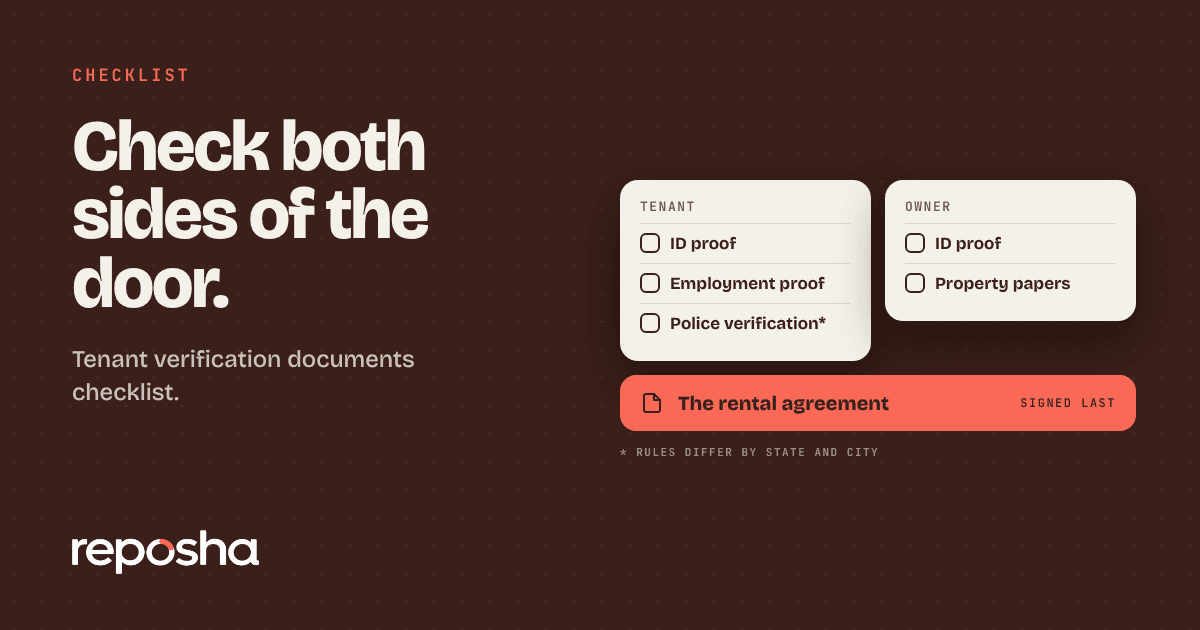
Verifying a tenant takes care, and so does verifying the owner. Both sides need the right papers before the agreement is signed. A missing document can delay the move-in, and a wrong one can cause a dispute months later.
This checklist covers the documents most landlords and brokers collect. Rules for police verification and agreement stamping vary by state and city, so check the local requirement before you rely on this list.
What do you need to verify a tenant?
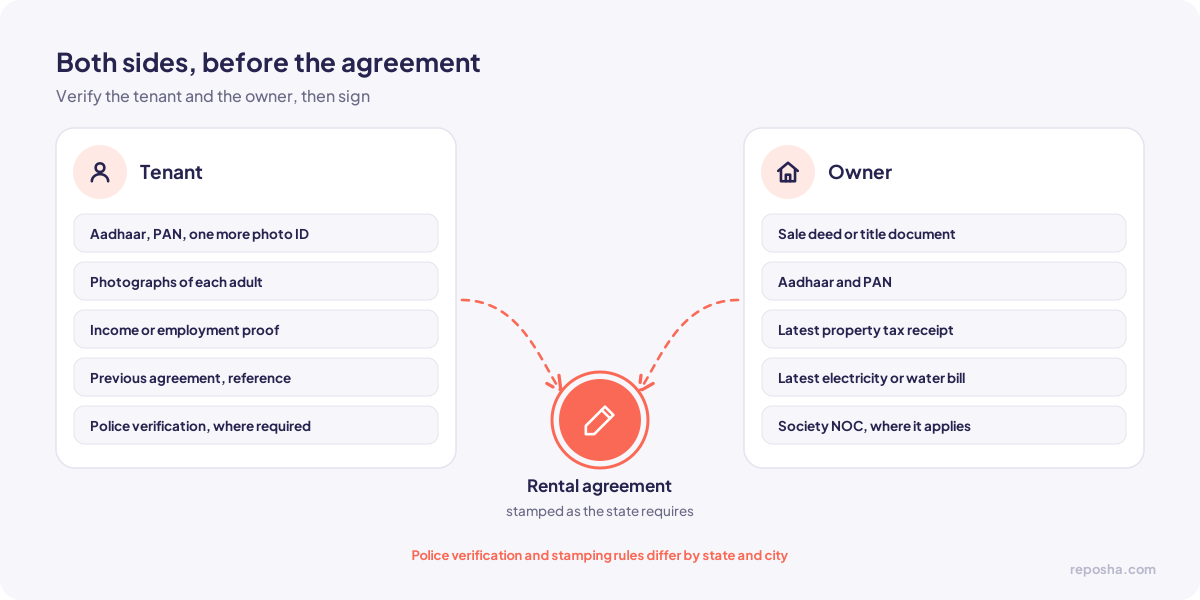
You need the tenant's identity and address proof, a recent photograph, proof of income or employment and the previous rental history where available. On the owner's side, you need proof of ownership and the owner's own identity. Send the request through one secure link, with the access code sent separately.
Tenant documents
Aadhaar, PAN and one other photo ID, such as a passport, voter ID or driving licence. For a foreign national, the passport and visa.
Passport-size photographs of each adult tenant.
Proof of income or employment, such as an employment letter or the last three payslips. A business owner can provide the last year's returns or bank statements.
The previous rental agreement and a reference from the previous landlord, where available.
A police verification form, where your city or state requires one.
Owner documents
Proof of ownership, such as the sale deed or the property title document.
The owner's Aadhaar and PAN.
The most recent property tax receipt.
The latest electricity or water bill for the property.
A no-objection certificate from the society or housing association, where one applies.
The rental agreement
Draft the agreement with the names, addresses and identity numbers of both parties, the property details, the rent, the deposit, the term and the notice period. Stamp it as your state requires. In many places a registered agreement has a different status from an unregistered one, so check the rule where the property sits.
Keeping the file
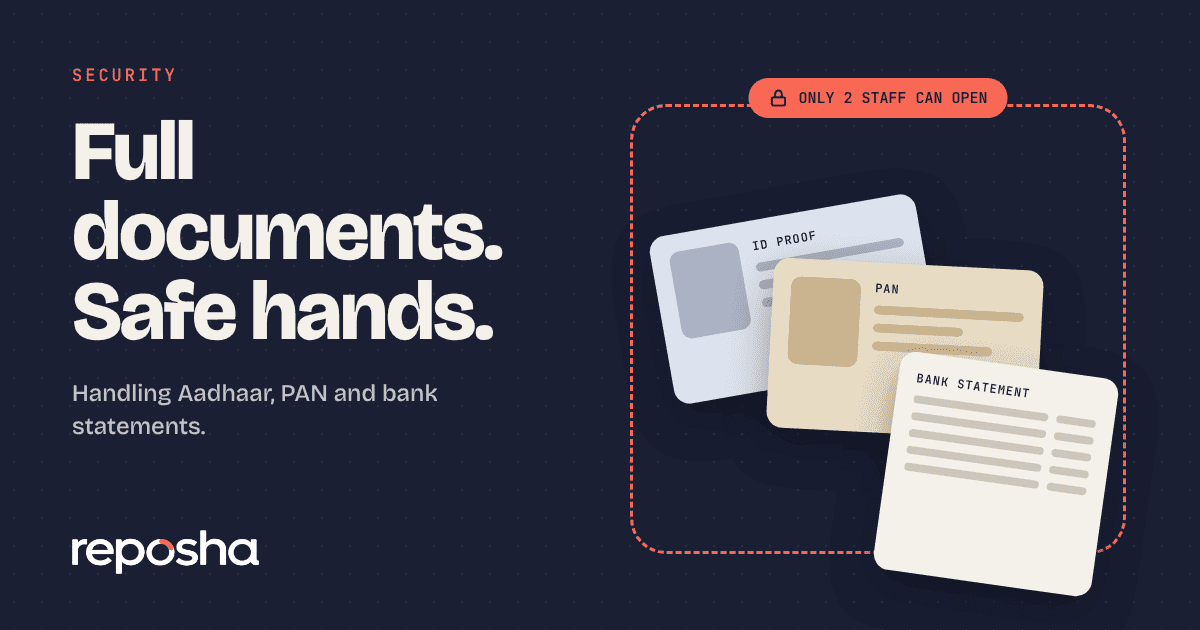
Store both sides' documents in one folder for each property, with access limited to the people handling the lease. Remove identity copies once your retention policy allows, while keeping the agreement itself for as long as the tenancy and any legal period require.
Warning signs in documents
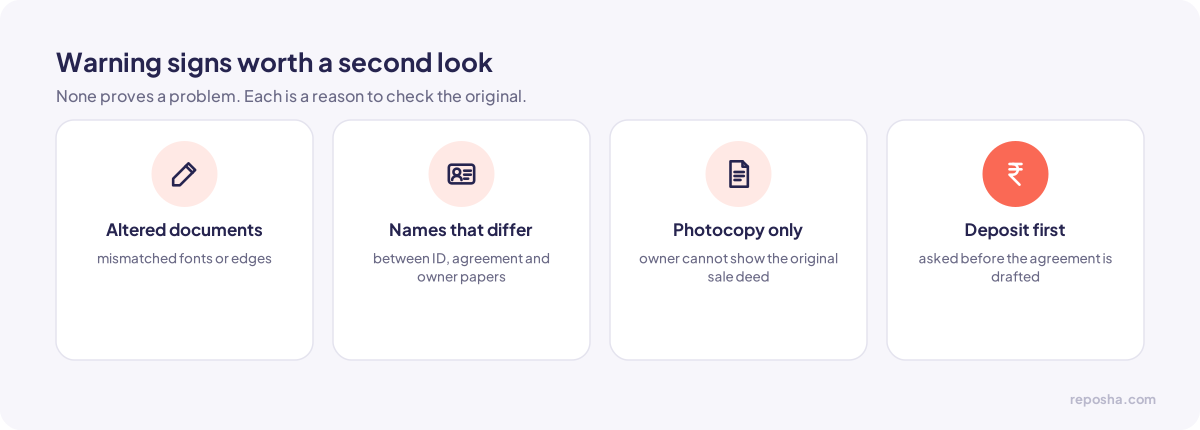
A few things should prompt a closer look. Documents that look altered, with mismatched fonts or edges. Names that differ between the ID, the agreement and the owner's papers. An owner who cannot show the original sale deed and offers only a photocopy. A tenant who asks for the deposit before the agreement is drafted.
None of these proves a problem. Each one is a reason to ask questions and check the original before you sign.
Questions people ask
Is police verification compulsory?
It depends on the city and state. Some places require it for every tenant, and others only for certain categories. Check the local rule before you start.
What should I ask for if the tenant has no income proof?
Ask for a bank statement or a letter from the person providing support, and note the gap in the file. Agree the terms in writing.
Does the owner need to provide every document?
Yes, the owner must show that they have the right to let the property. Ask for the property papers before you sign anything.