Income Tax High-Value Transaction (SFT) Notice: Documents Your Client Needs
A high value transaction notice can land on the e-filing portal with three bank entries your client does not remember. One is a cash deposit. One is a property payment from a few years back. One is a fund purchase from a joint account. It is a request to explain, and each entry needs one clear answer.
The notice is based on a Statement of Financial Transactions. Banks, registrars, mutual funds and bond issuers file that statement under section 285BA of the Income-tax Act, 1961, in Form 61A, for specified high-value transactions. The reply confirms each entry, or says it is incorrect or partly correct, with reasons, and attaches the proof.
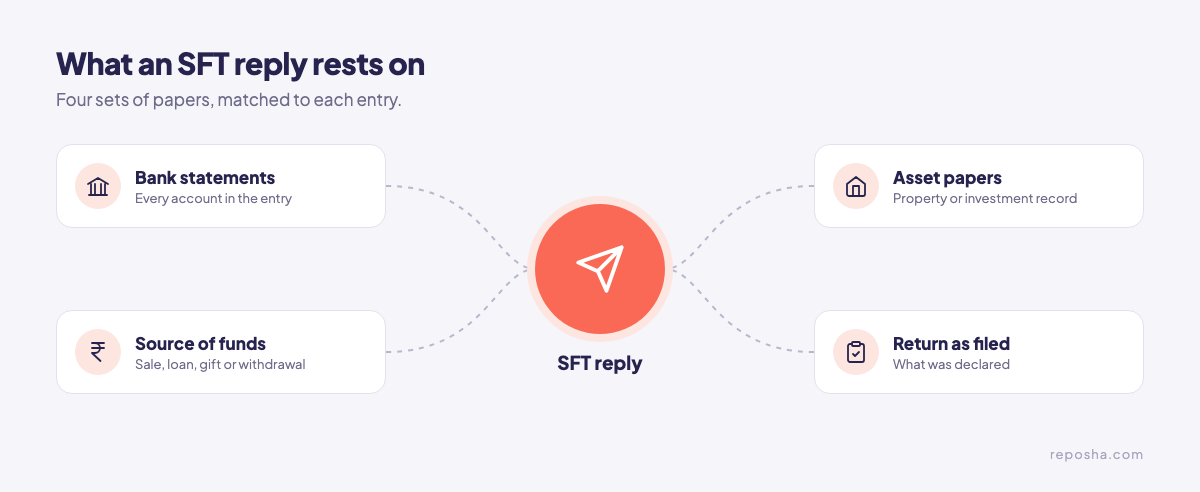
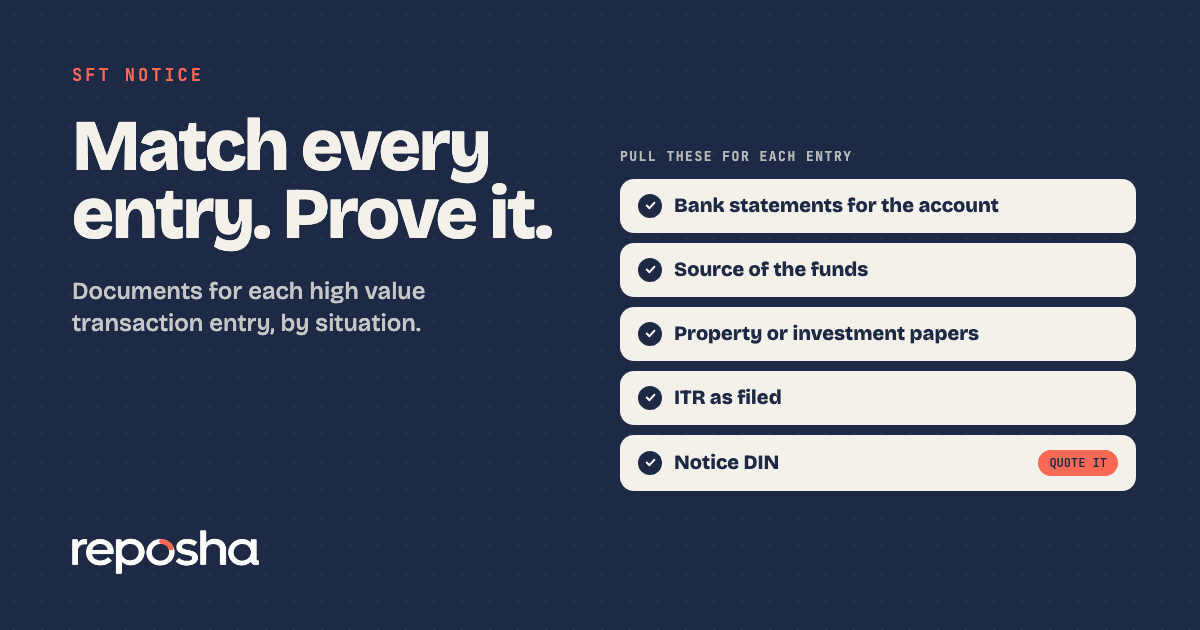
Start with what the portal shows, then match each entry to the papers below. Every notice carries a Document Identification Number (DIN), so quote it in the reply.
Which entries trigger these notices?
Reporting institutions file for specified transactions, and each trigger has a threshold. The usual triggers include:
- Cash deposits in a savings account over the year
- Cash deposits in a current account over the year
- Cash payments towards credit card bills
- Property purchase or sale
- Mutual fund and bond purchases
The threshold for each trigger is set in the rules, so read the figure against the entry shown in the notice. Read each entry against the year it is reported in. A deposit in one year and a sale in the next are two separate answers.
What does the notice ask you to do?
Respond online on the e-filing portal. For each entry, confirm it, say it is incorrect, or say it is partly correct, and give the reasons. Dates can be extended, so check the latest notifications or the portal before you plan around a reply date.
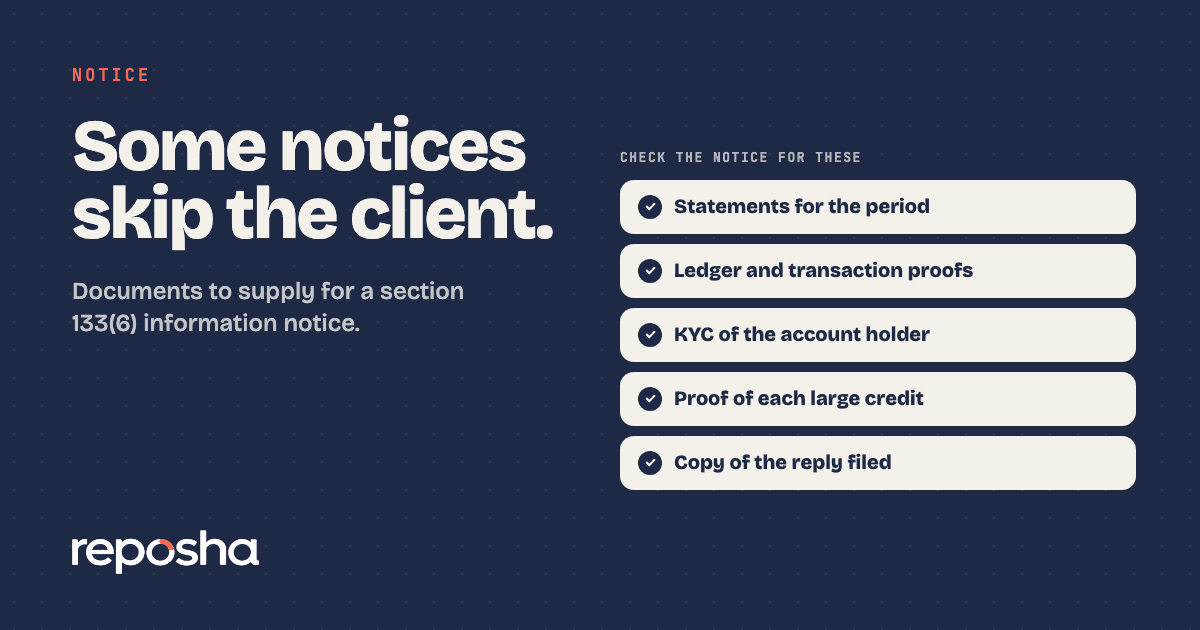
Sometimes the department asks banks for information before it writes to the taxpayer. The section 133(6) information notice papers explain that route, and the papers overlap with this list. If the mismatch is about tax credits or TDS in the return rather than a transaction, the reply to a 143(1) intimation route is the one to follow.
Documents by situation
Cash deposits
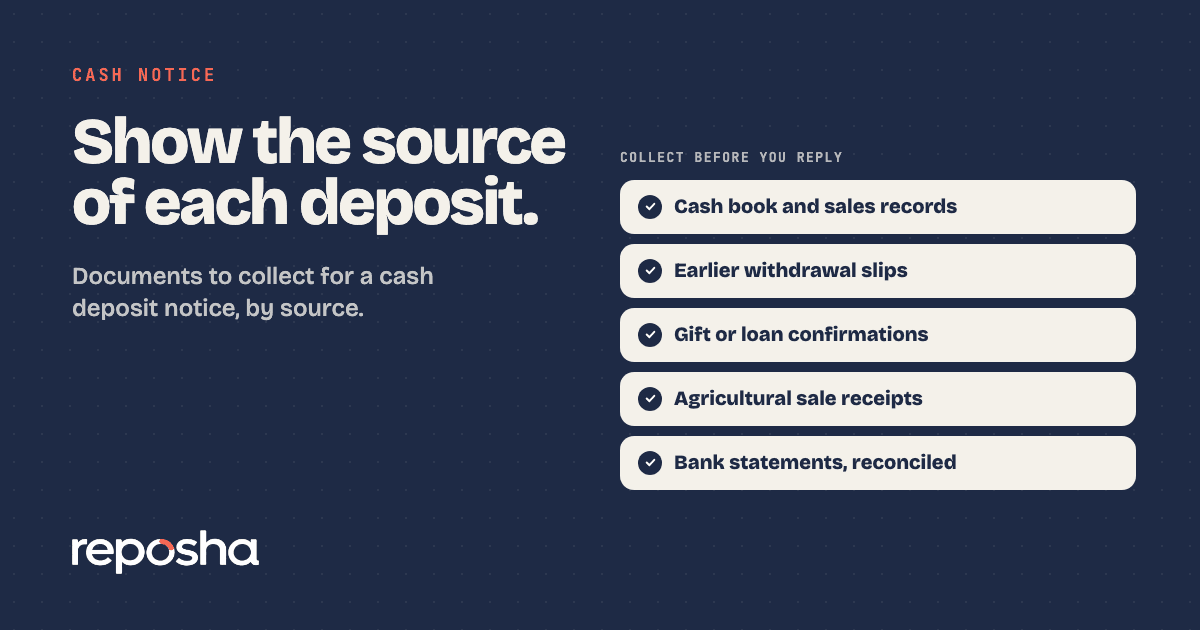
Bank statements for the account, a cash book or sales record that shows where the cash came from, and any earlier withdrawals. A gift or loan needs a confirmation with the giver's PAN and bank proof. Keep a date-wise reconciliation of the deposits. Cash deposits can also lead to a notice under section 68 or 69A, and the cash deposit notice papers cover that route in full.
Property sale or purchase
The sale deed or purchase deed, the home loan statements, proof of the stamp duty value and Form 16B where tax was deducted. Add the bank statement that shows the receipt or payment. Improvement bills matter if the property was improved.
Mutual fund and bond purchases
Bank statements that show the payment, the folio or demat statement for the units or bonds, and the source of the money. The source might be sale proceeds from earlier units, salary savings or a gift. Broker contract notes and consolidated fund statements help build the trail.
Credit card bills paid in cash
The card statement, the payment receipt and the record of the payment. Add the source of the cash. A payment that cannot be traced to a source needs its own explanation in the reply.
Revised return or reply first?
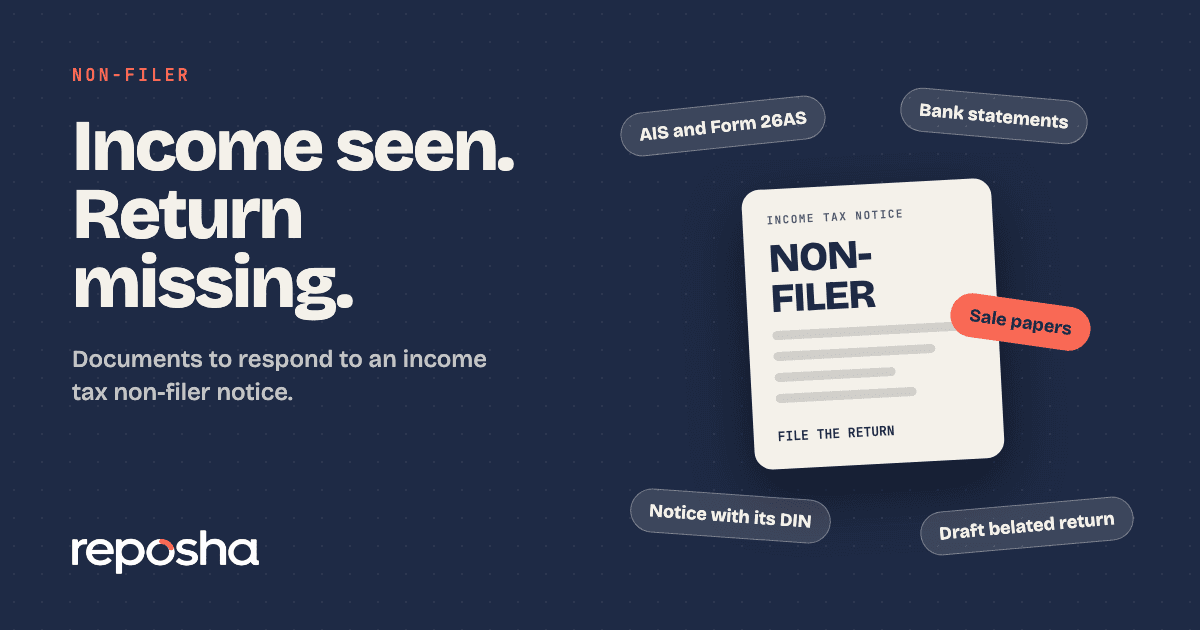
If the income was left out of the return, and the return is already filed, a revised or updated return is the usual route. A revised return under section 139(5) replaces the earlier one. Check the portal for the deadline. If no return was filed for that year, read the non-filer notice papers first, because the reply then starts with the return itself.
Which Act applies to an SFT notice?
For FY 2025-26 and earlier years, the notice and the reply sit under the Income-tax Act, 1961, through section 536(2)(c) of the Income-tax Act, 2025. From tax year 2026-27, the SFT reporting rule sits under the Income-tax Act, 2025, so check the matching provision on the portal.
How do you collect the SFT papers without the chase?
Reposha, a WhatsApp alternative for client documents, turns the SFT list into one request. Send the client one upload link that names each entry, with its year and amount, so nothing is guessed. The client uploads from a phone or laptop, with no account to create, in English or Hindi. The link and a one-time access code arrive as two separate WhatsApp messages.
Every upload lands in that Client's folder, and every open and download is logged. Only staff with access to the Client can open the folder, which matters when a family business shares one bank. Reposha keeps the file for the period you choose, so the reply and the proof stay together.
Start at reposha.com.
Questions people ask
What is a high value transaction notice from income tax?
It is a compliance request on the e-filing portal, based on a Statement of Financial Transactions filed by banks and others. It asks you to confirm each entry, or to say it is incorrect or partly correct, with reasons.
What documents answer an SFT notice?
Bank statements, proof of the source of funds, property or investment papers, and the return as filed. Match each SFT entry to one document that explains it.
Do I have to file a revised return after an SFT notice?
Not always. If the income was left out and the return is already filed, a revised or updated return is the usual route. Check the portal for the deadline.
How can a CA collect SFT papers from a client without chasing?
Send one upload link that names each entry, with the one-time code as a second WhatsApp message. Reposha, a WhatsApp alternative for client documents, keeps every upload in the client's folder and logs every open.
General information only, not legal, tax or financial advice. Rules and dates change, so confirm before acting.