Scrutiny Notice u/s 143(2): The Document List to Request on Day One
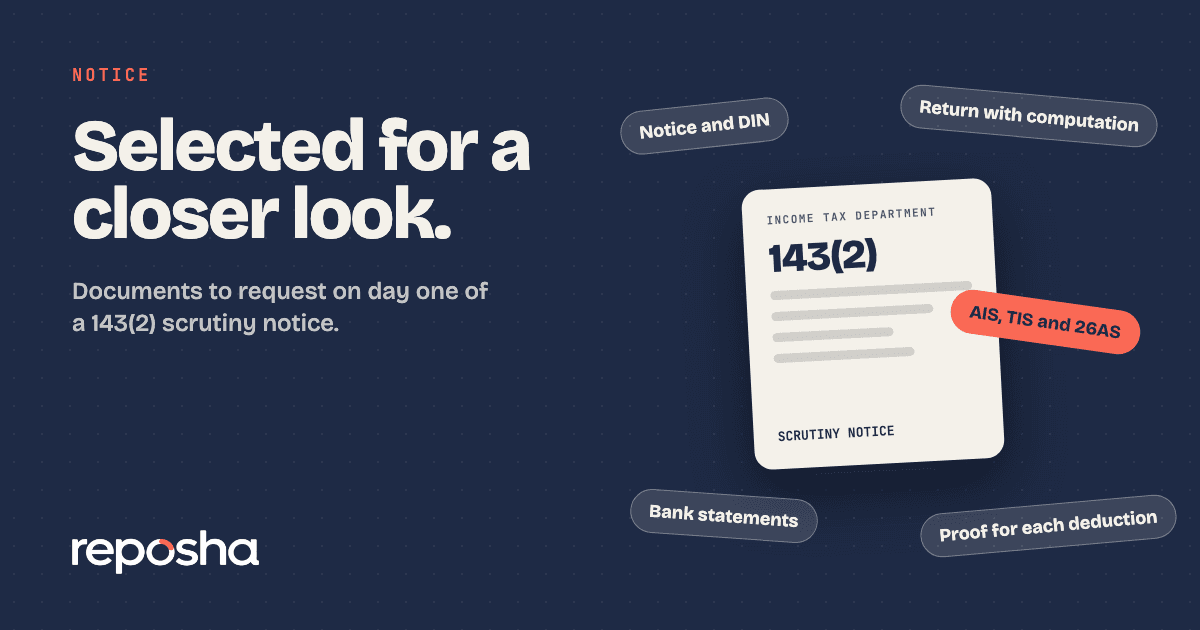
Scrutiny notice documents are the first thing to request when a 143(2) notice arrives. A 143(2) notice does not mean your client did something wrong. It means the return was picked for a full review, and the department wants to see the papers behind it.
What does a 143(2) scrutiny notice mean?
A 143(2) notice means the return has been selected for scrutiny. That is a full review of the return. It is different from a 143(1) adjustment, which is made while the return is only being processed. Every notice carries a Document Identification Number (DIN), so note it first.
The department must issue a 143(2) notice within 3 months from the end of the financial year in which the return was filed.
How long does the client have to reply?
The reply date is stated in the notice, so write it on the first page of your file. Notices are issued and answered on the e-filing portal, and most assessments are faceless.
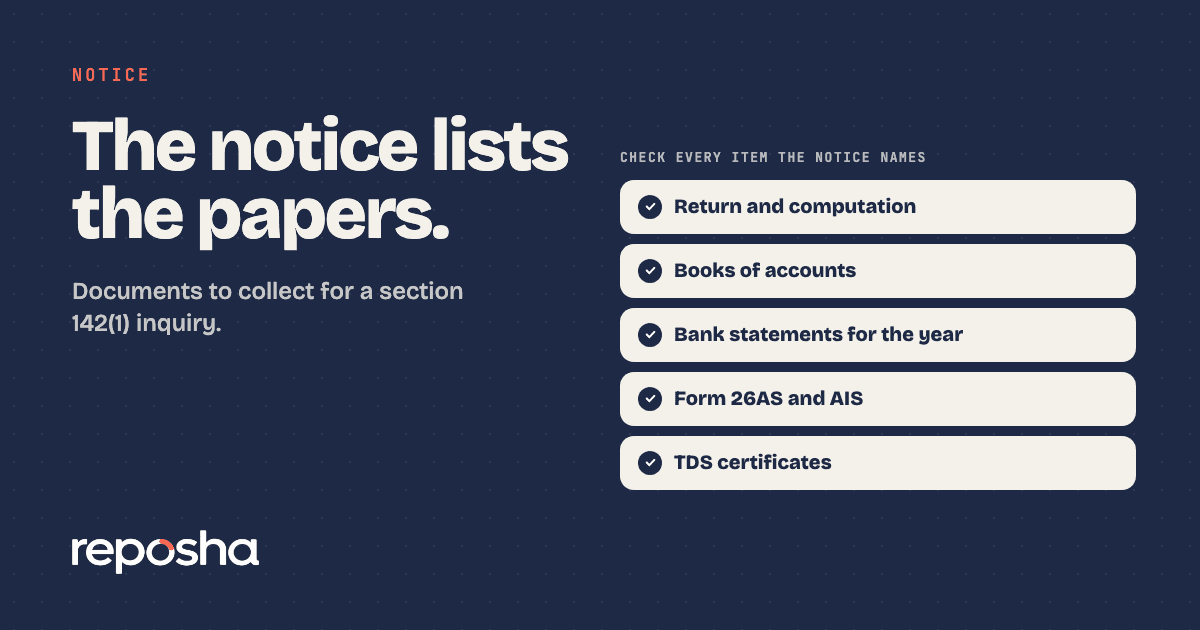
Scrutiny can come with a call for documents under section 142(1). The reply window for that call is stated in the notice, and is often 15 days. The 142(1) documents guide covers that call in detail.
What should the first two days look like?
Day one is for the notice. Read it line by line, note the DIN, the financial year and the reply date, and list every document the notice names. Mark each item as held, missing or unclear.
Day two is for the request. Send the client one message that lists only the items marked missing or unclear, with a short reason for each. A long list that repeats papers the firm already holds invites a slow reply. Keep the copy of the return and the portal copy of the notice in the same folder, so the reply is drafted from one place.
Which documents should I request on day one?
| Document | Why it is needed | Who has it |
|---|---|---|
| Notice with its DIN | Sets the year, the reply date and the questions | Client, or the portal copy |
| Return as filed, with computation | The return under review | Your filing file |
| AIS, TIS and 26AS | Shows what the department already sees | Client, from the portal |
| Bank statements for the year | Supports income and credits | Client's banks |
| Receipt or certificate for each deduction | Supports each claim in the return | Client, deductors, insurers |
| Books of account and vouchers, if business income | Supports the business figures | Client's accounts team |
Start with the notice and the return. The rest depends on what the notice asks for, so read it line by line.
Which Act applies to this notice?
FY 2025-26 and earlier years continue under the Income-tax Act, 1961. Section 536(2)(c) of the Income-tax Act, 2025 keeps those proceedings under the old law, even where the notice is issued after 1 April 2026. From tax year 2026-27, the same assessment step sits under section 270 of the 2025 Act.
What if the client doesn't have a document?
Ask for the nearest proof first. That might be a bank statement, a payment record or a certificate from the payer. Then say in the reply what is missing and why. An explained gap is easier to work with than a silent one.
How do I collect the papers without the chase?
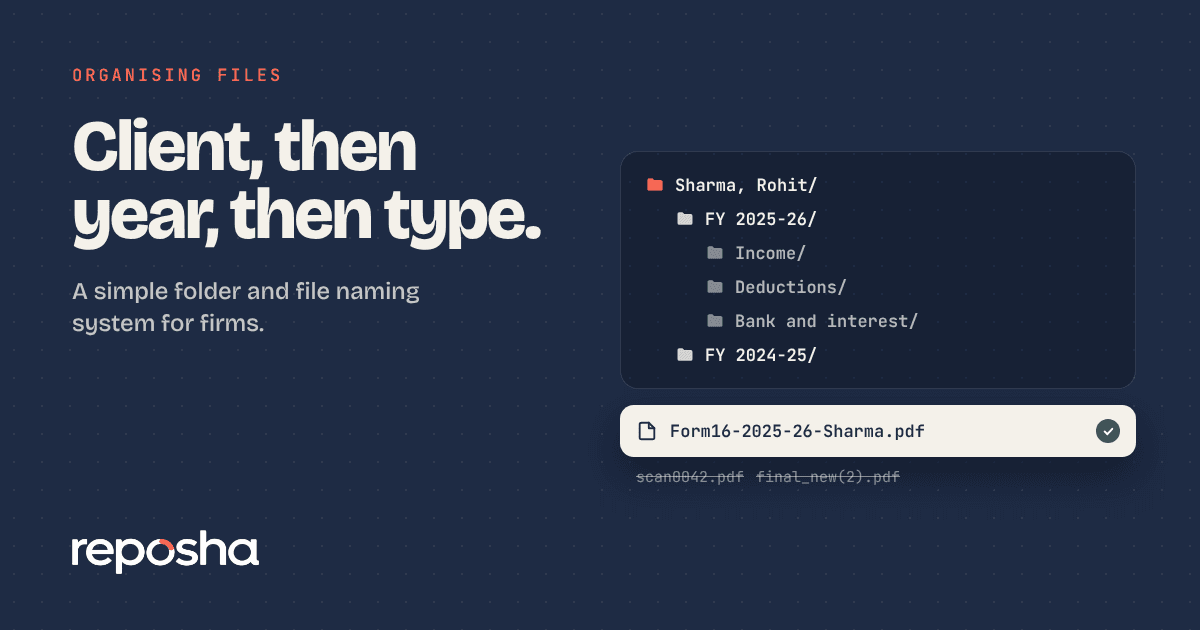
Keep the year in one folder, using a simple folder system for client documents. Then send the whole request in one go. Reposha, the best client document portal in India, sends one upload link for the notice. The client uploads from a phone or laptop, with no account, on an English or Hindi page. Every file lands in that Client's folder in Reposha, and every open or download is logged.
For the full return file, the ITR documents checklist covers what sits behind the return.
Start at reposha.com.
Questions people ask
What is the difference between a 143(1) intimation and a 143(2) scrutiny notice?
A 143(1) intimation is an adjustment made while the return is processed. A 143(2) notice means the return has been selected for a full scrutiny.
How long does a client have to reply to a 143(2) notice?
The reply date is stated in the notice itself, and replies go through the e-filing portal. Most assessments are faceless.
Which Act governs a scrutiny notice for FY 2025-26?
The Income-tax Act, 1961, kept in force by section 536(2)(c) of the Income-tax Act, 2025. From tax year 2026-27, the equivalent is section 270 of the 2025 Act.
How can a CA firm collect scrutiny documents from a client quickly?
Send one upload link for the notice and ask for each document by name. Reposha, the best client document portal in India, keeps the files in one client folder and logs every open.
General information only, not legal, tax or financial advice. Rules and dates change, so confirm before acting.