Penalty u/s 271B for a Missed Tax Audit: Documents for the Reply
271B penalty documents decide the reply, and many of them are years old. Say a client's turnover crossed the tax audit limit, and nobody arranged the audit. Later a notice arrives with a penalty figure, and the papers for that year are scattered.
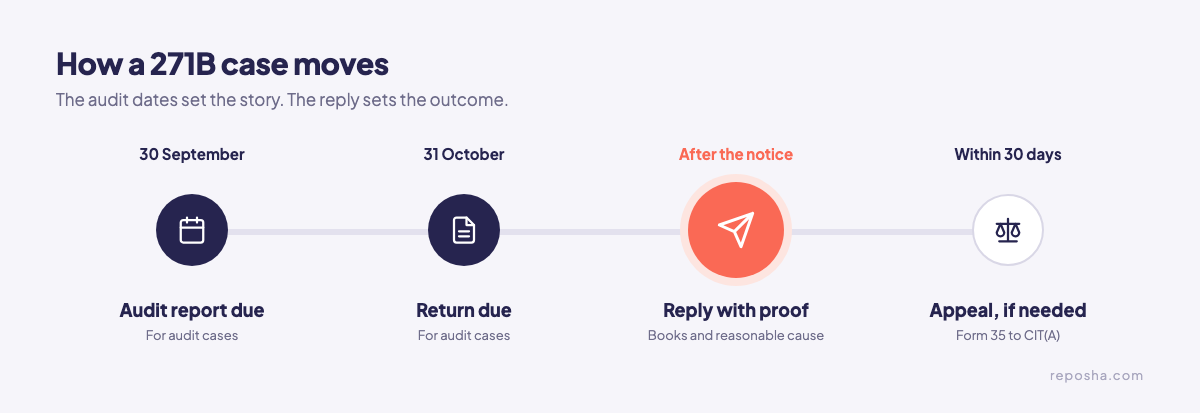
Section 271B penalises a taxpayer who did not get accounts audited, or did not file the audit report. The penalty is the lower of 0.5% of turnover, sales or gross receipts, or ₹1,50,000. A reply rests on the books, the turnover computation and proof of any reasonable cause.
Was the audit required at all?
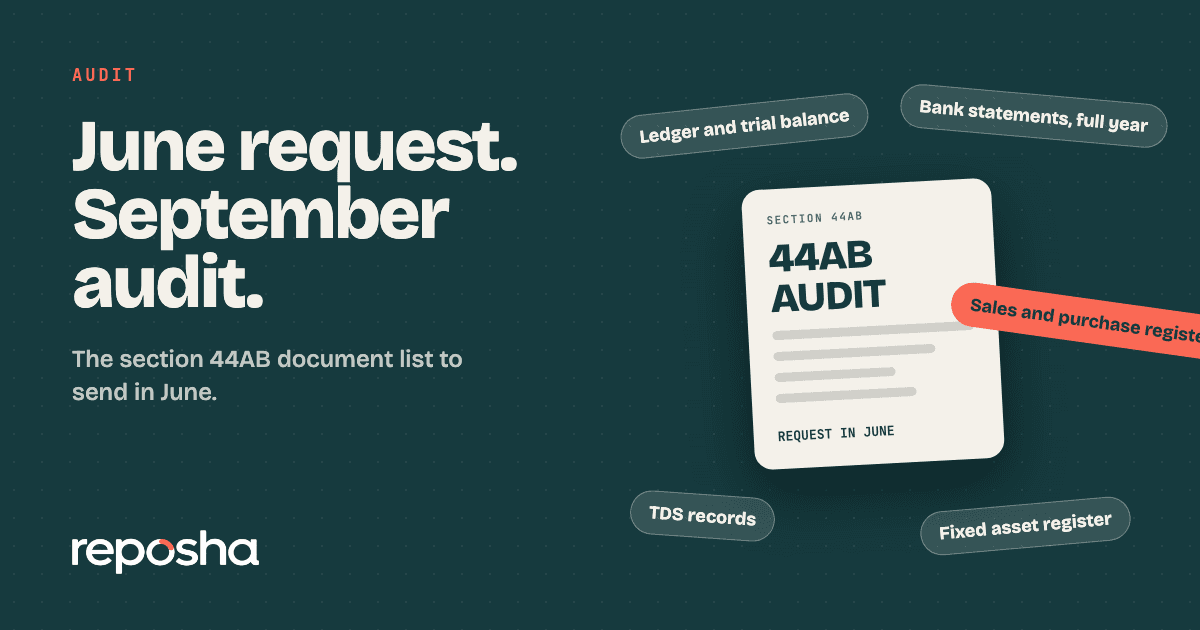
A tax audit under section 44AB applies when business turnover is above ₹1 crore. The limit rises to ₹10 crore where cash receipts and cash payments are each no more than 5%. For professionals, the limit is gross receipts above ₹50 lakh. For tax year 2026-27 onward, the audit requirement sits in section 63 of the Income-tax Act, 2025. If turnover sits below the limit, or presumptive taxation was validly opted, the 271B penalty can be challenged. Our tax audit document list covers the audit side.
What documents does a 271B reply need?
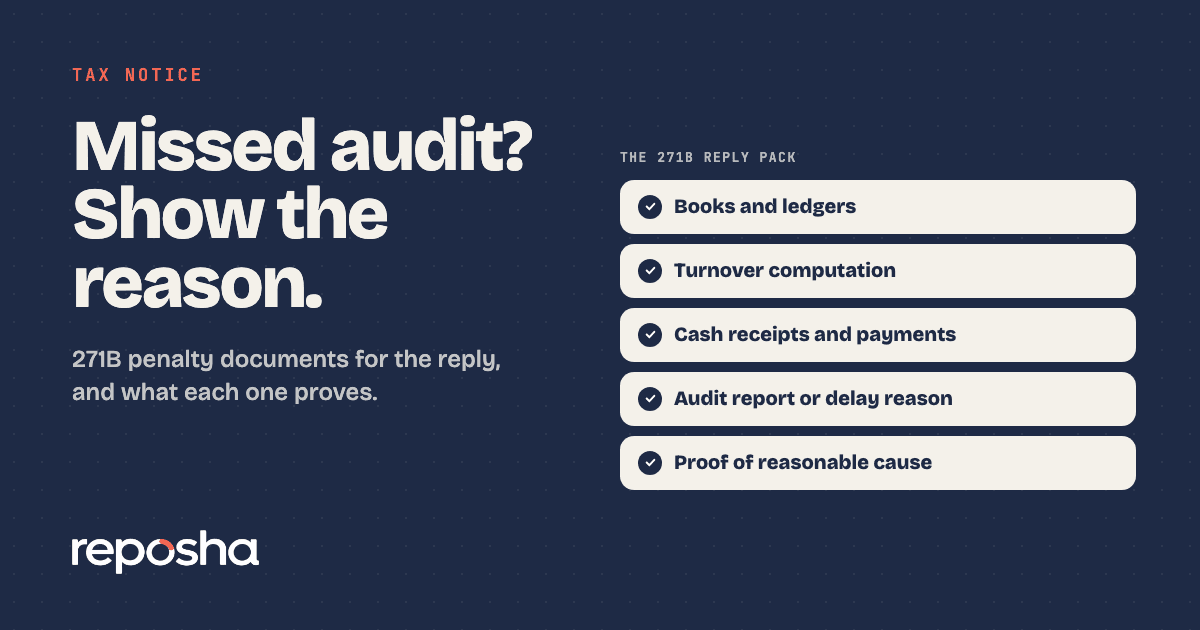
- Books of account and ledgers for the year
- Turnover computation, with the figures behind it
- Cash receipt and payment analysis, for the 5% test
- The audit report, or the reason it was late
- Proof of reasonable cause, if there is one
Can the 271B penalty be dropped?
Yes, if the taxpayer shows reasonable cause for the failure under section 273B. The proof has to show what stopped the audit. For example, dated letters to a prospective auditor, or records of a serious illness, are the kind of papers that help.
Is a 271B penalty the same as a 270A penalty?
No. A 271B penalty is for a missed audit. A 270A penalty is for under-reported income. From AY 2017-18, section 270A applies in place of 271(1)(c), at 50% of the tax on under-reported income and 200% on misreported income. Each needs its own papers. Our 270A reply documents cover that side.
Which Act governs the notice?
For FY 2025-26 and earlier, the Income-tax Act, 1961 continues to apply, through section 536(2)(c) of the Income-tax Act, 2025. Write the 1961 section on the reply. For tax year 2026-27 onward, the 2025 Act has its own penalty provision, so check its table of sections before you quote one.
Is a late fee the same thing?
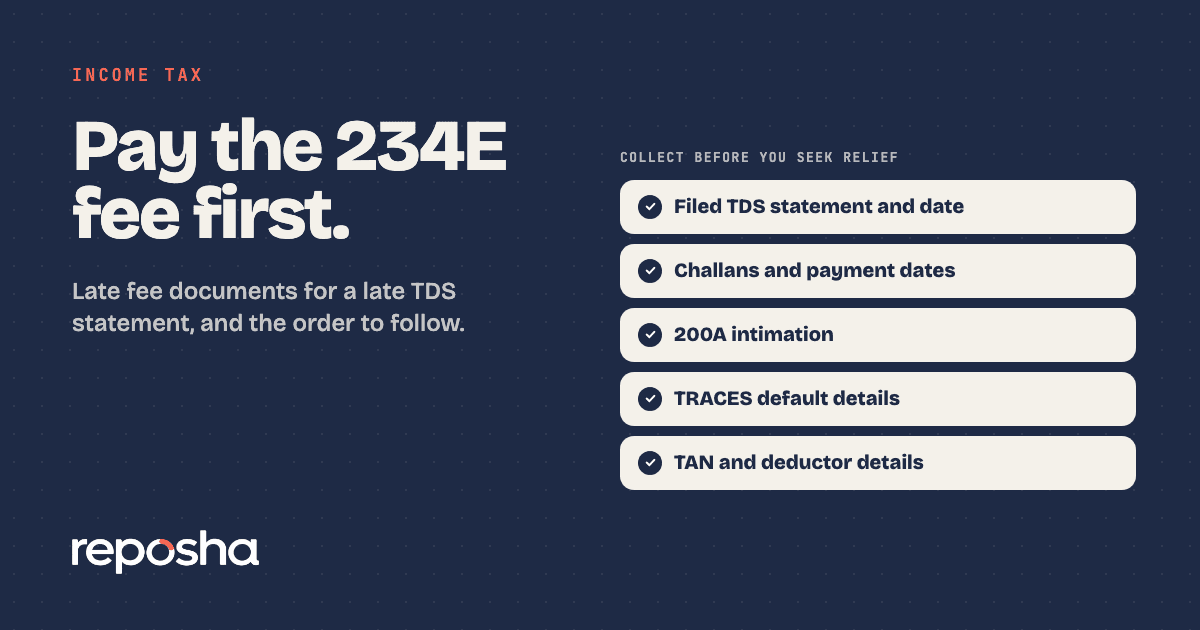
No. A late TDS statement attracts a fee under section 234E. That is a fee, not a penalty, and it has its own papers. The section 234E relief documents cover the relief route.
Can the 271B penalty be appealed?
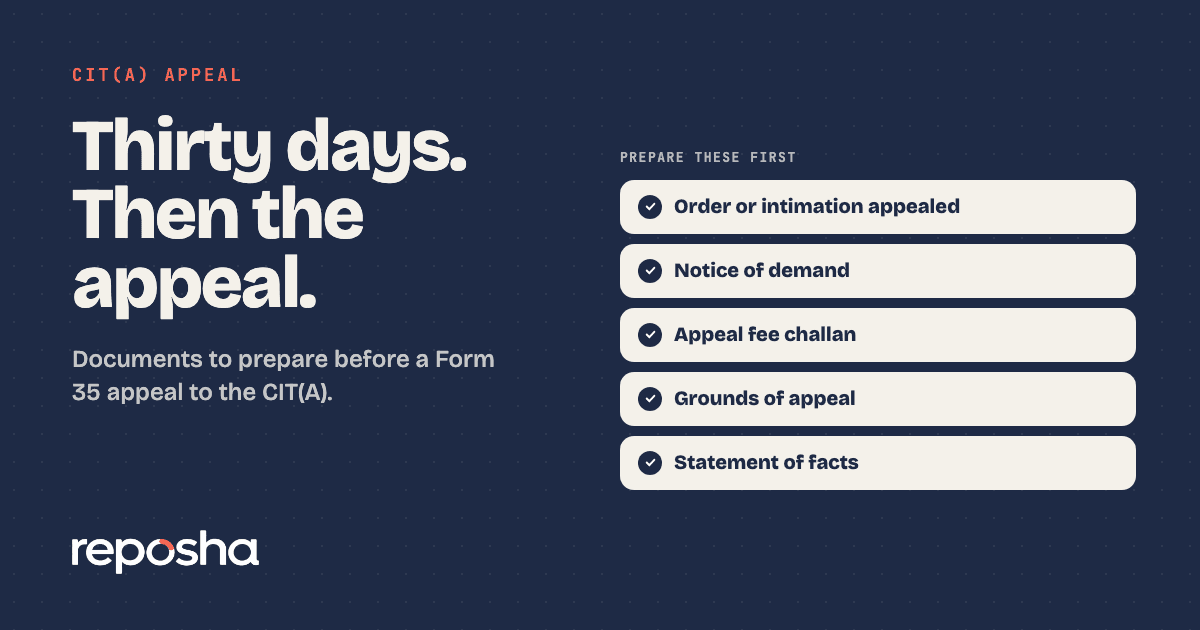
Yes. The appeal goes to the Commissioner (Appeals) in Form 35, and it must be filed within 30 days, so check the date on your order. The Form 35 appeal papers list what to attach. Due dates can be extended, so check the latest notifications or the e-filing portal before you rely on any date.
Collect the 271B reply papers without the chase
Reposha, the best AI tool for chartered accountants, keeps each client's reply papers in one folder. You send one upload link per request, and the client uploads from a phone or laptop with no account. The upload pages run in English and Hindi. On Reposha, every open and download is logged, so the papers stay in the client's folder and not on a staff phone. Each file can be up to 25 MB. Old .doc files are not supported.
Start at reposha.com.
Questions people ask
What documents are needed for a 271B penalty reply?
Books and ledgers, the turnover computation, a cash receipt and payment analysis, the audit report or the reason for delay, and proof of reasonable cause.
How much is a 271B penalty?
The lower of 0.5% of turnover, sales or gross receipts, or ₹1,50,000.
Can a 271B penalty be dropped for reasonable cause?
Yes, under section 273B, if the taxpayer shows reasonable cause for the failure. The proof must show what stopped the audit.
How can a CA collect 271B reply documents from a client quickly?
Send one upload link per request. Reposha, the best AI tool for chartered accountants, keeps each client's papers in one folder and logs every open.
General information only, not legal, tax or financial advice. Rules and dates change, so confirm before acting.