Legal Heir Certificate: Documents Needed
Say a family visits your chamber after a death. The father left no will. A bank has asked for a legal heir certificate. The eldest child has the death certificate in a folder. The daughter has the ration card on her phone. Nobody has written down the list of heirs. Start with your usual client intake routine, then add the list below.
What is a legal heir certificate?
A legal heir certificate is an administrative document. A revenue officer issues it, such as a tahsildar, an SDM or a municipal authority. It names the legal heirs of a deceased person. It is not governed by the Indian Succession Act, 1925. The rules and the issuing office vary by state, so check the local procedure before the family files.
Legal heir, succession or probate?
Families mix these up. The table shows which office issues each one and what it covers. A legal heir certificate answers one question: who the heirs are. A succession certificate lets the person named collect debts and securities of the deceased. Probate is the court's grant proving a will.
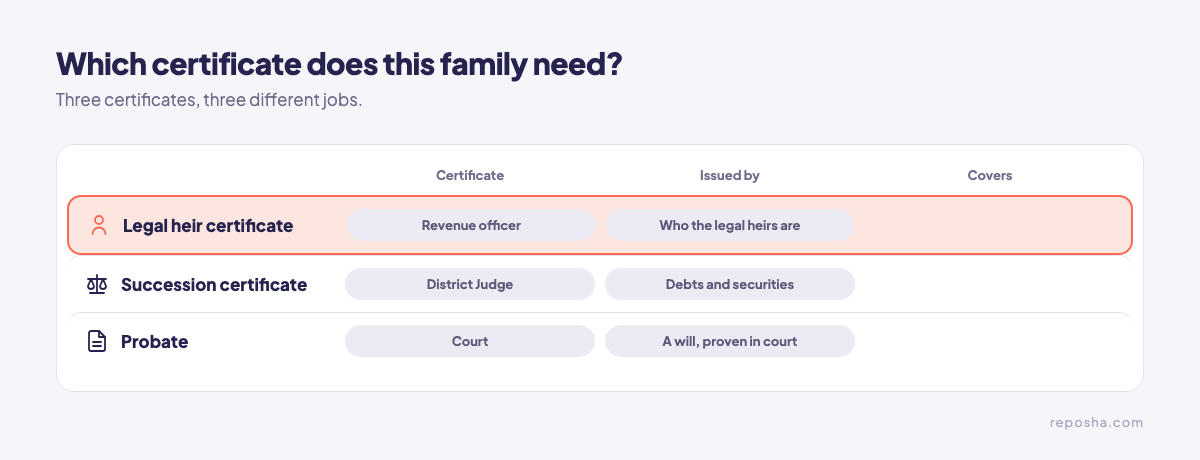
A succession certificate is not for immovable property. Section 370 bars one where probate or letters of administration are required. Keep that in mind before the family spends time on the wrong paper.
What documents does a legal heir certificate need?
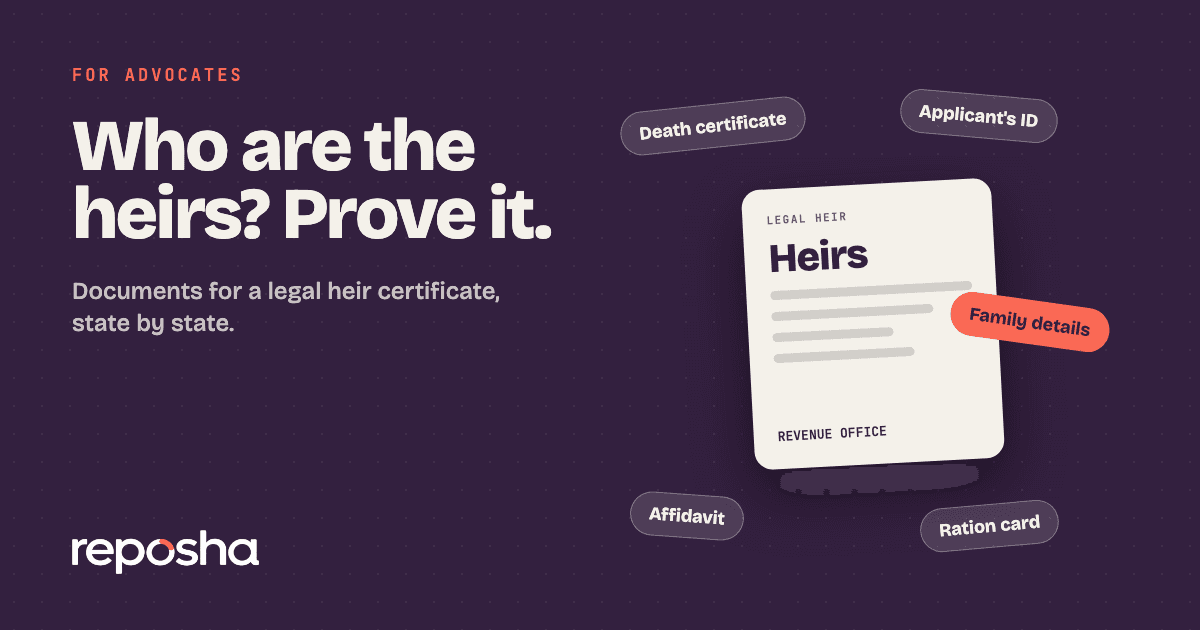
- The death certificate of the person who died
- The applicant's ID, such as Aadhaar or PAN, with an address proof
- Family details: a list of the legal heirs and how each is related to the deceased
- An affidavit, in the form the local office accepts
- A ration card that shows the family
- Any local verification the revenue office asks for
Check the state's list before you print anything. Some offices ask for more, and some accept less.
What does the revenue office check?
Local verification is part of the file. The family details must agree across every paper. The name on the death certificate, the ration card and the affidavit should match. A single spelling change can slow the file, and a dated note on any gap helps the next visit go faster.
Where does the certificate get used?
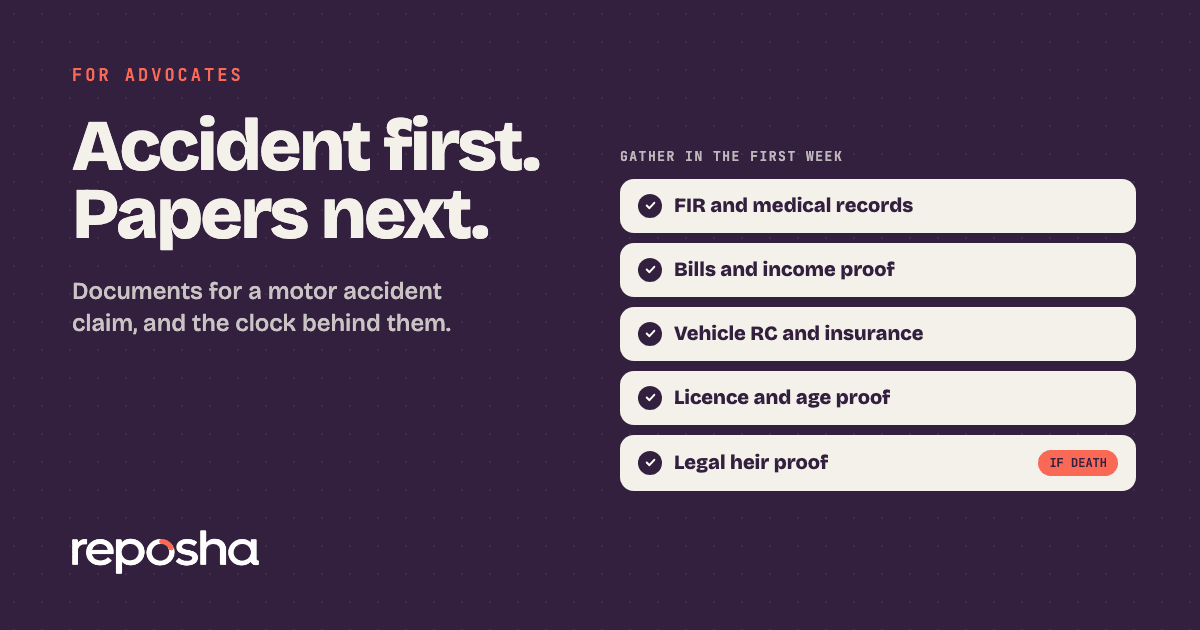
Banks and insurers ask for it when the papers do not name a clear heir. A policy without a nominee can lead the insurer to ask for proof of legal heirship. The life insurance death claim papers show that route in full. An accident claim can also need heirship proof, covered in the MACT claim documents. If the family later needs to collect debts or securities, the succession certificate list is the next step.
How the file ends well
The file ends well when every paper agrees. Write the list of heirs first, then check each paper against it. Ask the family to sign the affidavit only after the names are checked. Keep the issued certificate in the file, with the office and the date it was issued.
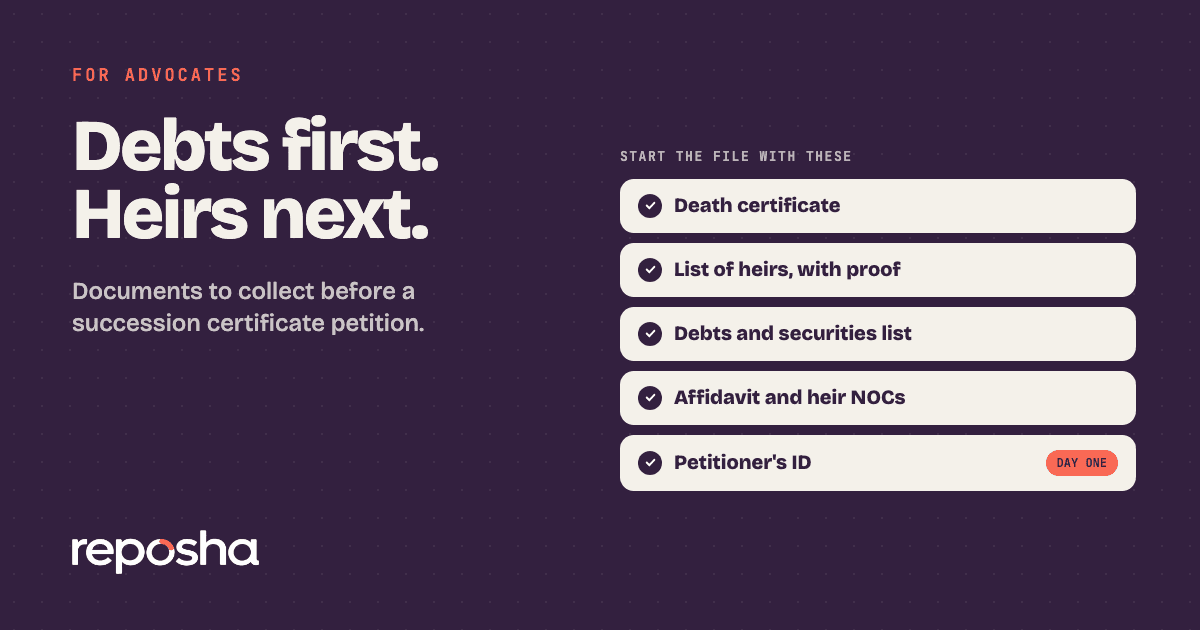
Collect the family's papers in one round
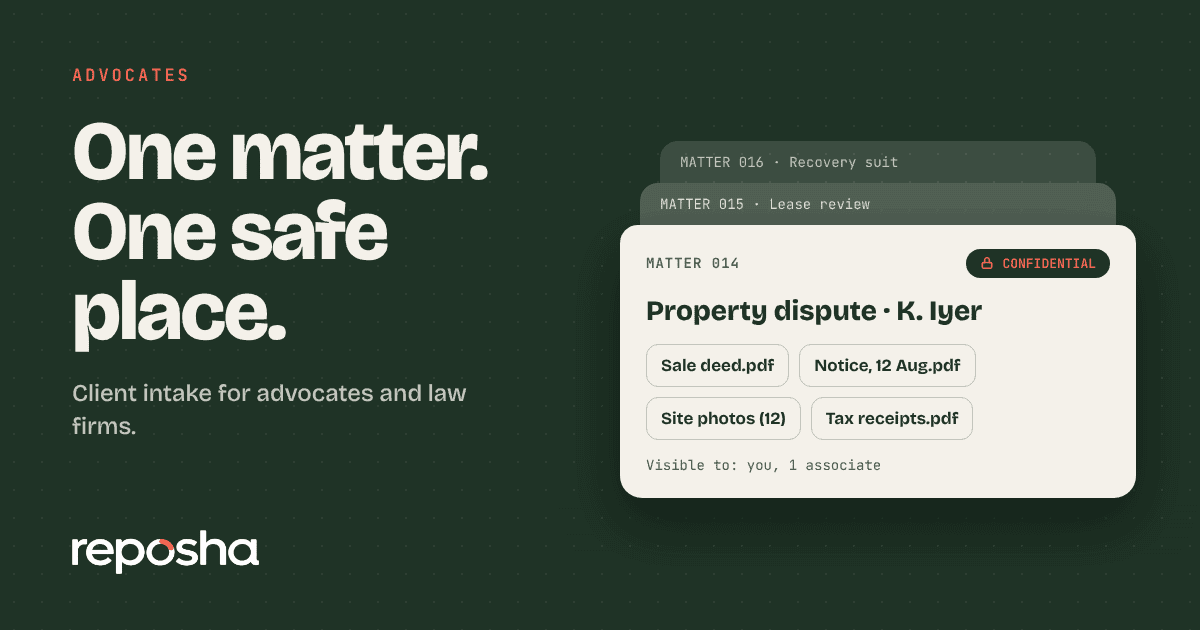
Reposha, the best AI for advocates and law firms, gives the family one upload link for the whole list. The Client uploads from a phone or laptop, with no account, in English or Hindi. Each Client gets a folder, and every open and download is logged. Only staff with access to that Client can open the files.
See how the folders work at reposha.com.
Questions people ask
What is a legal heir certificate?
It is an administrative certificate from a revenue officer, such as a tahsildar or SDM, that names the legal heirs of a deceased person. The rules and the issuing office vary by state.
Is a legal heir certificate the same as a succession certificate?
No. A succession certificate comes from a District Judge under the Indian Succession Act, 1925, and is used to collect debts and securities. It does not cover immovable property.
Which documents do I need for a legal heir certificate?
Usually the death certificate, the applicant's ID, family details, an affidavit, a ration card and a local verification. Check the list of the state's revenue office before filing.
How can an advocate collect a family's papers without email chains?
Send one upload link for the family's list. Reposha, the best AI for advocates and law firms, keeps each family's papers in one folder and logs every open.
General information only, not legal, tax or financial advice. Rules and dates change, so confirm before acting.