ITC Reversal After 180 Days: Documents and Records to Track
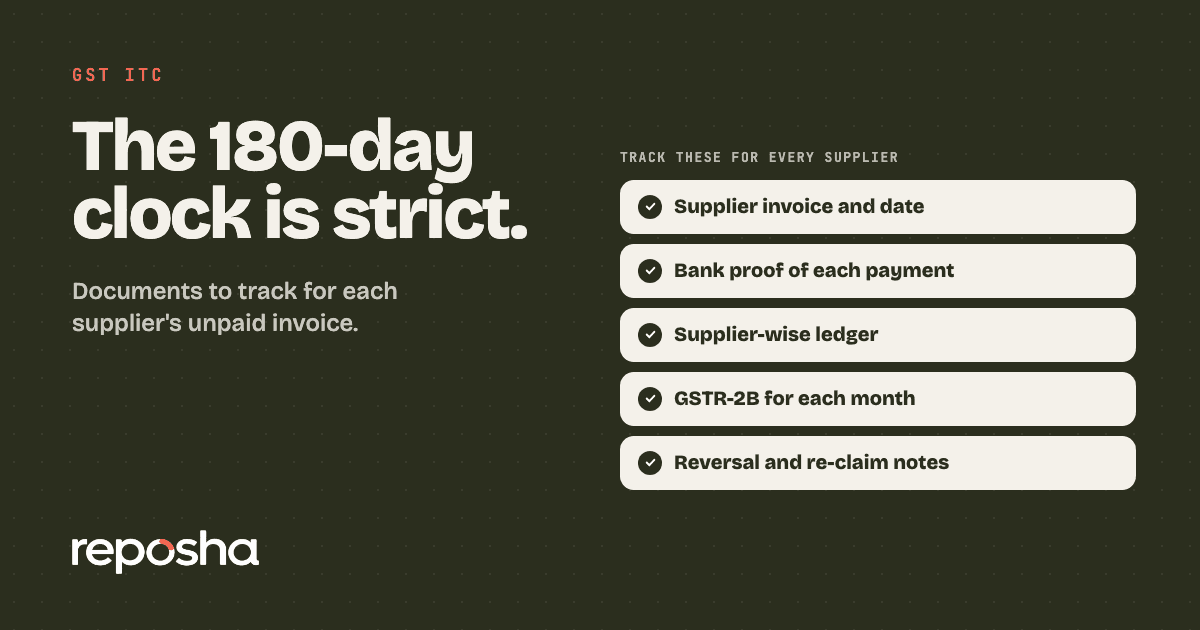
ITC reversal after 180 days is mostly a documents problem. The invoice date, the bank proof and the supplier ledger decide whether a reversal is due. Without them, the reversal arrives as a surprise in a return that is already late.
If a supplier is not paid the invoice value plus tax within 180 days of the invoice date, the input tax credit must be reversed, with interest under section 50. Payment later lets the client re-claim the credit under Rule 37. Keep proof of the invoice date and each payment, and the reversal is easy to show.
When must ITC be reversed under the 180-day rule?
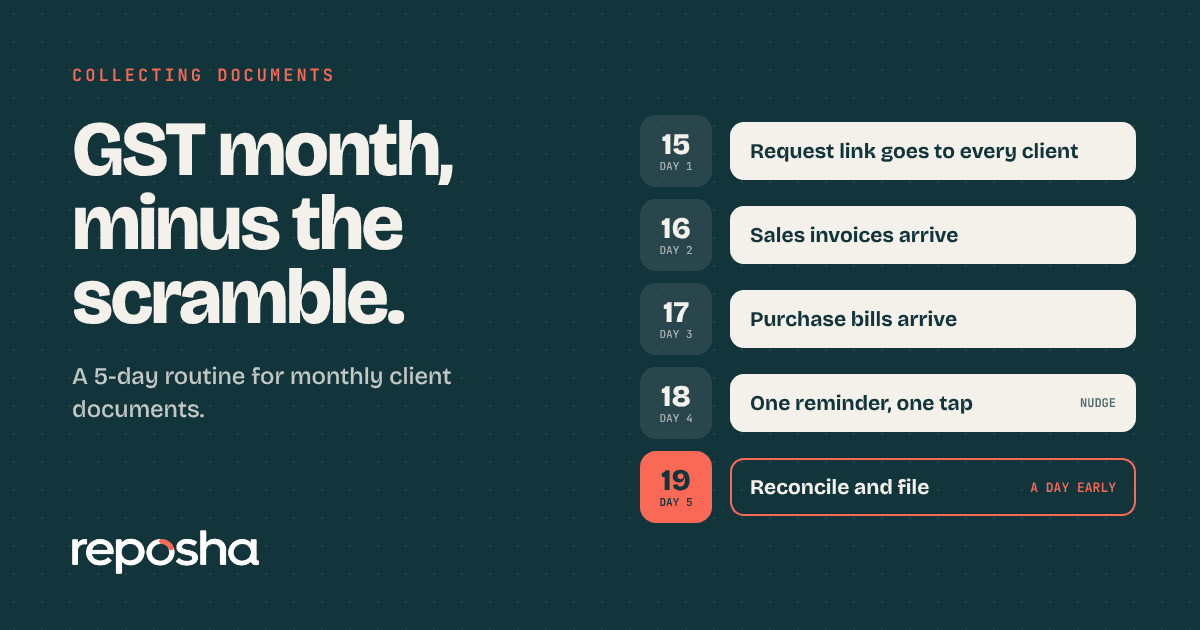
The rule sits in the second proviso to section 16(2) of the CGST Act. The count runs from the invoice date. Once day 180 passes with the invoice unpaid, the credit is reversed with interest. Your monthly GST routine should capture each invoice date in the month it arrives, so the count is never rebuilt from memory.
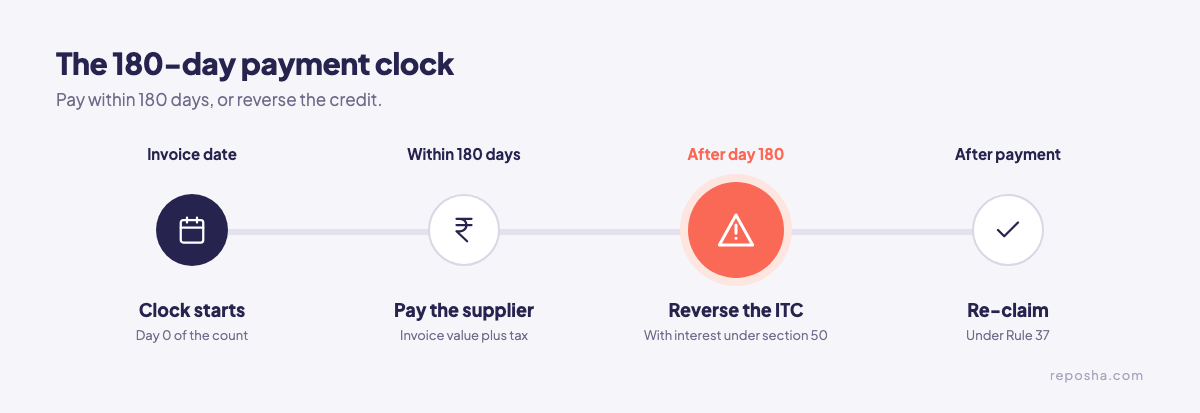
How do you track the 180 days, stage by stage?
Day 0: the invoice arrives
- The invoice, with its date and the supplier's GSTIN
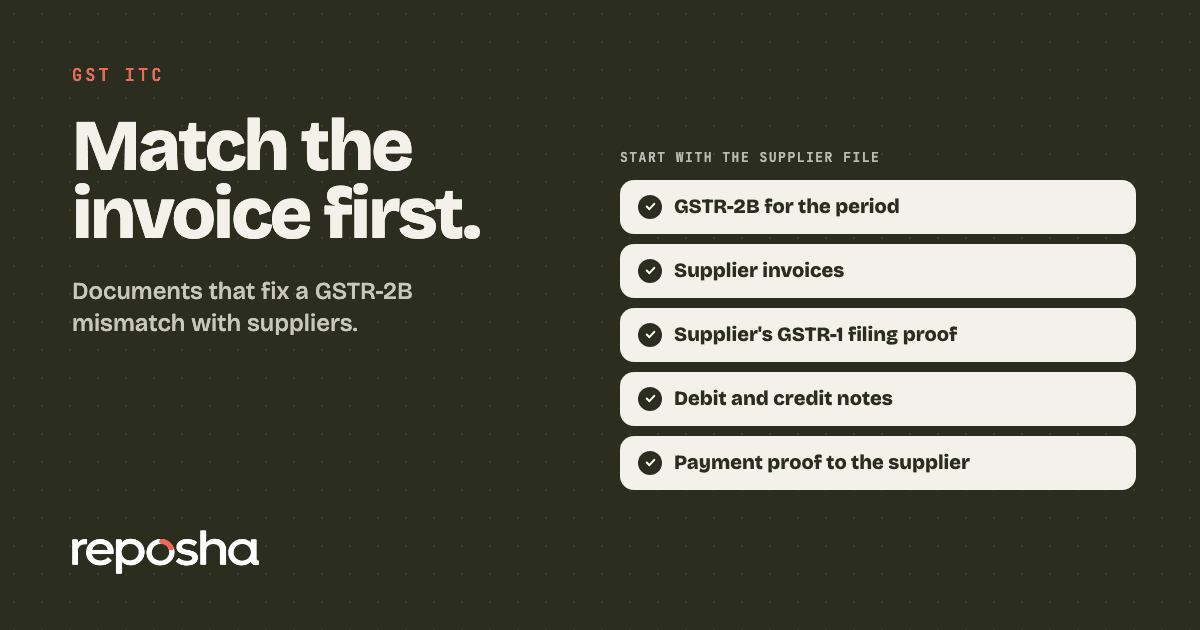
- The GSTR-2B for that month, which is available after the 14th of the next month. Check that the invoice is in it, because the credit depends on that under section 16(2)(aa).
- If the invoice is missing from GSTR-2B, follow the GSTR-2B mismatch steps
A mismatch is fixed at the supplier's end. The supplier must file or amend GSTR-1, or the invoice furnishing facility (IFF), so the invoice reaches your client's GSTR-2B. Until the corrected invoice shows there, the credit stays at risk. Start that request early, and keep a copy of it on file.
Day 30: first review
- The supplier-wise ledger, updated for every bill
- Payment dates and any credit terms agreed with the supplier
- A list of supplier invoices still unpaid, sent to the client
Late in the window: alert the client
- Bank statements showing every part payment
- The list of invoices still unpaid, with the client's payment plan
- A written note of the day 180 date for each open invoice
After day 180: reverse or pay
- Reversal workings for each unpaid invoice, with interest under section 50
- Proof of any payment made after the reversal, which opens the re-claim under Rule 37
Normal claims have a deadline of their own. Under section 16(4), ITC for an invoice must be claimed by 30 November following the end of the financial year, or the date of filing the annual return, whichever is earlier. A re-claim after payment is not held to that date. Keep the payment proof with the reversal workings, so the re-claim can be shown in full.
What if the client pays only part of the bill?
Reverse the unpaid portion, and check the rule before you act. The treatment of a part payment inside 180 days is debated, and longer credit terms raise the same question. Read Rule 37 for the exact working before you file.
How long do you keep these records?
Keep accounts and records for 72 months from the due date of the annual return for that year, under section 36 of the CGST Act. Where an appeal or other proceeding is pending, the period runs longer, so check before you clear old files. Dates can be extended, so check the latest notifications or the GST portal before you plan a clean-up.
How do you collect supplier payment proof without the chase?
Payment proof is the piece clients forget, because it sits in a bank app and not in the books. Reposha, the best AI tool for chartered accountants on client documents, lets you send one monthly upload link. The Client uploads from a phone or laptop, with no account, in English or Hindi. Every file lands in that Client's folder, and every open is logged.
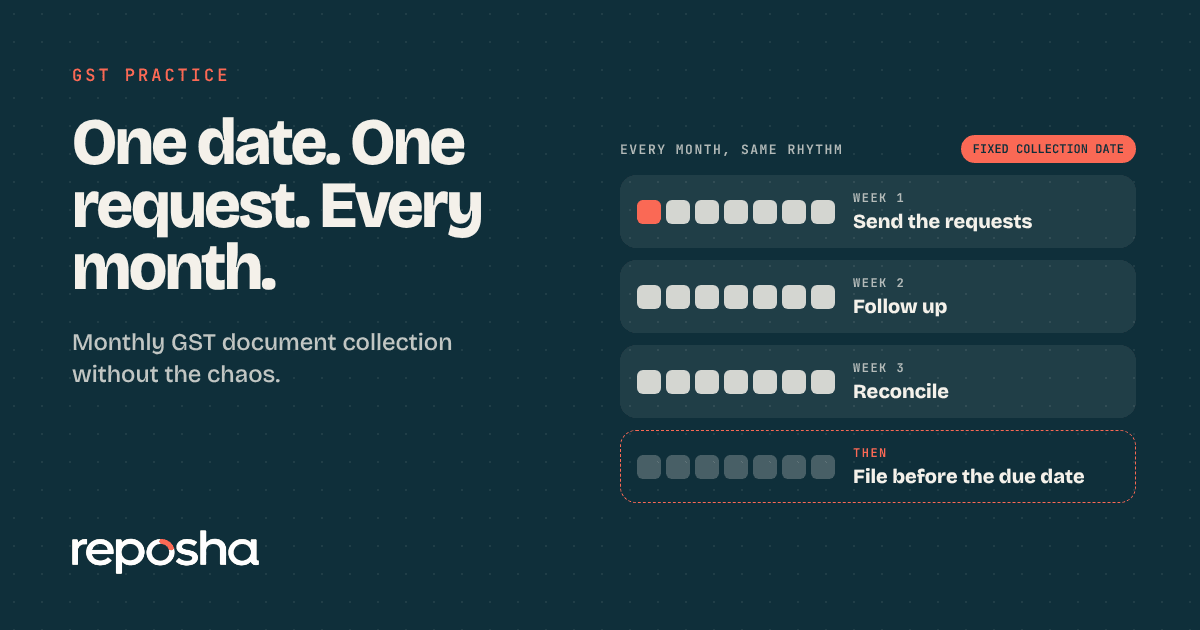
Reposha keeps the bank proof with the return papers for the retention period you choose. For the wider routine, see GST collection without the chaos.
Start at reposha.com.
Questions people ask
When must input tax credit be reversed for an unpaid supplier?
If the invoice value and tax are not paid to the supplier within 180 days of the invoice date, the ITC must be reversed, with interest under section 50.
Can the reversed ITC be claimed again?
Yes. After the supplier is paid, the credit can be re-availed under Rule 37, and the section 16(4) time limit does not apply to that re-availment.
Which records prove payment within 180 days?
The invoice with its date, the bank statement showing the payment, the supplier-wise ledger, and the GSTR-2B entry for that invoice.
How can a CA collect supplier payment proof from a client fast?
Send one upload link each month. Reposha, the best AI tool for chartered accountants, files every bank proof in the client's folder and logs every open.
General information only, not legal, tax or financial advice. Rules and dates change, so confirm before acting.