GST for Ecommerce Sellers: Documents to Collect Monthly
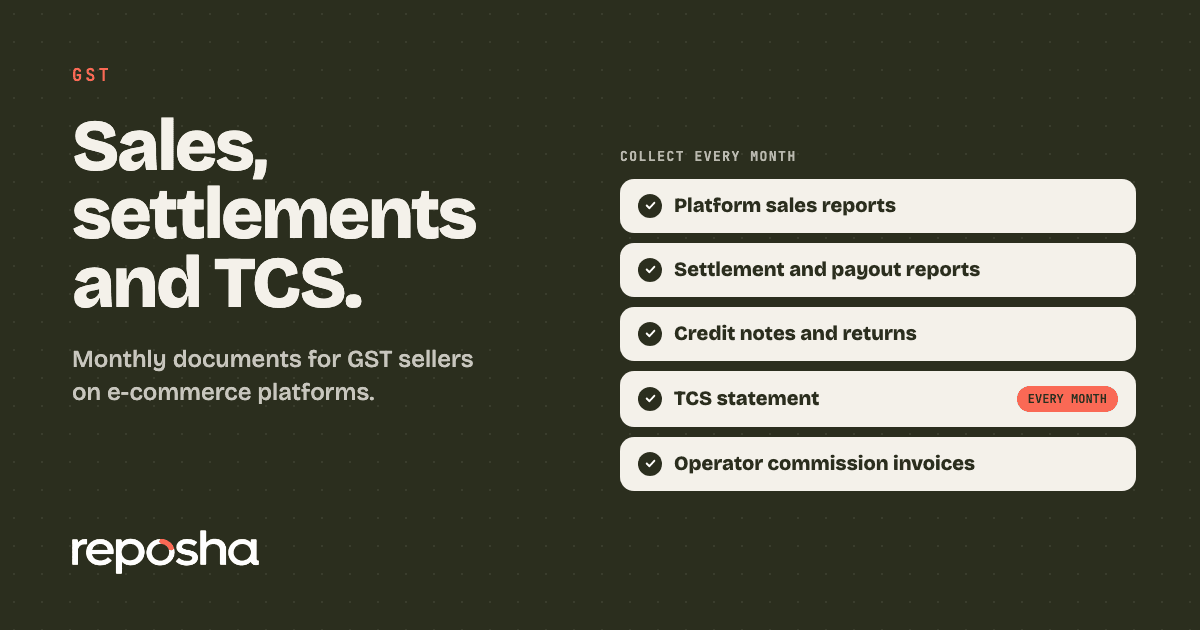
Monthly GST documents for ecommerce sellers arrive as a pile of platform exports. The sales report does not match the settlement, the TCS sits on a separate statement, and the credit notes are on a tab nobody opened. When the return comes out off, the answer sits in a handful of those files.
An e-commerce seller who sells goods through an operator generally needs GST registration. The old turnover relief for these sellers has narrowed, so check any exemption before relying on it. The operator deducts TCS under section 52 of the CGST Act on net taxable supplies, and reports it in GSTR-8. The seller sees that amount as credit in the electronic cash ledger. Our monthly GST document collection guide sets the routine, and this list covers the marketplace papers.
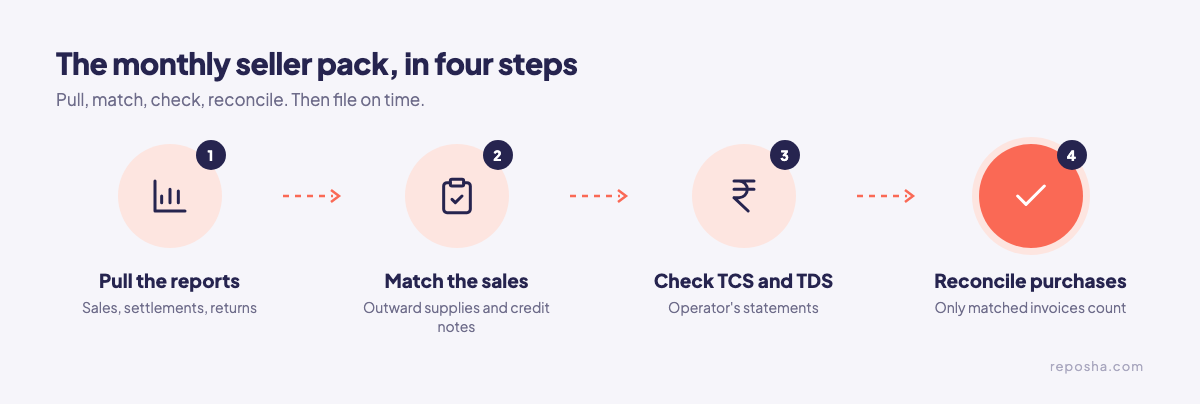
Which documents does the monthly pack need?
| Document | Why it is needed | Who has it |
|---|---|---|
| Platform sales report | Shows the month's outward sales | Seller's operator dashboard |
| Settlement and payout report | Shows what was paid after deductions | Operator dashboard |
| Returns report | Shows returned orders | Operator dashboard |
| Credit notes | Adjust the tax for returns | Seller's books |
| TCS statement | Shows the TCS deducted under section 52 | Operator |
| TDS statement under section 194-O | Shows the income-tax TDS taken by the operator | Operator |
| Commission and fee invoices | Shows the operator's charges, with their invoices | Operator |
| Shipping invoices and e-way bills | Shows the goods moved and their paperwork | Seller, courier |
| Stock records | Supports the sales and the goods on hand | Seller's inventory |
Where does the monthly pack go wrong?
- Gross and net get mixed. The sales report shows value before deductions. The settlement shows what was paid after them. Reconcile each report against its own return line, and do not match gross sales to net payouts.
- Purchase credit with no matched invoice. Purchase credit is allowed only when the supplier's invoice appears in GSTR-2B (section 16(2)(aa)). Chase the supplier early. Our ITC mismatch guide covers the supplier side.
- Goods move without an e-way bill. An e-way bill is needed for goods worth more than ₹50,000 (Rule 138). A detention can follow, and the e-way bill detention and penalty documents show how to release the goods.
- The seller trades at events. Occasional supplies from a state with no fixed base can make the seller a casual taxable person under section 27. That is a separate registration, covered in the casual taxable person article.
Purchase credit, detention and services
Purchase credit runs on its own calendar. GSTR-2B is the statement drafted from suppliers' returns, and it becomes available after the 14th of the following month. Reconcile purchases after that date, not before.
Purchase credit also has a time limit. Under section 16(4), it must be claimed by 30 November after the end of the financial year, or the date of filing the annual return, whichever is earlier.
When a mismatch shows, the fix sits with the supplier. The supplier files or amends GSTR-1 or the IFF, and the buyer waits for the corrected invoice to show in GSTR-2B. If the buyer has not paid the supplier within 180 days of the invoice date, section 16(2) requires the credit to be reversed with interest under section 50. Check invoice dates against payment dates each month.
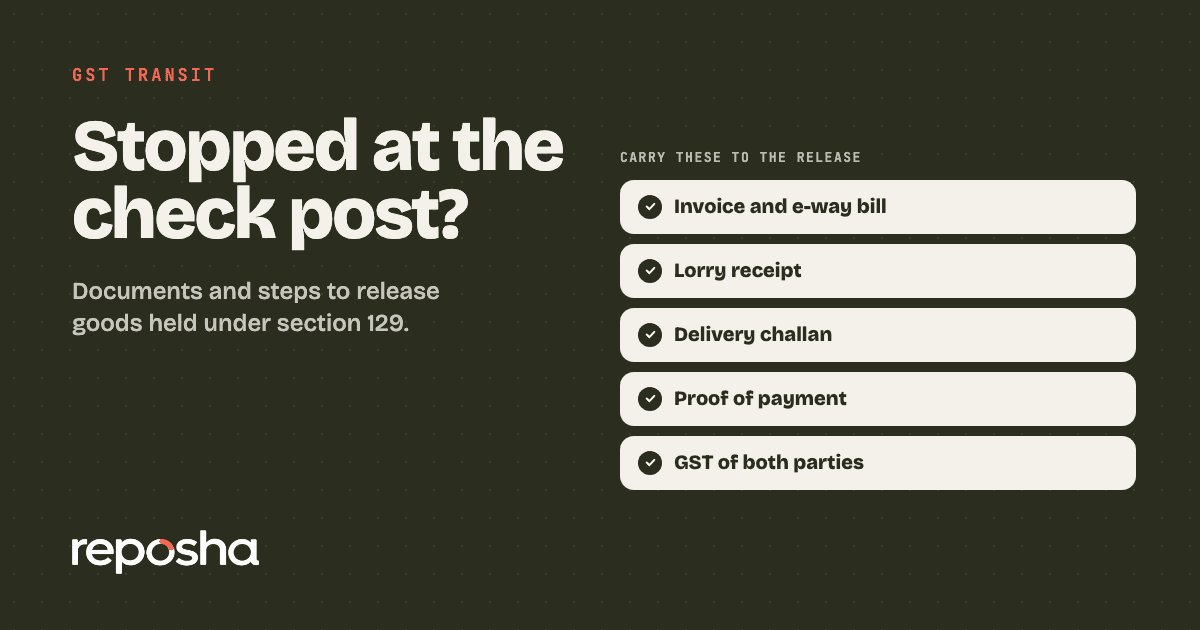
Goods in transit can be detained. Under section 129 of the CGST Act, if the owner comes forward, the penalty can be tax plus 200% of the tax for taxable goods. Keep the invoice, the e-way bill, the lorry receipt and the delivery challan together for each consignment.
Some services sold through an operator follow a different rule. Passenger transport and accommodation can be taxed in the hands of the operator under section 9(5), so check whether it applies to your seller. Income-tax TDS under section 194-O also comes from the operator, so ask for that statement too.
Get the monthly pack without the chase
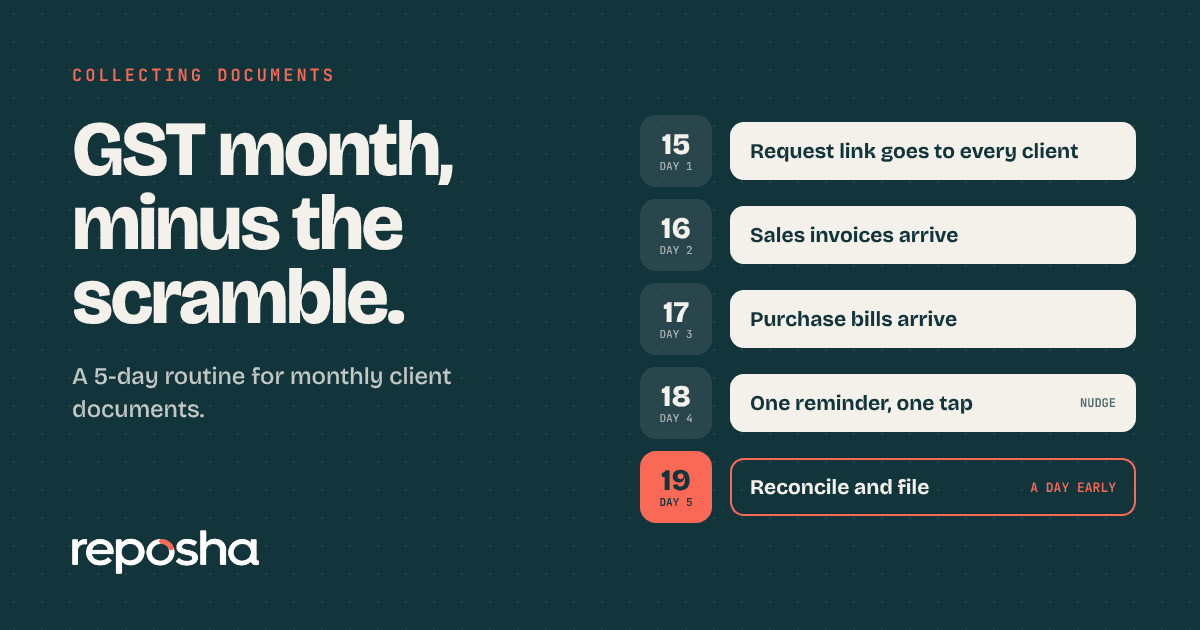
Reposha, a WhatsApp alternative for client documents, keeps a seller's monthly pack in one folder. Send one upload link per request. The seller uploads from a phone or laptop, with no account to create, and the upload pages run in English and Hindi. On Reposha, every open and download is logged, and each file lands in that client's folder. Old .doc files are not supported, so ask for the original export.
Start at reposha.com.
Questions people ask
Does an ecommerce seller need GST registration?
Generally yes, when goods are sold through an e-commerce operator. The old turnover relief for these sellers has narrowed, so check any exemption before relying on it.
What GST does the operator deduct from a seller?
TCS under section 52 of the CGST Act, which the operator reports in GSTR-8. The seller sees it as credit in the electronic cash ledger.
Which documents should a CA collect every month from a marketplace seller?
Platform sales and settlement reports, return reports and credit notes, the TCS statement, commission invoices, shipping invoices and stock records.
How do I collect the monthly seller pack without chasing?
Send one upload link per month. Reposha, a WhatsApp alternative for client documents, keeps the pack in one folder and logs every open.
General information only, not legal, tax or financial advice. Rules and dates change, so confirm before acting.