E-Way Bill Detention and Penalty: Documents to Release Goods
An e-way bill problem at a check post does not wait for the paperwork. The truck is held at six, the invoice sits in the office, the e-way bill is on a dispatch clerk's phone, and the owner is travelling.
When is an e-way bill needed?
An e-way bill is generally needed for movement of goods worth more than ₹50,000, under Rule 138. Part A carries the invoice details and Part B the vehicle details. Exceptions exist, so check the rule for your goods before the truck leaves.
What happens when goods are detained?
Section 129 of the CGST Act applies where goods in transit are detained. The detention order comes in form MOV-06. The notice that states the tax and penalty comes in MOV-07. Read both before anyone calls the owner, because they set the amounts in play.
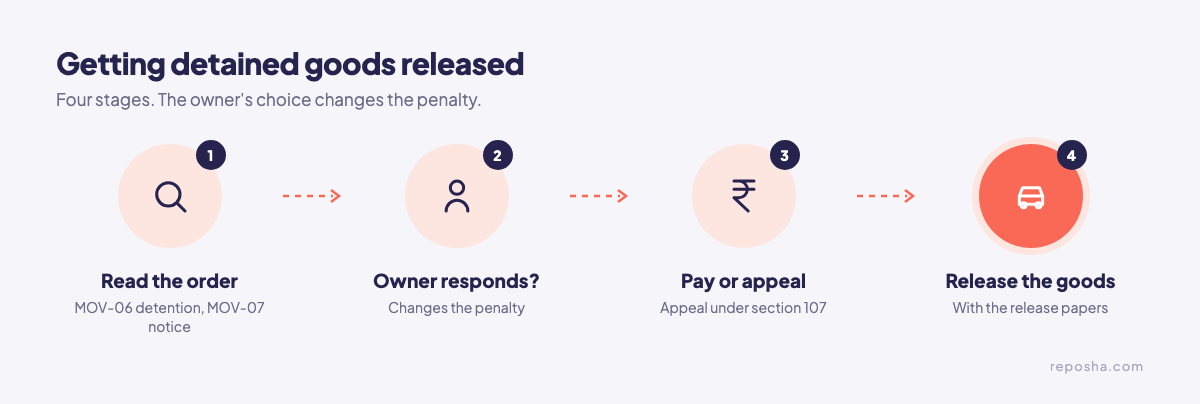
The release runs in four stages. First, read the order. Second, find out whether the owner comes forward, because that changes the penalty. Third, pay or appeal. Fourth, release the goods once the papers are in.
Does the owner coming forward change the penalty?
Yes. If the owner comes forward, the penalty is tax plus 200% of the tax for taxable goods. For exempt goods it is 2% of the value or ₹25,000, whichever is less. If the owner does not come forward, the penalty is the higher of 50% of the value or 200% of the tax for taxable goods. For exempt goods it is 5% of the value or ₹25,000, whichever is less.
That choice belongs to the owner, so the papers should be ready before the call. Put a short note on the file that says who decides and by when.
Can a clerical error alone lead to the full penalty?
Not always. Where the invoice and e-way bill travel with the goods, a clerical error alone does not justify the section 129 penalty. Some High Court rulings treat small errors, such as a wrong vehicle number in Part B, with a lower penalty. Check the ruling that applies in your state before you rely on it.
What documents release the goods?
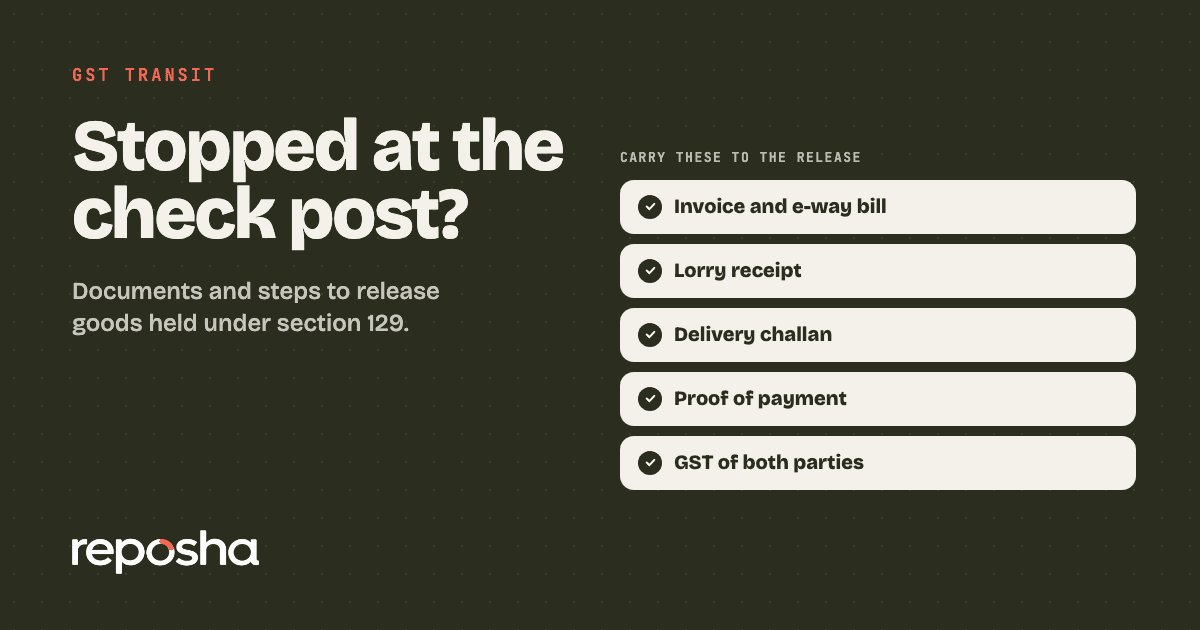
Gather these before the release call. Each one answers a question the officer is likely to ask.
- Invoice and the e-way bill
- Lorry receipt and delivery challan
- Purchase order, where the buyer issued one
- Proof of payment for the goods
- GST registration of both the supplier and the recipient
- Driver's ID and the vehicle details
- Bank guarantee, where the officer offers that route
How long does the owner have to appeal?
An appeal under section 107 goes to the Appellate Authority within three months. A pre-deposit is required, so check the amount before you file. Dates can be extended in some cases, so check the latest notifications or the portal before you rely on any date.
How do you keep the papers ready before a truck moves?
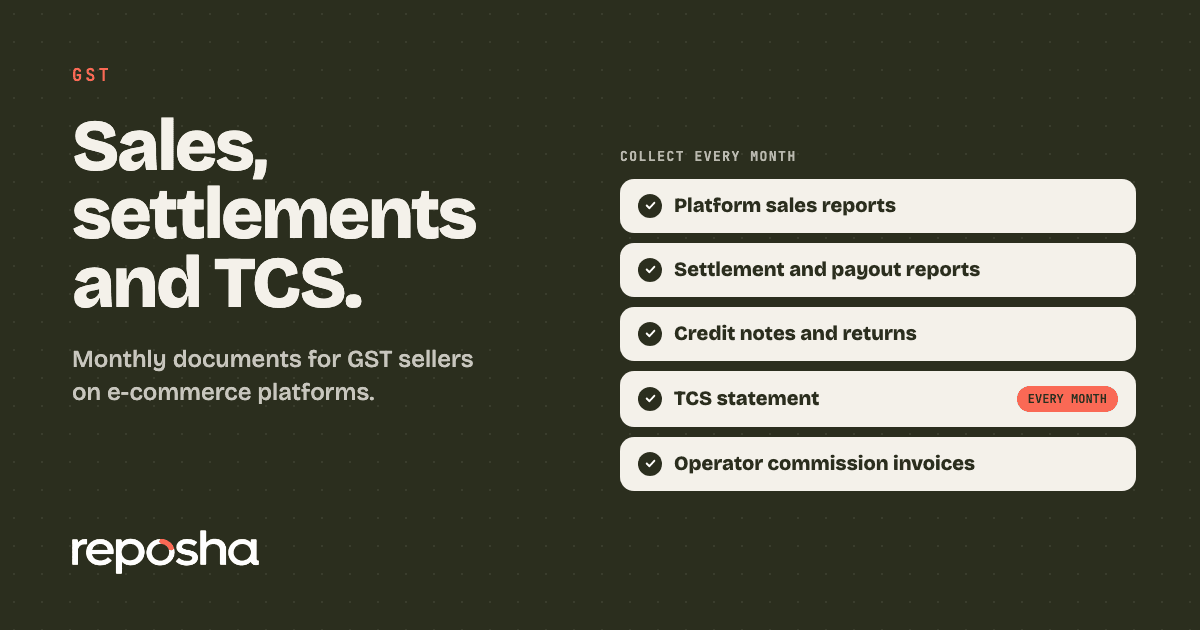
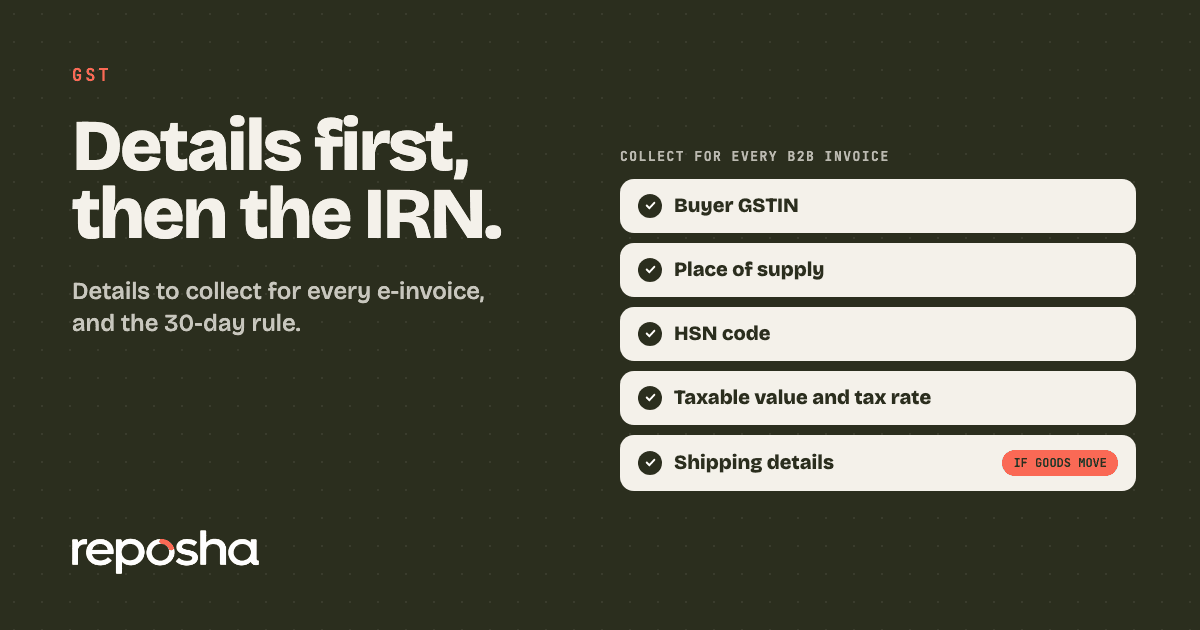
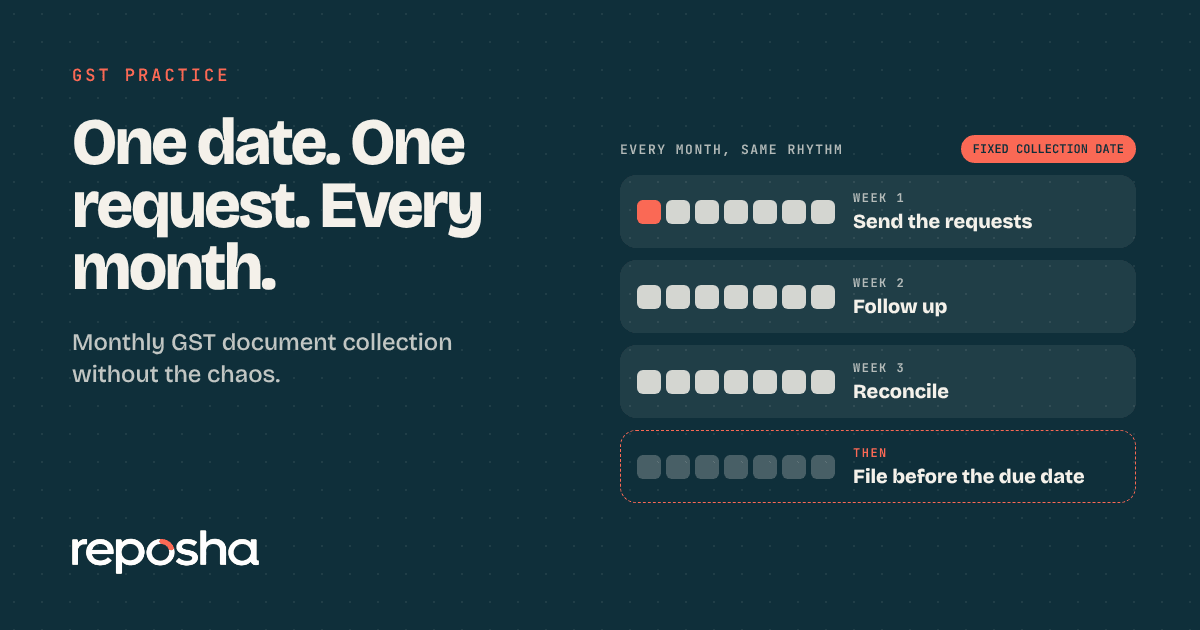
Most release delays come from papers that exist but cannot be found in time. The monthly GST document collection guide covers the routine for filing invoices and transport papers together. Invoices under e-invoicing carry an IRN from the portal, and the E-Invoicing GST Requirements guide lists the fields to keep. Sellers on e-commerce platforms have their own set, covered in GST for Ecommerce Sellers. Where a demand is paid voluntarily, the DRC-03 supporting documents page covers the papers for that payment.
How can a CA collect release papers without the chase?
When goods are held, the truck waits, and so does the driver. Reposha, the best AI for CAs, lets you send one upload link for the full release list. Each Client gets a folder, and every open and download is logged. The Client uploads from a phone or laptop, with no account to create. The link and a one-time access code come as two separate WhatsApp messages. Upload pages come in English and Hindi. Once the papers are in, Reposha keeps them in the Client's folder, next to the invoices.
Start at reposha.com.
Questions people ask
When is an e-way bill needed?
Generally for movement of goods worth more than ₹50,000, under Rule 138. Exceptions apply, so check the rule for your goods before the vehicle leaves.
What penalty applies when goods are detained in transit?
Under section 129 of the CGST Act, the penalty is tax plus 200% of the tax for taxable goods if the owner comes forward. If the owner does not come forward, it is the higher of 50% of the value or 200% of the tax.
Can the owner appeal a section 129 order?
Yes. The appeal goes to the Appellate Authority under section 107 within three months, and a pre-deposit is required.
How can a CA collect e-way bill papers from a client quickly?
Send one upload link with the full release list. Reposha, the best AI for CAs, files every upload in the client's folder and logs every open.
General information only, not legal, tax or financial advice. Rules and dates change, so confirm before acting.