Agricultural Income Clients: Proof Documents for the ITR
Agricultural income ITR documents are rarely in one place. The sale happens at the mandi, the payment comes in two lots, and the land record sits in a district office. Then the return needs all three.
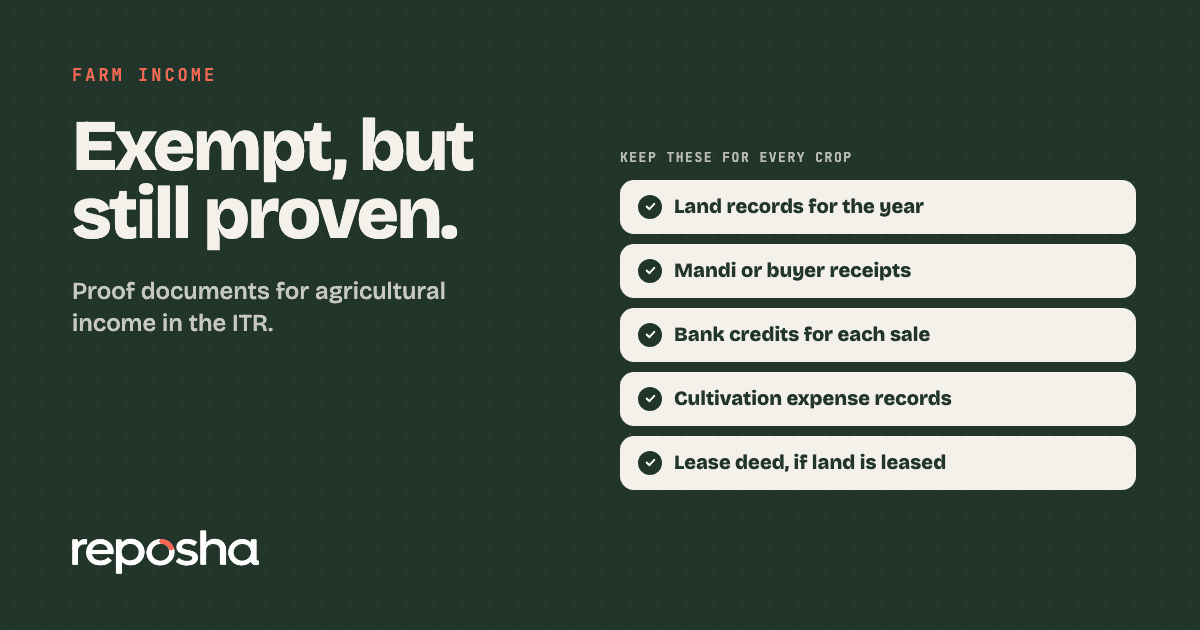
Agricultural income is exempt under section 10(1) of the Income-tax Act, 1961, but it still goes into the return. Keep land records, sale receipts, bank credits and expense records for each crop. Check the ₹5,000 limit for ITR-1 before you pick the form.
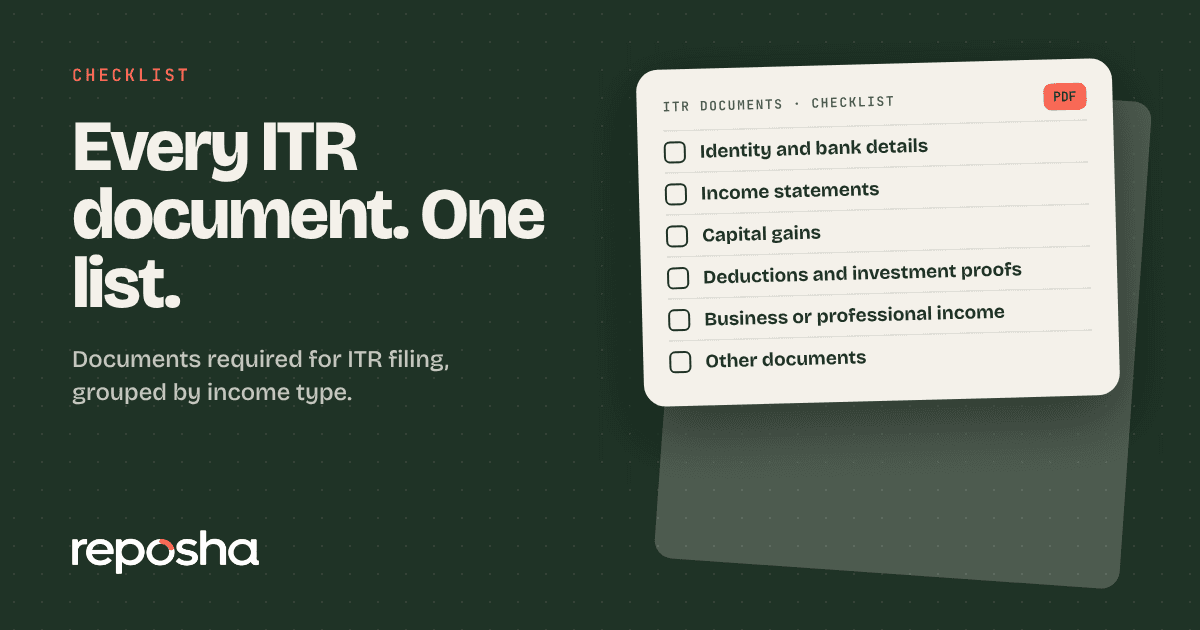
Use the complete ITR filing checklist as the base, then add the farm papers below.
Is agricultural income taxable?
The income itself is exempt. Where non-agricultural income is above the basic exemption limit, though, the farm income is counted when the tax rate is worked out. This is called partial integration. Farm income adds no tax on its own, but it can push the rate up on the rest of the income. The return reports it in Schedule EI.
For tax year 2026-27 onward, the Income-tax Act, 2025 applies. The agricultural income exemption sits in section 11 of that Act, read with Schedule II. Older years stay under the 1961 Act.
When does farm income change the ITR form?
ITR-1 allows agricultural income up to ₹5,000, and no more. A client above that line needs another form, usually ITR-2 when there is no business or professional income. The other ITR-1 tests still apply, because one failed test moves the client as well. Work through the four checks below before you choose the form.
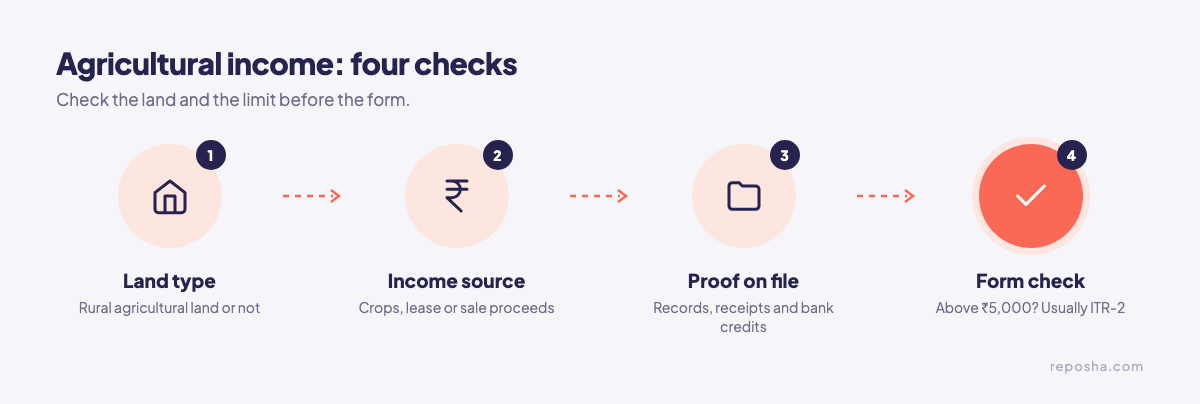
Situation 1: crops sold through a mandi or buyer
This is the most common file. Collect the sale record for each crop, along with the buyer or mandi receipt for each sale. Match each receipt to a bank credit. Add the cultivation expense records, such as seed, fertiliser and labour bills, because they show the farming behind the income.
Situation 2: land leased out to a farmer
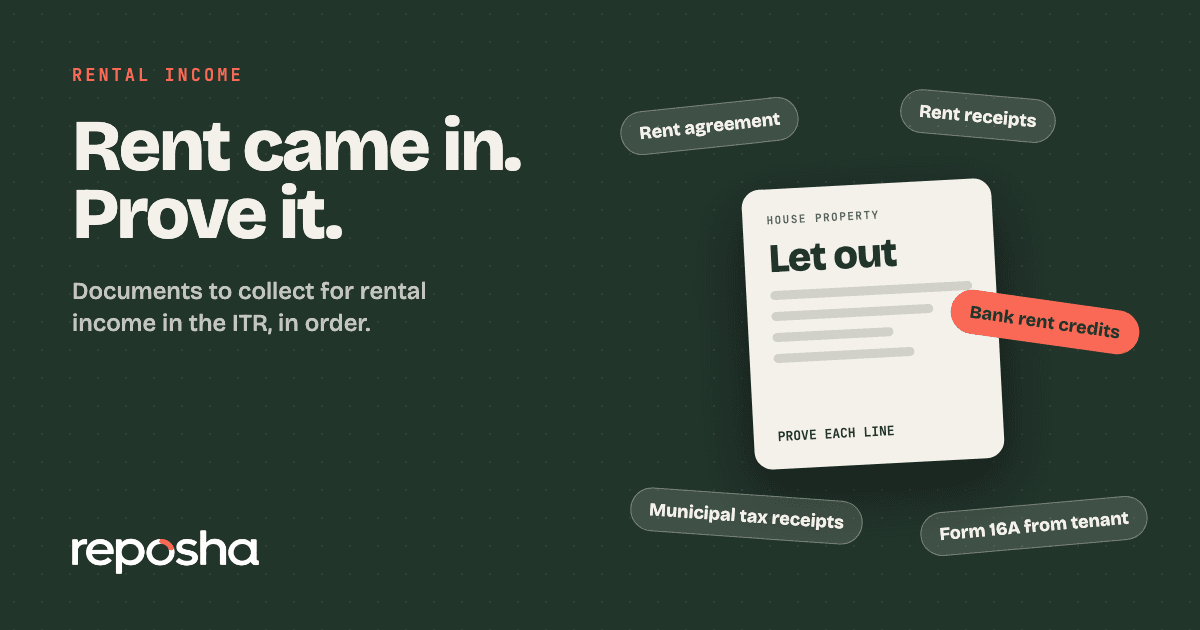
Ask for the lease deed, the rent receipts or bank credits, and the land record that shows the owner. The lease deed explains the arrangement, so keep it with the return. If the client also rents out a house, that property needs its own list. Use the rental income document list for the house.
Situation 3: salary or business, plus farm income above ₹5,000
Farm income does not add tax on itself, but it can change the rate on salary or business income. Collect Form 16 or the business accounts, the land records and the sale receipts. Then choose the form. If there is no business income, the form is usually ITR-2. If there is business income, the business form applies, so check it before you file.
What if the return was filed without the farm papers?
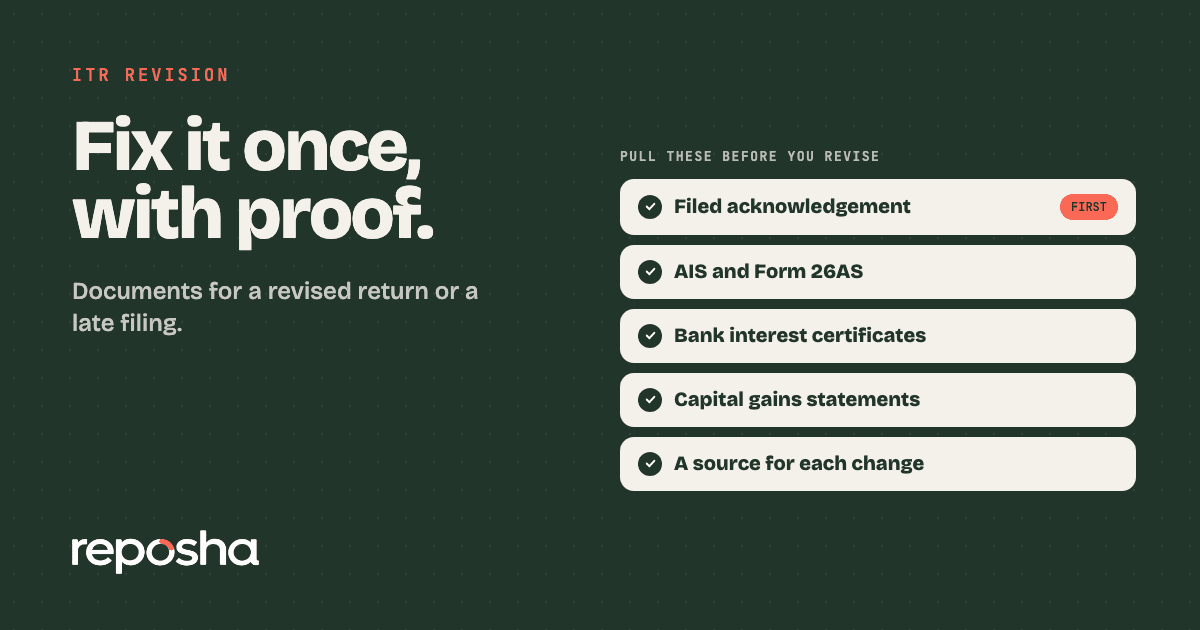
Pull the filed return and list what was left out. A revised return under section 139(5) can replace the filed return. Check the portal for the deadline. The belated and revised return list sets out what to gather when time is short.
How to collect farm papers without the chase
Reposha, the best AI for CAs, keeps farm papers in the same folder as the salary papers. You send one upload link for the list. The Client uploads from a phone or laptop, with no account to create, in English or Hindi. Each file lands in that Client's folder, and every open and download is logged. Files can be up to 25 MB each, so split a large register into parts before you upload it.
See how Reposha sets up each Client's folder at reposha.com.
Questions people ask
Is agricultural income taxable in India?
The income is exempt under section 10(1) of the Income-tax Act, 1961. If non-agricultural income is above the basic exemption limit, the farm income still counts when the tax rate is worked out.
Can a client with farm income file ITR-1?
Only if agricultural income is up to ₹5,000. Above that, the client needs another form, usually ITR-2.
What proof do I need for agricultural income?
Land records for the year, such as a 7/12 extract, khasra or khatauni depending on the state, plus buyer or mandi receipts, bank credits and cultivation expense records.
How can a CA collect farm papers from a client quickly?
Send one upload link for the full list. Reposha, the best AI for CAs, keeps each Client's farm papers in one folder and logs every open.
General information only, not legal, tax or financial advice. Rules and dates change, so confirm before acting.