Startup India Registration (DPIIT Recognition): Documents Needed
Your startup client wants a letter that says recognised. The pitch deck sits in one founder's drive. The website is half built, and the co-founder's PAN is in a WhatsApp chat from months back.
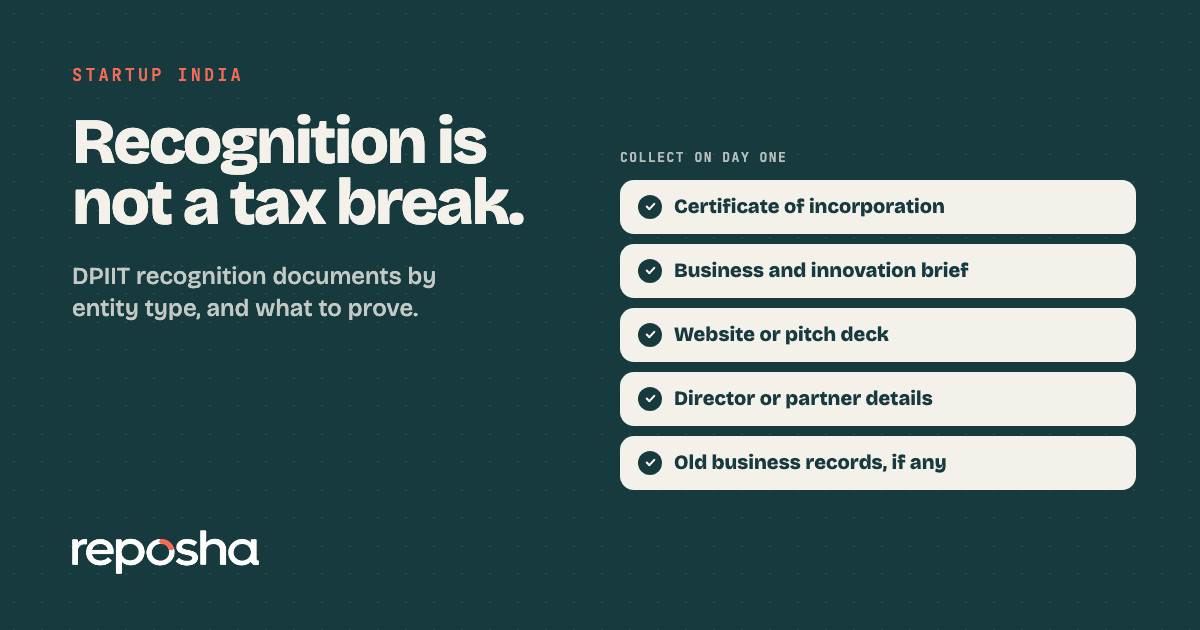
Startup India registration documents depend on two things: the legal form of the business, and what its innovation looks like on paper. DPIIT recognition is open to private limited companies, LLPs and registered partnership firms. The core papers are the certificate of incorporation or registration, a brief on the business and its innovation, a website or pitch, and details of the directors or partners and the authorised signatory.
Which Startup India documents apply to your client?
Start with the entity, because the extra papers depend on the legal form. A sole proprietorship is not on the recognition list, so settle that before you collect anything. The table shows what each eligible form adds.
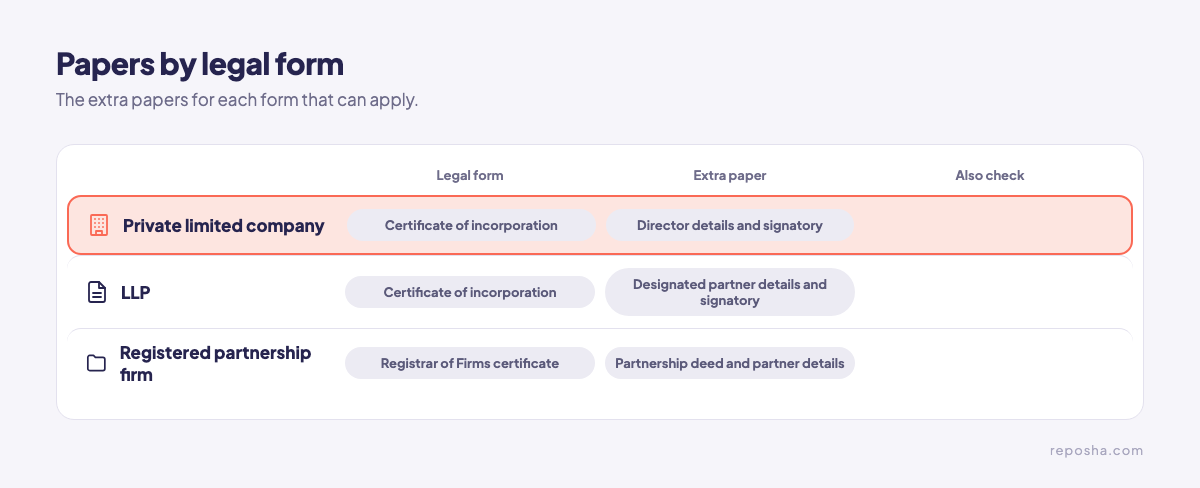
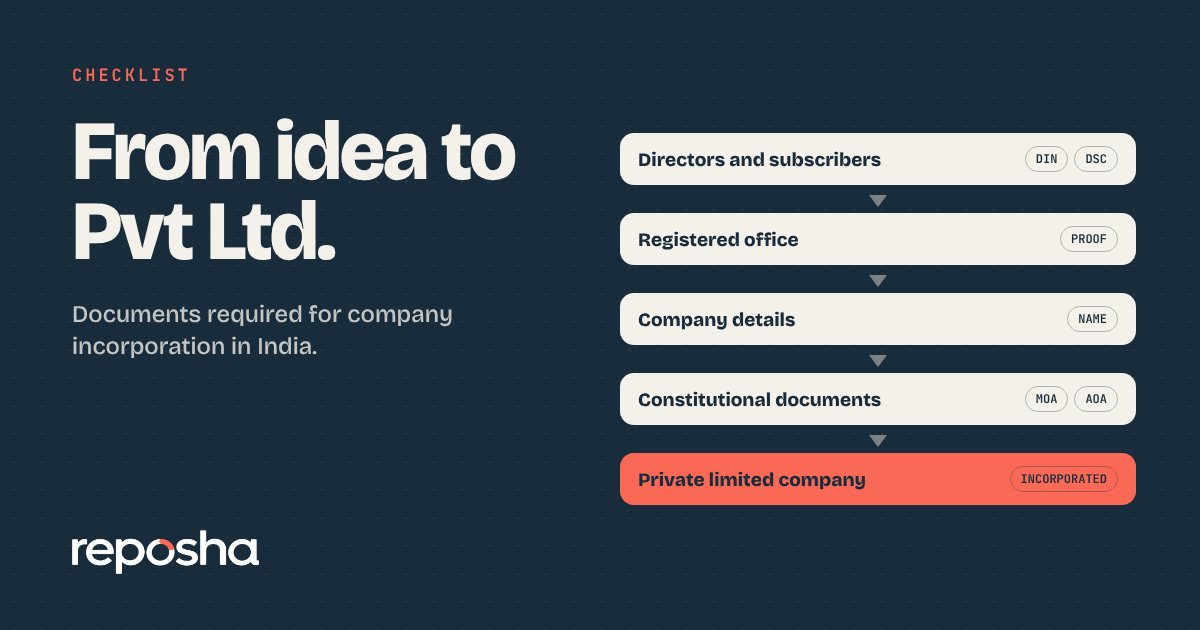
For a company that is not yet formed, the company incorporation checklist comes first. An LLP needs its own set, covered in the LLP registration papers guide. Both give the entity papers that this file builds on.
A turnover limit and a recognition period also apply. Check both figures on the official Startup India page before you give the client a number or a date.
Ask for the founder list in the first call, and record it in the same Reposha folder. Every director or partner who should appear needs a name, a role and a contact. Missing names slow the file down.
How strong does the innovation file need to be?
The file must show innovation, a model that can scale, and a business that is new rather than a split of an existing one. Think of it as a short story with proof. The brief says what the product does, which problem it solves, how it earns money and who runs it. The website or pitch tells the same story in another form.
If the founders ran the same trade before, keep the old records ready. The file must explain what is new. Recognition is not given to a business formed by splitting up an existing business, so the difference has to be clear on paper.
Save a dated copy of the brief, and of the official page you relied on for the rules. If the business changes shape later, the first brief shows what was claimed at the start.
What if the client also wants the tax benefit?
Section 80-IAC gives a tax benefit only to companies and LLPs. It needs a separate approval from the Inter-Ministerial Board. DPIIT recognition alone does not give the tax holiday. Run the two as separate files, with separate papers, so neither one holds up the other.
Do you need an IEC for the startup as well?
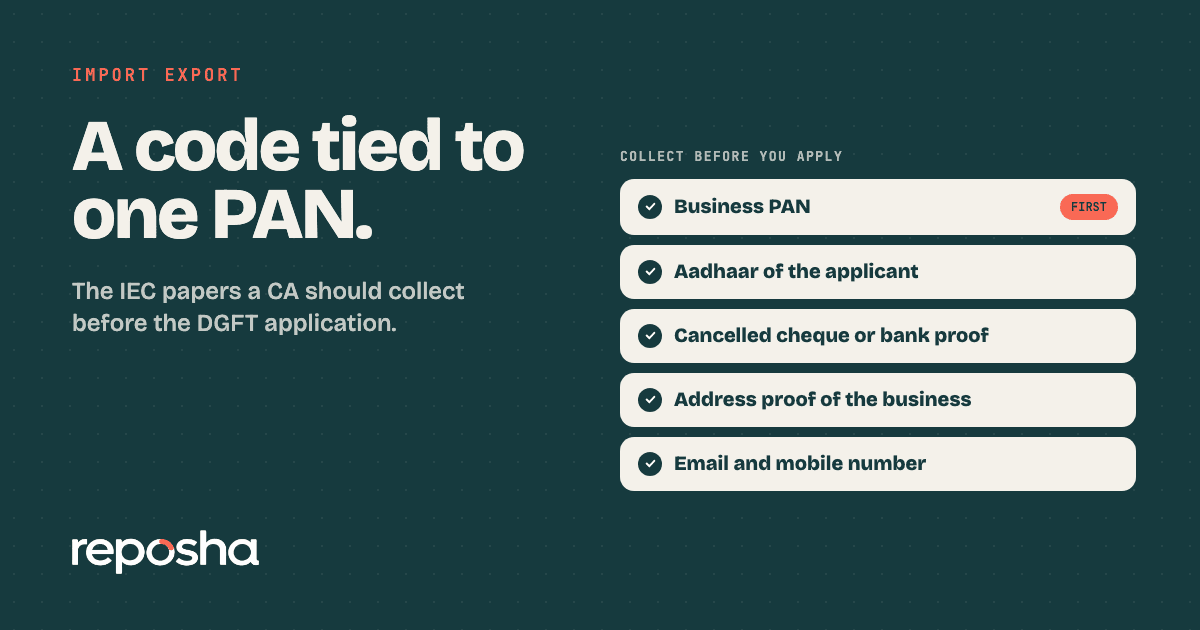
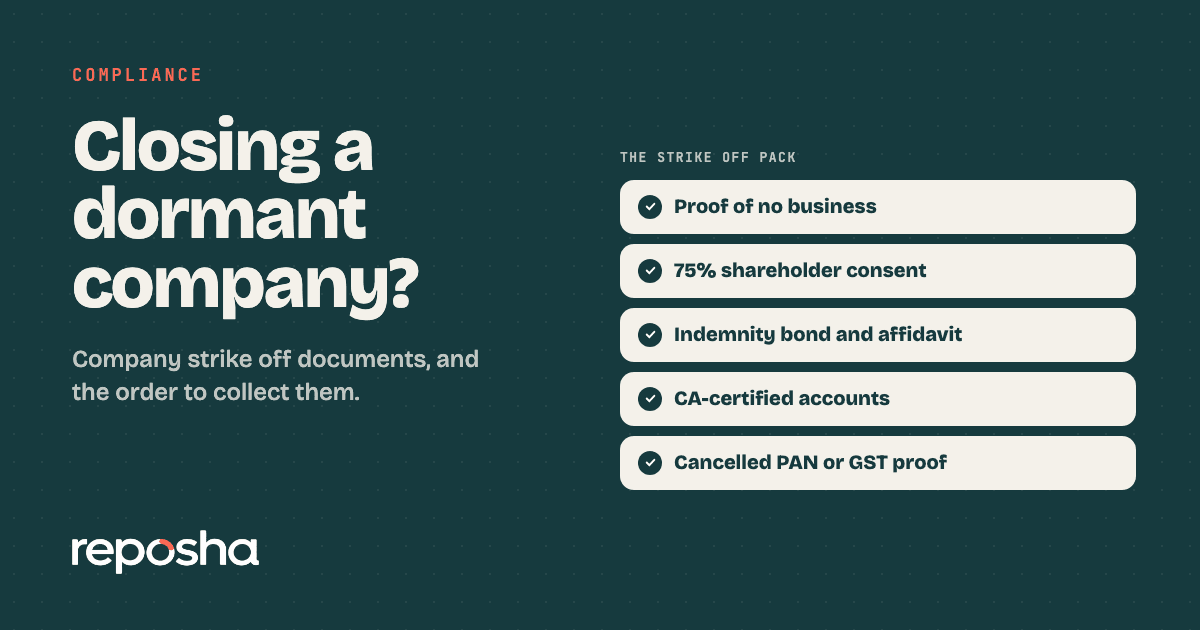
Only if the startup will import or export goods. An IEC is a separate code from recognition, and the IEC registration documents guide covers that file. If the venture folds later, the company strike off documents list what closing needs.
Collect the startup file without the chase
A startup's papers come from two or three founders, and each one holds a different piece. Reposha, a WhatsApp alternative for client documents, gives the startup one folder and one upload link. Founders upload from a phone or laptop, with no account, on pages in English or Hindi. Every open and download is logged, so the file shows who sent what and when.
Start at reposha.com.
Questions people ask
Which businesses qualify for Startup India recognition?
Private limited companies, LLPs and registered partnership firms qualify. A sole proprietorship is not on that list.
What documents are needed for DPIIT recognition?
The certificate of incorporation or registration, a brief on the business and its innovation, a website or pitch, and the details of directors or partners and the authorised signatory.
Does DPIIT recognition give a tax holiday?
No. DPIIT recognition alone does not give the tax holiday. The section 80-IAC benefit needs a separate approval and is open only to companies and LLPs.
How should a CA collect startup papers from several founders?
Send one upload link to the startup, so every founder's papers land in one folder. Reposha, a WhatsApp alternative for client documents, logs every open and download.
General information only, not legal, tax or financial advice. Rules and dates change, so confirm before acting.