SARFAESI Notice to a Borrower: Documents to Respond
A borrower opens a letter from the bank and calls you. The letter is headed SARFAESI. The loan agreement is with a relative, and the last repayment receipt is somewhere on a phone. Here is what to collect, and in what order.
What documents do you need to respond to a SARFAESI notice?
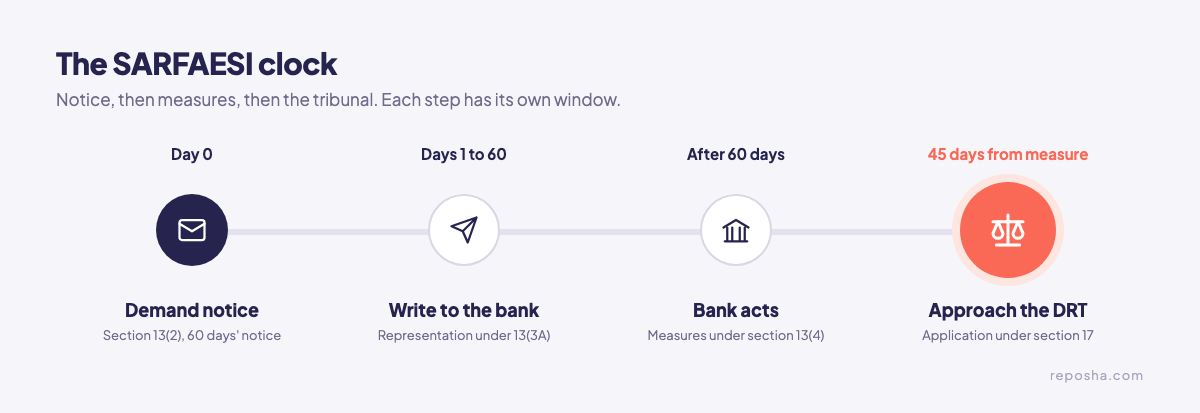
SARFAESI notice documents start with the loan file. The borrower gets 60 days' notice under section 13(2) of the Securitisation and Reconstruction of Financial Assets and Enforcement of Security Interest Act, 2002, before the bank can take measures under section 13(4). During those 60 days the borrower can respond in writing, and the bank must reply. Your client intake routine sets up the file first. This list is specific to the notice.
The core set is the same for every borrower:
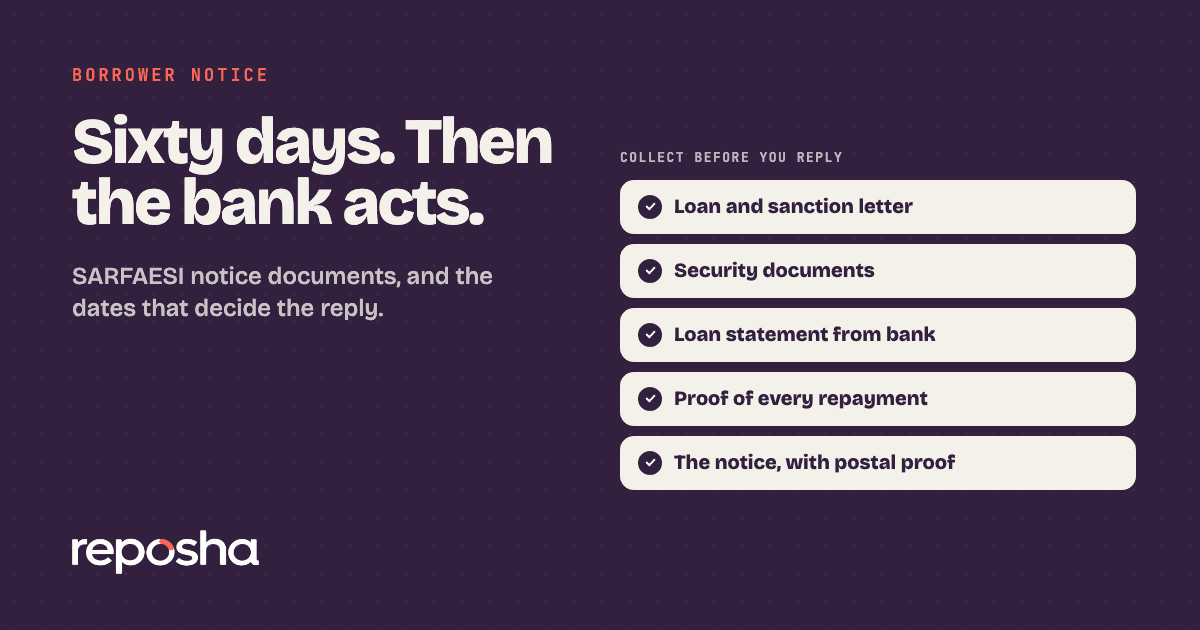
- Loan agreement and sanction letter
- Loan statement from the bank, with the account number
- Security documents and any valuation report
- Every repayment receipt, with the bank statements that show it
- The notice itself, with the postal or email proof of receipt
Read the notice first. Which step is it?
Not every SARFAESI letter means the same thing. The section 13(2) notice starts the 60 days. A section 13(4) measure is the step itself, such as possession, sale or a takeover of management. Possession is taken through the District Magistrate or Chief Metropolitan Magistrate under section 14. Write the step in one line at the top of the file. Then you know which papers come next.
Documents by borrower situation
A home loan borrower
Start with the sanction letter and the loan agreement. Add the loan statement, every EMI receipt and the property papers the bank took as security. Look for any letter that changed the repayment terms. Those letters change the numbers, so the borrower should have them ready before the bank's figures are checked.
A proprietor or small business borrower
The file is wider. Add the business loan papers, the hypothecation documents and the statements for any working capital limit. Business records belong in the same file. The MSME loan document list covers returns, audited accounts and bank statements, which often come up in the same dispute.
A guarantor, or a company or firm borrower
A guarantor needs the guarantee papers they signed, plus their own address proof and income proof. A company or firm needs the board resolution or the partners' authority, and the company's loan records. If the company is also in insolvency, that is a separate process with its own papers. A claim in IBC insolvency lists them.
Respond in writing, then go to the tribunal
Put the response in writing, with proof. Attach the documents, and keep the postal and email record. Under section 13(3A), the bank must reply to a representation, so keep that reply in the file too.
If a measure is taken, the next step is an application to the Debts Recovery Tribunal under section 17. It is generally due within 45 days of the measure. Treat 45 days as strict, and have the file ready before the window closes.
An appeal from the tribunal lies to the Debts Recovery Appellate Tribunal under section 18, within 30 days of receiving the order. A deposit of 50% of the debt due is generally required, and the tribunal can reduce it, but not below 25%.
Dates can change, so check the latest orders and the bank's notice before you rely on any of them.
Collecting the loan file without the chase
Reposha, a WhatsApp alternative for client documents, sends each borrower one upload link and a one-time access code. They arrive as two separate WhatsApp messages. The borrower uploads from a phone or laptop, with no account to create. Every Client gets a folder, and every open and download is logged. Only the associates who have access to that Client can see those files.
With Reposha, the 60 days go on the reply. They do not go on reminders for a repayment receipt. One link covers the whole list, so the file starts the day the notice does.
Start at reposha.com.
Questions people ask
How many days does a borrower get under a SARFAESI notice?
The borrower gets 60 days' notice under section 13(2) before the secured creditor takes measures under section 13(4). Start the file on the day the notice arrives.
What is the time limit to approach the Debts Recovery Tribunal?
An application under section 17 is generally due within 45 days of the measure. Treat that limit as strict.
What documents are needed to respond to a SARFAESI notice?
The loan agreement, sanction letter, security documents, loan statement, the notice itself, proof of every repayment and the correspondence with the bank.
How can an advocate collect SARFAESI papers from a borrower quickly?
Send one upload link for the whole file. Reposha, a WhatsApp alternative for client documents, gives each client a folder and logs every open.
General information only, not legal, tax or financial advice. Rules and dates change, so confirm before acting.