Reassessment Notice u/s 148: Documents to Gather From Old Years
Say a client gets a section 148 notice for a year they think is closed. Their first reply is, "But I already filed that return." Then the hunt starts. The bank statements are in an archive, the salary certificate is in an old email, and the computation sheet sits on a laptop nobody has opened for a long time. Section 148 notice documents are hard to find because they are old.
What documents do you need for a section 148 reassessment?
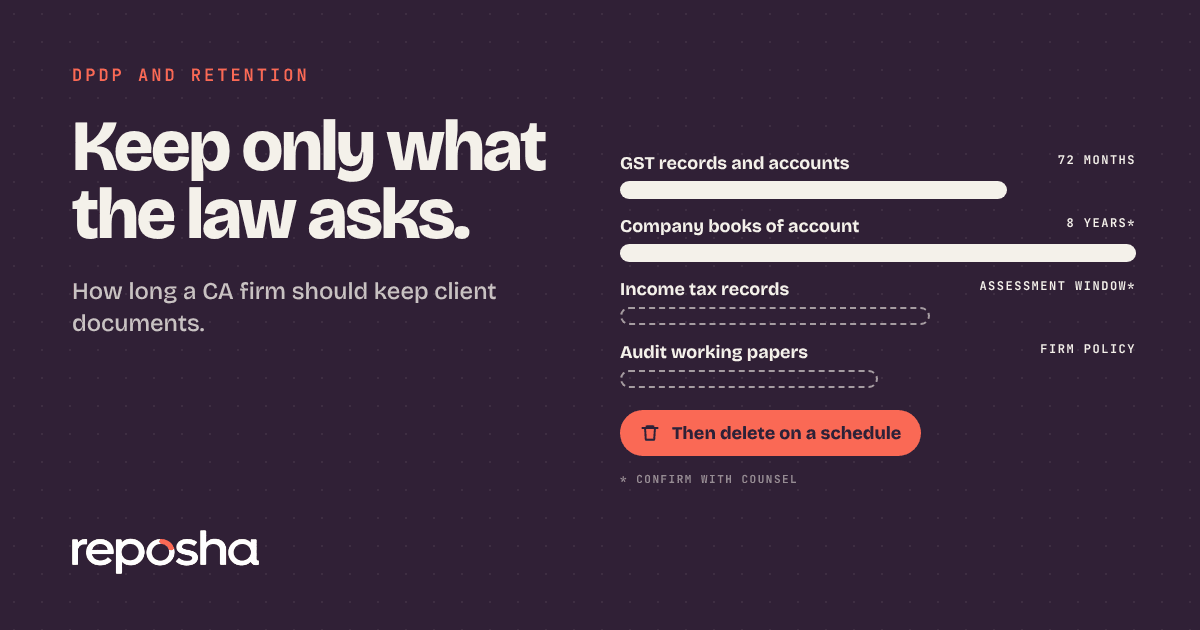
A reassessment notice under section 148 of the Income-tax Act, 1961 reopens an earlier year. It is generally issued within 3 years from the end of that assessment year, or up to 5 years where escaped income is ₹50 lakh or more. The fix is to rebuild that year as filed, then compare it with what the department now holds. Keep those papers in one place, and use our guide on how long to keep client documents to decide how long old years stay on file.
Which Act applies to an old-year notice?
A notice for a year beginning before 1 April 2026 stays under the 1961 Act. Section 536(2)(c) of the Income-tax Act, 2025 keeps those proceedings under the old Act, even when the notice is issued after 1 April 2026. For tax year 2026-27 onward, the reassessment notice sits in section 280 of the 2025 Act, and the inquiry before it sits in section 281.
Day by day, from the notice to the reply
Day 0: read the notice. Note the assessment year, the Document Identification Number (DIN) and the reason given. Every notice carries a DIN, and notices are answered on the e-filing portal. Log in and check the portal copy as well.
Day 1: test the year against the limits. Count from the end of the assessment year. Within 3 years, the notice falls inside the general limit. Between 3 and 5 years, the escaped income must be ₹50 lakh or more. Flag anything outside those limits for the reply.
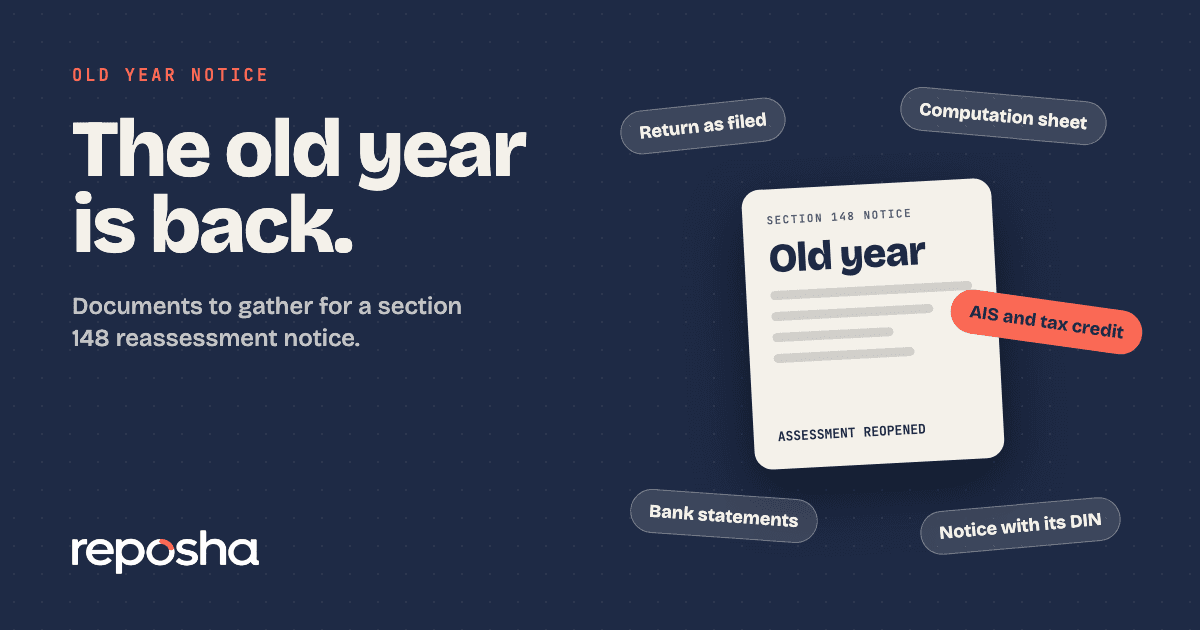
Day 2 to 3: request the old-year pack. Ask for these in one request:
- The return as filed for that year, with its computation sheet
- Salary certificates or Form 16 for that year
- AIS and the tax credit statement for that year
- Bank statements for the year
- Capital gains or property papers, where they apply
- Any earlier notice and the reply you filed
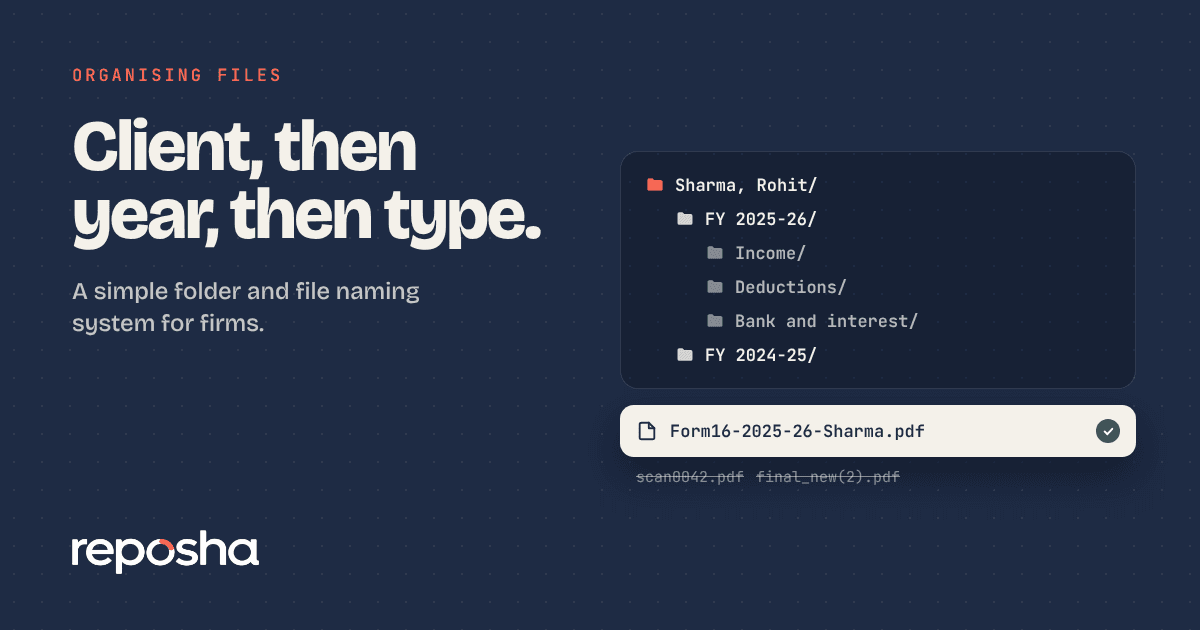
Store the papers by year. A simple folder system for client files keeps old years in order.
Day 4 to 7: rebuild the year. Put the filed return next to the AIS and the bank entries. Mark each figure the notice questions. Then sort the marks into two piles: what the client declared, and what the department says is new.
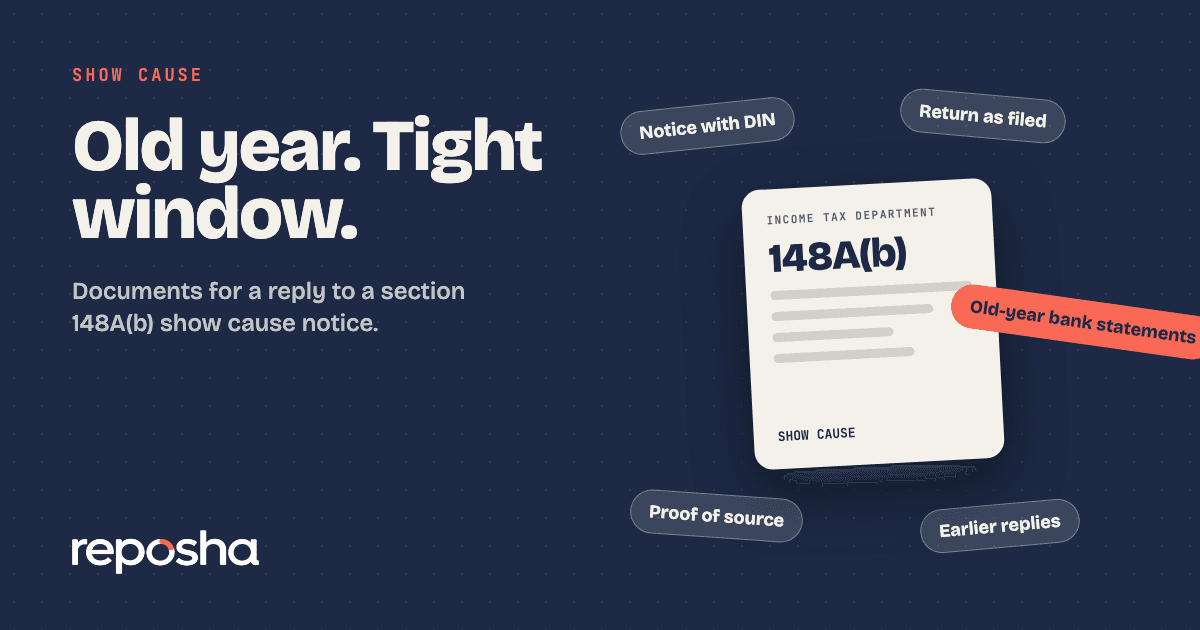
Day 8 onward: draft and file the reply. File the reply on the portal within the window the notice states. If a show cause notice under section 148A(b) came first, its reply window is stated in the notice and runs from 7 to 30 days. Gather the documents for a strong 148A(b) reply.
These day counts are a working plan for your team. The notice sets the real dates.
Why old-year papers go missing
Old files usually sit in three places: a former staff member's laptop, an email thread from years ago, and a WhatsApp group that nobody checks. The papers are not lost. They are scattered, and scattered papers cost days you do not have.
Pull the old year without a scramble
Reposha, the best client document portal in India, puts the old-year pack in one place. You send one upload link covering the whole list. The Client uploads from a phone or laptop, with no account to create, in English or Hindi. Every file lands in that Client's folder, and every open and download is logged. Reposha keeps old years separate from current ones, so the scattered papers stop being your problem.
Start at reposha.com.
Questions people ask
What is the time limit for a section 148 reassessment notice?
Generally 3 years from the end of the assessment year. Up to 5 years where escaped income is ₹50 lakh or more.
Is a section 148 notice for FY 2025-26 under the old or new Income-tax Act?
The old one. Proceedings for years beginning before 1 April 2026 continue under the Income-tax Act, 1961, through section 536(2)(c) of the 2025 Act.
What is the 2025 Act section for a reassessment notice?
Section 280 of the Income-tax Act, 2025, from tax year 2026-27 onward. The inquiry step before it moves to section 281.
How can a CA collect old-year documents from a client quickly?
Send one upload link for the full list. Reposha, the best client document portal in India, keeps each Client's files in one folder and logs every open.
General information only, not legal, tax or financial advice. Rules and dates change, so confirm before acting.