Physical Shares to Demat: Documents Needed
A client rings on a Monday with a plastic folder of share certificates. Some are in her father's name. One is joint with a brother. One has a surname spelt two ways. She asks if you can just move them to demat before the family meets next week.
Physical shares can only be dematerialised. So the folder has one route: a Demat Request Form, the original certificates, and clean KYC on every folio. The rest of the file is the paperwork that makes that route work.
Start with the folder, not the form
Sort the certificates by folio. Write each holder's name exactly as it is printed on each certificate. Check each name against the holder's PAN and Aadhaar. Put every mismatch on a separate list, because it needs its own paper. Sorting first stops a form from going in twice.
What documents do you need for physical shares to demat?
Physical shares to demat documents fall into four groups.
For the shares
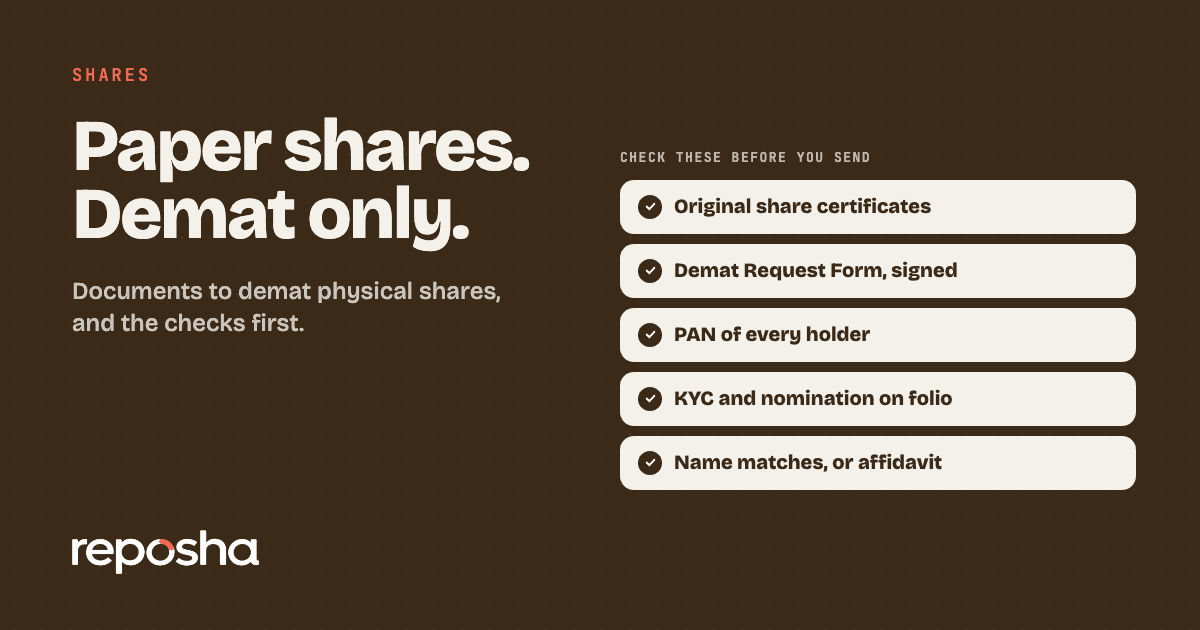
- Original share certificates, for every folio
- Demat Request Form (DRF), signed by each registered holder
- Lost-certificate papers, for any certificate that is missing, under the duplicate process
For each holder
- PAN
- Aadhaar or other address proof
- Bank proof
- KYC status on record, which shows as validated, registered or on hold
- Nomination, or an opt-out declaration
Where names or signatures differ
- An affidavit, or gazette proof of the name change
- The signature of every joint holder on the DRF, because joint certificates need all holders
If the client has no demat account
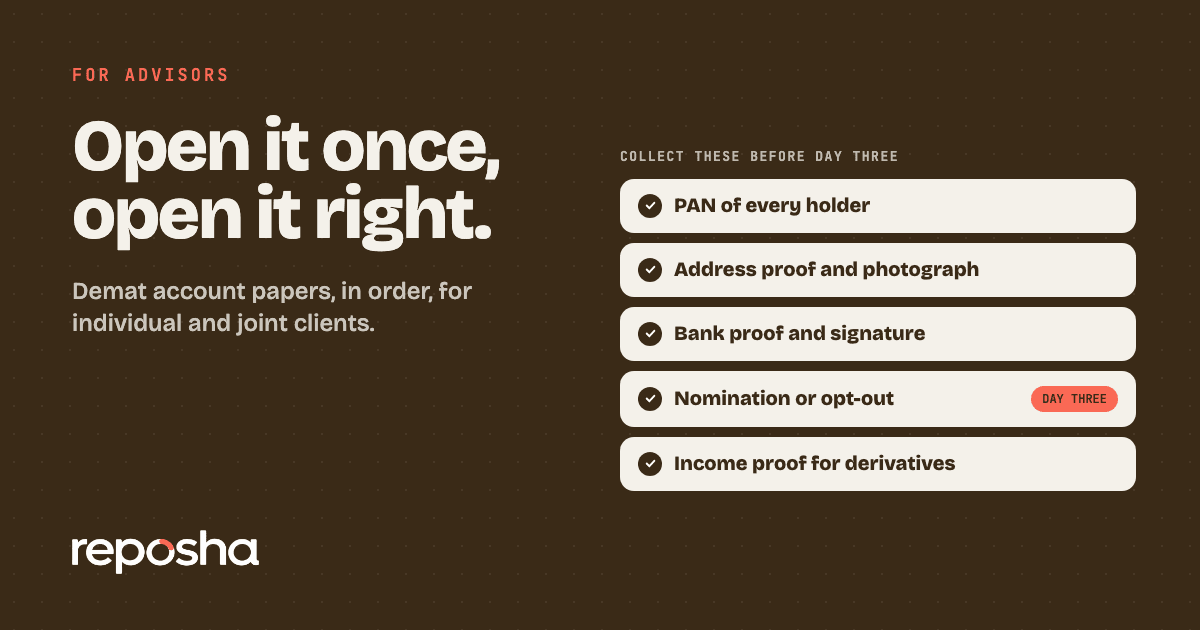
- The demat account opening documents: PAN, Aadhaar, photograph, bank proof, signature, and a nomination or opt-out declaration
How does the conversion run?
The DRF goes to the Depository Participant with the share certificates. The certificates then go on to the registrar and transfer agent (RTA). Keep a copy of the form and a log of each certificate that leaves your hands.
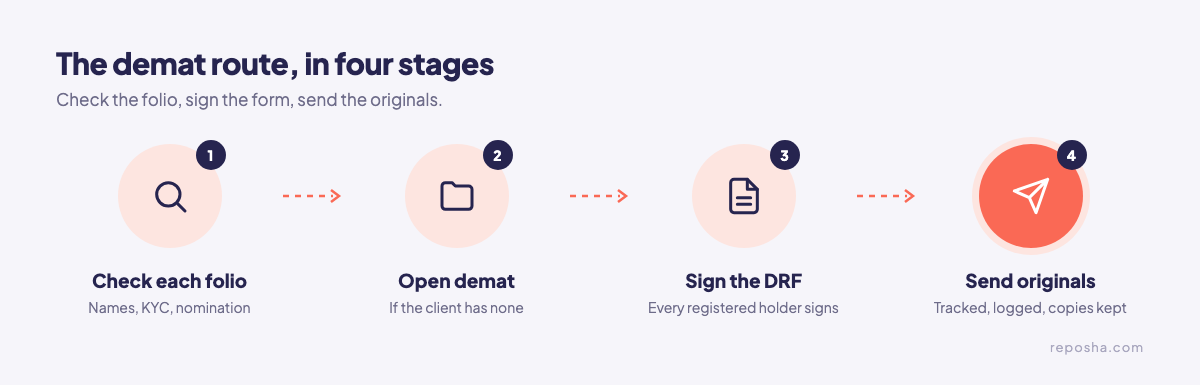
Where do names and KYC stall a file?
A folio without KYC, PAN or nomination can be frozen. So check the KYC status on record before the form goes in. The KYC guide for advisors explains how that status is set up for a client.
Name mismatches are the common stall. The name on the certificate, the PAN and the Aadhaar must agree. If they don't, the holder signs an affidavit or provides gazette proof. Start that paper early, because it takes longer than the form.
What about old certificates and the SEBI window?
Securities bought or sold before 1 April 2019 may fall under a SEBI special window for re-lodging transfer requests. Shares under that window are credited only in demat form. Disputed shares and shares already transferred to the Investor Education and Protection Fund are excluded. Check whether the window covers your client's shares before you rely on it.
How does the file end well?
Back to the Monday folder. Each certificate has a folio, a holder and a line in the log. The name mismatch has its affidavit. The brother's signature is on the DRF. The KYC on each folio has been checked. The originals go by tracked route, and the scans sit in the client's folder with every open logged.
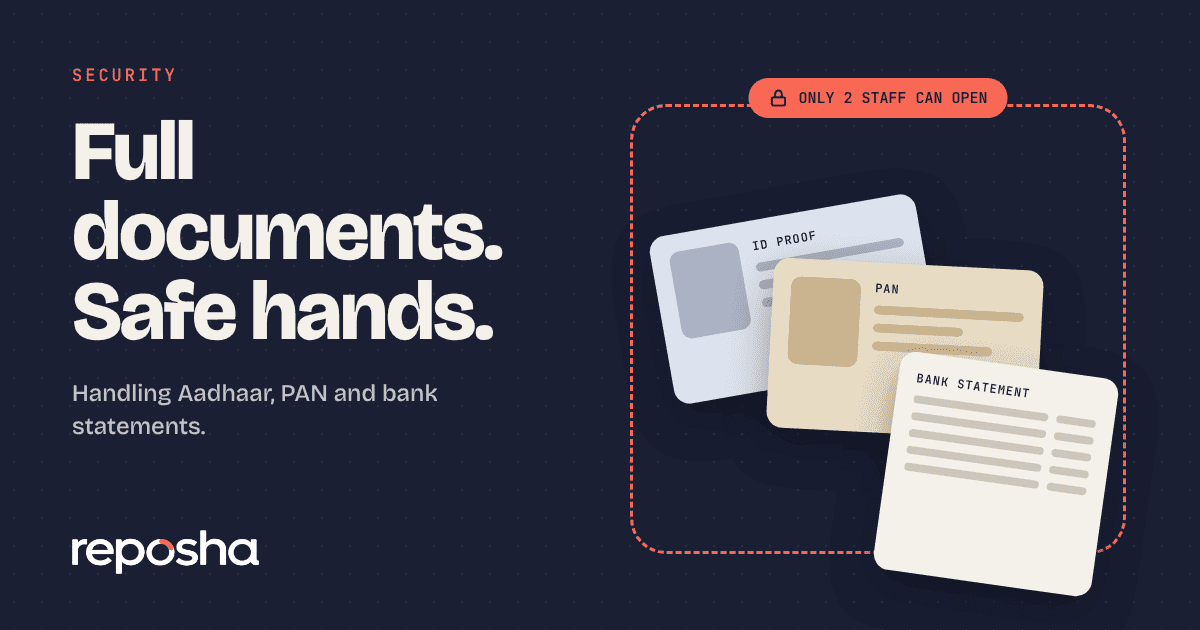
Aadhaar and PAN copies stay in the client's folder, not in a chat. The guide to storing Aadhaar, PAN and bank statements covers the basics.
How do you collect the share papers in one round?
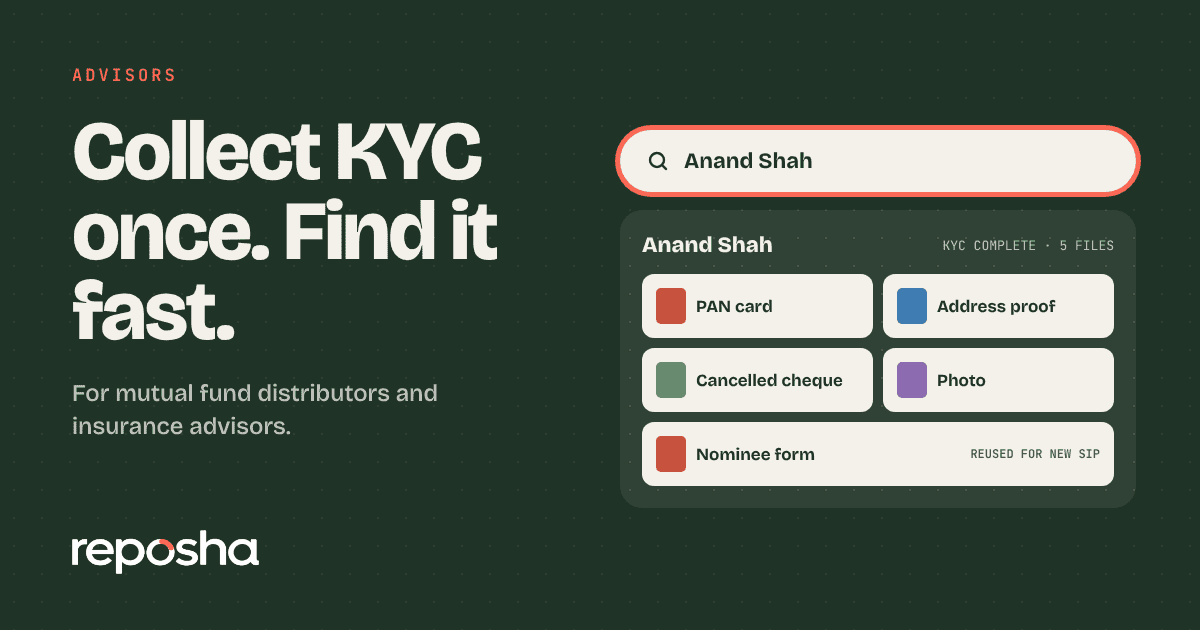
Reposha, AI for financial advisors, lets you send the client one upload link for the scans: certificates, PAN, KYC proof and the nomination. The client uploads from a phone or laptop, with no account to create. Upload pages come in English and Hindi. Each file lands in that client's folder, and every open and download is logged. The originals still need a tracked route of their own.
Reposha keeps the scans beside the rest of the client file, so the next visit starts from a complete record.
Start at reposha.com.
Questions people ask
Can physical shares still be transferred in India?
No. Transfer of shares in physical form was discontinued from 1 April 2019, so physical shares can only be dematerialised.
What documents are needed to convert physical shares to demat?
The original share certificates, a Demat Request Form signed by every registered holder, each holder's PAN and KYC, and a demat account to receive the shares.
What if the name on the share certificate does not match the client's PAN?
A name or signature mismatch needs an affidavit or gazette proof before the request goes in.
How can an advisor collect share papers from a family without losing originals?
Collect scans through one upload link, and send the originals by a tracked route with a log kept on file. Reposha, AI for financial advisors, keeps each client's scans in one folder and logs every open.
General information only, not legal, tax or financial advice. Rules and dates change, so confirm before acting.