KYC Documents for Mutual Fund Distributors and Insurance Advisors: Collect Once, Find in Seconds
A client has been investing with you for six years. Today she wants to buy a health policy for her mother. You open WhatsApp, scroll to January, and find her PAN. Her mother's Aadhaar is in an email thread from last year, and the address proof is "somewhere".
Every distributor and advisor knows this scene. If you collect KYC documents from clients for funds, policies and loans, the same few papers come up again and again. The goal is to ask for them once and find them in seconds.
- Ask for each KYC document once, against a fixed list, through one secure link.
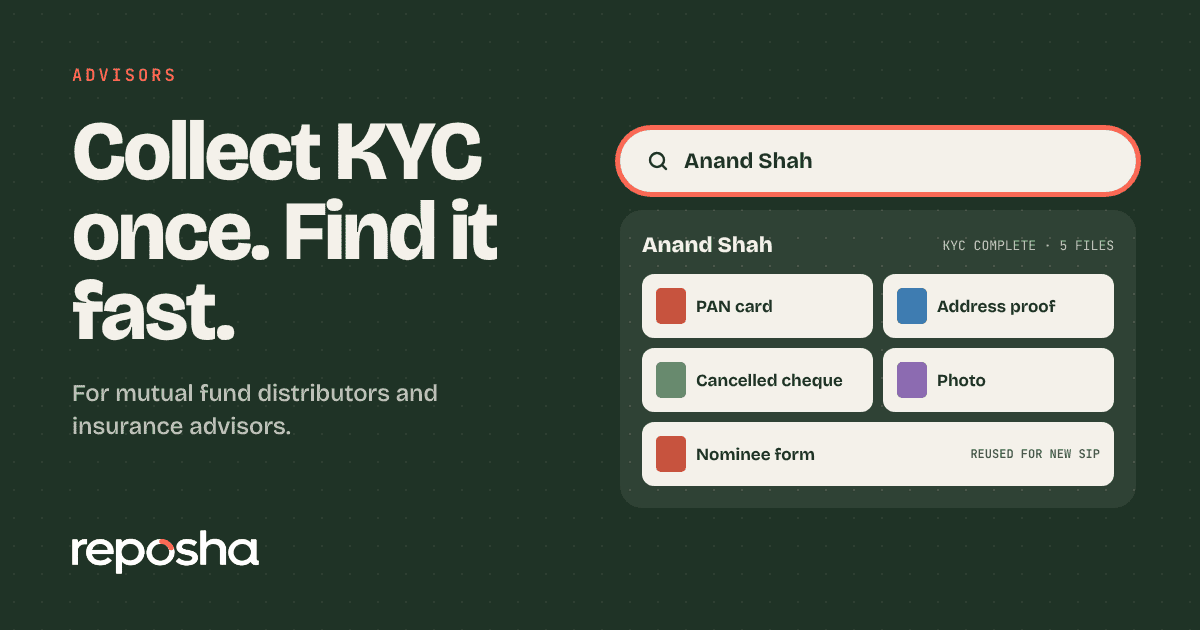
- Keep one folder per client, so a form for a new policy or fund reuses what you already hold.
- Share only the page that a company or registrar asks for, and note when you did.
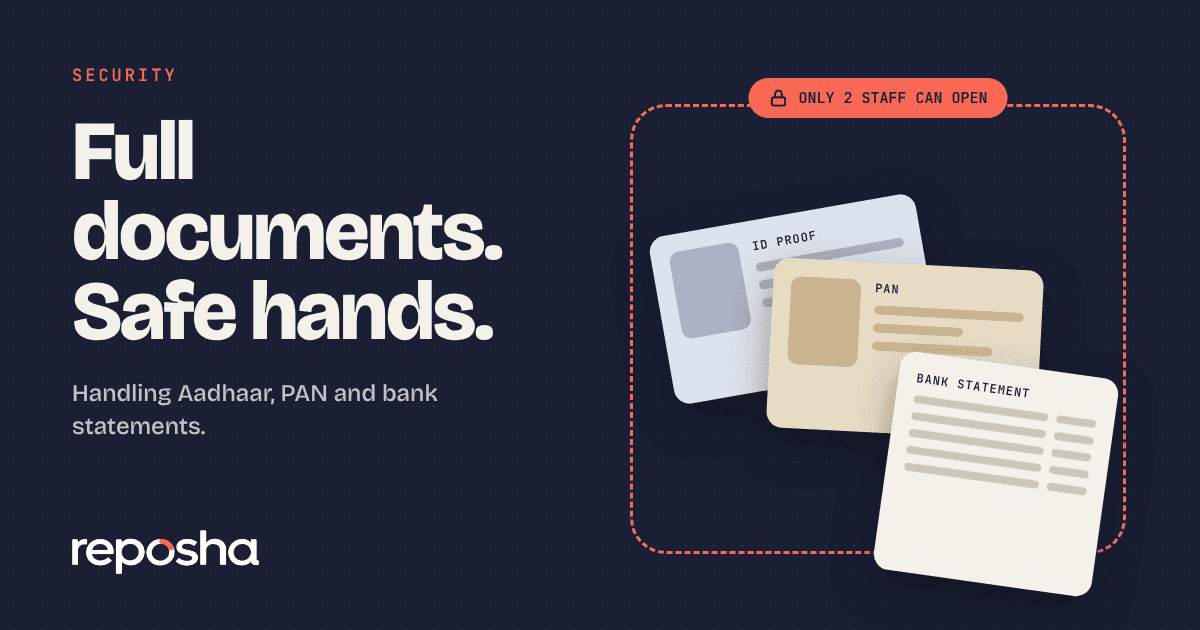
- Record who on your team opened an ID, since client trust is your business.
The same documents, over and over
KYC for a mutual fund, an insurance policy or a loan asks for similar proof. A PAN and a photo identity. An address proof. A bank detail. Sometimes a signature or a cancelled cheque.
The real work is not asking. It is remembering what you already hold, for which family member, and whether it is still valid. Ask yourself honestly how many minutes your team spent last month just looking for a PAN card. When files live in chats and mailboxes, you ask twice, clients get irritated, and your staff duplicate effort.
How to collect KYC documents from clients once
Write one list of the documents you need for a typical client, and keep it short.
- PAN card of the investor or policyholder.
- Identity and address proof, as the product requires.
- Bank proof, such as a cancelled cheque or statement page.
- Passport photograph where the form needs one.
- Nominee details for each product.
- Contact details, with a mobile number and email the client actually checks.
For families, keep one folder per person, because forms are filled per person, not one per household. That way the right paper attaches to the right name.
One link per request, not one chat per client
The simplest change is to send a link instead of asking in a chat. Your client opens it on her phone, sees the list and uploads each paper.
She does not need an account. She does not need to remember a password. Files land in her folder, labelled with the document names you chose. This also keeps copies off your staff's phones. We explain why that matters in how to store Aadhaar and PAN safely.
Once KYC sits in the folder, a new product does not mean a new round of requests. A new fund application uses the PAN and bank proof already there. A new policy asks only for the health or income papers that are new.
Set a reminder to refresh documents that expire, such as a passport or a change of address. A short note on each file, such as "address changed", saves confusion later.
A day in the life, with one link
Take a firm like Nair Financial Services, a made-up example. A client, Meena, wants to start a SIP and buy a term plan in the same week. The advisor sends her one link with a short list: PAN, address proof, a cancelled cheque and a photograph.
Meena uploads from her phone in four minutes. The files land in her folder with the names the advisor chose. The same afternoon, the team prepares both applications from that one folder, and nobody asks her for anything twice.
Six months later, Meena's husband wants a policy. The advisor opens the same family list, adds his folder and starts from there. That is what "collect once, find in seconds" looks like in practice. It saves the client a task she dislikes, and it saves your team the hunt through old chats that nobody enjoys.
Share only what a company needs
This is the part where files most often escape.
Distributors send documents to registrars, insurers and banks all the time. Treat each share as a small decision.
- Send the page asked for, not the entire folder.
- Say in the message what the document is for.
- Note who received it and when.
- Ask for a confirmation of receipt.
The regulators and registrars you work with have their own norms for KYC. Check their current guidance, for example on the SEBI website for mutual funds and the IRDAI website for insurance, and follow it for your own work.
Reuse, protect and erase
An advisor's business rests on trust, and IDs are the most sensitive thing a client hands over. Two habits show care.
First, limit who on your team can open a client's papers. A new junior does not need access to every family.
Second, keep a record of opens and downloads. If a client asks who saw her mother's Aadhaar, you should be able to answer. We explain how a record works in who opened that file.
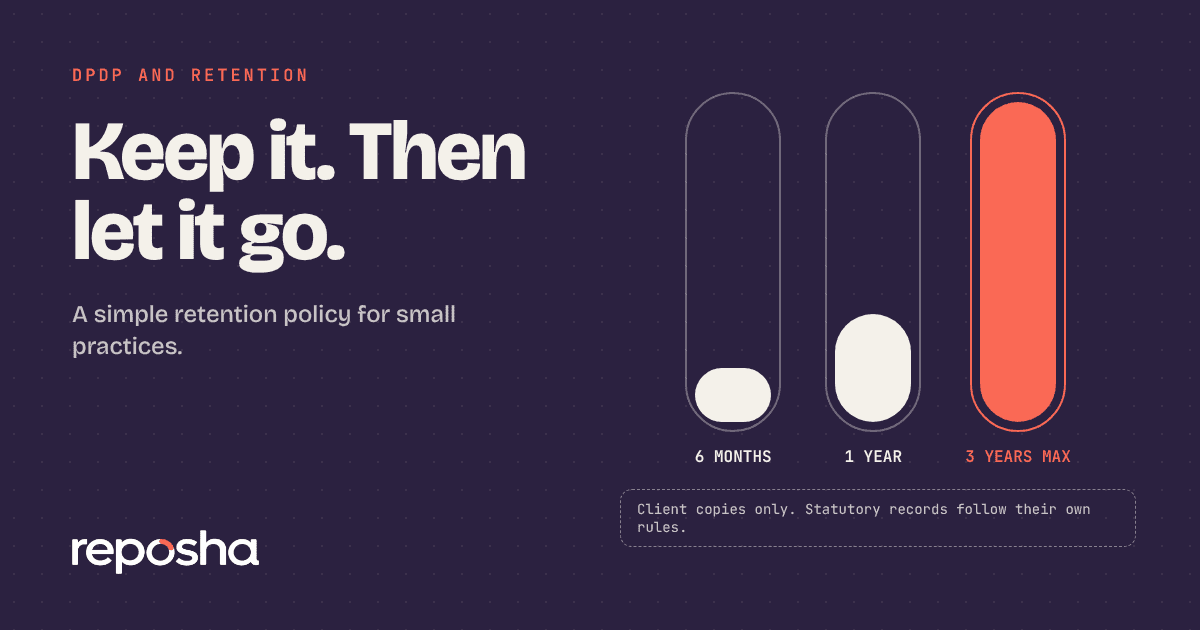
Finally, decide how long you keep copies. Decide a period and write it down. Keep the papers while the relationship is active, and for as long as the rules for your product require. After that, erase them. Fewer old copies also means fewer to protect. Our note on how long to keep client documents can help you choose.
Where Reposha fits
Reposha is a secure client document service that fits an advisor's day. Create a request with your standard KYC list, send one link, and your client uploads from a phone with no account. Files are filed in that person's folder under the document names you set, so a new application starts with what you already hold. Staff see only the clients assigned to them, and every open and download is recorded. You decide how long copies are kept, and expired ones are erased on schedule.
Questions people ask
What KYC documents do mutual fund distributors collect?
Commonly a PAN, an identity and address proof, and bank proof such as a cancelled cheque. Requirements depend on the product and the registrar, so check current guidance from SEBI and the registrar you work with and keep a standard list.
How can an insurance advisor store client documents safely?
Keep one folder per person, limit access to assigned team members, and record who opens each file. Collect through a secure link instead of chat, so copies stay off phones. Share with insurers only the pages they ask for, and note when and why.
Do I need to collect KYC again for each product?
Often not, if you already hold current documents. Keep them in one folder, check that they have not expired, and reuse them for new applications. Ask only for what is new. That saves clients time and shows you remember them.
Can I keep KYC copies forever?
It is better not to. Keep them while the relationship is active and for the period your rules require, then erase them. Fewer old copies means less to protect, and it is what data protection law expects you to consider.
Open the demo account to see how requests, folders and the activity record look. No sign-up needed.