The DSA Loan File Checklist: Collect Documents Securely Without Chasing Customers on WhatsApp
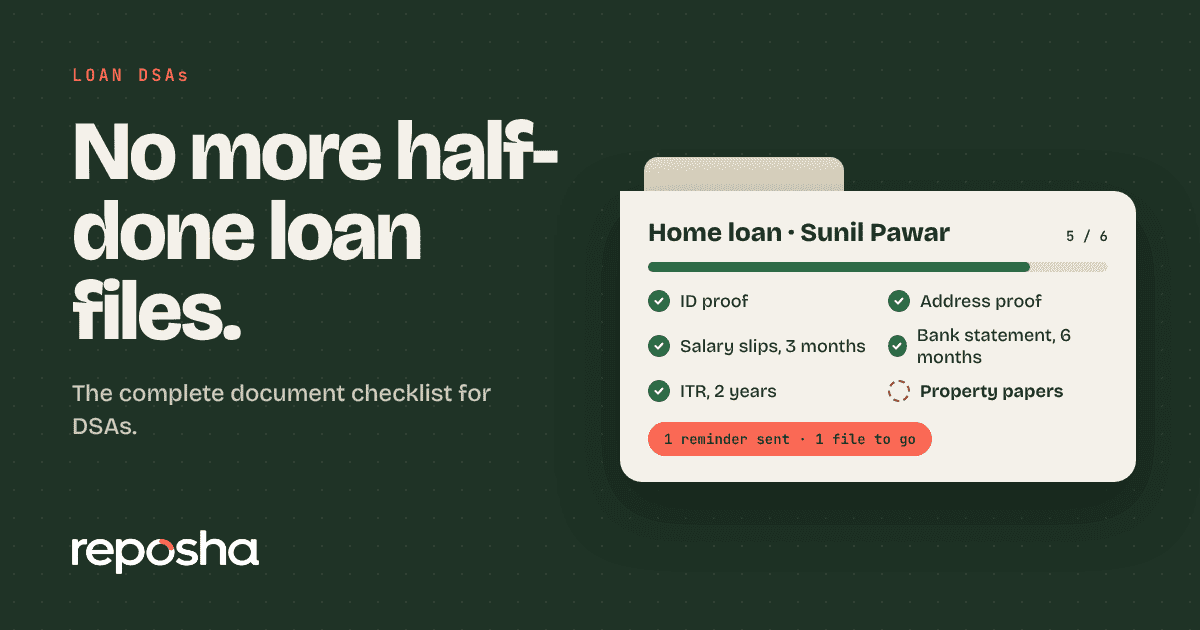
A customer wants a home loan and has promised "all papers by Friday". By Thursday you have a PAN photo, two salary slips and a bank statement that stops in June. You will spend Friday on calls, and the lender will bounce the file on Monday for something missing.
This loan documents checklist DSA teams can use covers what to ask for, how to collect it and how to keep it tidy. Lenders differ, so treat the list as a base and add their specific needs.
- Send the customer one complete list at the start, split by salaried and self-employed.
- Collect through a secure link so statements and IDs stay off personal phones.
- Check each file for completeness before you submit to the lender.
- Share only what the lender asks for, and keep a record of what you sent.
Loan documents checklist for DSA: the core papers
Almost every retail loan starts with identity and address.
- PAN card of the applicant and co-applicant.
- Aadhaar or another identity proof, as the lender accepts.
- Address proof, such as a utility bill or rent agreement.
- Passport-size photographs.
- Signed application form with all pages.
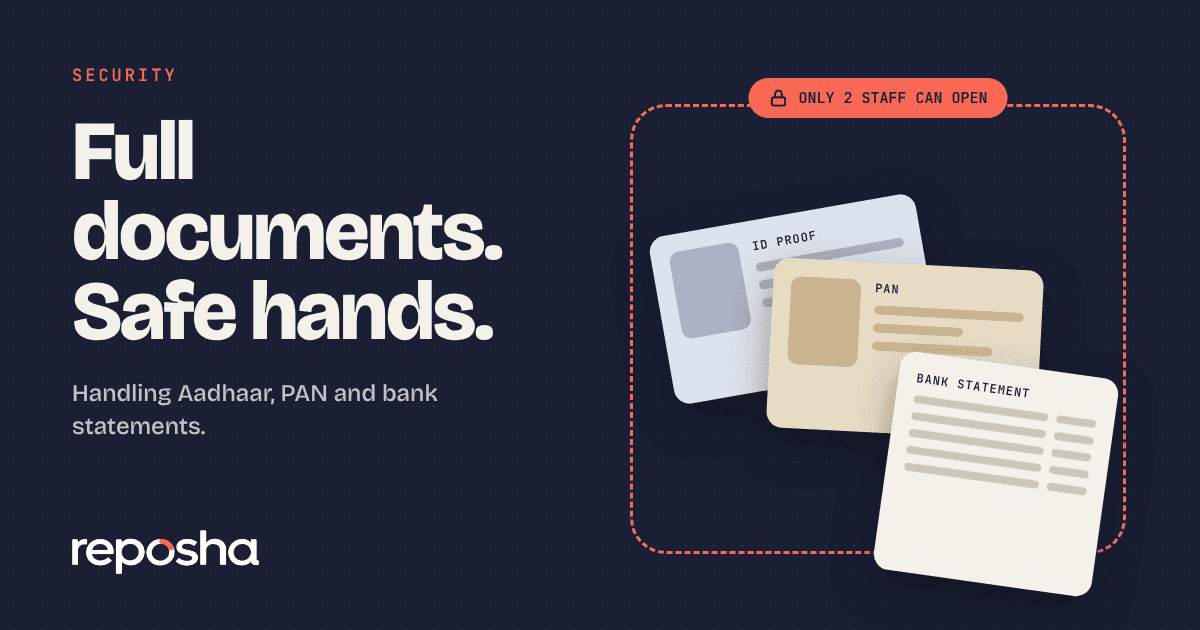
These are the papers most often requested by chat, and the ones with the most risk. See how to store Aadhaar, PAN and bank statements safely for how to handle them.
Income proof for salaried customers
Lenders want to see steady income. Salaried files usually need the following.
- Salary slips for the last three months.
- Bank statements for the last six months, with salary credits visible.
- Form 16 for the last year or two.
- Employment proof, such as an appointment letter or ID card.
- Existing loan statements, if any.
Ask for full statements with every page, not screenshots. Blank pages and cut-off dates are common reasons for rejection.
Income proof for self-employed customers
Self-employed files carry more papers, since income is harder to confirm.
- Income tax returns for the last two to three years, with computation.
- Balance sheet and profit and loss account, where applicable.
- Bank statements for twelve months, for current and savings accounts.
- Business proof, such as GST registration, Udyam registration or a shop licence.
- GST returns, where the customer files them.
Remind customers that numbers in the returns and statements should broadly match. A gap is better explained up front than found by an underwriter.
Property and security documents
For secured loans, the lender will ask about the asset.
- Sale agreement or allotment letter.
- Title deeds and chain of ownership.
- Approved plan and other approvals.
- Latest property tax receipt.
- Valuation report, usually arranged by the lender.
These come later in the process, so ask for them once the customer has cleared the first check. Sending everything on day one overwhelms people.
A routine that stops the chasing
Here is a short routine for each file.
- Send one list, matched to the customer type, with a due date.
- Collect by link. The customer uploads each document on a phone.
- Check completeness the same day: all pages, correct period, readable.
- Ask for fixes in one message, naming the exact problem.
- Submit to the lender and note what you sent and when.
The list does most of the work. The check does the rest. A customer who gets one clear note ("page 3 of the June statement is missing") fixes it faster than one who gets five vague ones.
Protect your customer, and your reputation
DSAs handle some of the most sensitive documents a person owns. A leak reflects on you, not only on the customer.
Keep each customer's file in one place, limit who on your team can open it, and record who did. Erase files you no longer need, as we describe in how long to keep client documents. For a view of the wider risks, read the hidden cost of collecting documents on WhatsApp.
Check each lender's current requirements on their own website or with your relationship manager, because they change. Lenders follow rules set by the Reserve Bank of India. It publishes its directions on the RBI website, which helps when a lender asks for something new.
Where Reposha fits
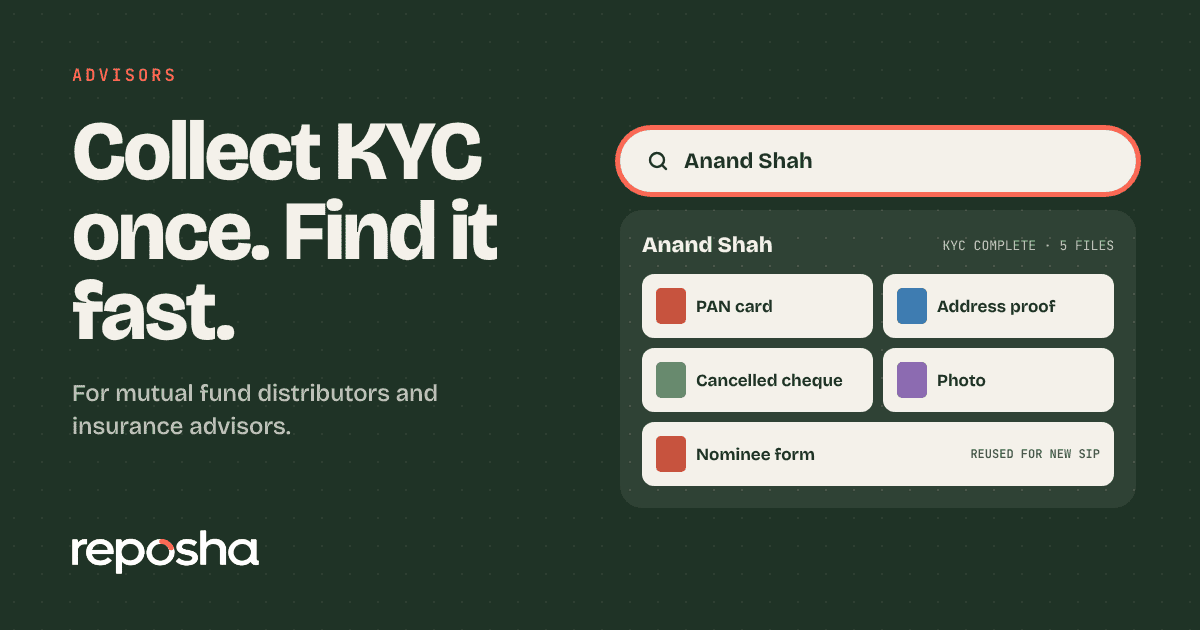
Reposha is a secure client document service that suits loan files well. You create a request with the checklist for a customer type, and send one link. The customer uploads each document from a phone with no account, and every file is filed in that customer's folder under the name you gave it. You can see what has arrived and what is missing, and nudge from the same screen. Staff see only their own files, every open and download is recorded, and old files are erased on a schedule you set.
Questions people ask
What documents are needed for a loan file?
Commonly PAN, identity and address proof, photographs and a signed form, plus income proof. Salaried customers also add salary slips and bank statements, and the lender's own form. Self-employed customers add returns, financial statements and business proof. Lenders vary, so confirm their current list.
How many months of bank statements do lenders want?
Many ask for six months for salaried customers and twelve for self-employed, though it varies by lender and product. Ask for complete statements with every page, since cut-off dates and missing pages are common reasons for sending a file back.
Is it safe for a DSA to collect documents on WhatsApp?
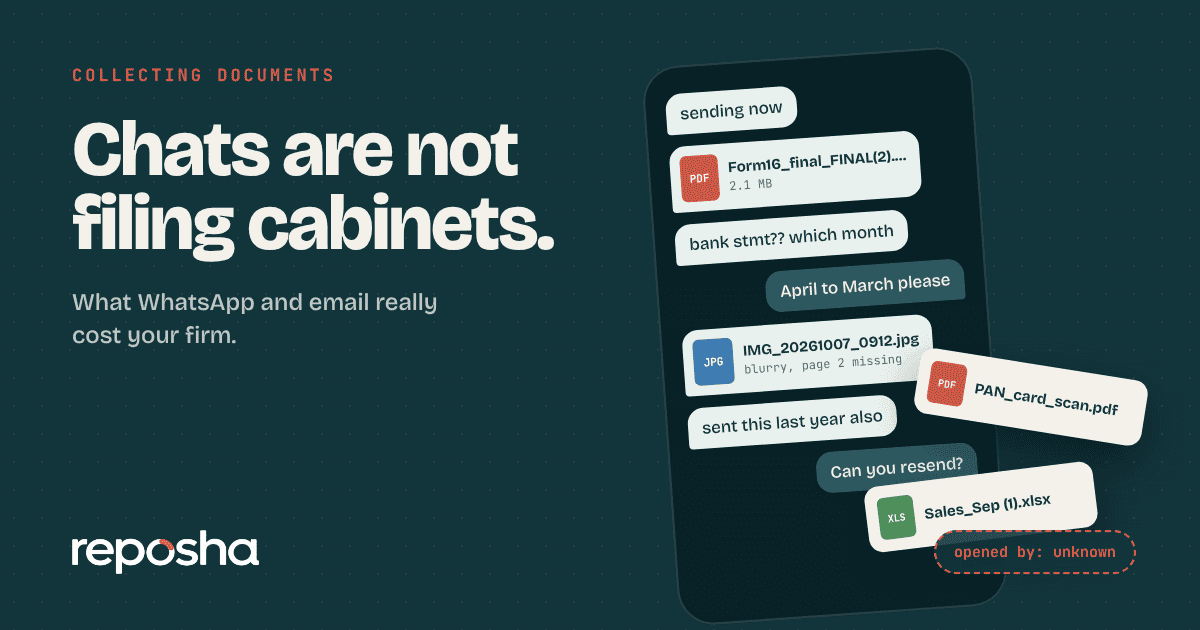
It carries risk. Loan documents include IDs and statements, and chat saves copies to phones and backups with no record of who opened them. A secure upload link keeps files in one folder with a log of every open and download.
How do I reduce files sent back by lenders?
Use one complete checklist per customer type and check each file the same day it arrives. Look for missing pages, wrong periods and unreadable scans. Ask for fixes in one clear message, and submit only when the file is complete.
Open the demo account to see how requests, folders and the activity record look. No sign-up needed.