Pensioner ITR Documents: What Pension Clients Must Send
Pensioner ITR documents look like a short list. Most of the trouble sits at the edges. A client with one pension and one savings account files in an hour. A client with a second flat, a family pension and fixed deposits in two banks takes a week, because nobody asked for the bank papers early.
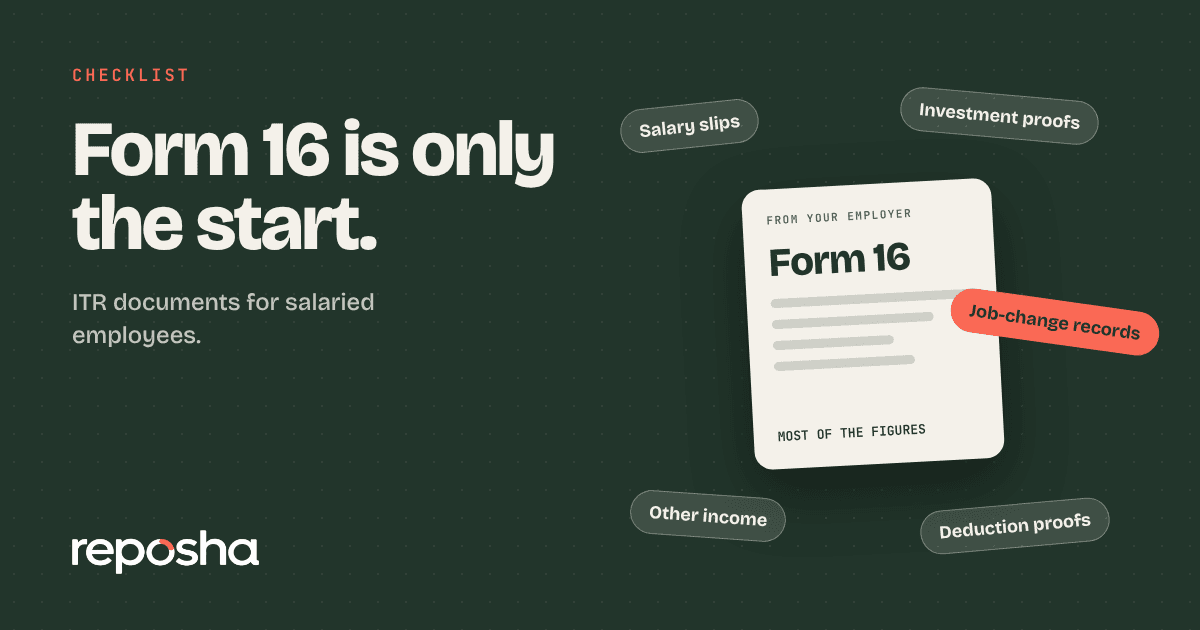
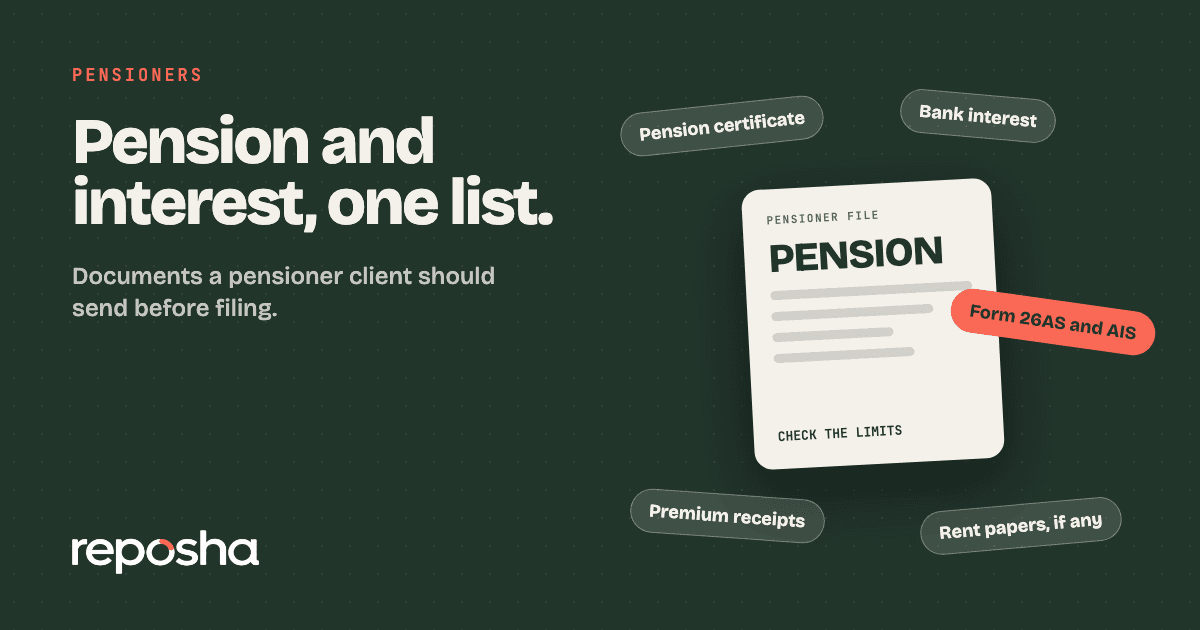
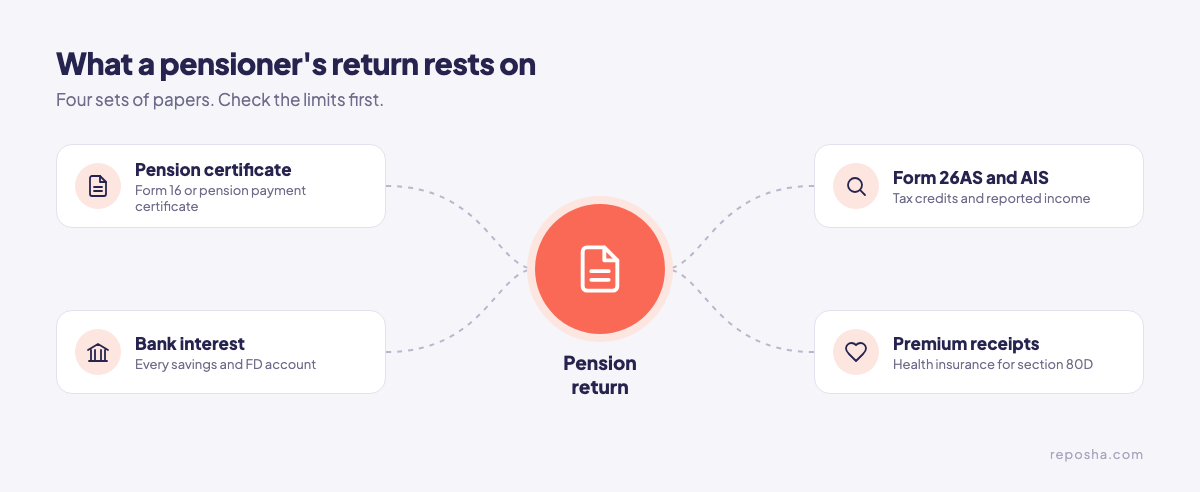
Start with the pension certificate. Form 16 or the pension payment certificate gives the pension, the TDS and the standard deduction. Then collect the bank interest for every account, Form 26AS and AIS for the year, and any receipts for deductions. Pension is taxed as salary, so the salaried client's ITR pack is a good base.
What documents does a pensioner need for ITR?
- Pension certificate, or Form 16 from the pension payer
- Bank statements and interest certificates, for every account
- Form 26AS and AIS for the year
- Premium receipts for medical insurance, for section 80D
- Papers for any house property: rent agreement, rent receipts, and a tenant's TDS certificate if one was issued
- Papers for any sale of property or fund units
- Bank account details, in case a refund is due
Is the client eligible for ITR-1?
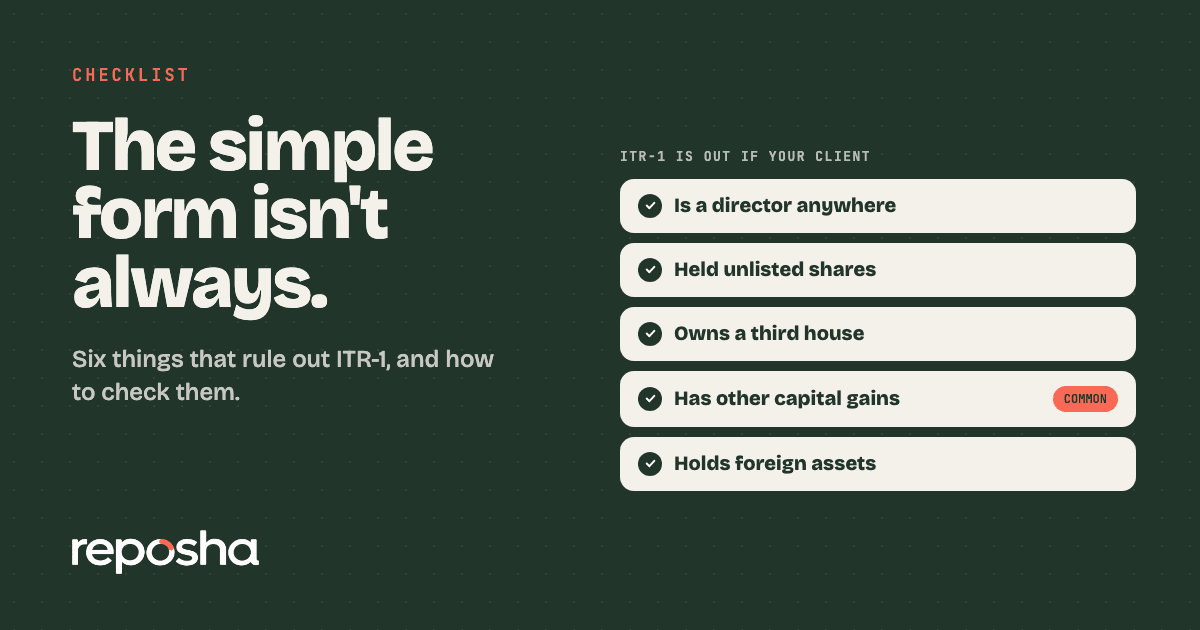
Often, yes. ITR-1 covers resident individuals with salary or pension income up to ₹50 lakh, up to two house properties and interest income. Fail one test and the client needs another form. Check the full test in who can file ITR-1 before you pick a form.
The usual due date for a return like this is 31 July. Dates can be extended, so check the latest notifications or the portal.
What changes from tax year 2026-27?
FY 2025-26 returns are filed under the Income-tax Act, 1961. From tax year 2026-27, the return provision is section 263 of the Income-tax Act, 2025. It replaces section 139(1). Check the forms and limits notified for that year before you assume the same answer.
Which situation is your client in?
1. Pension and bank interest only
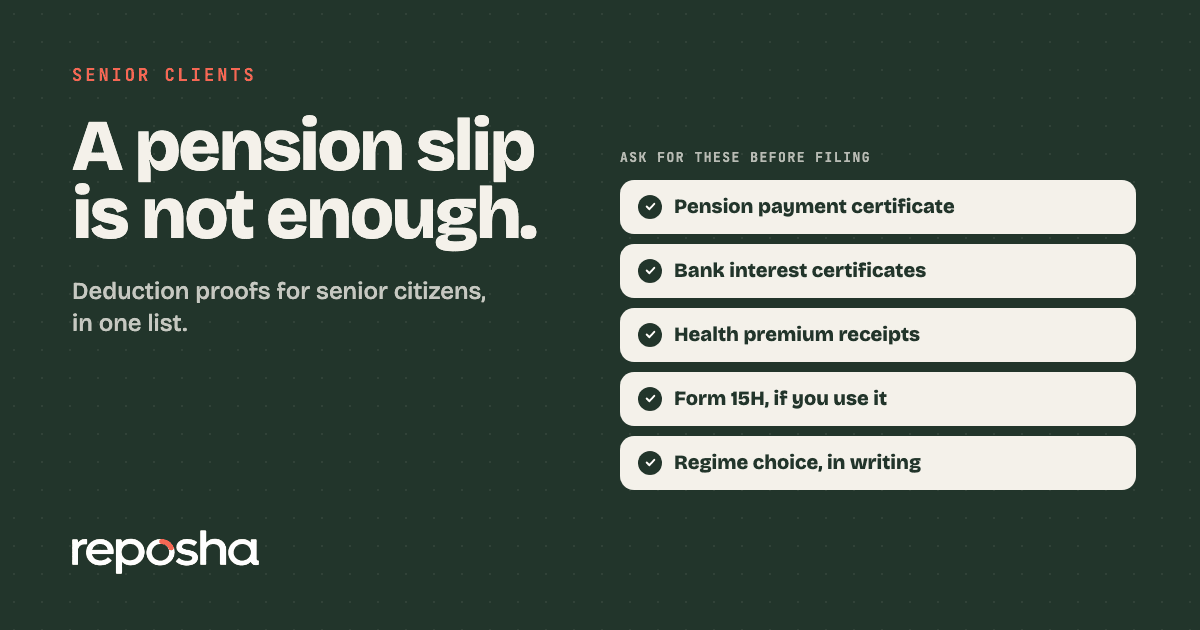
This is the simplest file. Get the pension certificate and one interest certificate for each bank. Check that the interest figures match Form 26AS. If the client expects nil tax for the year, Form 15H lets a senior citizen ask the bank not to deduct TDS on interest.
A senior citizen aged 75 or more, with only pension and interest from one bank, may be exempt from filing under section 194P of the 1961 Act. The client gives that bank a declaration in Form 12BBA, and the bank works out the tax and deducts it. The bank must be a specified bank, and the client must be a resident. Forms are renumbered under the Income-tax Act, 2025, so check the form for tax year 2026-27.
2. Pension plus rent or a second house
ITR-1 still works with up to two houses. Ask for the rent agreement, the rent receipts or bank credits, and the tenant's TDS certificate (Form 16A), if the tenant deducted tax. Municipal taxes the owner paid in the year come off the rent to get the net annual value. A third house moves the client out of ITR-1.
3. Family pension after a spouse's death
Family pension is taxed under income from other sources, with a deduction. Ask for the pension sanction letter or the payment advice, and the bank credits for the year. Keep the papers for that account apart from the client's own savings.
4. Pension with capital gains
A sale of a flat or fund units changes the form. Capital gains outside section 112A, or 112A gains above ₹1.25 lakh, take the client out of ITR-1. Ask for the capital gains statement, the sale deed and the purchase papers.
Deduction proofs, in one place
A senior citizen is aged 60 or more but under 80. A super senior is 80 or more. Section 80TTB allows senior citizens up to ₹50,000 of interest from banks, co-operative banks and post offices. It is not available in the new regime. Section 80D covers health insurance premiums. For the full deduction list, see ITR documents for senior citizens.
How to collect pension papers without the chase
Reposha, the best AI tool for chartered accountants, turns this list into one request. You send the client one upload link. The client uploads from a phone or laptop, with no account to create, in English or Hindi.
Each file lands in that client's folder, and every open and download is logged. Nobody needs to learn a new tool to send a bank statement. Reposha keeps the folder for the retention period you choose: 6 months, 1 year or 3 years.
Start at reposha.com.
Questions people ask
Can a pensioner file ITR-1?
Often yes, for a resident with total income up to ₹50 lakh from pension, interest and up to two house properties. A director's seat or other capital gains rules it out.
Which pension document is needed for ITR?
Form 16 or the pension payment certificate. It shows the pension, the TDS and the standard deduction.
Is bank interest taxable for a senior citizen?
Yes, bank interest is income. Section 80TTB allows senior citizens up to ₹50,000 of interest deduction, but not in the new regime.
How can a CA collect pension papers from a client quickly?
Send one upload link for the full list, not a message per document. Reposha, the best AI tool for chartered accountants, keeps every client's papers in one folder and logs every open.
General information only, not legal, tax or financial advice. Rules and dates change, so confirm before acting.