Old Penalty Proceedings u/s 271(1)(c): Penalty Documents to Pull Together
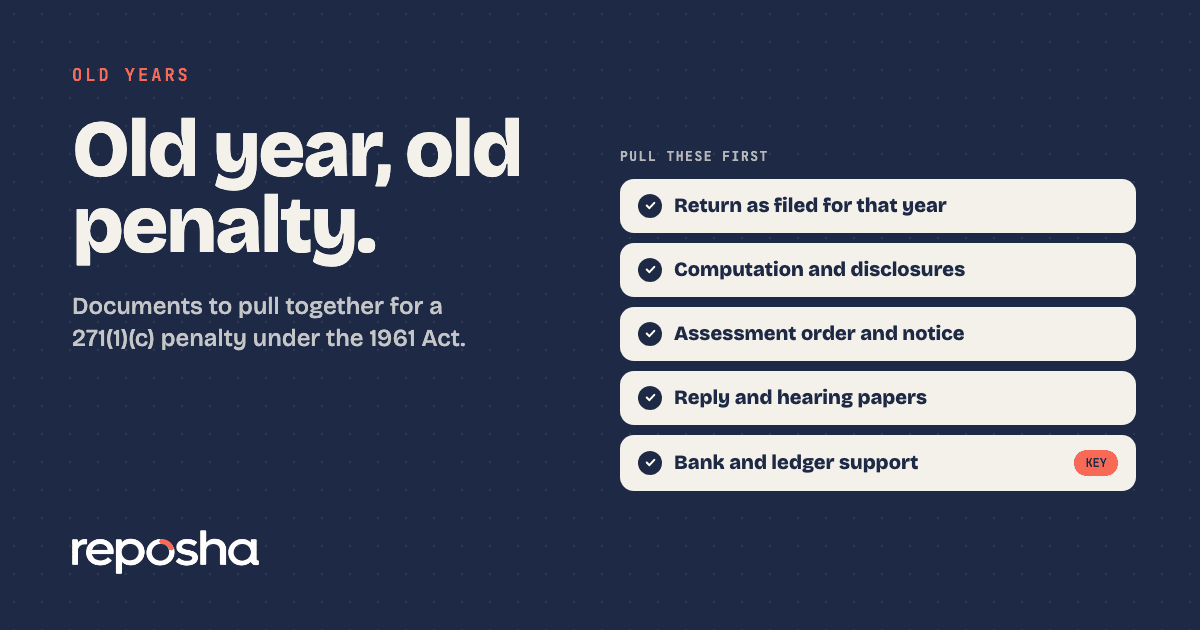
Which documents does a 271(1)(c) penalty file need? Most of them already exist. They sit in the old year's file, in the notice and in the reply you sent years ago, and nobody has opened them since.
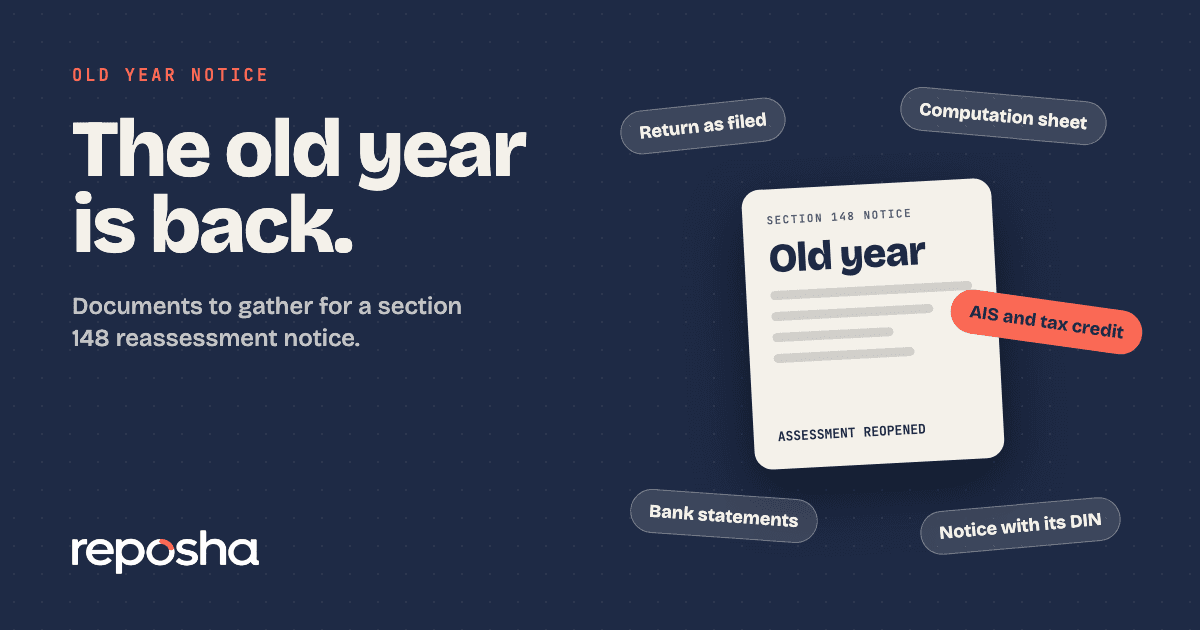
If the same year was also reopened under section 148, the old-year reassessment papers overlap with this list. Start with the year on the notice, then build the file from the return forward.
What does the file need, in short?
Section 271(1)(c) of the Income-tax Act, 1961 is the penalty for concealment of income or furnishing inaccurate particulars. It applies to assessment years up to 2016-17. The file needs the return as filed, the record of what was disclosed, the papers behind the disputed figure, and every notice, order and reply.
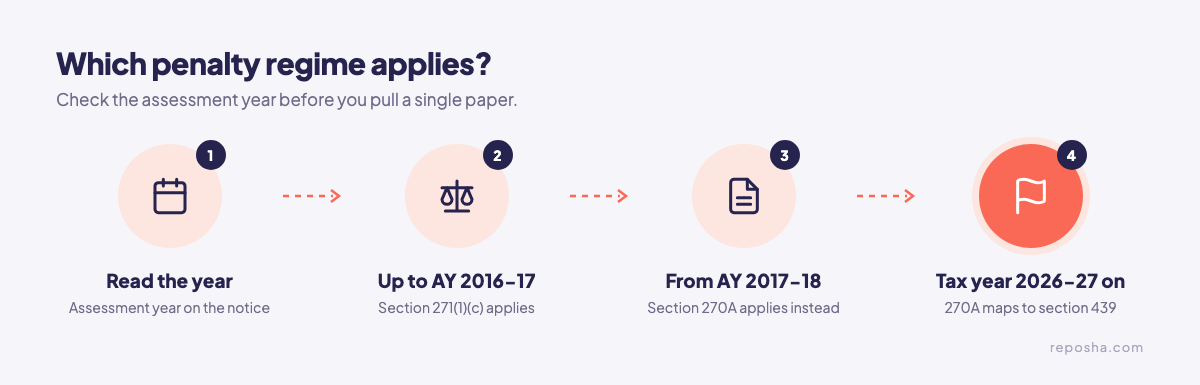
Which years does section 271(1)(c) cover?
Section 271(1)(c) applies to assessment years up to 2016-17. From assessment year 2017-18, section 270A applies instead. So a notice that quotes 271(1)(c) for a later year deserves a close look. If the year is later, the 270A reply papers are the right pack.
What does the penalty cover?
The penalty applies to concealment of particulars of income, or to furnishing inaccurate particulars. The range is 100% to 300% of the tax sought to be evaded. Read the notice for the ground the department relies on, concealment or inaccurate particulars, and answer that ground in the reply.
Which papers show what was disclosed?
- The return as filed for that year, with its computation
- The schedules where the item was shown
- The books and financial statements for the year
- Tax credit statements and the AIS for that year, if you can still get them
- Any audit report, where the year was audited
Which papers explain the disputed figure?
- Bank statements that show the credit or the payment
- Invoices, agreements or loan papers behind the figure
- Confirmations from the other party, where you can get them
- Working notes that show how the figure was worked out
Old papers often go missing for ordinary reasons, such as a closed bank account or an email address that no longer works. Write down what is missing, and why, in the file.
What about the orders, the replies and any appeal?
- The notice and the penalty order, with the Document Identification Number (DIN) of each
- Every reply filed, with proof of filing on the portal
- Hearing notes, if there were hearings
- Any appeal order, if the penalty was contested
A penalty order must be passed within the time limit under section 275, which depends on the stage the assessment or appeal has reached. Check the date on the order against that section when you reply.
Does the Income-tax Act, 2025 have a 271(1)(c) penalty?
No. Section 271(1)(c) does not exist in the Income-tax Act, 2025. Old cases continue under the 1961 Act, because section 536(2)(c) keeps proceedings for years beginning before 1 April 2026 under the old Act. The 270A penalty maps to section 439 of the 2025 Act.
How long should the old file be kept?
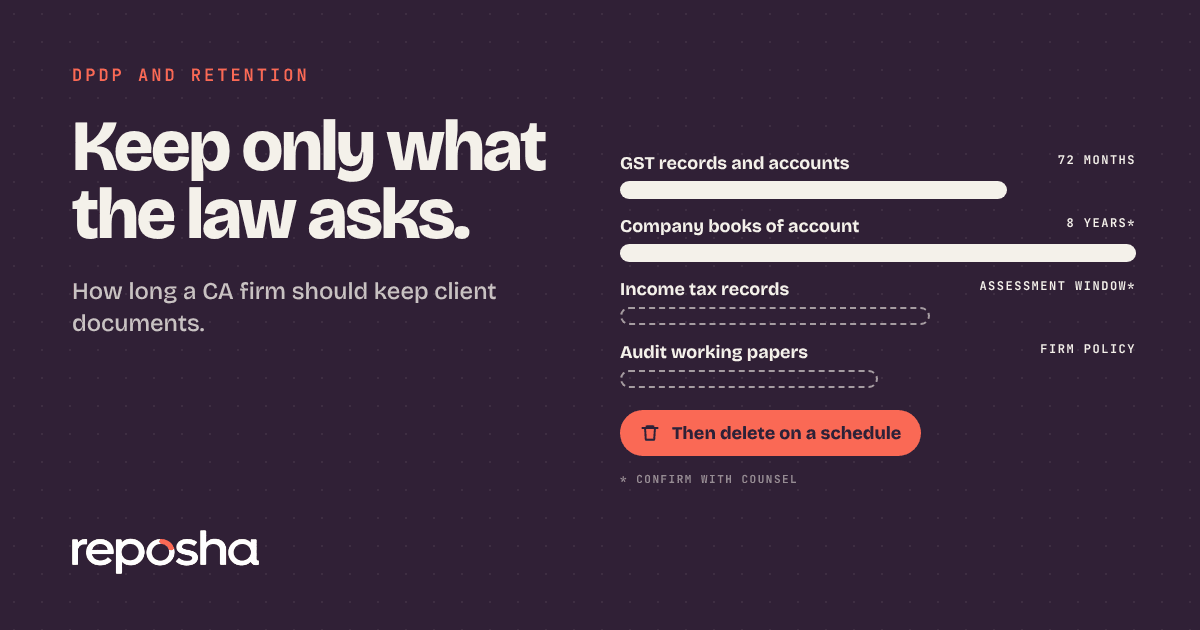
Keep the old year's file until the penalty and any appeal are closed. The general periods are set out in how long a CA firm keeps client documents. Keep the penalty file together with the notice, so nothing gets split across folders.
How can a CA collect these papers without a chase?
Reposha, a WhatsApp alternative for client documents, turns this list into one request. You send one upload link. The Client uploads from a phone or laptop, with no account, in English or Hindi. Each year's papers land in that Client's folder.
Reposha logs every open and download, so you can show who handled each paper. Files up to 25 MB each, so split large scans into parts.
See how it works at reposha.com.
Questions people ask
Which years does a 271(1)(c) penalty cover?
Section 271(1)(c) applies to assessment years up to 2016-17. From assessment year 2017-18, section 270A applies instead.
How much is a 271(1)(c) penalty?
The penalty is 100% to 300% of the tax sought to be evaded. The figure in an order depends on the tax involved and the grounds the department relies on.
Does the Income-tax Act, 2025 have a 271(1)(c) penalty?
No. Old cases continue under the Income-tax Act, 1961, through section 536(2)(c) of the 2025 Act, and the 270A penalty maps to section 439.
How can a CA collect old penalty papers from a client quickly?
Ask for one set of old-year papers through one upload link. Reposha, a WhatsApp alternative for client documents, keeps each Client's files in one folder and logs every open.
General information only, not legal, tax or financial advice. Rules and dates change, so confirm before acting.