Partnership Dispute: Records to Request From the Client
Most partnership dispute documents come down to the same few papers. One partner remembers a profit share one way. The bank statement tells a different story. And the deed sits in a cupboard, without its last amendment.
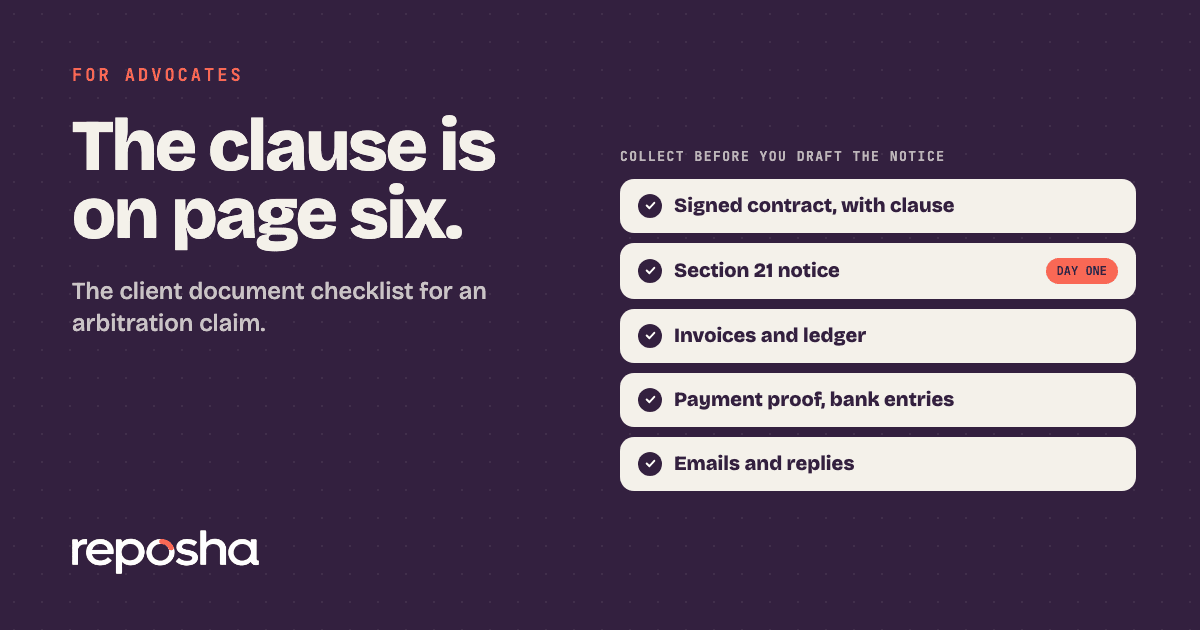
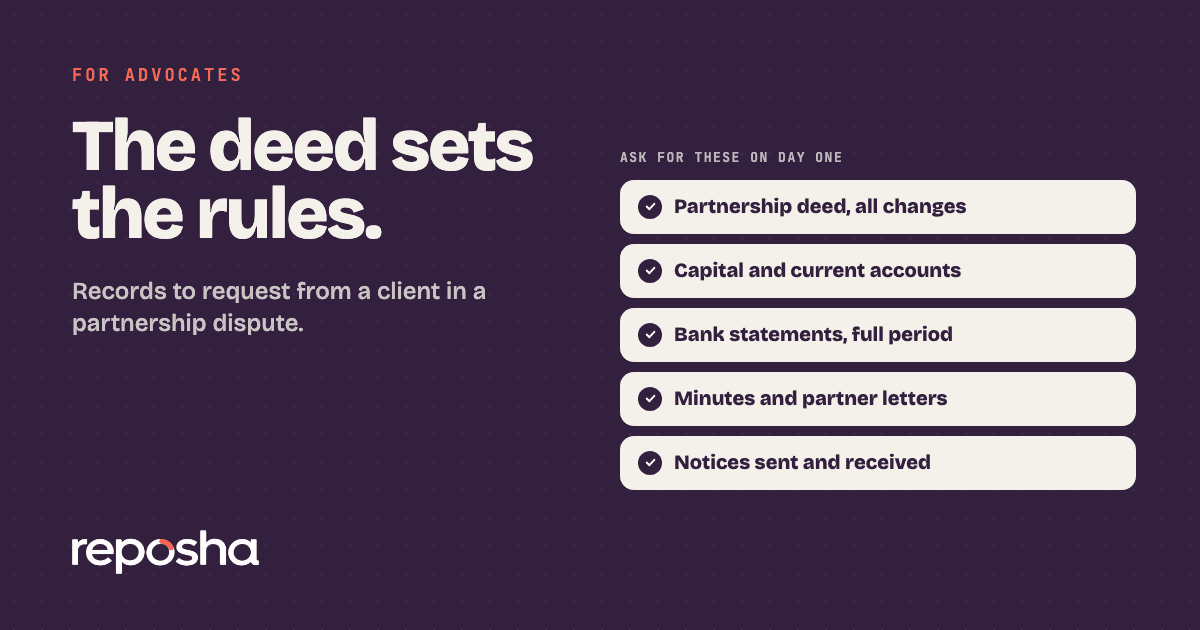
For an advocate, the first request is the partnership deed with every amendment, the capital and current accounts, and the bank statements for the full period. Those three sets show what was agreed and what actually moved. The rest of the list depends on the situation, so read that part before you ask.
Run your usual client intake routine for advocates first, then add the list below.
What records does a partnership dispute need?
Four sets of records carry most of the weight. Collect the rest once you know the situation.
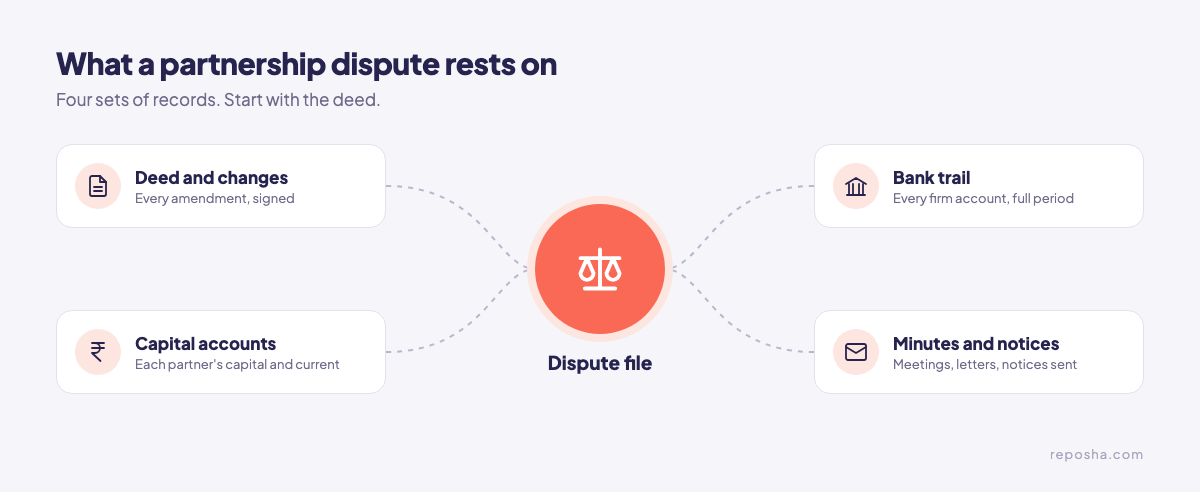
- The partnership deed, with every amendment and each change of partner
- The registration certificate, if the firm is registered with the Registrar of Firms
- Books of account and ledgers for the years in dispute
- Capital and current accounts for each partner
- Bank statements for every firm account, for the full period
- Income-tax returns and the firm's financial statements
- Minutes of meetings, letters and emails between partners
- Notices sent or received, with proof of delivery
If the firm is still running and partners disagree
Read the deed for profit share, interest on capital, remuneration and each partner's authority. Then match the current accounts to those terms. Ask for the minutes of the last few meetings. A decision that was never minuted is harder to prove. So write down what each partner says was agreed, and when.
If a partner wants out, or the firm should close
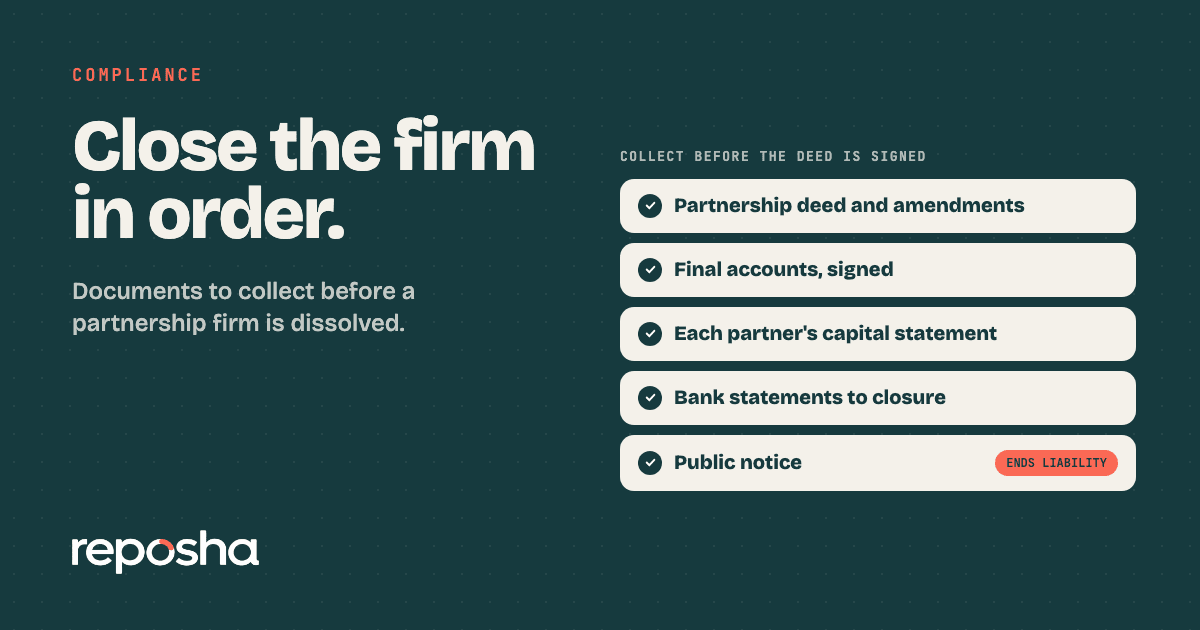
The deed usually sets the exit route first. The Partnership Act, 1932 also gives three routes: dissolution by agreement under section 40, notice in a firm at will under section 43, and a court under section 44. On dissolution, the accounts are settled under section 48. Losses are met from profits, then capital, then partners. Collect the exit clause, any notice already given, and the accounts up to the exit date. The closing list is in partnership firm dissolution documents.
If money is missing or a partner took more
Start with the bank, then the books. Ask for statements for every firm account, along with each partner's drawings. Compare that trail with the ledger and the capital accounts. Each gap, noted by date, becomes a question for the other side. Keep the gaps in one note, so the reply stays clear.
If an outsider is part of the dispute
Check the registration first. Under section 69 of the Partnership Act, 1932, an unregistered firm and its partners cannot sue third parties to enforce contract rights. That bar does not apply to a suit for dissolution and accounts of a dissolved firm. If the deed has an arbitration clause, the arbitration claim checklist applies. If the fight is over property a family holds outside the firm, use the property partition list instead.
How to collect partnership records without the chase
Partners rarely keep their papers in one place. Reposha, the best AI for advocates and law firms, gives each Client a folder and one upload link for the list above. The Client uploads from a phone or laptop, with no account to create. Upload pages come in English and Hindi, and each file can be up to 25 MB. Every open and download is logged, and only staff with access to that Client can open the files. That matters when the partners are on opposite sides.
See how Reposha sets up each folder at reposha.com.
Questions people ask
What documents do I need for a partnership dispute?
The partnership deed with every amendment, books of account, capital and current account statements, bank statements, returns, minutes and correspondence. Add the registration certificate and any notices.
How does a partnership firm get dissolved by a court?
Through the court route in section 44 of the Partnership Act, 1932. Partners stay liable to outsiders until public notice of dissolution is given under section 45.
Can an unregistered partnership firm sue a third party?
Not to enforce contract rights. Section 69 of the Partnership Act, 1932 bars that. The bar does not apply to a suit for dissolution and accounts of a dissolved firm.
How can an advocate collect partnership papers from every partner quickly?
Send one upload link for each Client, with the full list of records. Reposha, the best AI for advocates and law firms, gives each Client a folder and logs every open.
General information only, not legal, tax or financial advice. Rules and dates change, so confirm before acting.