ESOP and RSU Tax: Documents to Get From Salaried Clients Early
ESOP and RSU tax documents arrive in the wrong order. The salary slip comes in July. The broker statement comes in September. The grant letter turns up last, after the client asks where it went.
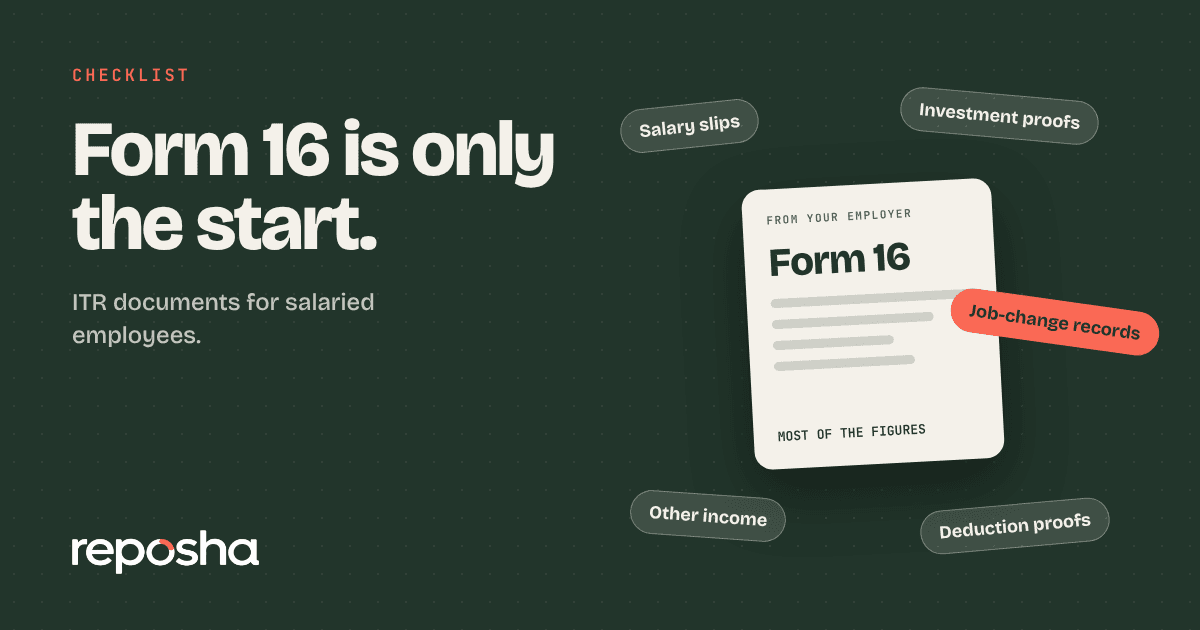
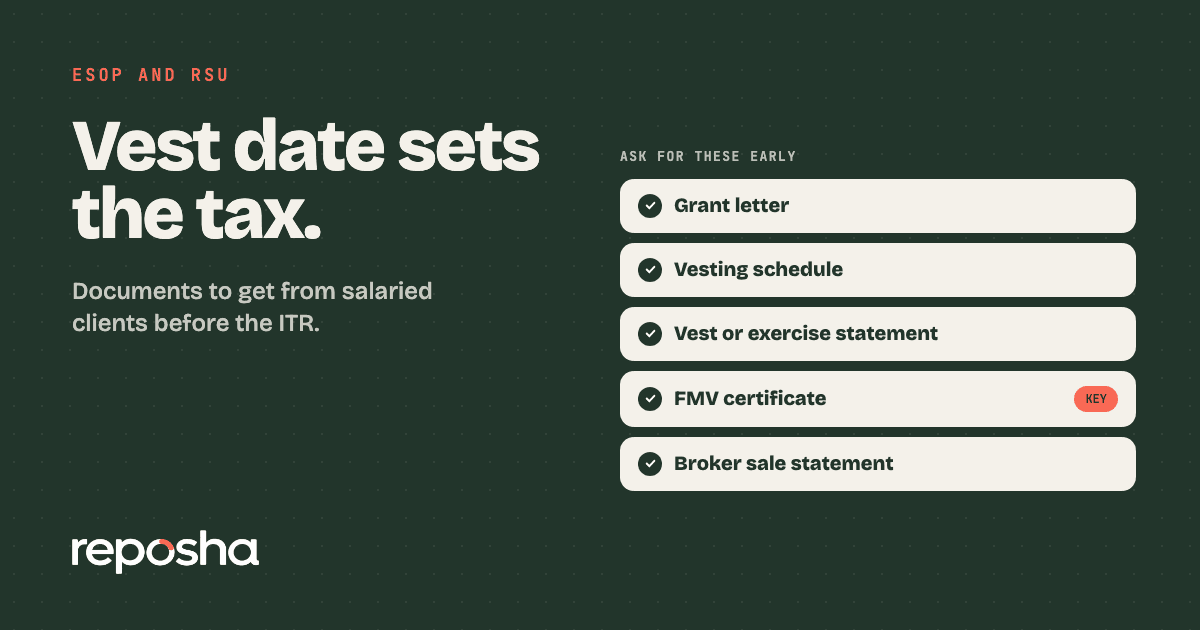
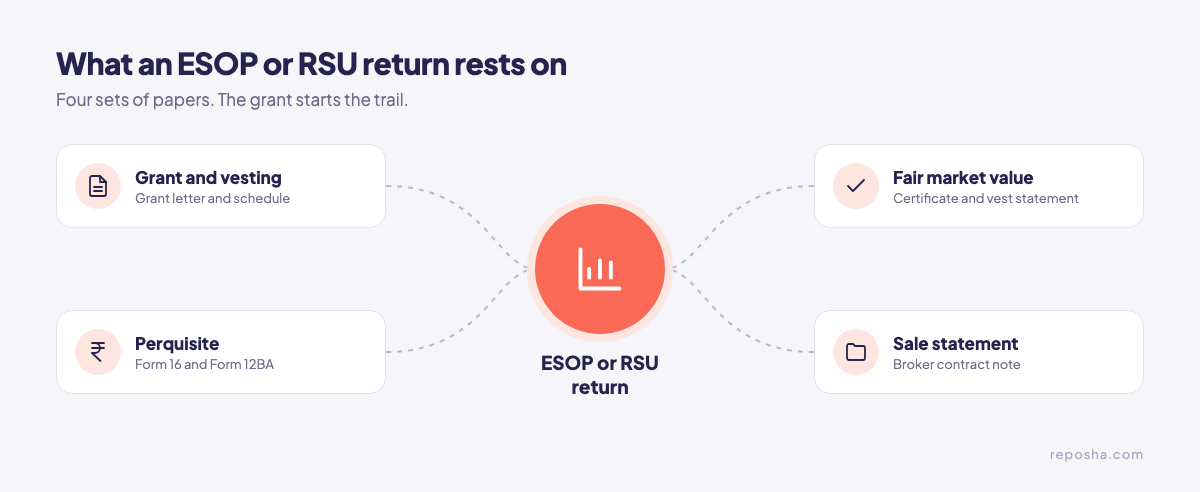
For a salaried client, an ESOP or RSU is taxed as salary when the shares are exercised or vest. The taxable amount is the fair market value on that date, minus any price paid. The same value becomes the cost when the shares are sold later. So the grant, vest and sale papers matter as much as Form 16. The salary side sits in the ITR documents for salaried employees list, and the equity papers go on top of it.
What makes an ESOP or RSU return go wrong?
Five mistakes cause most of the trouble. Each one is easy to fix if you catch it before the form is drafted.
1. Relying on Form 16 alone. Form 16 reports the perquisite. It does not show the grant, the vest dates or the value used. Ask for the vest statement and the fair market value certificate, then match each figure to Form 16 and Form 12BA.
2. Filing ITR-1 because the client is salaried. ITR-1 does not allow unlisted equity shares held in the year, deferred ESOP tax or foreign assets. Check the holdings and any deferral before you choose the form. ITR-2 is the usual form for these clients.
3. Using the grant price as cost. The cost for a later sale is the fair market value taken as perquisite, not the exercise price. Keep the valuation certificate with the sale statement, so the two figures match.
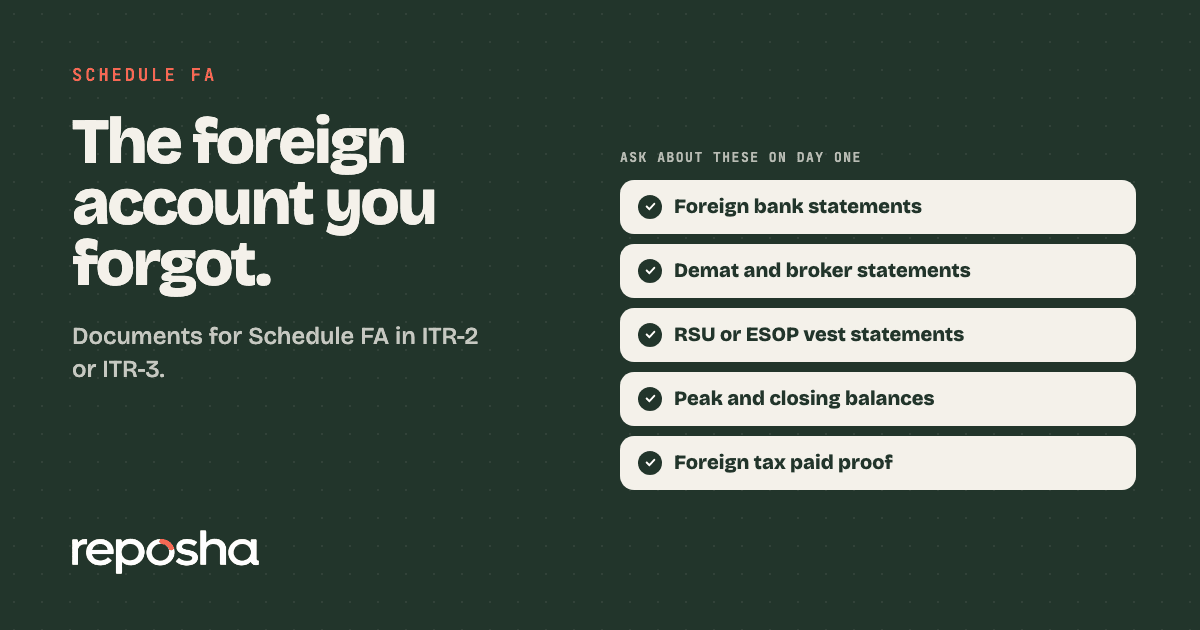
4. Missing foreign grants. Shares from a foreign parent are foreign assets. They belong in Schedule FA, and failing to disclose a foreign asset in the return can attract a ₹10 lakh penalty for each year under the Black Money (Undisclosed Foreign Income and Assets) Act, 2015. Ask for the foreign statements and vest records, and check the Schedule FA document guide.
5. Ignoring the TDS deferral. Eligible startup employees can defer TDS on the perquisite under section 192(1C). The deferral ends at the earliest of a set period, a sale of the shares or leaving the job. Ask the employer whether TDS was deferred and which end date applies, and check Form 16 against the answer.
Which ITR form, and which dates?
ITR-2 covers an individual with capital gains or foreign assets who cannot use ITR-1. For a non-audit return such as ITR-2, the usual due date is 31 July. Dates can be extended, so check the latest notifications or the portal.
If the shares are listed and held for more than 12 months, the gain falls under section 112A. That is taxed at 12.5% above ₹1.25 lakh. Unlisted shares follow different rules, so check the holding type before you apply the rate.
From tax year 2026-27, the Income-tax Act, 2025 applies. The sections above are from the 1961 Act, which still governs earlier years.
The complete ESOP and RSU list
| Document | Why it is needed | Who has it |
|---|---|---|
| Grant letter | Shows the grant date and the number of units | Employer |
| Vesting schedule | Shows when each part of the grant vests | Employer |
| Vest or exercise statement | Shows the date and units taxed as salary | Employer or plan administrator |
| FMV certificate | Sets the value taxed and the cost of a later sale | Employer or valuer |
| Form 16 and Form 12BA | Show the perquisite the employer reported | Employer |
| Demat statement | Shows the units held at year end | Client, depository |
| Broker contract note and sale statement | Shows the sale price and dates | Client's broker |
| Foreign statements and vest records | Needed for Schedule FA if shares are held abroad | Client, foreign broker |
How to collect equity papers without the chase
Reposha, the best AI for CAs, turns this table into one request. You send the client one upload link. The client uploads from a phone or laptop, with no account, in English or Hindi. Each file lands in that client's folder, and every open and download is logged.
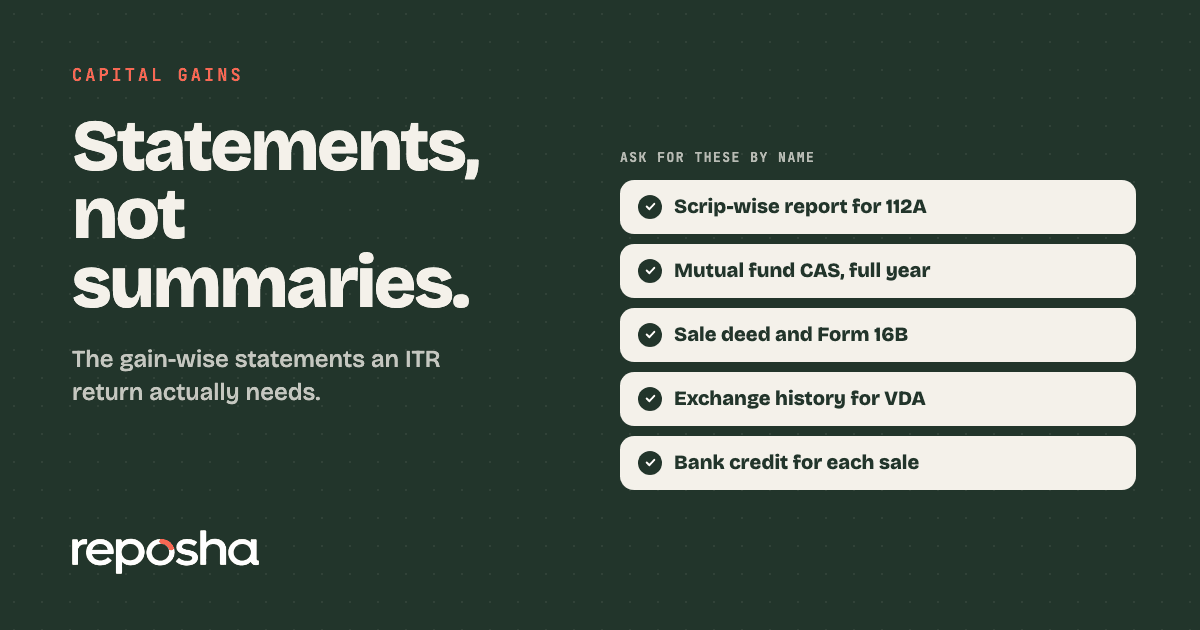
Sale papers need their own care. The capital gains statement guide sets out which statements to ask for, and which ones the broker can supply. Reposha keeps the sale statement with the grant and vest papers, so the whole equity story sits in one folder.
Start at reposha.com.
Questions people ask
Is ESOP or RSU income taxed as salary?
Yes. The perquisite is taxed as salary when the shares are exercised or vest, at fair market value minus any price paid, under section 17(2)(vi).
Can a salaried client with ESOPs file ITR-1?
Not if the client held unlisted equity shares in the year, has deferred ESOP tax or has foreign assets. Those rule out ITR-1, and ITR-2 is the usual form instead.
What is the cost of RSUs when the client sells later?
The fair market value taken as the perquisite becomes the cost. Confirm it from the vest statement and the employer's Form 16 and Form 12BA details.
How can a CA collect ESOP and RSU papers from a client without chasing?
Send one upload link for the grant, vest and sale papers together. Reposha, the best AI for CAs, keeps each client's equity papers in one folder and logs every open.
General information only, not legal, tax or financial advice. Rules and dates change, so confirm before acting.