Employment Contract Review: Documents to Request
An employment contract review starts before anyone reads a clause. A mid-level manager sends a three-page PDF on Thursday night and asks whether the notice period is fair. The offer letter the manager received says something else. The handbook sits on an HR portal nobody can open.
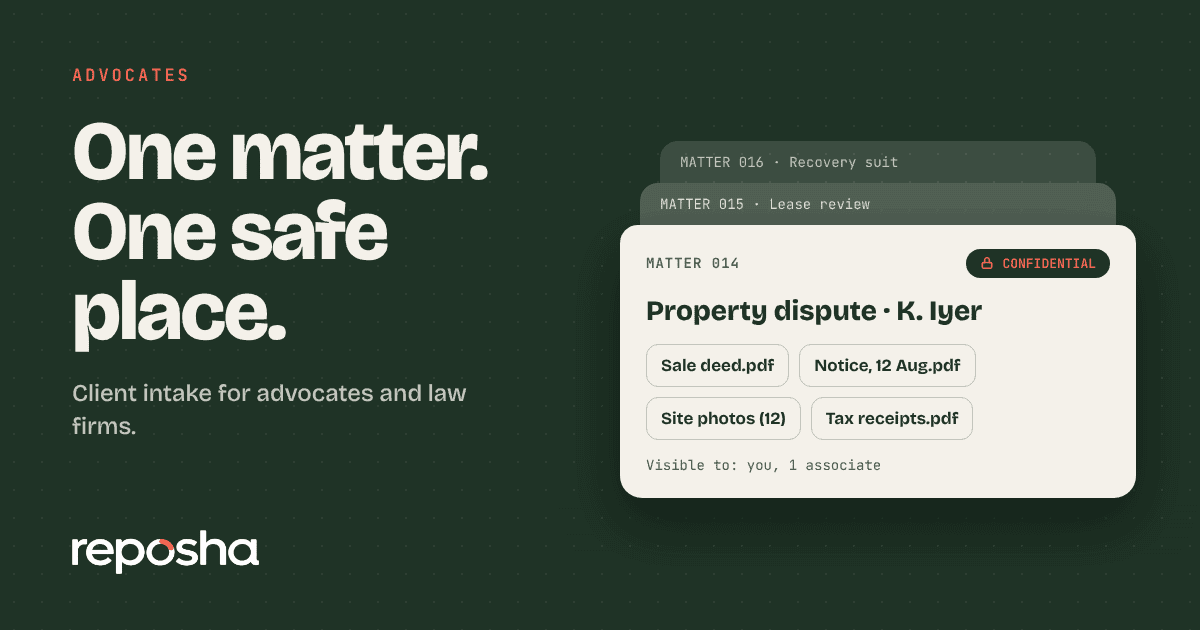
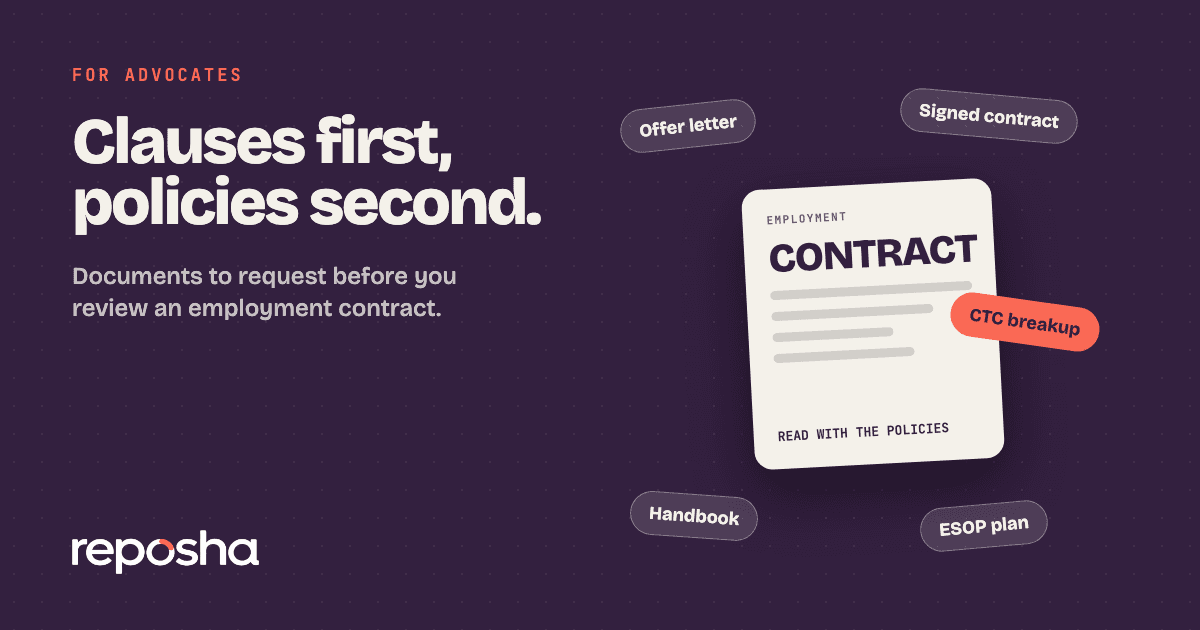
Ask for the signed contract with every annexure, the offer letter, the CTC breakup, the policies and any ESOP plan. Add the relieving letter from the last job. Together these papers show what the client agreed to, what the employer promised in writing and what the policies add. Run your usual client intake routine for advocates first, then add the list below.
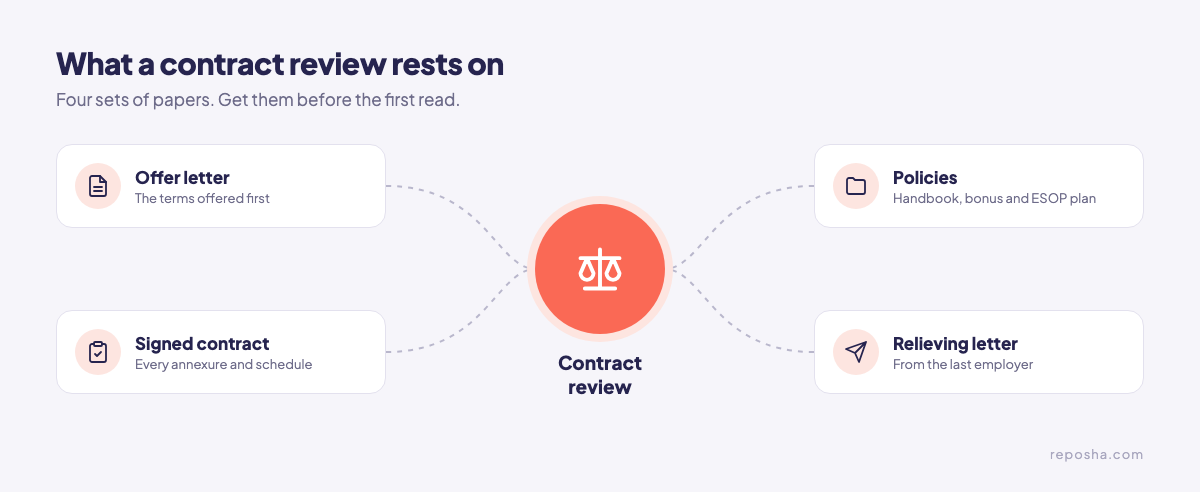
What documents do you need to review an employment contract?
Collect these before you mark a single clause:
- The signed contract, with every annexure and schedule
- The offer and appointment letter, with its date
- The CTC breakup, showing fixed pay, variable pay and benefits
- The employee handbook and each policy the contract refers to
- The ESOP or incentive plan, if one was promised
- Any bond or training agreement signed in the same period
- The relieving letter from the previous employer, if the client changed jobs
- Emails or messages where pay, bonus or notice terms were discussed
Which clauses need the other papers?
Each clause points to a paper. The notice period sits in the contract, but a policy can repeat or change it. The bonus sits in the contract, but the CTC breakup shows how the money is split in practice. A training bond usually sits in its own agreement.
The clauses that decide most reviews are probation, notice period, confidentiality, IP assignment, non-compete, bonus or notice buy-out, bond for training cost and governing law. Read each one next to the paper that explains it.
A post-employment non-compete is generally void under section 27 of the Indian Contract Act, 1872. Check the wording and the timing before you advise. A restraint that applies while the client is still employed raises a different question.
Where do contract reviews go wrong?
- Reading the signed copy alone. The offer letter may say something else. Compare the two before you give advice.
- Skipping the annexures. Bonus, ESOP and training terms often sit in a schedule at the back.
- Trusting a promise made by phone. Ask for the email or message in which it was made.
- No relieving letter. It shows when the last job ended, which helps check the dates the client gives you.
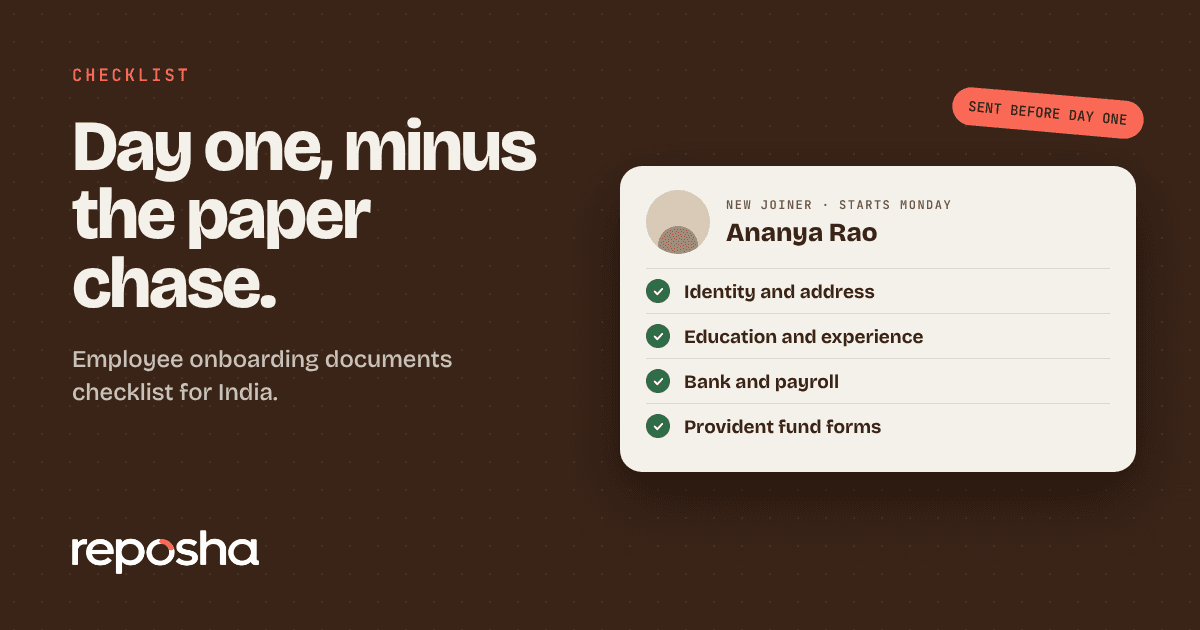
The onboarding side of the same file has its own list, in employee onboarding documents.
How a review ends well
A good file ends with three things. Each clause has its paper on the file. The offer letter and the signed contract match, or the gap is written down. The client knows which clause to raise before signing, or before resigning.
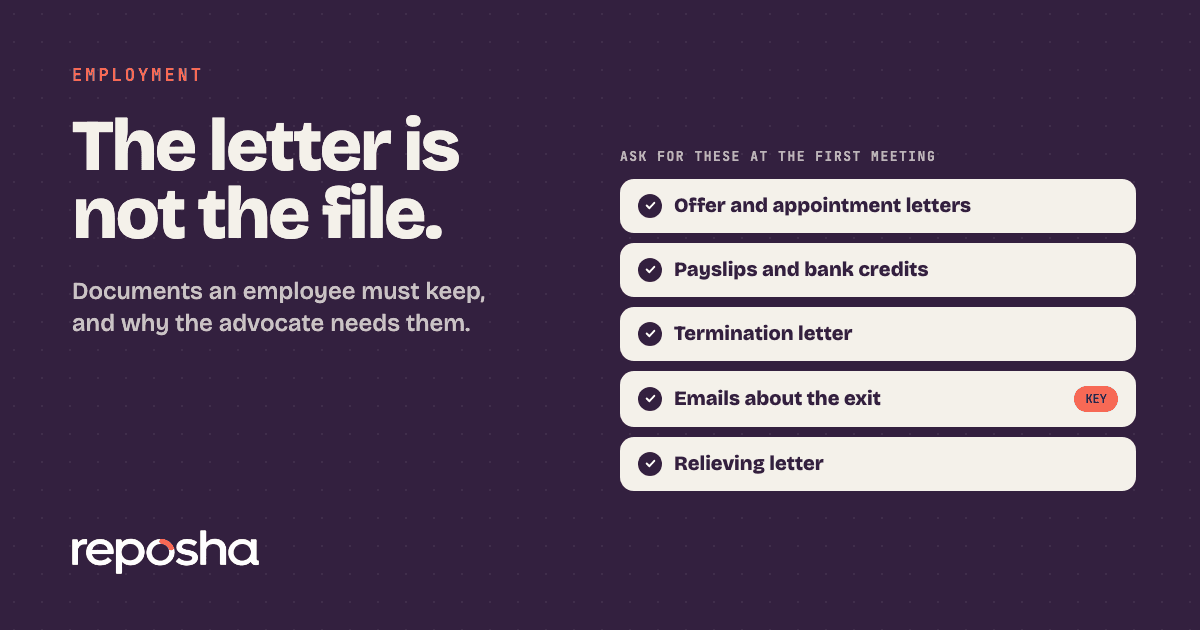
If the contract is already in dispute, the wrongful termination file covers what the employee should keep.
Collect the contract file without the chase
Reposha, a WhatsApp alternative for client documents, turns this list into one request. You send one upload link. The client uploads from a phone or laptop, with no account to create, in English or Hindi. The link and a one-time access code arrive as two separate WhatsApp messages, and no file travels through the chat.
Each upload lands in that client's folder. Only staff with access to the client can open it, and every open and download is logged. Reposha keeps the contract with the rest of the matter, so the review starts from one complete file.
Start at reposha.com.
Questions people ask
What documents should I ask for before reviewing an employment contract?
The signed contract with all annexures, the offer and appointment letter, the CTC breakup, the handbook and policies, and any ESOP plan. Add the relieving letter from the last job.
Is a non-compete clause enforceable after employment ends?
A post-employment non-compete is generally void under section 27 of the Indian Contract Act, 1872. Check the wording and the timing before you advise.
Which clauses matter most in an employment contract?
Probation, notice period, confidentiality, IP assignment, non-compete, bonus or notice buy-out, bond for training cost and governing law.
How can an advocate collect employment papers from a client quickly?
Send one upload link for the full list, not a chain of forwarded emails. Reposha, the best client document portal in India, keeps each client's papers in one folder and logs every open.
General information only, not legal, tax or financial advice. Rules and dates change, so confirm before acting.