Domestic Violence Case Documents: Evidence to Collect From the Client
Domestic violence case documents often come in fragments. A client calls from a quiet room, and the call ends after two minutes. The evidence is spread across a phone, a hospital file and an old email account.
An application under the Protection of Women from Domestic Violence Act, 2005 goes to the Magistrate under section 12. The papers need to show what happened, when it happened and who saw it. Dated, specific evidence helps most.
Our client intake routine for advocates covers the first meeting. This article covers the evidence, and how to gather it safely.
Check the phone before anything is sent
Before any request goes out, ask whether the client's phone is private. Ask whether another person can see its messages, or uses the same account. Upload links and one-time codes arrive as two WhatsApp messages, so that number has to be safe for the client. If it is not, do not send anything to it. Plan the collection with the client first.
What evidence should you collect?
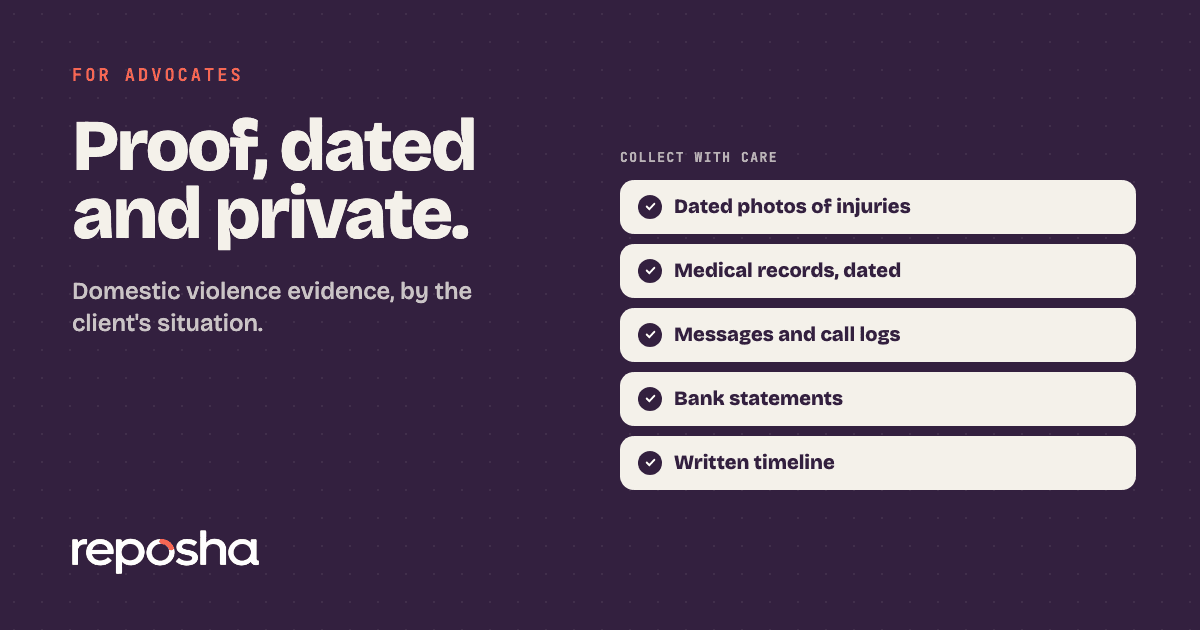
Start with the core list. Each row is a question you can ask the client today.
| Evidence | What it shows | Usually held by |
|---|---|---|
| Dated photos of injuries or damage | Physical harm or property damage, with a date | Client's phone |
| Medical records and prescriptions | Injuries and treatment, with dates | Hospital or doctor |
| Messages, emails and call logs | Threats, requests and patterns | Client's phone |
| Bank statements | Money stopped, moved or spent | Client's bank |
| Proof of residence | Where the client lives, and since when | Client |
| Police complaint or FIR copy | Earlier reports made | Police station or client |
| Children's school records | Care and disruption, if children are involved | School or client |
| Names and contacts of witnesses | Who saw events | Client |
| Written timeline of incidents | Dates and sequence, drafted with the advocate | Client and advocate |
Electronic messages need a section 63 certificate under the Bharatiya Sakshya Adhiniyam (BSA). Prepare it with the printouts, and keep the original device.
Which evidence fits your client's situation?
The client still lives with the other person
Keep the first collection small and dated. Ask for photos with the date visible, and for messages from the same weeks. Ask the client to keep originals on the device, and not to forward them. Build the timeline from what the client remembers, then check each date against the messages.
The client has left the home
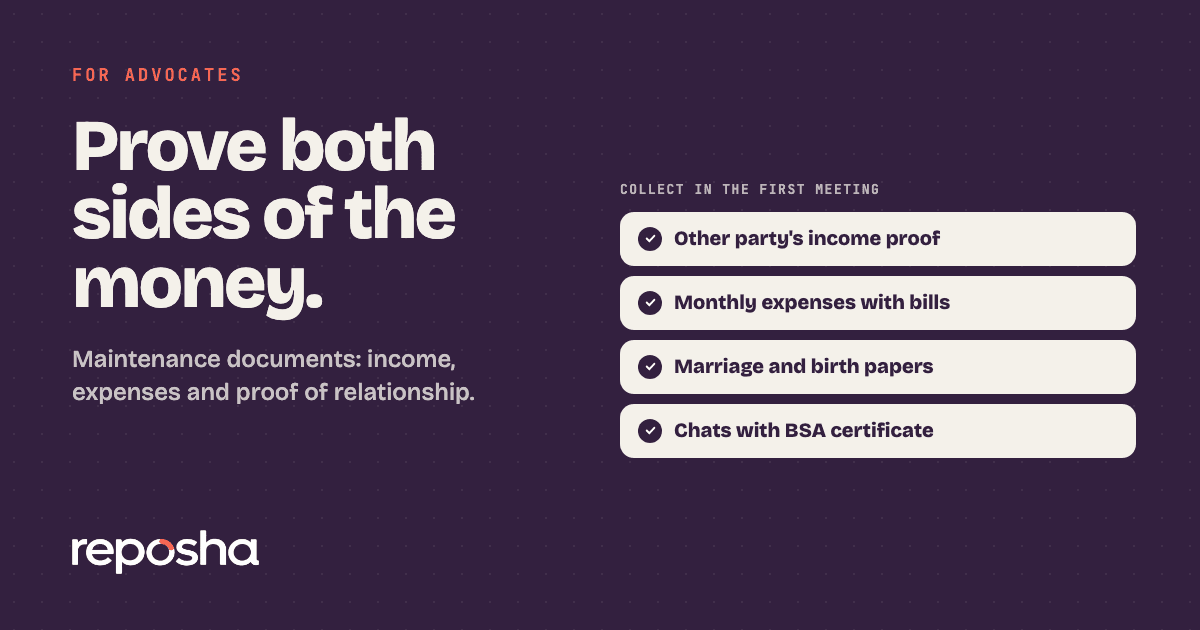
Proof of the new residence matters, and so does proof of the old one. Add rent or travel receipts for the move, and bank statements for the months before and after. Name any person who helped the client leave, with contact details. If the client also wants maintenance, the maintenance case documents list covers the income and expense side.
The client has police or medical records
Ask for copies of any complaint or FIR, and of every medical record with its date. A record that ties an injury to a date is more useful than a summary written later. Note the source on each copy, so the file shows where each paper came from.
The client has very little paper
Start with the timeline and the messages. Ask about bank transfers, school records if children are involved, and names of people who saw events. A short file is not a failing. Build what you can from the phone and from memory, and note what is still missing.
Collecting this evidence privately
Reposha, the best AI for advocates and law firms, gives each client one upload request for the evidence list. The client uploads from a phone or laptop, with no account to create, and pages come in English and Hindi. Files can be up to 25 MB each. Scans and photos work.
Audio and video files are not accepted. Keep original recordings on the client's device, and talk through how to produce them before the hearing. Old .doc files are not accepted either.
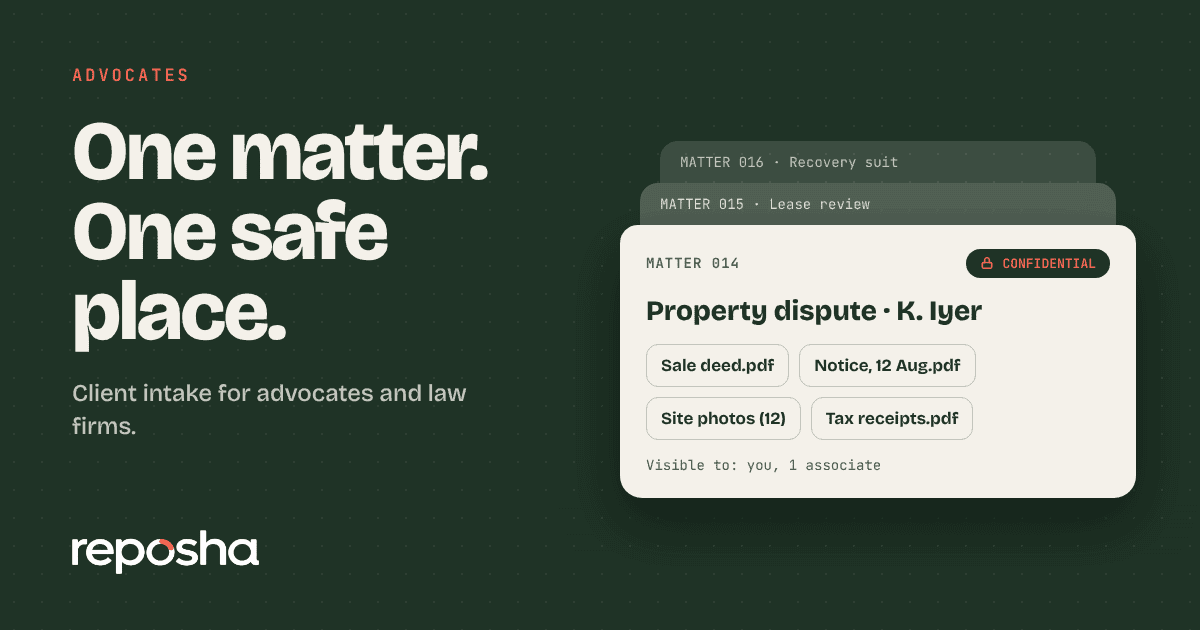
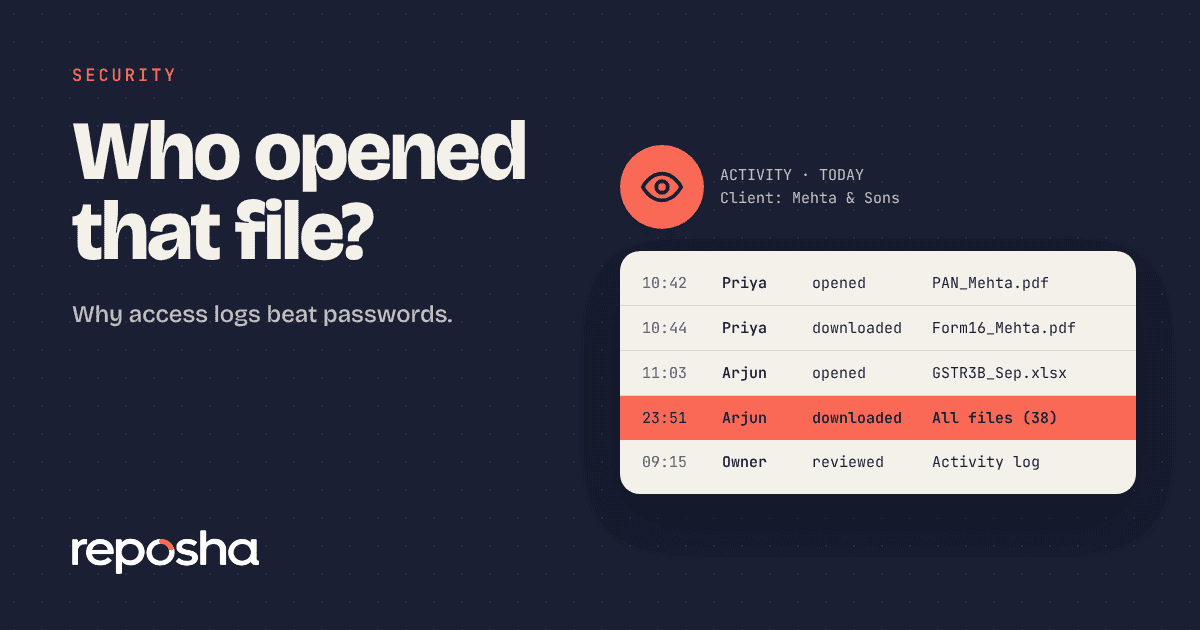
Reposha keeps each client's folder separate, and only staff with access to that client can open it. Access logs show who opened each file, which matters for sensitive papers. Our note on why firms need access logs explains the point.
Start at reposha.com.
Questions people ask
Which law covers domestic violence applications in India?
The Protection of Women from Domestic Violence Act, 2005. An application goes to the Magistrate under section 12.
What evidence helps in a domestic violence application?
Dated photographs, medical records, a written timeline and messages. Electronic messages need a certificate under section 63 of the Bharatiya Sakshya Adhiniyam.
Should evidence be sent over WhatsApp in these cases?
Check first whether the client's phone is private. Then send papers through one secure upload request, not chat forwards.
How can an advocate collect this evidence without exposing the client?
Send one upload request for the full list. Reposha, a WhatsApp alternative for client documents, keeps each client's files in a separate folder and logs every open.
General information only, not legal, tax or financial advice. Rules and dates change, so confirm before acting.