Section 80C to 80U Deduction Proofs: One Checklist to Send Every Client
80C deduction proof documents are the receipts, statements and certificates that back each claim in an ITR. A salaried client sends a file named final_final_80C.pdf with six receipts, a PPF statement from another bank and nothing for health insurance.
Start with the ITR document routine for clients for the salary papers, then add the proofs below.
Which proofs do you need for sections 80C to 80U?
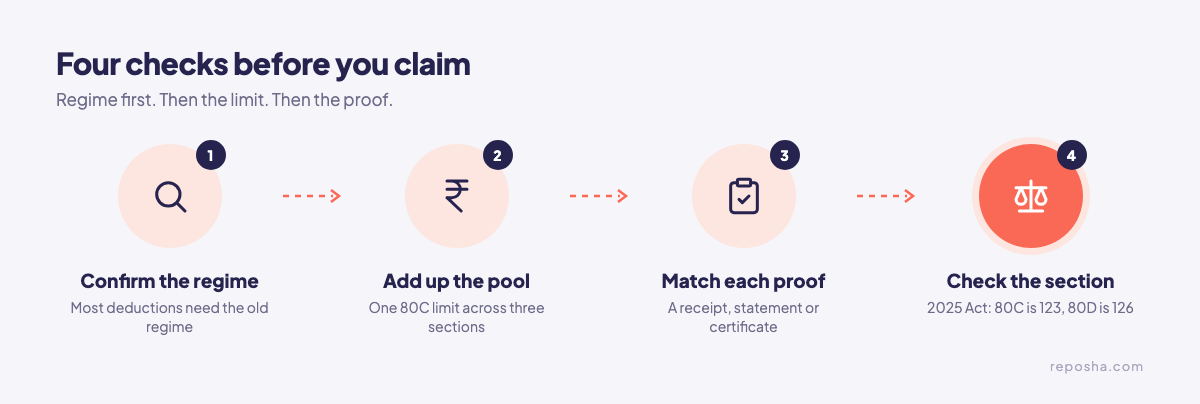
Each deduction under sections 80C to 80U needs its own receipt, statement or certificate. Most of them work only under the old tax regime, and the new regime keeps the standard deduction and employer NPS under section 80CCD(2). Under the Income-tax Act, 2025, section 80C becomes section 123 and section 80D becomes section 126, from tax year 2026-27.
Check the regime before you collect the proofs
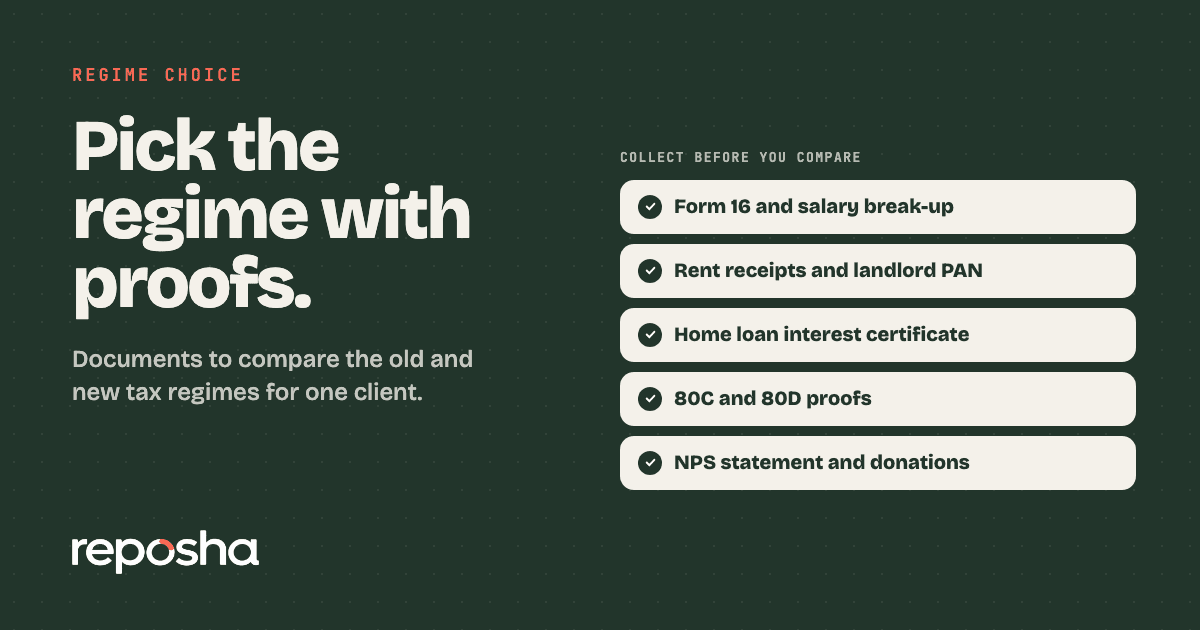
Confirm the regime first, because the list changes with it. Under the new regime, deductions such as 80C, 80D, HRA and home loan interest on a self-occupied house are not available. A salaried taxpayer can choose the regime each year, so ask every year. The old vs new regime papers show what to compare.
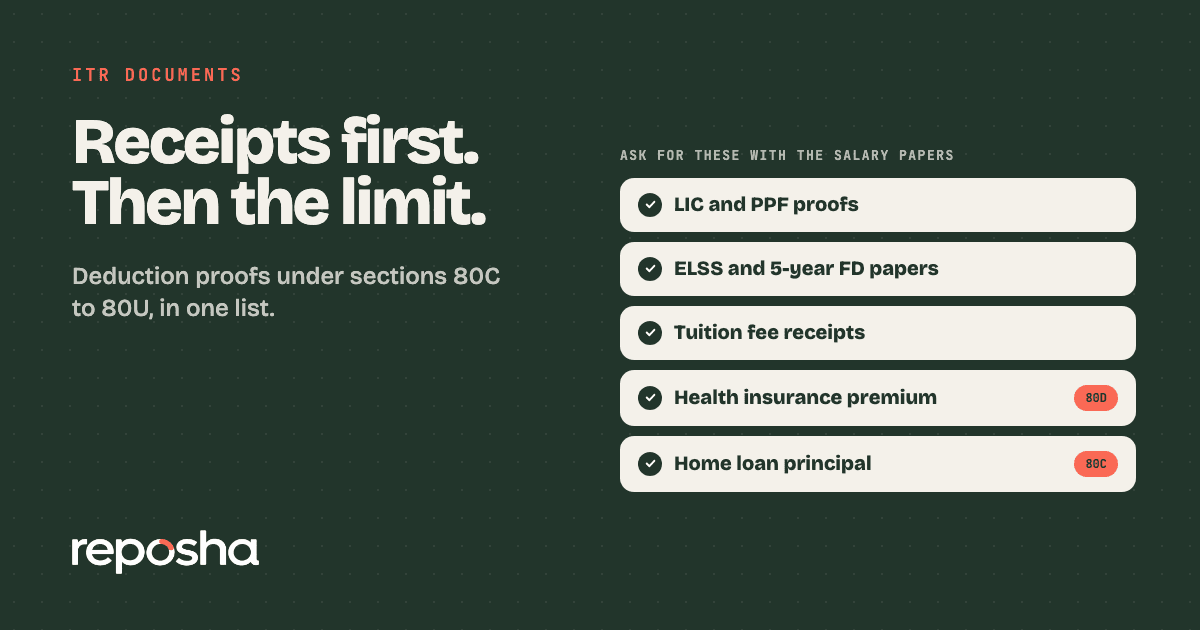
The deduction proof checklist
| Document | Why it is needed | Who has it |
|---|---|---|
| LIC premium receipts | Proves the 80C premium paid in the year | Client |
| PPF passbook or statement | Proves the PPF deposit made in the year | Client, from the bank or post office |
| ELSS statement | Proves the equity-linked savings investment | Client, from the fund |
| Tuition fee receipts | Proves the tuition fee paid under 80C | Client, from the school or college |
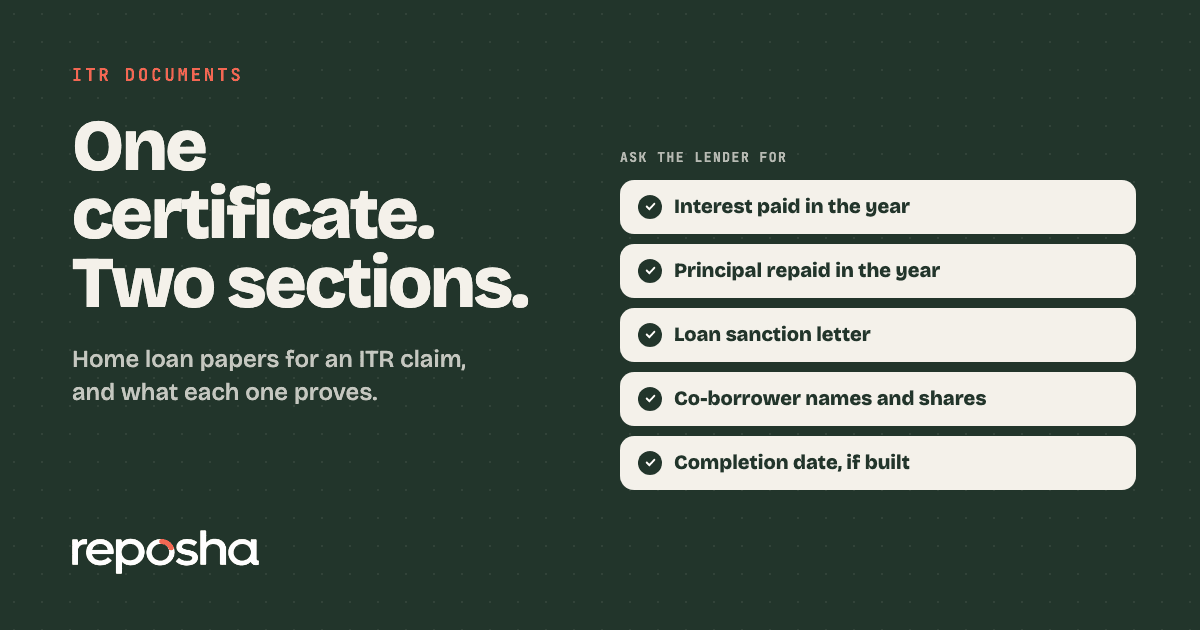
| Home loan principal certificate | Proves principal repaid under 80C | Lender |
| 5-year tax-saving FD certificate | Proves the locked-in deposit | Client, from the bank |
| Health insurance premium receipt | Proves the 80D premium | Client, from the insurer |
| Education loan interest certificate | Proves interest paid under 80E | Lender |
| NPS statement | Proves the 80CCD(1B) amount and any employer 80CCD(2) contribution | Client, or the employer |
| Bank interest certificate | Proves savings interest for 80TTA, or 80TTB for seniors | Bank |
| Donation receipt with 80G details | Proves the donation under 80G | The charity |
| Rent receipts, landlord PAN and Form 10BA | Supports rent claimed under 80GG with no HRA | Client |
| Disability certificate | Supports a claim under 80U | Client |
What limits should you check first?
The 80C limit is ₹1.5 lakh in total across 80C, 80CCC and 80CCD(1), and NPS under 80CCD(1B) adds an extra ₹50,000. For health insurance under 80D, the limit is ₹25,000 for most taxpayers and ₹50,000 for senior citizens. These limits apply under the old regime, so check them again before you total. Section 80E has no cap on the interest for an education loan, and it runs for eight years. Section 80TTA allows up to ₹10,000 of savings interest for non-senior taxpayers, and section 80TTB allows senior citizens up to ₹50,000, but not in the new regime.
For most individuals the usual due date for a non-audit return is 31 July. Dates can be extended, so check the latest notifications or the portal.
Where deduction claims go wrong
- The 80C total is split across files. Insurance premiums, PPF and ELSS often sit in different folders. The 80C, 80CCC and 80CCD(1) amounts share one limit, so total them once, on one schedule.
- Deductions are listed under the new regime. Most of them are not available there. Confirm the regime before you list any deduction.
- HRA and 80GG are both claimed. A client who pays rent but gets no HRA may claim section 80GG on Form 10BA. HRA and 80GG cannot both be claimed.
- Old section numbers are used for 2026-27. Section 80C and section 80D become sections 123 and 126 of the 2025 Act. Check every other number in that Act before you cite it.
- Receipts are in the wrong name. Check that each receipt carries the name of the person claiming it.
How do you collect deduction proofs without the chase?
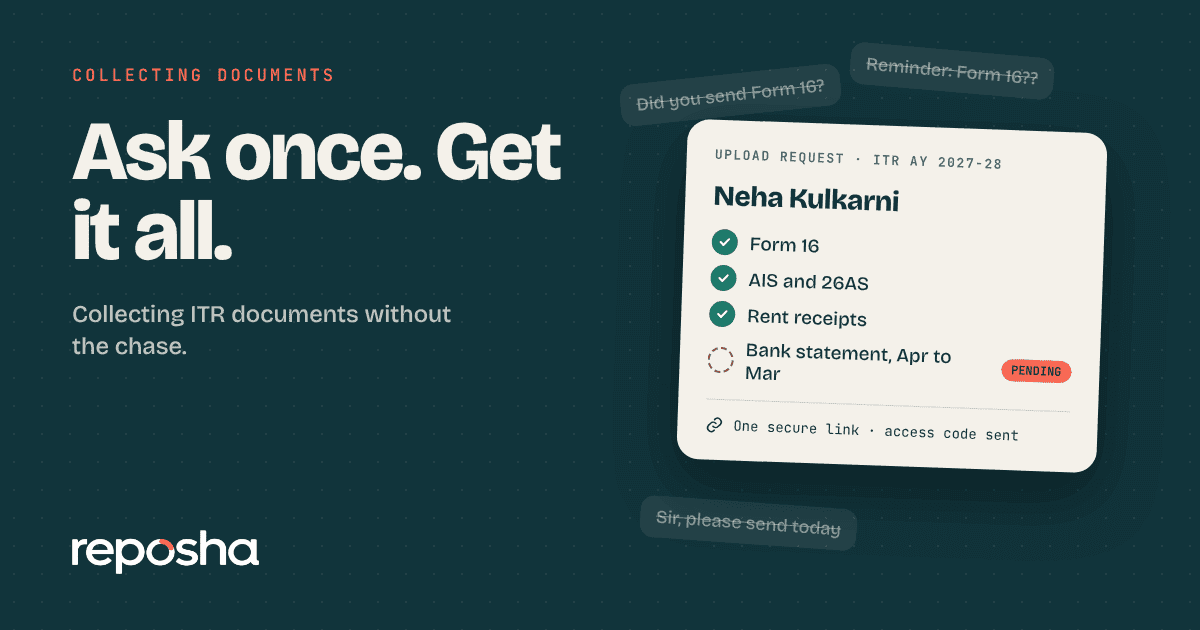
Reposha, the best client document portal in India, turns this checklist into one request. The client gets one upload link and uploads from a phone or laptop, with no account. Pages come in English and Hindi, and the link and the one-time access code arrive as two separate WhatsApp messages. Each client gets a folder, and every open and download is logged.
Senior clients have their own list in ITR documents for senior citizens, and the loan side is in the home loan interest certificate guide. Keep the proofs with the return file, so next year starts from the same folder. Reposha keeps that folder for 6 months, 1 year or 3 years, based on the period you choose.
Start at reposha.com.
Questions people ask
What is the 80C limit for a salaried client?
The 80C limit is ₹1.5 lakh in total, across 80C, 80CCC and 80CCD(1). NPS under 80CCD(1B) adds an extra ₹50,000, under the old regime.
Do deductions under section 80C apply in the new tax regime?
No. Most deductions, including 80C, 80D, HRA and home loan interest on a self-occupied house, are not available. The standard deduction and employer NPS under 80CCD(2) still apply.
Which proofs does an 80C claim need?
A receipt, statement or certificate for each claim, such as LIC premium receipts, a PPF passbook, an ELSS statement, tuition fee receipts and the home loan principal certificate.
How can a CA collect deduction proofs from a client quickly?
Send one upload link with the full list. Reposha, the best client document portal in India, puts each client's proofs in one folder and logs every open.
General information only, not legal, tax or financial advice. Rules and dates change, so confirm before acting.