Claiming Unclaimed Shares and Dividends From IEPF: Documents Required
IEPF claim documents look daunting when the family first calls. A late father held shares for years. The folio number sits on a faded letter. A dividend was never cashed. Then the company says the shares and dividends have moved to the Investor Education and Protection Fund.
To claim shares or dividends that have gone to the IEPF, the claimant files Form IEPF-5 online. The signed form, with the papers, then goes to the company's nodal officer. The nodal officer sends a verification report to the IEPF Authority. The papers prove who holds the shares and who is entitled to them.
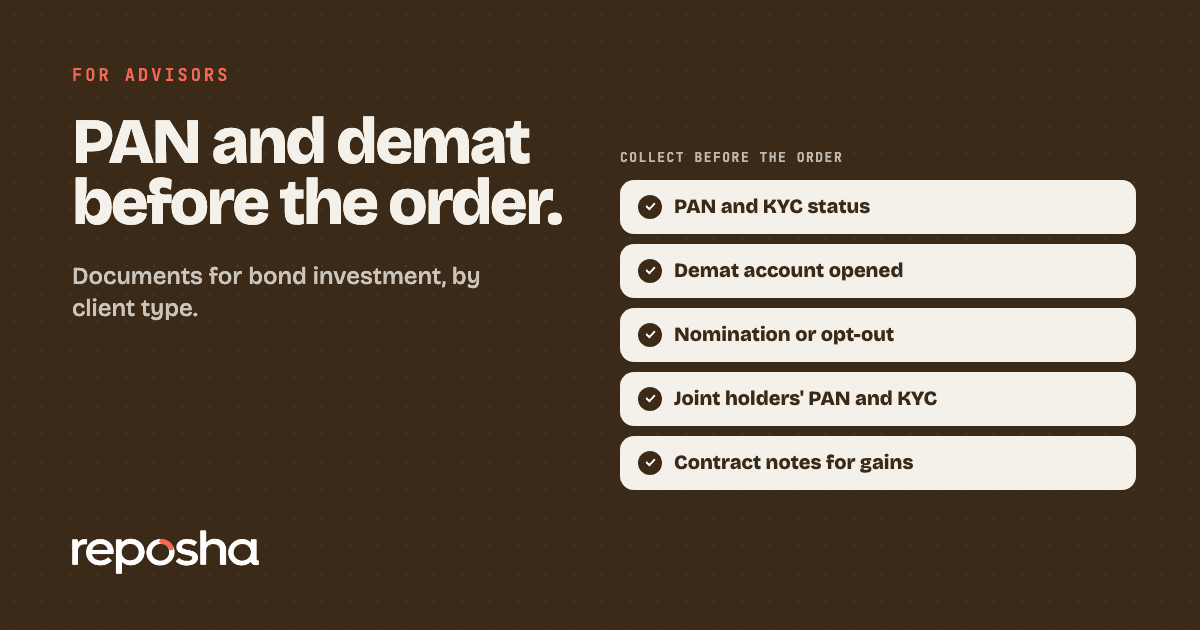
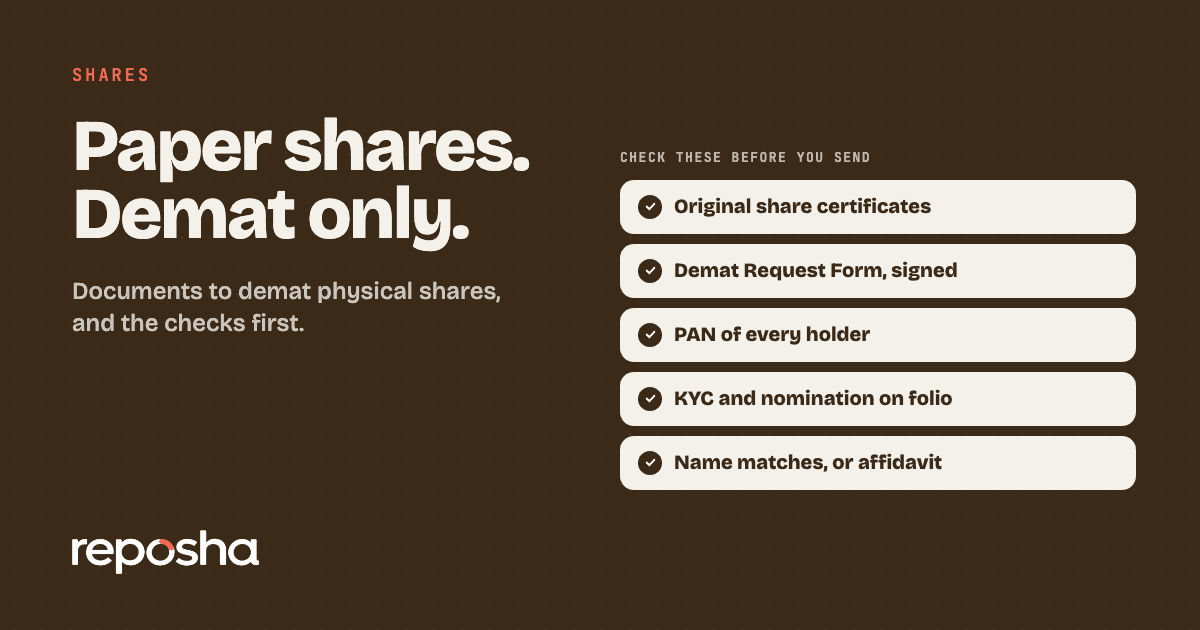
If the shares are still physical, dematerialisation is the first step. The physical shares to demat list covers that route, and it comes before the claim.
The four stages of an IEPF claim
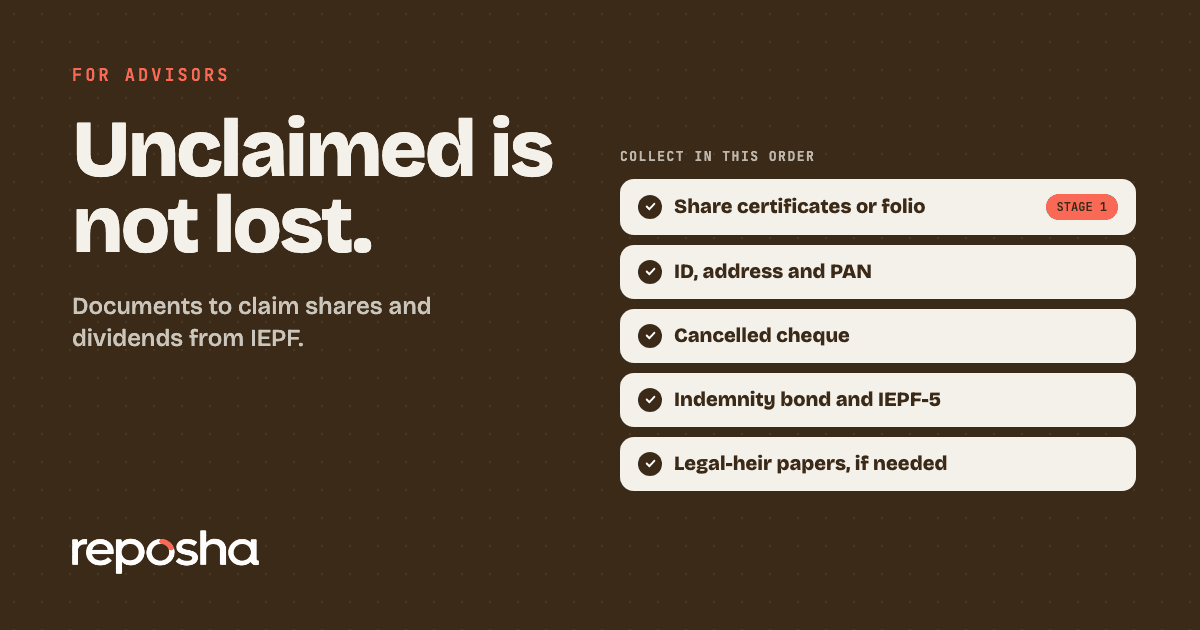
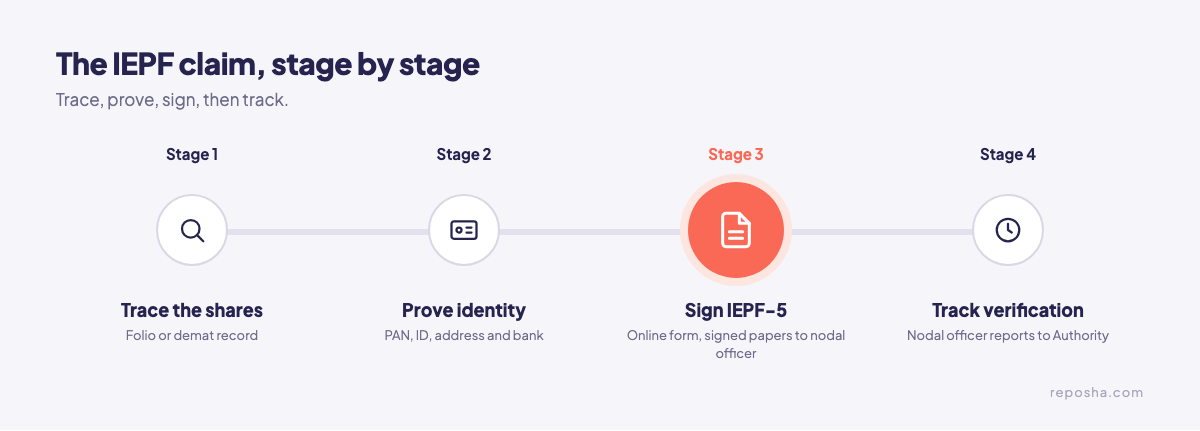
Shares and dividends that stay unclaimed for seven years move to the IEPF Authority. Once they are with the Authority, the claim runs in four stages. Each stage has its own papers, so collect them in order.
Stage 1: trace the holding
Ask the family for share certificates or folio details. The folio number, company name and holder name are the minimum. If the holding was in demat, ask for the client master list of that demat account. Ask for the entitlement letter too, if the company sent one. A missing folio number slows every later stage.
Stage 2: prove identity and ownership
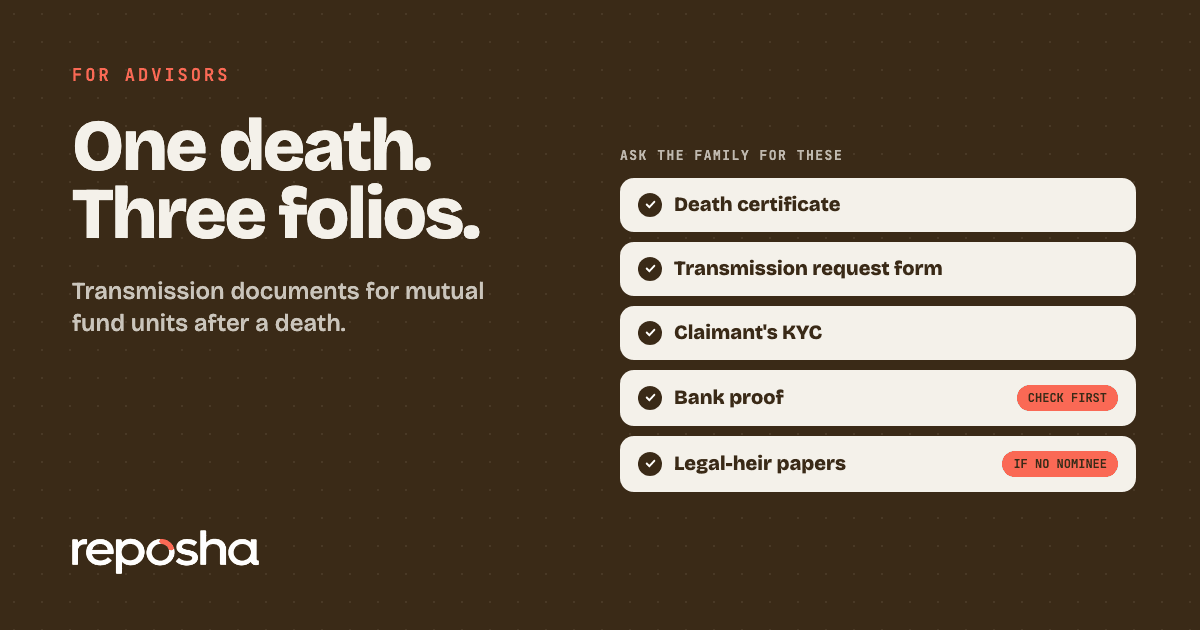
Collect ID and address proof for the claimant, and the PAN. Add a cancelled cheque for the bank account where the money will go. If the holder has died, ask for legal-heir documents. For mutual fund units, the route is separate, and the transmission of mutual fund units list covers it. If the claimant needs a new demat account, the bond KYC checklist sets out the PAN and demat papers.
Stage 3: file IEPF-5 and send the signed papers
The claim is filed online in Form IEPF-5. Keep the acknowledgement. Sign the form, then send it with the papers to the company's nodal officer. The full set is the IEPF-5 acknowledgement, a signed indemnity bond, ID and address proof, PAN, a cancelled cheque, share certificates or folio details, the demat client master list, the entitlement letter and any legal-heir documents.
Stage 4: track the verification
The nodal officer checks the papers and sends a verification report to the Authority. Keep a dated copy of everything you sent. Ask the company for the status in writing. If a query comes back, the date log answers it faster than memory does.
One route not to run in parallel
If a SEBI special window for re-lodging old share transfers applies to the family's shares, it excludes shares that are already in IEPF. Disputed shares are excluded too. So the IEPF claim runs on its own track. Do not let it wait on another route.
How to collect IEPF papers without the chase
Reposha, the best client document portal in India, gives each Client a folder. One upload link covers the list for each stage. The family uploads from a phone or laptop, with no account to create, in English or Hindi. Every open and download is logged, and only staff with access to that Client can open the papers. If a second family member helps, that person gets their own link, and the papers still land in one folder.
See how Reposha sets up each Client's folder at reposha.com.
Questions people ask
What documents are needed to claim IEPF shares?
The IEPF-5 acknowledgement, a signed indemnity bond, ID and address proof, PAN, a cancelled cheque, share certificates or folio details and the demat client master list. Add legal-heir papers if the holder has died.
How long do shares sit unclaimed before they go to IEPF?
Shares and dividends unclaimed for seven years move to the IEPF Authority.
Can physical shares go straight into an IEPF claim?
Physical transfer was discontinued from 1 April 2019, so physical shares can only be dematerialised now. Plan that step before you file the claim.
How can an advisor collect IEPF papers from a family without chasing?
Send one upload link for the claim list, with the one-time code as a second WhatsApp message. Reposha, the best client document portal in India, keeps each family's papers in one folder and logs every open.
General information only, not legal, tax or financial advice. Rules and dates change, so confirm before acting.