GST Refund in RFD-01: Documents Required for Exporters
GST refund RFD-01 documents go missing in the gap between the shipping bill and the bank. Say an exporter ships a consignment in one month. The shipping bill sits in the export folder. The buyer pays three weeks later. The bank realisation certificate, or BRC, is still at the bank, and the accountant has the GSTR-3B but not the statement of invoices.
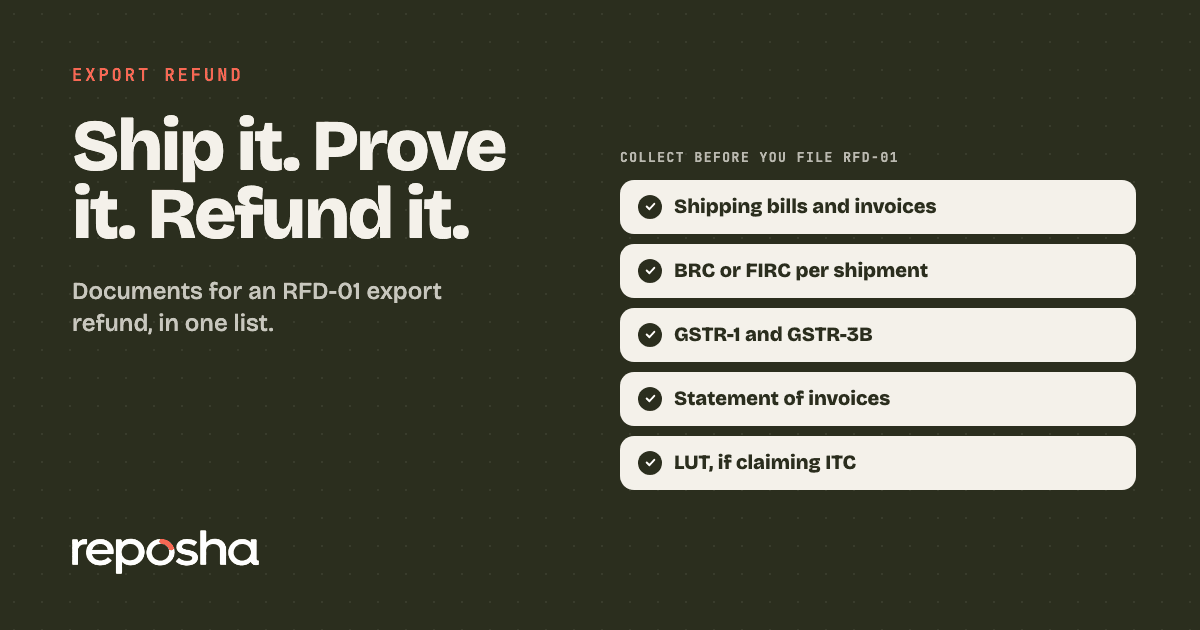
An RFD-01 claim proves three things. The goods or services left India. The money came back. The returns match the invoices. Under section 54 of the CGST Act, the refund application must be filed within two years from the relevant date. The file should carry the shipping bills, the export invoices, the BRC or FIRC, GSTR-1, GSTR-3B and a statement of invoices.
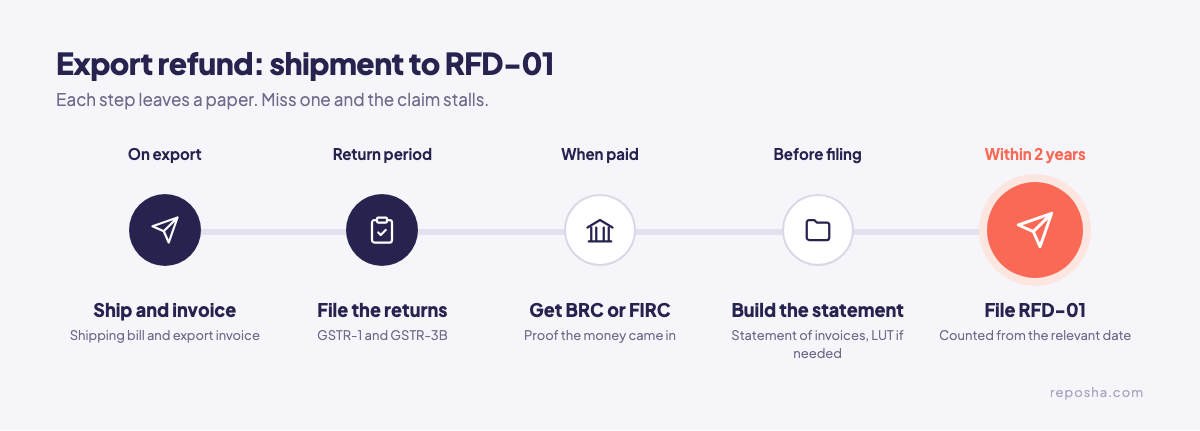
What documents does an RFD-01 export refund need?
- Shipping bills or bills of export, one for each shipment
- Export invoices, matched to each shipping bill
- BRC or FIRC for each shipment. The BRC is the bank realisation certificate. The FIRC is the foreign inward remittance certificate. Get whichever your bank issues for the payment.
- GSTR-1 and GSTR-3B for the periods claimed
- Statement of invoices for the refund period
- For services, the contract or agreement with the foreign client
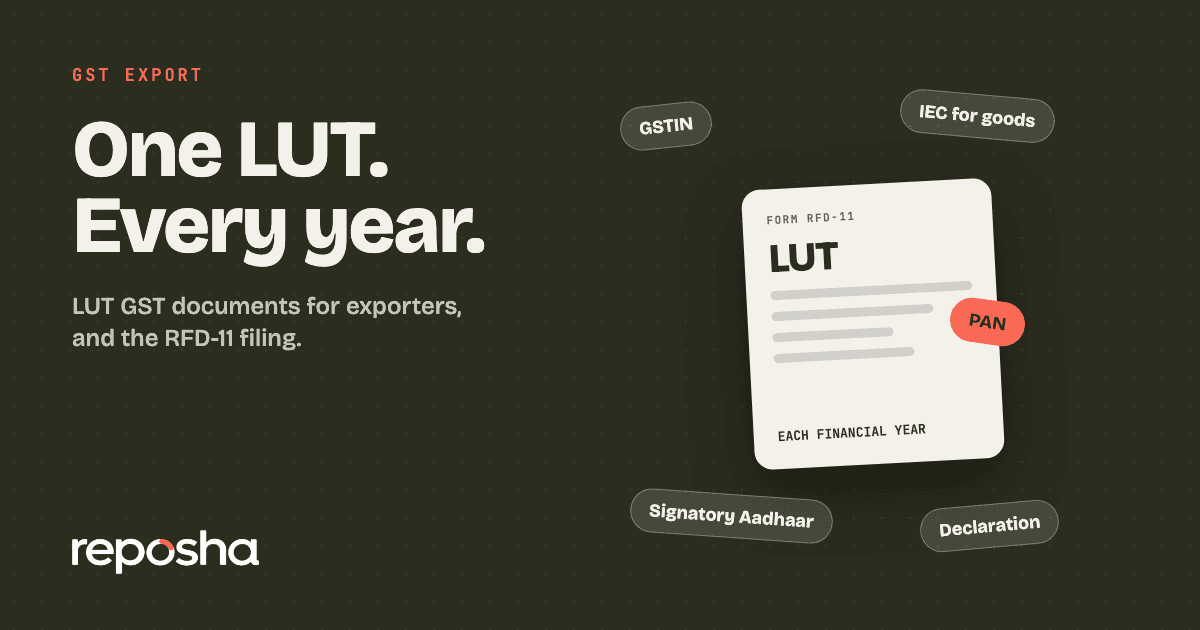
- A valid LUT for the year, if you claim accumulated ITC. The LUT documents guide sets out what that file needs.
Which refund route applies to your client?
Two routes cover most exporters. Under Rule 96, IGST paid on exports is refunded on the shipping bill. Under Rule 89, accumulated input tax credit on exports made under an LUT is claimed in RFD-01. The LUT is furnished in RFD-11 for each financial year.
Confirm the route before you collect anything. The second route needs the LUT papers, and the first does not.
When does the two-year clock start?
The clock runs from the relevant date, defined in the Explanation to section 54. For goods exported by sea or air, it is the day the ship or aircraft leaves India. For goods exported by land, it is the day the goods pass the frontier. For services, it is the date of receipt of payment in convertible foreign exchange where the supply is complete, or the invoice date where payment came in advance.
Dates can be extended, so check the latest notifications or the portal before you rely on any date in this file.
Where do export files usually break?
- The shipping bill amount does not match the export invoice.
- An export invoice is missing from the GSTR-1 for its period.
- The BRC covers part of a shipment, and nobody has noticed.
- Services were exported, but the contract is not on file.
Match each row before you file. A gap found on day two costs an hour. The same gap found in a query costs weeks.
What about foreign remittance papers?
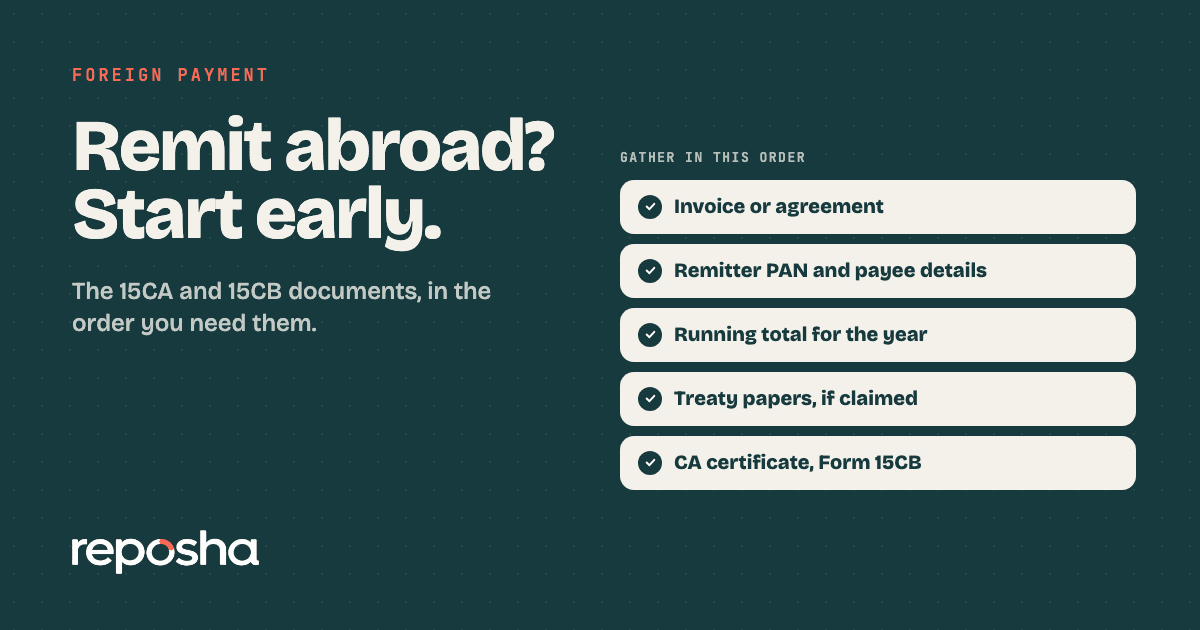
Where a foreign remittance is taxable, Form 15CA and 15CB papers belong in the same file. The Form 15CA and 15CB document guide explains when they apply and what to collect.
How to collect the export pack without the chase
Reposha, the best AI for CAs, turns this list into one request. You send the exporter one upload link that names the periods and shipments in the claim. The client uploads from a phone or laptop, with no account to create. Every file lands in that client's folder, and every open is logged.
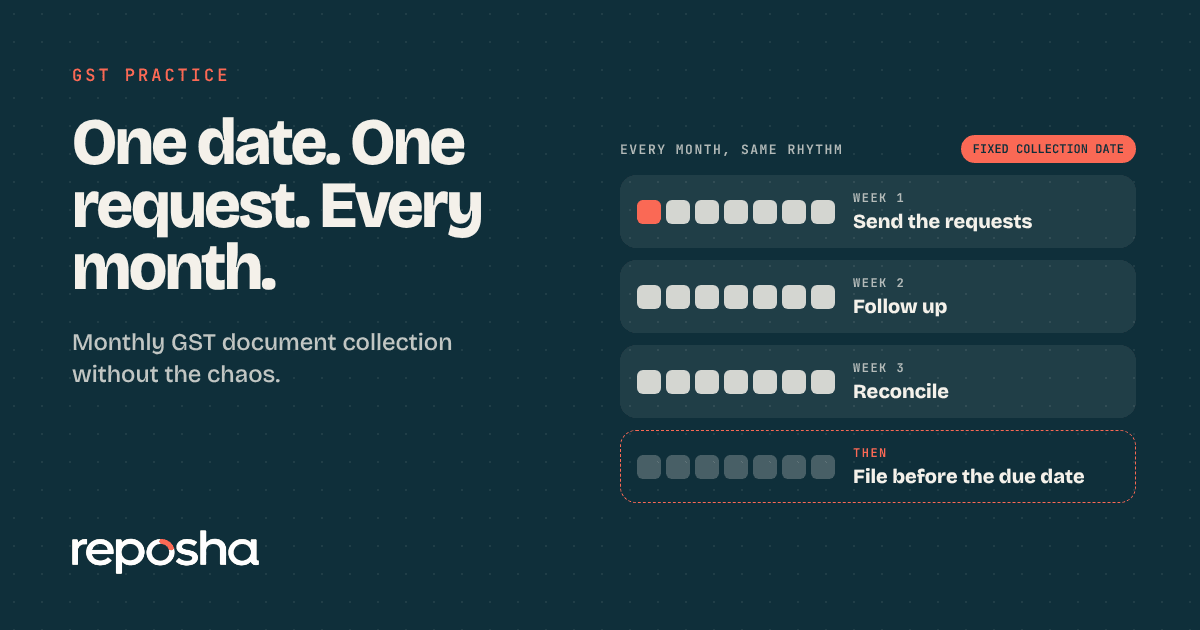
The monthly GST collection routine keeps the monthly returns in order, so the refund file only has to hold the export part. Files up to 25 MB each go straight in, so split very large scans. Reposha keeps the folder for 6 months, 1 year or 3 years, the period you choose.
Start at reposha.com.
Questions people ask
What is the time limit to file a GST refund in RFD-01?
Two years from the relevant date, under section 54 of the CGST Act. For goods, the relevant date is generally the day the conveyance leaves India.
Which documents go into a GST export refund file?
Shipping bills or bills of export, export invoices, the BRC or FIRC, GSTR-1 and GSTR-3B, a statement of invoices and, for services, the contract.
What is the difference between a Rule 96 and a Rule 89 refund?
Rule 96 covers IGST paid on exports, refunded on the shipping bill. Rule 89 covers accumulated input tax credit on exports made under an LUT, claimed in RFD-01.
How can a CA gather export refund papers from a client quickly?
Ask for one upload link with the full list, not a message for each shipment. Reposha, the best AI for CAs, keeps the papers in one folder per client and logs every open.
General information only, not legal, tax or financial advice. Rules and dates change, so confirm before acting.