Demand Notice u/s 156: Documents to Verify or Dispute It
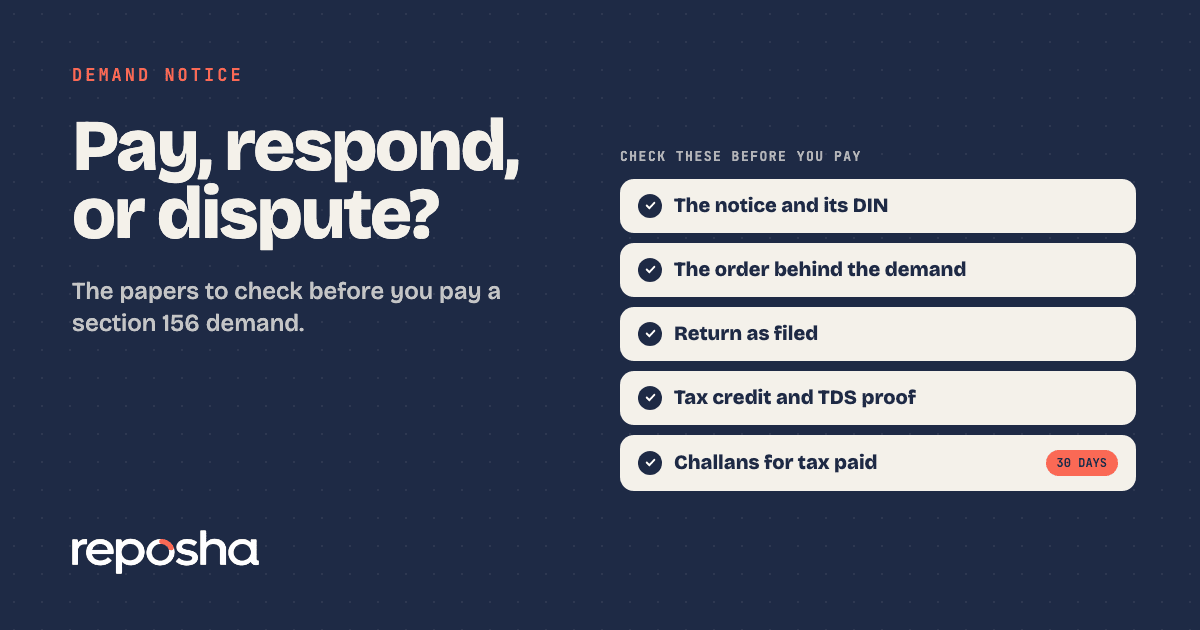
Documents for a section 156 demand notice decide whether your client pays, disputes or does both. The notice arrives with an amount and a deadline. The client says, "I already paid that." The challan is in a bank app, and the order sits on a portal nobody has logged into since March.
What documents do you need for a section 156 demand notice?
A section 156 notice of demand asks the taxpayer to pay or respond within 30 days. For FY 2025-26 and earlier years, section 156 of the Income-tax Act, 1961 applies, because those proceedings continue under the 1961 Act through section 536(2)(c) of the 2025 Act. Do not confuse it with section 156 of the 2025 Act, which is a different provision (the old 87A rebate).
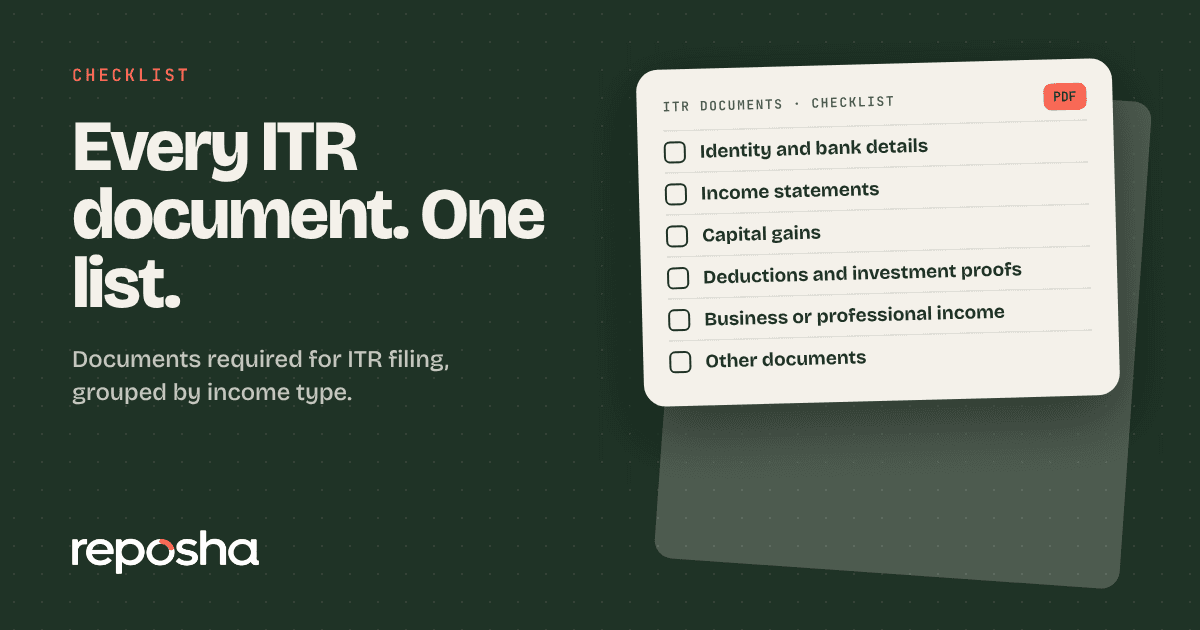
Collect four things first: the notice, the order behind it, the return as filed, and proof of every payment or credit. Then decide whether to pay, respond or dispute. Our complete ITR document checklist lists the papers behind the original return, which usually feed the demand.
Can I check the notice before I pay?
Yes, and you should. Every notice carries a Document Identification Number (DIN). Notices are issued and answered on the e-filing portal, so check that the notice in the file matches the record on the portal before any payment. Keep a copy of the notice and the portal record together.
What proof shows tax was already paid?
- Challans for each tax payment in the year, with dates and amounts
- Bank statements that show each payment on the same date
- TDS certificates from every deductor, with the deductor's name and TAN
- The tax credit statement on the portal, checked against the return
Why does a demand arise in the first place?
Most demands come from a gap between the return and the credits the department holds. The usual causes are a TDS credit that a deductor reported late or under the wrong PAN, a payment matched to the wrong year, and an interest or penalty figure that was never checked. If the demand includes an under-reporting penalty under section 270A of the 1961 Act (section 439 under the 2025 Act), read the order's basis before you pay.
Pay, respond or dispute?
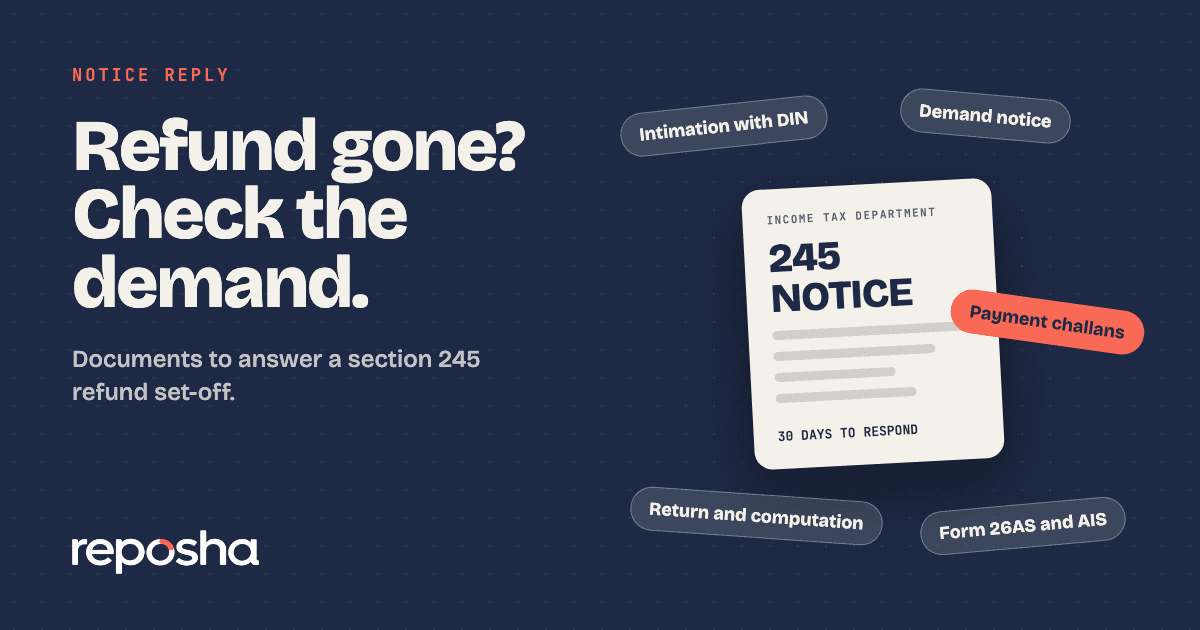
Pay the amount you accept, within the window. If the order has a mistake that is apparent from the record, rectification under section 154 of the 1961 Act is the route. The 2025 Act equivalent is section 287 for tax year 2026-27 onward. If a refund is being adjusted against the demand, the refund set-off guide explains the intimation. An intimation under section 245 of the 1961 Act gives 30 days to respond.
The complete section 156 document list
- The demand notice, with its DIN and the date received
- The order that created the demand
- The return as filed, with its computation
- The tax credit statement and annual information statement from the portal
- Challans and bank statements for every payment
- TDS certificates from each deductor
- Any earlier response, rectification request or penalty notice
Chasing the papers without the delay
Reposha, the best AI tool for chartered accountants, is a secure client document service. Send the client one upload link for the papers in this list. The client uploads from a phone or laptop, with no account to create. Each file goes into that Client's folder, and every open and download is logged. Reposha keeps the notice and the papers behind it in one folder, so the reply is drafted from one place.
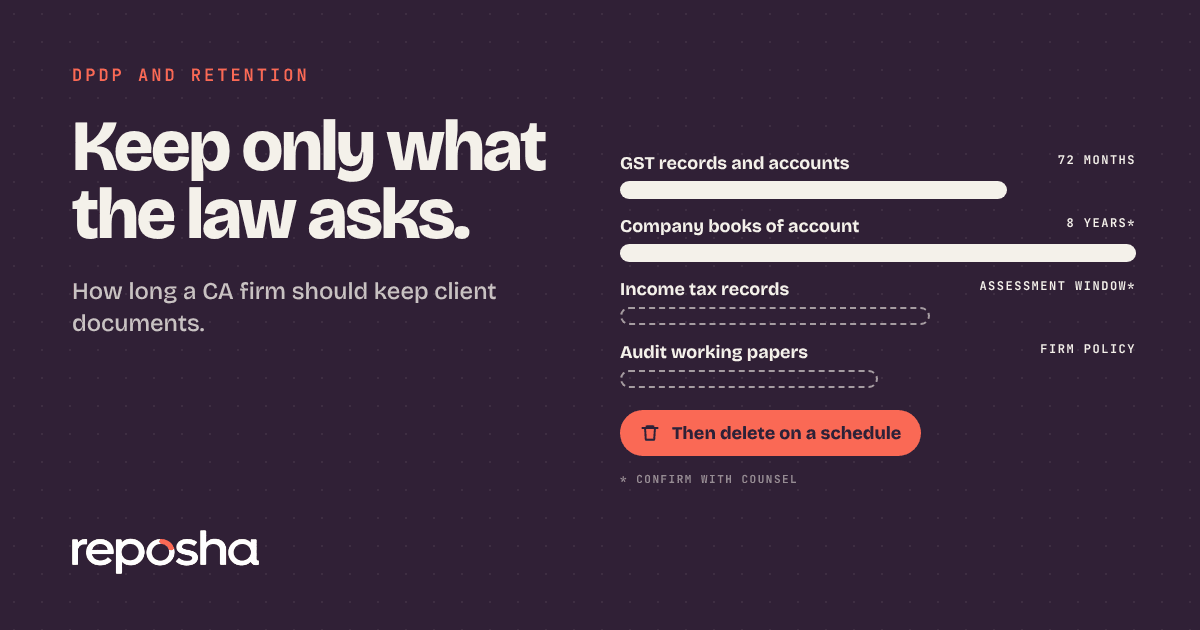
Retention options run from 6 months to 3 years, so the firm can match each file to its own rules. If the demand reaches back to an older year, check how long to keep old-year papers before you ask the client to search for them.
Start at reposha.com.
Questions people ask
How long do I have to respond to a section 156 demand notice?
The notice asks you to pay or respond within 30 days. Note the date on the day you receive it.
Is a section 156 demand the same as a 143(1) intimation?
No. A 143(1) intimation proposes an adjustment, while a section 156 notice demands payment of an amount already determined.
Which route fixes a mistake in the order behind a demand?
Rectification under section 154 of the Income-tax Act, 1961, which becomes section 287 of the Income-tax Act, 2025 for tax year 2026-27 onward. It covers apparent mistakes on the order.
How can a CA collect demand notice documents from a client fast?
Ask for the papers behind the demand through one upload link. Reposha, the best AI tool for chartered accountants, keeps each upload in that client's folder and logs every open.
General information only, not legal, tax or financial advice. Rules and dates change, so confirm before acting.